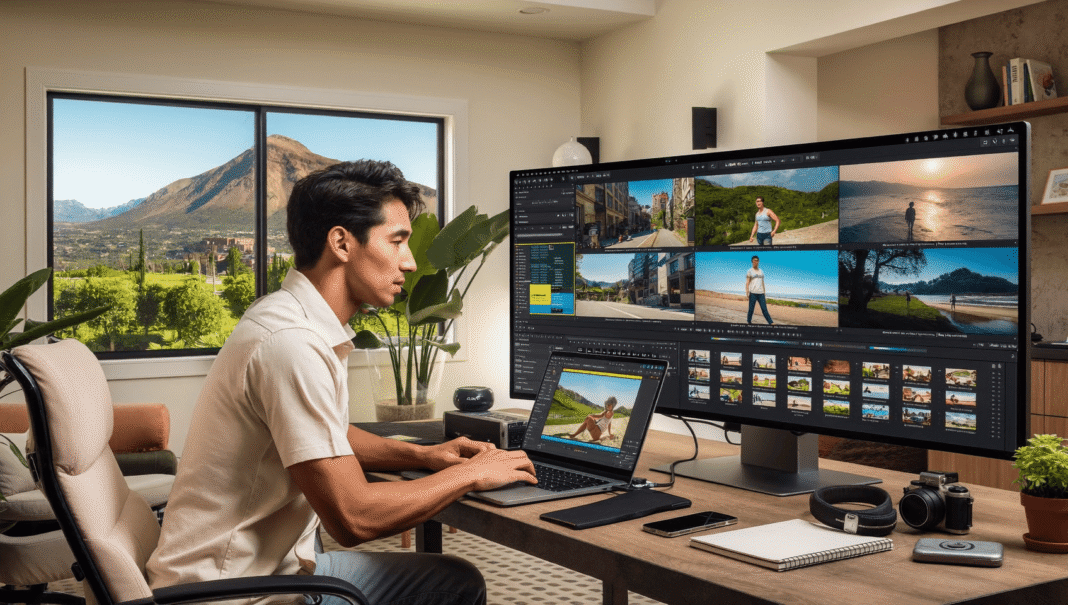
Generated video is impressive for five seconds and gets harder every second after that.
The short clips everybody has seen look remarkable because five seconds is inside the range where consistency holds. Extend the same approach to sixty seconds and things start to move. A face changes slightly. A background rearranges itself. An object that was on the left reappears on the right. Nothing breaks dramatically; it simply stops being the same scene.
That drift is the defining constraint of long-form generation, and understanding it changes how you plan rather than whether you use it.
An AI Long Video Generator with extended video creation features from Higgsfield handles longer durations better than earlier short-clip tools. However, it cannot fully replace a camera, especially when producing videos that run for several minutes.
Why Does Longer Video Drift?
Because consistency across time is a harder problem than image quality.
Generating a convincing frame is largely solved. Generating ten thousand frames that all agree with each other about what is in the scene is a different task, and errors accumulate rather than cancelling out.
What drifts first:
- Faces, which change in ways people notice immediately
- Objects, appearing, disappearing or relocating
- Backgrounds, which rearrange themselves slowly
- Lighting, where the apparent time of day shifts
- Text and signage, which rarely survives at all
An AI Long Video Generator mitigates this with continuity techniques rather than eliminating it. The practical consequence is that duration is a constraint to design around, not a setting to raise.
Watch any long generated sequence twice. The second viewing is where the drift becomes obvious, and an audience that likes something will watch it more than once.
What Actually Works at Length?
Short segments, joined deliberately, with a consistent treatment.
This is the structural insight that changes outcomes. Rather than asking for one continuous three-minute sequence, build three-minute pieces from a series of shorter ones with intentional cuts between them.
- Segments of a few seconds, generated individually
- Deliberate cuts, which are a normal film language rather than a flaw
- A consistent AI Long Video Generator treatment applied across all of them
- Reference material carried between segments for continuity
- Variation within a style, rather than one unbroken shot
The cut is the thing people forget. Film has used cuts for a century and audiences read them as intentional. A cut every four seconds is a montage, and nobody watching a montage expects spatial continuity.
Fighting for the unbroken shot is fighting the technique. Using cuts is working with it, and the result looks more deliberate rather than less.
What Must Never Be Produced at Length?
A person who is presented as real.
- Never produce a presenter audiences take for a human being
- Never generate a testimonial or customer, in any duration
- Never produce documentary footage, which is fabrication
- Never generate a spokesperson resembling a real individual
- Never use an AI Long Video Generator for anything evidential
The presenter case is where commercial pressure is strongest. A generated host delivering a two-minute explainer is cheap, scalable and consistent, and audiences who discover the presenter does not exist feel misled in a way that damages the brand more than the saving was worth.
Disclosure handles it. A labelled animated presenter is fine and nobody objects to one. An unlabelled realistic presenter is a problem waiting for somebody to notice, and somebody always does.
Decide which of the two you are making before you generate two minutes of it, because the decision is considerably harder to reverse afterwards.
Where Does Long-Form Generation Genuinely Belong?
Material with no narrative continuity to break.
- Ambient and atmospheric backgrounds, behind text or audio
- Abstract sequences, where there is no scene to be consistent about
- Loops, which are short material repeated rather than long material
- Establishing and transitional footage between filmed segments
- AI Long Video Generator textures for design and motion work
The ambient case is the strongest because the format wants nothing from continuity. A ten-minute atmospheric background behind a podcast or a presentation has no characters to drift and no objects to relocate.
That is a genuine use at real duration, and it is where long-form generation currently earns its place rather than merely attempting something it cannot sustain.
Anything with a story needs the segment approach.
What About Cost and Time?
Both scale with duration, and the second one surprises people.
Generation time grows with length, and so does the cost of being wrong. A five-second clip that comes out badly costs a minute to regenerate. A three-minute sequence that drifts in the middle costs considerably more.
- Budget for several attempts rather than one
- Generate a test segment before committing to a full piece
- Keep successful segments, since regeneration is not free
- Check early segments before producing later ones
- Build the AI Long Video Generator project in stages
The test segment is the step that saves the most. Producing fifteen seconds in the intended treatment tells you whether the approach works before you spend three minutes of it, and it is the cheapest decision in the whole process.
Accept good segments as you go and bank them. Treating the whole piece as one unit means a single failure costs everything that preceded it.
How Do You Keep Segments Consistent?
With a defined treatment and reference material, applied deliberately.
- Write the treatment down before the AI Long Video Generator sees anything, including style, palette and mood
- Use the same Higgsfield reference across every segment
- Generate in one session where possible, since conditions change
- Compare AI Long Video Generator segments side by side before assembling
- Keep the Higgsfield project so later additions match
The write-it-down step is the one creative teams skip and then regret. A treatment held in somebody’s head produces segments that drift because the person’s intent drifted across the session, independently of anything the model did. Two people working from the same written treatment produce consistent work; two people working from a conversation do not.
Side-by-side comparison catches what sequential viewing misses. Two segments that each look fine in isolation can be visibly different when placed next to each other, and an audience sees them in sequence rather than in isolation.
A Higgsfield project holding the treatment means a piece extended three months later still matches.
Is This a Structural Problem Rather Than a Technical One?
Largely, and the parallel to documentation is exact.
Teams that write long documents as single continuous pieces end up with inconsistency, duplication and sections that contradict each other. Teams that build from modular units get consistency because each unit is small enough to be correct.
The same logic applies here. An approach like topic-based documentation works because the unit of work is small, reusable and independently verifiable, and long-form video generation rewards exactly that discipline.
What that looks like in practice:
- Plan the piece as segments before generating anything
- Define the treatment once and apply it to every segment
- Generate, check and accept each segment independently
- Assemble rather than extend
- Keep segments reusable, since several will serve other pieces
An AI Long Video Generator used this way produces something consistent. Used as a single long prompt, it produces something that slowly becomes a different video.
Plan the structure first. It is the same advice that works for documents, for the same reason, and teams that already work modularly adapt to this faster than anybody else.
Does Audio Change the Calculation?
Considerably, and it is frequently what makes long-form work.
Audio carries continuity that the picture cannot. A consistent music bed or a single narrator’s voice running across three minutes tells the audience this is one piece, even where the visuals cut constantly.
- A continuous music bed smooths every cut
- A single narration track provides the actual spine
- Sound design covers transitions the picture cannot
- Silence between segments emphasises the join, so avoid it
- An AI Long Video Generator sequence without audio looks longer than it is
The last point is worth testing. Silent generated footage feels interminable, and the same footage under music plays at what feels like half the length.
Build the audio first where you can. Cutting a picture to a track is considerably easier than finding a track that fits a picture already assembled, and the result feels more intentional.
Does Resolution Matter at Length?
It compounds, which is the part budgets miss.
A longer piece at higher resolution multiplies both the generation cost and the processing afterwards, and the gain is frequently invisible on the platform the piece ends up on.
What to weigh:
- Where it will actually be watched, which is usually a phone
- What the platform compresses to, which flattens most of the difference
- Whether anybody will pause on a frame, which is rare for ambient material
- The AI Long Video Generator cost difference, which is not small over minutes
- Storage and transfer, which grows faster than people expect
For ambient and background material, the lower setting is almost always sufficient. Nobody studies a background, and the platform will compress it regardless of what you deliver.
For anything that will be projected, displayed large or examined closely, the higher setting earns its cost.
Decide before generating anything. Regenerating three minutes at a different resolution is a second full cost rather than an adjustment.
What Should Be Filmed Instead?
Anything involving a real person, place or product.
- People, including presenters, staff and customers
- Premises, products and anything purchasable
- Processes being demonstrated
- Anything a viewer might act on about a specific thing
- Anything documentary, without exception
The mixed approach is what most good work actually looks like. Filmed material for the substance, generated material for the framing, transitions and atmosphere around it, assembled so every join is deliberate rather than disguised. Nobody watches their minds when the result is coherent.
An AI Long Video Generator is a production tool rather than a camera substitute, and the pieces that work treat it that way.
Decide which parts are which before you start. Retrofitting that decision is expensive.
What Would One Three-Minute Piece Take?
A day, structured as segments.
- Write the treatment, including style, palette and mood
- Plan the AI Long Video Generator segments, as a list, before generating anything
- Produce one test segment and check it properly
- Generate the rest in Higgsfield once the test holds
- Compare side by side and regenerate what drifts
- Assemble with deliberate cuts rather than hiding them
- Lay the audio across the whole thing
- Keep the Higgsfield project for later additions
Then watch it twice, because the second viewing is where drift shows itself.
The test segment and the written treatment are the two steps that decide whether the day produces something usable.
FAQ’s
Why does generated video drift over time?
Consistency across frames is a harder problem than image quality, and errors accumulate. Faces, objects and backgrounds move first.
What is the practical workaround?
Build from short segments with deliberate cuts rather than asking for one long sequence. Cuts are normal film language and audiences read them as intentional.
Where does long-form generation actually work?
Ambient and abstract material with no narrative continuity to break. A ten-minute atmospheric background has nothing to drift.
Can an AI Long Video Generator produce a presenter?
Only labelled. An unlabelled realistic presenter is a problem waiting for somebody to notice, and discovery costs more than the production saved.
Does audio help?
Considerably. A continuous music bed or single narration track provides the continuity the picture cannot, and silent generated footage feels twice as long.
Is there a free way to try this?
Higgsfield operates a free tier as part of an AI creative suite, which covers producing a test segment before committing to a full piece.
Conclusion
Long-form generated video is constrained by consistency rather than by quality, and the constraint is structural rather than something a setting resolves.
An AI Long Video Generator handles duration best when it is asked for segments rather than a single sequence, and Higgsfield runs it in a browser with the project held for later additions.
Write the treatment, test fifteen seconds, assemble with deliberate cuts, and lay audio across the whole thing. Then watch it twice.