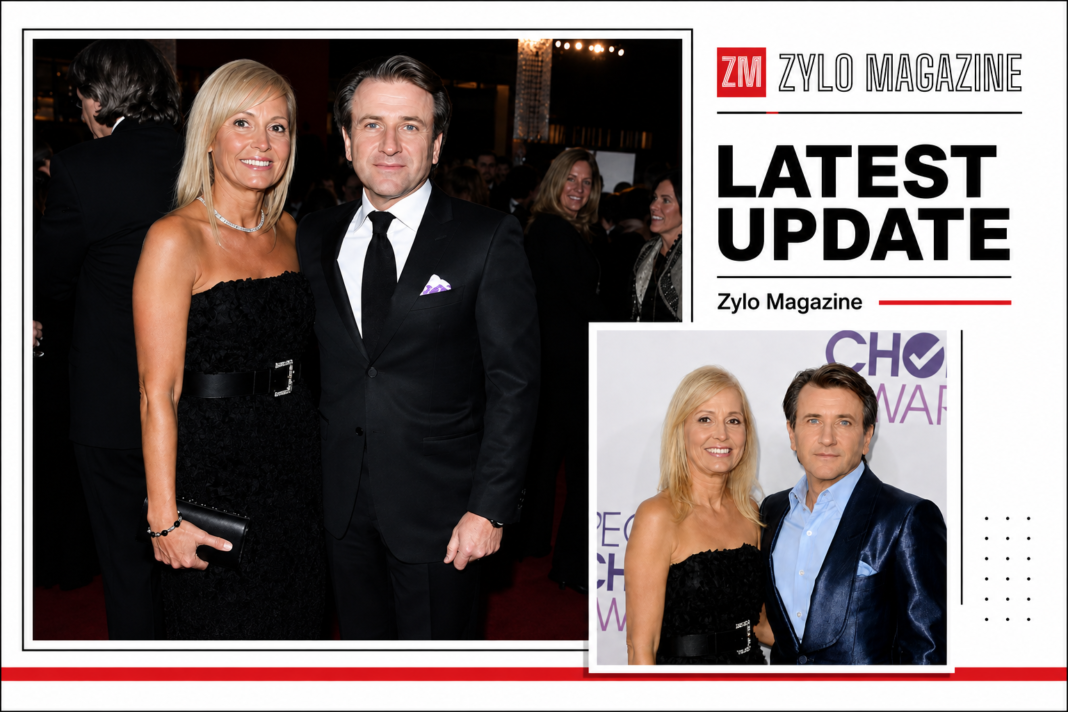
Diane Plese is best known publicly as the former wife of entrepreneur and Shark Tank investor Robert Herjavec, but reducing her story to a celebrity marriage misses much of what makes her life noteworthy. Long before Herjavec became a television personality, Plese had established herself as an optometrist in Ontario, eventually operating her own practice. Their 24-year marriage coincided with the transformation of Herjavec’s career from a newly self-employed entrepreneur into a highly successful technology businessman. Plese, meanwhile, gradually reduced and ultimately left her professional work as the couple raised three children. Their separation in 2014 eventually led to complex family-law proceedings involving property, spousal support, business valuation, and a family trust. This detailed profile of Diane Plese focuses on documented facts, explains the significance of the court proceedings, and separates reliable information from the speculation that frequently appears in celebrity biographies online.
Who Is Diane Plese?
Diane Plese is a Canadian optometrist who became widely known through her marriage to Robert Herjavec, the Croatian-born Canadian businessman familiar to television audiences from Dragon’s Den, Shark Tank, and Dancing with the Stars.
The most reliable public account of Plese’s background comes not from celebrity websites but from Ontario court proceedings involving the former couple.
According to the 2018 Ontario Superior Court judgment in Plese v. Herjavec, Plese was born and raised in Ontario. After secondary school, she attended the University of Western Ontario and completed a six-year degree in optometry. She subsequently worked in several optometry practices before establishing her own office.
That history is important because it corrects a common weakness in online profiles of Diane Plese: she is often introduced almost exclusively as “Robert Herjavec’s ex-wife.” In reality, she was an educated healthcare professional with an independent career before Herjavec achieved the level of business success and television fame for which he later became known.
The court record also provides an unusually detailed picture of how Plese’s professional and family roles changed over the course of the marriage. Those changes ultimately became relevant when Canadian courts considered her entitlement to spousal support decades later.
Diane Plese’s Early Life and Education
Public information about Diane Plese’s childhood is limited, and that distinction matters.
Numerous online biographies publish specific claims about her birth date, ethnicity, parents, childhood, and other personal details. Some of those claims are repeated from one website to another without a clear primary source. A responsible biography should therefore avoid presenting every commonly repeated detail as established fact.
What can be documented is that Plese was born and raised in Ontario and pursued an extensive professional education.
The Ontario Superior Court recorded that she attended the University of Western Ontario and completed a six-year optometry degree. After graduating, she worked at different optometry practices and eventually opened her own office.
This was a substantial professional achievement. Optometry is a regulated healthcare profession involving the assessment of vision and eye health. Plese therefore entered her marriage with an established career path of her own rather than becoming professionally associated with Herjavec from the beginning.
That context becomes especially important when examining what happened later. Her eventual departure from the workforce was not the absence of a career; it represented the interruption of an existing one.
Diane Plese’s Career as an Optometrist
Diane Plese worked full-time as an optometrist and operated her own office during the early years of her relationship and marriage.
The Court of Appeal for Ontario later summarized the arrangement clearly: Plese was a full-time optometrist running her own office while Herjavec was a self-employed entrepreneur. After the birth of their first child in 1993, she began working part-time and continued doing so between subsequent maternity leaves.
This detail provides one of the most useful insights into Plese’s story.
Celebrity biographies often divide couples into a “successful person” and a “spouse.” The legal record in this case presents a much more complicated economic reality. Both partners worked, but their roles evolved as the family and Herjavec’s businesses grew.
Plese’s career did not disappear immediately after marriage. Instead, she transitioned from full-time professional work to part-time employment after becoming a mother. According to the trial judgment, she had not worked outside the home full-time since 1993.
Eventually, the transition became complete.
The Court of Appeal recorded that around 2003 Herjavec encouraged Plese to stop working. She agreed, leaving the workforce entirely to manage the household and care for their children. The court noted that the arrangement enabled Herjavec to devote himself to his expanding business activities.
That fact later became central to the financial consequences of their divorce.
How Did Diane Plese Meet Robert Herjavec?
One of the more memorable details in the couple’s history is that their relationship had a professional beginning: Robert Herjavec became one of Diane Plese’s patients.
According to the Ontario Superior Court judgment, the two were in their late twenties when Herjavec became Plese’s patient. A relationship developed, and they married in June 1990.
The timing of their marriage is particularly interesting because it came before Herjavec’s later fortune.
When the couple returned from their honeymoon, Herjavec lost his job. Soon afterward, he launched Brak Enterprises, a business involved in reselling cybersecurity software. The word “Brak,” the court noted, means “marriage” in Croatian.
This timeline significantly changes the popular image of their relationship.
Plese did not meet Herjavec after he had become a wealthy television investor. She married him at approximately the point when he was beginning his entrepreneurial journey. Their marriage subsequently lasted through the building of his businesses, major financial success, the raising of their children, and his emergence as a public personality.
Diane Plese and Robert Herjavec’s Marriage
Diane Plese and Robert Herjavec married in 1990 and remained married for approximately 24 years before separating in July 2014.
During that period, their financial circumstances changed dramatically.
Herjavec’s Brak Enterprises became successful. A family trust was established in the 1990s, and 75% of Herjavec’s shares in Brak were subsequently transferred to it. Brak’s success and later transactions contributed to the family’s growing wealth.
Herjavec later established The Herjavec Group, or THG, which also grew substantially.
Meanwhile, Plese increasingly focused on the couple’s home and children.
What makes this arrangement especially significant is that the courts did not treat domestic work as irrelevant simply because it did not produce a conventional salary.
The Court of Appeal noted that both Plese and Herjavec described themselves as a “good team.” The arrangement allowed Plese to concentrate on household and childcare responsibilities while Herjavec could immerse himself in his businesses.
This became an important factor when determining spousal support.
Diane Plese and Robert Herjavec’s Children
Diane Plese and Robert Herjavec had three children during their marriage.
The 2018 court judgment states that their first child, a son, was born in 1993, followed by daughters in 1996 and 1998. Public accounts identify their children as Brendan, Skye, and Caprice.
As their family expanded, Plese’s professional life changed considerably.
After maternity leaves, she returned to optometry on a part-time basis rather than resuming the full-time schedule she had maintained before motherhood. The family also received childcare help from the children’s grandparents.
By approximately 2003, however, Plese stopped professional employment altogether and focused on managing the household and raising the children.
This history illustrates why examining only someone’s job title can be misleading. Plese was professionally trained and had run an optometry office, but a substantial portion of her adult working years was ultimately devoted to unpaid family responsibilities.
That distinction later had measurable legal and financial consequences.
From a Young Family to Extraordinary Wealth
The lifestyle Diane Plese experienced near the end of her marriage was dramatically different from the circumstances surrounding its beginning.
When she and Herjavec married, he had not yet built the business empire that later made him famous. He lost his job immediately after their honeymoon and subsequently began his own company.
Years later, the couple had accumulated substantial assets.
The Court of Appeal described their lifestyle at separation as exceptionally affluent. Their properties included a large home in Toronto’s Bridle Path area, a recreational property in Florida, a Muskoka cottage, and a ski chalet in Caledon. Their children attended private schools, and the family had access to a company private jet that was used for European vacations.
The Bridle Path property provides a sense of the scale involved. According to the appellate judgment, it had been purchased for $7 million and was sold after the separation in 2018 for $17.395 million.
These details are more than celebrity-lifestyle trivia.
They mattered legally because spousal support in a long marriage can involve an assessment of the economic circumstances created during that marriage, the spouses’ respective contributions, and the consequences of the roles each person assumed.
Why Did Diane Plese and Robert Herjavec Separate?
Diane Plese and Robert Herjavec separated in July 2014 after approximately 24 years of marriage. Family-law proceedings were commenced by Plese in March 2015.
The precise private reasons for the breakdown should be treated carefully.
Many online articles attempt to identify one dramatic cause, sometimes repeating allegations about relationships or events surrounding the separation. However, readers should distinguish between verified chronology and speculation about private motivations.
What is firmly documented is that the marriage ended after more than two decades and that the resulting financial issues became complicated enough to require extensive litigation.
Herjavec publicly discussed the emotional difficulty of the separation. In a 2015 interview with ABC News, while appearing on Dancing with the Stars, he described relationships as difficult and spoke about experiencing emotional highs and lows following the split.
For a biography of Plese, however, the more useful focus is not speculation about blame. It is the documented economic history of the marriage and how courts evaluated it.
The Diane Plese and Robert Herjavec Divorce Case
The divorce proceedings were far more complicated than simply deciding who received a particular house or bank account.
The 2018 trial combined family-law issues with disputes involving the Robert Herjavec Family Trust. The major questions included equalization of net family property, business and real-estate valuations, spousal support, child support, and allegations concerning the administration of the family trust.
The trial itself lasted approximately four weeks.
The Court of Appeal later noted that the trial involved 18 days of evidence and 13 witnesses, including Plese, Herjavec, two of their children, business and property valuation specialists, and a forensic accounting expert.
That scale helps explain why simplistic headlines such as “Diane Plese got X million in the divorce” do not adequately describe what happened.
Multiple categories of money were involved, and they should not automatically be combined into a single “settlement” figure.
Property Equalization and Financial Issues
Under Ontario family law, equalization addresses differences between spouses’ net family property rather than simply dividing every individual asset in half.
In the Plese-Herjavec proceedings, valuation was particularly complicated because of the couple’s wealth and Herjavec’s business interests.
The trial judge calculated Herjavec’s net family property at approximately $24.16 million and Plese’s at approximately $18.84 million. The resulting equalization payment ordered from Herjavec to Plese was $2,689,558.
Importantly, that amount was significantly lower than the equalization payment Plese had sought.
The proceedings included disputes over the value of The Herjavec Group, the matrimonial home, the Muskoka cottage, vehicles and other assets. Experts did not always agree. In the case of THG alone, the trial judgment described a valuation gap of roughly $30 million between the parties’ experts.
This is a useful reminder when reading celebrity “net worth” and divorce articles: valuation is not necessarily a straightforward calculation. Privately held companies, property, liabilities, taxes, trusts, and ownership structures can make an apparently simple number highly contested.
The Family Trust Dispute
Another major component of the litigation concerned the Robert Herjavec Family Trust.
The trust had been established in the 1990s, and Herjavec served as its sole trustee. Plese and children were among the beneficiaries identified in the trust arrangements.
After the separation and commencement of family-law proceedings, Plese learned that the trust had virtually no assets remaining. This resulted in demands for an accounting and disputes over whether Herjavec had improperly benefited himself or his company using trust property.
The court found that Herjavec had breached fiduciary duties by failing to keep trust money properly separate and by failing to maintain adequate records.
But there is an important qualification frequently lost in shortened online retellings.
The trial judge characterized the breach as innocent and concluded that the beneficiaries had not suffered the type of financial loss alleged. The court accepted forensic accounting evidence indicating that beneficiaries had received benefits exceeding the trust funds in question.
This illustrates why primary legal sources are valuable: they preserve distinctions that sensational summaries often omit.
Diane Plese’s Spousal Support Award
One of the most widely reported parts of the case was the spousal support award.
Following the trial, Herjavec was ordered to pay Plese $125,000 per month in spousal support for an indefinite duration. He appealed that order, arguing that it should be eliminated or substantially reduced.
In December 2020, the Court of Appeal for Ontario dismissed the appeal.
The appellate court upheld the trial judge’s analysis of Plese’s entitlement, including consideration of the functions each spouse had performed during the marriage, their means and circumstances, and the economic consequences of their marital arrangement.
This is perhaps the most meaningful aspect of Diane Plese’s story from a broader perspective.
Her entitlement was not simply based on having once been married to a wealthy person.
The courts examined a 24-year partnership in which Plese had entered the marriage as a full-time healthcare professional, shifted to part-time employment while raising children, and eventually left her profession to focus entirely on family responsibilities while Herjavec devoted more of his time to expanding his businesses.
In other words, the financial result cannot be understood without understanding the division of labour during the marriage.
What Diane Plese’s Case Shows About Career Sacrifice
Plese’s biography provides a practical example of an economic issue that affects many families, even though very few deal with wealth on the scale involved here.
A professional career has a cumulative value.
Leaving the workforce does not merely mean giving up this year’s salary. Over a decade or more, it can also mean losing promotions, professional networks, experience, pension accumulation, business goodwill, updated technical knowledge, and future earning power.
Plese had trained extensively as an optometrist and operated her own office. She first reduced her hours following motherhood and later left the workforce entirely.
At the same time, Herjavec’s entrepreneurial activities expanded dramatically.
That does not mean one spouse “caused” all of the other’s success. Rather, the court record shows an interdependent arrangement. One spouse had greater freedom to focus on business because the other increasingly handled family and household responsibilities.
This distinction is precisely why long-term marriage cases cannot always be evaluated by looking only at whose name appeared on a paycheque.
Diane Plese’s Net Worth: Why Online Estimates Should Be Treated Carefully
Searches for “Diane Plese net worth” produce numerous estimates, but readers should approach them cautiously.
There is no reliable reason to assume that a celebrity-biography website knows Plese’s current net worth.
A true net-worth calculation would require current information about her assets, investments, property holdings, debts, taxes, spending, transfers, and other financial obligations. Divorce judgments can reveal historical financial information, but they do not provide a continuously updated balance sheet.
The court proceedings do provide verified historical numbers. For example, the trial calculations placed Plese’s net family property at approximately $18.84 million and resulted in a $2.69 million equalization payment from Herjavec. The support order was a separate matter.
Those figures should not simply be added together and labeled “Diane Plese’s net worth.”
Net family property, equalization, ongoing support, gross asset values, and net worth are different concepts.
For that reason, any precise claim about Diane Plese’s current fortune should be viewed as an estimate unless supported by recent, authoritative financial documentation.
Where Is Diane Plese Now?
Diane Plese has maintained a substantially lower public profile than Robert Herjavec.
That creates a predictable information gap.
Herjavec continues to be a television personality and entrepreneur, so information about his professional activities and public appearances is relatively easy to find. Plese has not pursued comparable celebrity visibility, meaning verified details about her day-to-day life after the divorce are much more limited.
Some websites make confident claims about her present residence, relationships, professional activity, or lifestyle. Unless those statements are supported by reliable current sources, they should be treated as unconfirmed.
Privacy itself is worth recognizing as part of the answer.
Not every person who becomes publicly known through a marriage chooses to build a public-facing career afterward. The absence of constant updates does not necessarily conceal a dramatic story; it may simply indicate that the person lives largely outside the celebrity-media ecosystem.
As of the available public record, Plese remains best documented through her earlier optometry career, her long marriage and family life, and the significant Ontario family-law litigation that followed her separation.
Why Is Diane Plese Still Searched Online?
Interest in Diane Plese persists for several reasons.
The most obvious is Robert Herjavec’s continuing fame. Viewers who discover him through Shark Tank often search for his family history and previous marriage.
But Plese’s story also attracts attention because it challenges the simplified narrative surrounding wealthy entrepreneurs.
Business profiles naturally focus on founders, sales, acquisitions, investments, television appearances, and net worth. Family-law records can reveal another side of that history: the household structure that existed while those businesses were being built.
In Plese’s case, the public record describes an optometrist who had her own professional career, gradually reduced that career after having children, and eventually left paid employment entirely while her husband concentrated on his businesses.
That does not diminish Herjavec’s entrepreneurial accomplishments. It provides fuller context for how the family operated.
The later court decision demonstrates that such contributions can have economic significance even when they do not appear on a company’s financial statements.
Separating Facts From Myths About Diane Plese
One of the biggest problems with online biographies of Diane Plese is circular sourcing.
A website publishes an unsupported detail. Another site repeats it. A third cites the second, and eventually the claim appears “well known” because dozens of pages contain it.
Repetition is not verification.
For Plese, some of the strongest available evidence comes from court judgments because the proceedings establish facts relevant to the legal dispute and provide detailed descriptions of the couple’s history.
Those records confirm important facts including her Ontario upbringing, optometry education, professional practice, marriage in 1990, three children, changing work pattern, separation in 2014, substantial family assets, and the later property and support litigation.
Readers should be more skeptical of exact current net-worth estimates, claims about her private relationships, unsourced descriptions of her present lifestyle, and biographical details that cannot be traced beyond celebrity websites.
This source-conscious approach may be less sensational, but it produces a much more accurate picture of Diane Plese.
Diane Plese’s Story Beyond the “Celebrity Ex-Wife” Label
The most useful way to understand Diane Plese is not as a supporting character in Robert Herjavec’s biography.
Her documented life illustrates how professional identity, parenting, marriage, entrepreneurship, and long-term financial decisions can intersect.
She entered adulthood with a demanding healthcare qualification and established optometry career. She married Herjavec before his greatest business success. As they had children, her professional workload declined. She eventually stopped working outside the home while the family’s wealth and Herjavec’s businesses grew substantially.
After 24 years of marriage, the relationship ended.
The resulting litigation required courts to reconstruct and evaluate decades of financial decisions, family roles, property accumulation, business growth, and trust administration.
That makes her story more substantial than the usual celebrity biography.
It is also why the most meaningful question is not simply, “How much money did Diane Plese receive?”
A better question is: how did a long-term marital partnership shape the economic position of both people when that partnership ended?
The Ontario courts’ decisions provide a far richer answer.
Frequently Asked Questions About Diane Plese
Who is Diane Plese?
Diane Plese is a Canadian optometrist and the former wife of entrepreneur and Shark Tank investor Robert Herjavec. She was born and raised in Ontario, completed a six-year optometry degree at the University of Western Ontario, worked in several practices, and eventually operated her own office. She became publicly known primarily through her marriage to Herjavec and the family-law proceedings that followed their separation.
How did Diane Plese meet Robert Herjavec?
According to the Ontario Superior Court judgment, Robert Herjavec became Diane Plese’s patient when both were in their late twenties. Their relationship developed afterward, and they married in June 1990. Herjavec lost his job shortly after their honeymoon and subsequently started Brak Enterprises, meaning Plese was present during the early stages of his entrepreneurial career rather than meeting him after he became wealthy and famous.
How many children do Diane Plese and Robert Herjavec have?
Diane Plese and Robert Herjavec have three children together. The court record states that they had a son in 1993 and daughters in 1996 and 1998. Public sources identify them as Brendan, Skye, and Caprice. Plese reduced her optometry work after becoming a mother and eventually left the workforce to focus on the household and children.
How much spousal support was Diane Plese awarded?
Following the 2018 trial, Robert Herjavec was ordered to pay Diane Plese $125,000 per month in spousal support for an indefinite duration. Herjavec appealed the support decision, but the Court of Appeal for Ontario dismissed the appeal in 2020. The court considered the length of the marriage, the spouses’ financial circumstances, and their respective roles during the relationship.
What is Diane Plese doing now?
Reliable information about Diane Plese’s current everyday life is limited because she maintains a relatively private profile. She has not pursued the same public-facing television and business presence as her former husband. Claims about her exact current net worth, relationships, residence, or lifestyle should therefore be treated cautiously unless supported by recent authoritative sources.
Conclusion
Diane Plese’s life is more accurately understood as the story of a healthcare professional, mother, long-term marital partner, and private individual than simply as the story of “Robert Herjavec’s ex-wife.” She built an optometry career before Herjavec became a famous entrepreneur, reduced her professional work while raising their three children, and eventually left the workforce as his business activities expanded. Their 24-year marriage ended in separation in 2014, followed by unusually complex litigation involving property valuation, a family trust, equalization, and spousal support. The strongest lesson from Diane Plese’s story is that unpaid family contributions and career sacrifices can have substantial long-term economic consequences. Just as importantly, her biography shows why reliable court records should carry more weight than unsupported celebrity-site claims about wealth, relationships, or private life.
Continue Exploring Our Latest Article: Kelly Ripken: Biography, Family, Health Advocacy, and Life Beyond Baseball