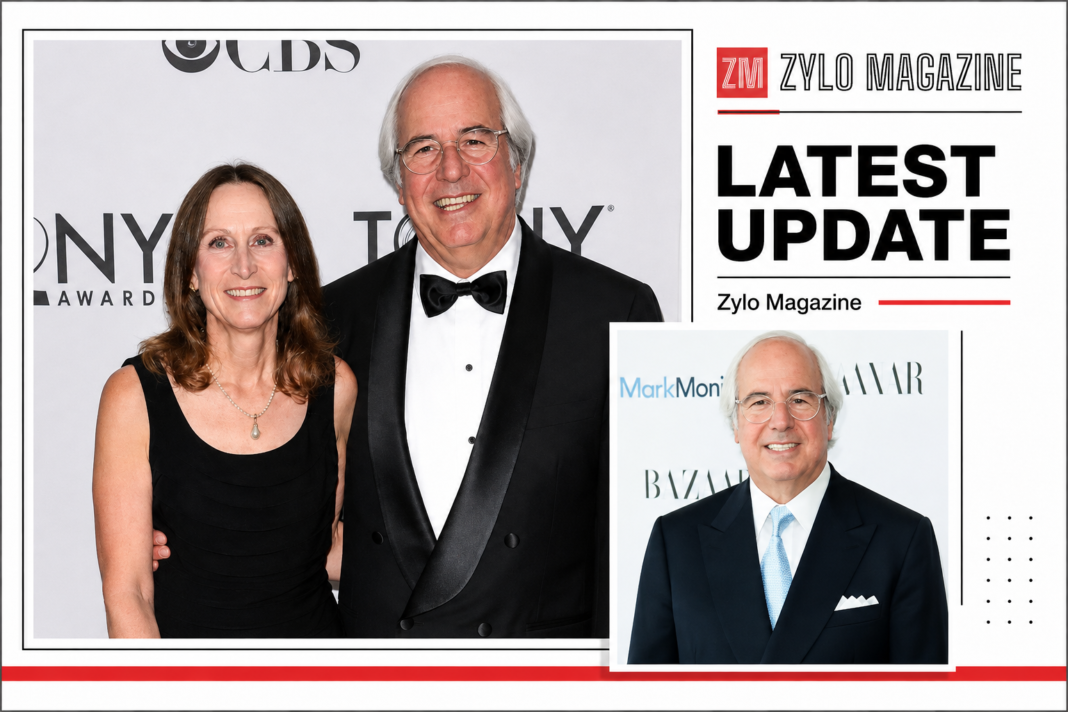
Kelly Anne Welbes Abagnale is best known as the longtime wife of Frank Abagnale Jr., the former offender and later fraud-prevention consultant whose story became internationally famous through Catch Me If You Can. Yet Kelly’s own life is strikingly different from the Hollywood narrative associated with her surname. She has spent decades largely outside the spotlight, raising a family while Frank built a public career discussing fraud, identity theft, and his controversial past.
Interest in Kelly Anne Welbes Abagnale has grown because readers want to know what happened after the dramatic period portrayed on screen—and who Frank actually married. The answer reveals a quieter and arguably more important chapter of his life. Frank has repeatedly credited his wife and family with profoundly influencing the direction he took as an adult. At the same time, reliable information about Kelly is limited, making it important to distinguish documented facts from online speculation.
Who Is Kelly Anne Welbes Abagnale?
Kelly Anne Welbes Abagnale is the wife of Frank William Abagnale Jr. Unlike her husband, Kelly has never built a significant public identity around interviews, books, speaking engagements, entertainment, or social media.
That distinction matters.
A large amount of online content about Kelly attempts to turn a deliberately private person into a conventional celebrity biography. As a result, precise claims about her career, wealth, personal habits, and early life are sometimes repeated without strong sourcing.
The more reliable picture is simpler.
Kelly became part of Frank Abagnale’s life in the 1970s, after the criminal period for which he became famous. Frank has publicly described her as his “one and only wife” and has repeatedly connected his marriage and children with his decision to build a stable life. In a 2015 interview with the Charleston City Paper, he said that his wife had the “biggest influence” on his life.
Frank’s official website currently describes him as married for more than 49 years and the father of three sons and grandfather of eight.
That makes Kelly important to understanding Frank Abagnale not because she participated in the exploits that made him famous, but because she belongs to the part of his life that came afterward.
Kelly Anne Welbes Abagnale: Quick Facts
Here is a cautious summary based on information that is reasonably well supported publicly:
| Detail | Information |
|---|---|
| Full name | Kelly Anne Welbes Abagnale |
| Known for | Wife of Frank Abagnale Jr. |
| Nationality | American |
| Husband | Frank William Abagnale Jr. |
| Marriage | 1976 |
| Children | Three sons |
| Public profile | Very private |
| Connection to Catch Me If You Can | Wife of the real-life subject, but not portrayed as his eventual wife in the film |
| Main public significance | Family life and influence on Frank’s post-criminal years |
Some secondary biographies report additional details, including a June 26, 1954 birth date and Galveston, Texas, as her birthplace. These details are widely repeated, but readers should understand that Kelly herself has not maintained a substantial public biographical record.
This is an important principle when researching Kelly: the absence of information should not be filled with speculation.
Why Is Kelly Anne Welbes Abagnale Famous?
Kelly is primarily known because of her marriage to Frank Abagnale Jr.
Frank became a household name because of stories about crimes and impersonations he said he committed as a young man. His story was popularized through his memoir and, most famously, Steven Spielberg’s 2002 film Catch Me If You Can, starring Leonardo DiCaprio as Frank and Tom Hanks as FBI agent Carl Hanratty.
The movie made Frank’s younger years part of popular culture.
Kelly represents a different period.
She entered Frank’s life after the youthful criminal adventures associated with his public image. That timing explains why someone so important to his later life is largely absent from the story most movie audiences know.
It also creates an interesting contrast.
The Frank Abagnale presented in popular culture is associated with movement, aliases, deception, risk, and instability. The life he later described as meaningful centers on almost the opposite qualities: marriage, children, professional responsibility, continuity, and family.
Kelly belongs to that second story.
How Did Kelly Anne Welbes Meet Frank Abagnale Jr.?
One of the most interesting questions about Kelly is how she met Frank.
The strongest readily available account comes from Frank himself.
In his 2015 interview with the Charleston City Paper, Frank said that he met his future wife while he was working undercover in Houston, Texas. According to his account, he was posing as a social worker at an institution where Kelly was doing graduate work. He developed feelings for her and eventually decided to reveal the truth about himself.
This detail is especially significant because Frank’s identity had previously been a tool for deception. According to his telling of the relationship, building a future with Kelly required him to do something fundamentally different: tell her who he really was.
Some online biographies offer different versions of the meeting, including claims involving grocery-store employment. Those accounts should be treated carefully. Frank’s own 2015 interview specifically places their meeting at an institution in Houston while he was posing as a social worker.
It is therefore better to describe the undercover-social-worker account as Frank Abagnale’s own version of how they met, rather than embellishing it with unsupported details.
That distinction is particularly important because elements of Frank’s broader autobiographical narrative have been challenged by researchers over the years.
Why Kelly Became So Important to Frank Abagnale
The most meaningful information about Kelly comes from what Frank himself has said about her influence.
His imprisonment alone, he told the Charleston City Paper, was not necessarily what convinced him never to commit another crime. Instead, he associated that permanent shift with his relationship with his future wife.
Frank said Kelly was the person who had the greatest influence on his life and explained that he reached a point where he did not want to do anything that could hurt or embarrass her or separate him from her.
That is more revealing than many of the superficial facts commonly attached to celebrity biographies.
It suggests that, at least in Frank’s own interpretation of his life, rehabilitation was not merely a legal process. It became personal.
Prison created consequences.
Employment created structure.
But family created something to lose.
That difference helps explain why Kelly appears repeatedly when Frank discusses what he considers genuinely important about his life.
Kelly and Frank Abagnale’s Marriage
Kelly and Frank married in 1976. Numerous biographical sources give November 6, 1976, as their wedding date.
The longevity of their relationship is remarkable given the unusual circumstances surrounding Frank’s past and later public life.
In 2015, Frank told the Charleston City Paper that he had been married to his “one and only wife” for 38 years. His official website now states that he has been married for more than 49 years.
As of August 2026, therefore, the couple is approaching 50 years of marriage.
Their 50th wedding anniversary would fall in November 2026 if the widely reported November 6, 1976 marriage date is correct.
The significance of that marriage extends beyond longevity. Frank has incorporated it into the way he publicly defines success.
His youthful notoriety made him famous, but he has frequently suggested that family is the achievement he values more highly.
Kelly Anne Welbes Abagnale and Her Three Sons
Kelly and Frank have three sons.
Frank has repeatedly discussed fatherhood as one of the achievements that matters most to him. In the 2015 interview, he emphasized that he and Kelly had three sons and noted the striking fact that one became an FBI agent.
His official website likewise identifies him as the father of three sons and, currently, the grandfather of eight grandchildren.
The FBI connection has obvious symbolic significance.
Frank became famous for being pursued by law enforcement, yet one of the children he and Kelly raised eventually entered the FBI himself.
In a transcript of a Google-produced talk, Frank described how his son became interested in joining the Bureau while growing up around FBI personnel. He recalled that Kelly hosted Christmas gatherings attended by agents in Tulsa, giving their son opportunities to speak with people in the profession.
The anecdote provides a rare glimpse into the family environment Kelly helped create.
Rather than defining their children by their father’s criminal past, the family appears to have constructed an everyday life in which law enforcement professionals could be family friends and role models.
Building a Family Life in Oklahoma
One of the less glamorous but more revealing chapters of the Abagnale family story took place in Oklahoma.
Frank testified before the U.S. Senate that he raised his three sons in Oklahoma partly to keep them away from the attention associated with his notoriety, even though his work required him to travel and spend time in Washington, D.C.
Another published account states that Frank and Kelly raised their sons in Tulsa and lived in the same house for approximately 25 years.
That long period of residential stability is worth considering alongside the story that made Frank famous.
His youth was characterized in his public narrative by constant movement.
His adulthood as a husband and father was characterized by putting down roots.
For Kelly, this period is probably far more representative of everyday life than anything viewers see in Catch Me If You Can.
It consisted not of disguises and airports, but of raising children, maintaining a household, forming community relationships, and building routines over decades.
Was Kelly Anne Welbes Abagnale in Catch Me If You Can?
No. Kelly Anne Welbes Abagnale is not portrayed as Frank’s eventual wife in Catch Me If You Can.
This causes considerable confusion because the movie gives Frank a prominent romantic relationship with Brenda Strong, played by Amy Adams.
Viewers sometimes assume Brenda was Kelly.
She was not.
Kelly entered Frank’s life later than the period on which the movie primarily focuses. Secondary biographical accounts describe Brenda Strong as a fictionalized or composite character rather than Frank Abagnale’s real-life wife.
Understanding that distinction prevents one of the most common misconceptions about Kelly Anne Welbes Abagnale.
The woman Frank married was Kelly.
The woman audiences remember from the movie was part of a dramatized screenplay.
Why Hollywood’s Version Creates Confusion
Movies based on real people rarely function as precise historical records.
They compress timelines, combine people, create dialogue, restructure events, and emphasize relationships that work dramatically on screen.
Catch Me If You Can should be understood in that context.
Frank himself told a Senate hearing that he had relatively little involvement with the movie and believed Spielberg was particularly interested in the redemption dimension of his story.
This makes Kelly’s absence especially interesting.
The film concentrates on the period before the stable family life Frank later identified as his greatest accomplishment.
In other words, Hollywood gives audiences the spectacular beginning.
Kelly is central to the quieter aftermath.
Anyone researching “Frank Abagnale wife” after watching the movie therefore needs to separate the cinematic narrative from the later real-life marriage.
Kelly Anne Welbes Abagnale’s Role in Frank’s Transformation
It is tempting to describe Kelly as the woman who “saved” or “reformed” Frank, but that language oversimplifies both rehabilitation and marriage.
People remain responsible for their own actions.
A more accurate interpretation is that Kelly provided a relationship Frank himself regarded as powerful motivation to maintain a different life.
His comments consistently support that narrower—and more meaningful—conclusion.
He did not merely praise Kelly as a supportive spouse. He connected his commitment to lawful behavior with his desire not to harm, embarrass, or lose his relationship with her.
This illustrates a broader insight about long-term behavioral change.
External consequences can stop behavior temporarily, but lasting change often becomes stronger when a person develops a new identity and meaningful commitments.
Marriage and fatherhood gave Frank roles incompatible with the identity of a fugitive.
He was no longer simply trying not to return to prison.
He was trying to remain a husband and father.
Kelly was central to that new identity.
A Private Person Married to a Public Figure
Perhaps the defining characteristic of Kelly Anne Welbes Abagnale’s public image is how little of one she has cultivated.
She is connected to a famous story without attempting to become famous herself.
That matters in the internet era, where spouses and relatives of public figures can quickly become subjects of speculative articles, social-media profiles, and invented “net worth” estimates.
Kelly’s limited media presence means responsible writers should resist filling gaps with assumptions.
For example, there is insufficient reliable public evidence to provide a precise personal net worth for Kelly.
There is also little justification for claiming detailed knowledge of her present daily routine, private beliefs, personal relationships, or financial arrangements.
Privacy is not missing biographical information waiting to be guessed.
It is a boundary.
And respecting that boundary makes an article about Kelly more accurate, not less complete.
What Is Kelly Anne Welbes Abagnale’s Net Worth?
There is no credible public basis for assigning Kelly Anne Welbes Abagnale a precise individual net worth.
Various celebrity-style websites may provide estimates, but such numbers frequently lack documentation showing how the figure was calculated.
Frank has earned money through books, speaking, consulting, fraud-prevention work, and related professional activities. But a spouse’s household assets or a husband’s professional success cannot automatically be converted into an independently verified personal net worth.
Therefore, claims such as “Kelly Anne Welbes Abagnale is worth $X million” should be treated as speculation unless accompanied by reliable financial documentation.
For readers, this offers a useful test when evaluating online biographies:
A precise number is not necessarily a precise fact.
If the underlying assets, liabilities, ownership interests, and methodology are unknown, an exact-looking net-worth figure can create an illusion of certainty.
The responsible answer is simply that Kelly’s personal finances are private.
What Did Kelly Anne Welbes Abagnale Do for a Living?
This is another area where certainty is limited.
Frank’s 2015 account says Kelly was doing graduate work at the institution where he met her while posing as a social worker. Secondary biographies frequently describe her studies as connected with child psychology, but detailed primary documentation of her academic and professional history is not readily available.
Consequently, it is safer not to construct an elaborate career biography around limited information.
What is much better documented is her long-term role within the Abagnale family.
She and Frank raised three sons, maintained a comparatively private family life, and remained married while Frank developed an international professional career.
That may sound less dramatic than an impressive job title, but it is the aspect of Kelly’s life that Frank himself has repeatedly emphasized.
Kelly’s Relationship With Frank’s Public Career
Frank eventually became known for fraud-prevention education and consulting.
His official website describes decades of work involving cybercrime, identity theft, scams, forgery, and secure documents, as well as a long association with the FBI.
This created an unusual family situation.
Kelly was married to someone whose livelihood required him to discuss a past the family simultaneously tried not to let define their private lives.
The decision to raise their children away from excessive attention appears particularly important in this context. Frank told senators that Oklahoma offered a way to protect his sons from the publicity surrounding his story.
That distinction—public work versus private family identity—may be one of Kelly’s most overlooked contributions.
Fame entered the household, but it did not have to become the household’s identity.
The Bigger Lesson in Kelly and Frank’s Marriage
Kelly Anne Welbes Abagnale’s story offers something more useful than celebrity trivia.
It raises a question about how people create a new life after serious mistakes.
Frank’s public narrative is often presented as a redemption story, but redemption is easily romanticized. Real change is less cinematic.
It requires years of ordinary consistency.
A person can make a promise in a dramatic moment. Maintaining that promise for decades is different.
Marriage, parenting, employment, friendships, and community responsibilities can create what psychologists might describe as reinforcing structures for a new identity. They give someone reasons to behave consistently with the person they are trying to become.
That does not mean a spouse is responsible for another adult’s rehabilitation.
It means relationships can increase the personal stakes of one’s choices.
Frank’s own comments suggest that this was how he viewed Kelly’s influence.
Separating Kelly Anne Welbes Abagnale From the Frank Abagnale Myth
There is another important reason to approach this biography cautiously.
Frank Abagnale’s famous story has faced substantial scrutiny, with researchers challenging aspects of the timeline and scale of exploits associated with Catch Me If You Can.
That means articles about Kelly should not automatically repeat every colorful claim about Frank as proven historical fact.
Fortunately, understanding Kelly does not require doing so.
The important facts about her concern a later chapter: she became Frank’s wife, they built a long marriage, they raised three sons, and Frank has publicly and repeatedly described his wife and family as central to his adult transformation.
These points can be discussed without turning disputed elements of his younger life into unquestioned biography.
That approach produces a more trustworthy article.
It also does Kelly a service by allowing her story to stand apart from the mythology surrounding her husband’s youth.
Why People Still Search for Kelly Anne Welbes Abagnale
Search interest in Kelly can be explained by several overlapping questions.
Some viewers finish Catch Me If You Can and wonder whom Frank married in real life. Others encounter interviews in which Frank credits his wife with changing his outlook and want to know more about her.
Still others are trying to determine whether Brenda Strong was a real person or whether Kelly appeared in the film.
All of these searches point to the same underlying curiosity:
What happened after the movie ended?
Kelly helps answer that question.
Whatever one thinks about the disputed details of Frank’s famous past, his later life involved decades of marriage, children, professional work, and family responsibilities.
Kelly is integral to that period.
What Makes Kelly Anne Welbes Abagnale’s Story Different?
Most biographies associated with famous names are driven by public achievements.
Kelly’s is driven by privacy.
There is no major public entertainment career to catalog, no extensive interview archive to analyze, and no verified public persona that needs constant updating.
Ironically, that absence is precisely what makes her story notable.
She demonstrates that proximity to fame does not require participation in celebrity culture.
Her husband became the subject of a bestselling story, Hollywood film, Broadway musical, interviews, speeches, and countless articles.
Kelly largely remained Kelly.
For readers accustomed to celebrities monetizing every dimension of their personal lives, that long-term privacy is unusual.
It also explains why a responsible biography of her must occasionally say, “This information is not publicly established.”
Accuracy is more valuable than manufactured detail.
Where Is Kelly Anne Welbes Abagnale Now?
Public information about Kelly’s present-day personal activities remains limited.
Frank’s official website states that he is married and emphasizes his family of three sons and eight grandchildren. Public biographical accounts have also associated Frank and Kelly with the Charleston, South Carolina, area in their later years.
Beyond information that the family has made public, there is little reason to speculate about Kelly’s daily life.
Her continued low profile is consistent with the way she has lived for decades.
That itself may be the most accurate answer to questions about what Kelly is “doing now”: she has not transformed herself into a public celebrity simply because people remain interested in her husband’s story.
Frequently Asked Questions About Kelly Anne Welbes Abagnale
1. Who is Kelly Anne Welbes Abagnale?
Kelly Anne Welbes Abagnale is the longtime wife of Frank Abagnale Jr., whose early life inspired Catch Me If You Can. She has maintained a substantially more private life than her husband and is the mother of their three sons. Frank has publicly credited his wife with having an enormous influence on the direction of his adult life.
2. Is Kelly Anne Welbes Abagnale the real Brenda from Catch Me If You Can?
No. Kelly is not Brenda Strong, the character played by Amy Adams in the 2002 film. Brenda is a fictionalized character associated with the movie’s dramatization of Frank’s younger life. Kelly became Frank’s real-life wife later and does not appear as his eventual wife in the film.
3. How did Frank Abagnale meet Kelly?
According to Frank’s 2015 account, he met Kelly in Houston while working undercover and posing as a social worker at an institution where she was doing graduate work. He said he eventually revealed his real identity and history to her.
4. How many children do Kelly and Frank Abagnale have?
Kelly and Frank have three sons. Frank has frequently expressed pride in his children and has highlighted the fact that one became an FBI agent. His official website currently also states that he has eight grandchildren.
5. Are Frank and Kelly Abagnale still married?
Frank’s official website currently describes him as having been married for more than 49 years. Their marriage is widely reported as beginning on November 6, 1976, meaning their 50th anniversary would occur in November 2026.
Conclusion
Kelly Anne Welbes Abagnale is interesting precisely because her life challenges the celebrity narrative surrounding her husband’s name. While Catch Me If You Can made Frank Abagnale Jr.’s youth famous, Kelly belongs to the much longer story that followed: marriage, parenthood, stability, professional responsibility, and family. Frank has repeatedly identified his wife as one of the strongest influences on the person he became, and their nearly five-decade marriage provides context that Hollywood’s version of his life largely leaves unexplored.
The most important point, however, is not to turn Kelly’s privacy into an excuse for speculation. Many details about her career, finances, and personal life simply are not well documented publicly. The strongest biography therefore respects what is known—and what is not. Ultimately, Kelly Anne Welbes Abagnale’s significance lies less in fame than in the enduring family life she helped build beyond one of America’s most famous stories of deception and reinvention.
Continue Exploring Our Latest Article: Diane Plese: The Verified Story of Robert Herjavec’s Former Wife, Career, Family, and Divorce