Key Takeaways
- A clean, organized boat makes inspection easier for buyers.
- Safety and reliability repairs usually matter more than expensive upgrades.
- Service records, ownership documents, and clear disclosures can prevent delays.
- Current photos should show the boat’s features as well as visible wear.
- Pricing should reflect comparable listings, condition, equipment, and local demand.
Getting a used boat ready to sell is about giving buyers a clear, accurate picture of what they are considering. Owners who plan to sell my boat can make the process smoother by cleaning thoroughly, testing key systems, organizing records, and addressing practical issues before the first showing.
Preparation does not mean trying to make an older vessel appear brand new. It means removing clutter, correcting avoidable problems, and being ready to answer reasonable questions about condition, maintenance, equipment, and ownership.
Why Preparation Matters Before Listing
Buyers often form an opinion quickly. Dirty storage lockers, standing water, mildew odors, loose gear, or inaccessible engine areas can create uncertainty, even when the boat has been well maintained. A clean boat also lets a buyer inspect the hull, seating, controls, compartments, trailer, and equipment without having to guess what may be hidden.
Start several weeks before your preferred listing date when possible. Use that time to assess the boat, clean it, complete sensible repairs, collect documents, take photos, write the listing, and plan for inspections and payment.
When comparing local inventory, reviewing boats for sell can help you see how similar vessels are presented, including the photos and details buyers may expect to find.
Clean the Boat From Bow to Stern
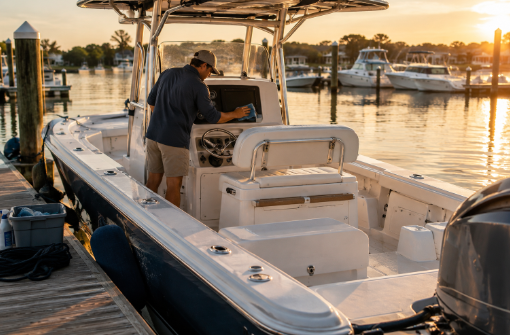
Remove personal belongings, old fishing tackle, loose tools, unused accessories, and trash before cleaning. Wash the hull and deck, clean seats and flooring, wipe down the windshield, helm, gauges, switches, and electronics, and empty storage lockers. Address leaves, standing water, stains, and mildew where possible. Cleanliness should reveal the boat’s actual condition, not conceal damage.
Cleaning Checklist
- Wash the hull, deck, rub rail, and windshield.
- Clean upholstery, cushions, carpet, nonskid surfaces, and storage spaces.
- Clear the bilge and engine compartment of loose debris.
- Wipe the helm, gauges, controls, and electronics carefully.
- Clean the trailer, including the winch, bunks, coupler, lights, and safety chains.
Check Safety and Mechanical Systems
Test the equipment you plan to describe in the listing. This commonly includes starting and charging systems, steering, throttle and shift controls, trim, bilge pump, navigation lights, horn, gauges, batteries, and installed electronics. If a system has not been tested, avoid stating that it works. A straightforward explanation is more useful than a broad claim that the boat “needs nothing.”
Ownership requirements differ by jurisdiction and may apply separately to the boat, outboard motor, and trailer. For example, Texas provides boat ownership transfer guidance for transactions involving boats and outboard motors. Check the appropriate agency in your own state before accepting payment or signing documents.
Decide Which Repairs Are Worth Doing
Prioritize items that affect safety, routine use, or a buyer’s ability to transport the boat. Active leaks, weak batteries, failed bilge pumps, damaged trailer tires, nonworking lights, broken couplers, and loose hardware deserve attention. Small fixes such as replacing a broken latch, strap, or worn safety item can also improve a showing.
Costly upgrades may not return their full expense at sale. New electronics, extensive upholstery work, or custom additions may appeal to some buyers but not others. If you leave work unfinished, describe it honestly and reflect it in the asking price.
Gather Service and Ownership Records
Create a simple folder, digital or printed, that a serious buyer can review. Include maintenance invoices, repair receipts, engine-hour information if available, winterization or storage records, manuals, warranty information, survey reports, registration, title paperwork, and lien-release or payoff details. Organized records help support the boat’s history without requiring you to rely on memory during a showing.
Useful Records to Collect
- Engine service and oil-change receipts.
- Receipts for repairs, replacement parts, and upgrades.
- Current registration, title, and trailer paperwork.
- Loan payoff instructions or lien-release documents, if applicable.
- Owner’s manuals for the engine, boat, and electronics.
Take Clear, Current Photos
Take photos after cleaning, preferably in daylight with a simple background. Include wide views from both sides, the bow and stern, seating, cockpit, helm, storage areas, engine, bilge, trailer, and major accessories. Add close photos of normal wear, repairs, or known flaws. Current, complete images reduce confusion and help buyers decide whether the boat is worth seeing in person.
Write an Honest, Useful Listing
A practical listing states the year, make, model, length, engine brand and horsepower, approximate hours when known, trailer details, included equipment, recent service, storage history, location, and known issues. Specific language is more credible than vague phrases such as “perfect condition.” Explain what is included and identify what is not included, especially removable electronics, personal gear, or accessories.
Set a Fair Asking Price
Compare boats with similar age, size, model, engine, hours, equipment, trailer condition, and location. Active listings can show the range of asking prices, but they do not necessarily show final sale prices. Adjust for documented maintenance, working systems, cosmetic condition, and repairs a buyer will need to handle.
- Does the asking price reflect the boat’s actual condition?
- Is the trailer included, titled if required, and road-ready?
- Are major systems demonstrated as working?
- Would disclosed repairs reasonably affect the price?
Prepare for Inspections, Sea Trials, and Closing
Serious buyers may request an inspection, a survey, a mechanical review, or a sea trial. Agree beforehand on timing, fuel, launch fees, mechanic charges, and who is responsible if damage occurs. Keep possession, keys, and original ownership documents until payment has been verified and the agreed paperwork is complete.
A detailed bill of sale should identify the parties, the boat, the included equipment, the price, the date, and the signatures. The practical paperwork tips for sellers also emphasize handling titles, loans, and post-sale responsibilities carefully. Resolve liens before transfer and retain copies of every signed document.
Final Pre-Sale Checklist
- Clean the boat, trailer, compartments, and engine area.
- Remove personal belongings and excess gear.
- Test major mechanical and safety systems.
- Complete practical safety and reliability repairs.
- Organize service records, titles, registration, and lien documents.
- Take current photos that show features and flaws.
- Price the boat against relevant comparable listings.
- Plan a safe payment and ownership handoff.
Conclusion
Preparing a used boat for sale means making it easier for buyers to evaluate its condition, history, and value. Focus on thorough cleaning, essential safety and mechanical checks, organized ownership records, and accurate photos that show both features and wear. Set a realistic asking price based on comparable vessels, and plan inspections, payment, and ownership transfer carefully. These practical steps can reduce uncertainty, support buyer confidence, and help you move toward a smoother, more straightforward sale.