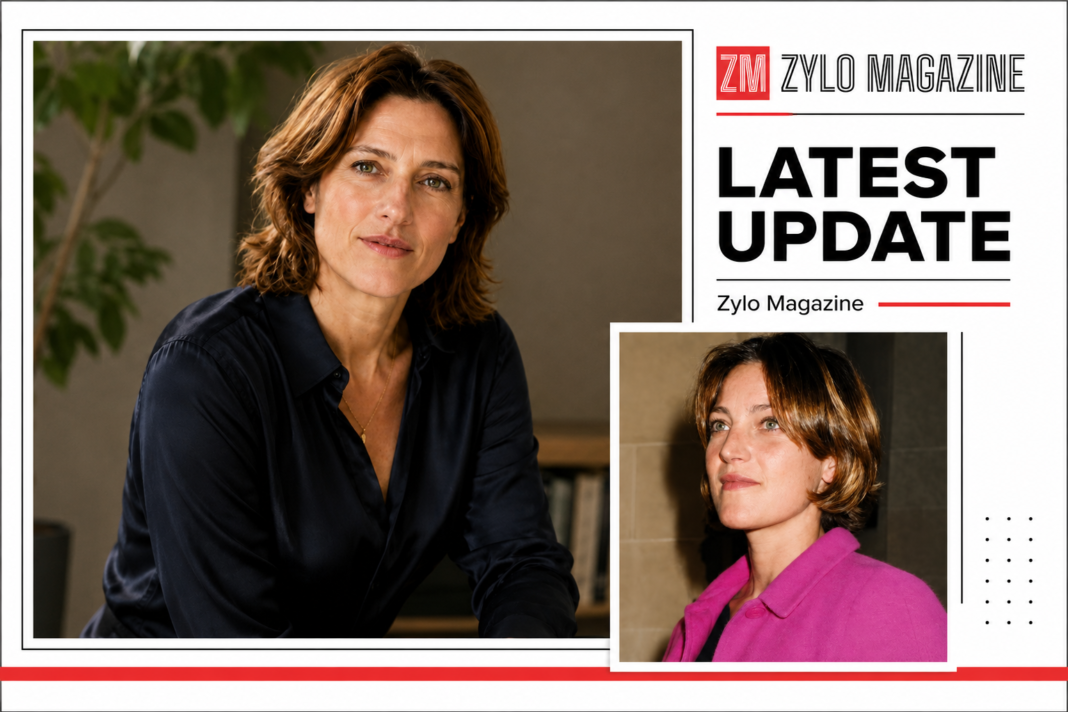
Dorothée Lepère is a French woman best known publicly as the former wife of François-Henri Pinault, the businessman who spent two decades leading the luxury group Kering and now serves as Chairman of its Board of Directors. Yet reducing Dorothée Lepère to the label of a billionaire’s ex-wife gives an incomplete—and potentially misleading—picture. She has commonly been described as an interior designer, is the mother of two of Pinault’s children, François and Mathilde, and has maintained an unusually private life despite her connection to one of France’s most prominent business families. Public curiosity about her has grown precisely because reliable information remains limited. This detailed guide examines what is actually known about Dorothée Lepère, her marriage and family, her reported professional life, and the reasons so many online biographies get important details wrong. Where evidence is limited, this article makes that distinction clear rather than turning speculation into biography.
Who Is Dorothée Lepère?
Dorothée Lepère is a French woman primarily known to the wider public through her former marriage to François-Henri Pinault. She is also frequently identified in published biographies and public databases as an interior designer.
Her public profile is unusual. Unlike many people connected to billionaires, luxury conglomerates, fashion houses, or celebrity families, Lepère has not developed a substantial public-facing personal brand. There is no widely documented media career, extensive interview archive, celebrity publicity operation, or easily accessible professional portfolio associated with her.
That relative absence from the public record is important when researching her.
Numerous websites provide surprisingly precise descriptions of Dorothée Lepère’s education, design philosophy, wealth, business activities, personal interests, and lifestyle. Much of that information, however, is difficult to trace to primary documentation or established reporting.
The facts that can be stated with substantially greater confidence are simpler.
Lepère was married to François-Henri Pinault from 1996 until 2004. Public records and published biographies identify the former couple as parents of two children, François and Mathilde Pinault. She has also repeatedly been described as working in interior design.
Beyond those basic facts, responsible biography requires more caution.
That distinction makes Dorothée Lepère an interesting example of a modern problem: the internet can contain thousands of words about a person without necessarily containing thousands of words of independently verified information about that person.
Dorothée Lepère at a Glance
Full name: Dorothée Lepère
Nationality: French
Known for: Former wife of François-Henri Pinault
Reported profession: Interior designer
Former spouse: François-Henri Pinault
Marriage: 1996–2004
Children: François Pinault and Mathilde Pinault
Public profile: Highly private
Some online biographies publish an exact birth date, education history, estimated net worth, specific design clients, and other personal information. Those details should not automatically be treated as established facts because reliable primary or high-quality secondary documentation is often missing.
That is particularly important with net-worth estimates. A person’s former marriage to a wealthy executive does not provide a legitimate basis for calculating that person’s personal fortune.
Why Is Dorothée Lepère Famous?
Dorothée Lepère became publicly recognizable because of her marriage to François-Henri Pinault.
Today, Pinault is internationally associated with the luxury industry. But understanding the timeline makes Lepère’s story more meaningful.
François-Henri Pinault joined the Pinault group in 1987. He subsequently held senior positions across its businesses and became Deputy CEO of PPR in 2000. In 2003, he became Chairman of Artémis, the Pinault family’s holding company and Kering’s controlling shareholder. He did not become Chairman and CEO of the company that would become Kering until 2005—after his marriage to Lepère had ended.
That chronology corrects a misleading impression sometimes created by celebrity biographies.
Dorothée Lepère did not simply marry the already-established head of the Kering luxury empire as it exists today. Their marriage began in 1996, during an earlier stage of François-Henri Pinault’s corporate career.
Kering itself looked significantly different at the time.
The group was still known as PPR, and François-Henri Pinault would eventually oversee its transformation toward luxury. Kering’s official corporate history states that he became Chairman and CEO of PPR in 2005 and progressively transformed the company into a global luxury group. The PPR name was not replaced by Kering until 2013.
This context matters because descriptions such as “the ex-wife of the Kering billionaire” apply today’s status retrospectively to a relationship that began in a different corporate era.
Dorothée Lepère and François-Henri Pinault’s Marriage
Dorothée Lepère and François-Henri Pinault married in 1996.
Their marriage lasted approximately eight years, ending in divorce in 2004. Public biographical records consistently associate Lepère with this period of Pinault’s life.
What happened inside the marriage is considerably less well documented.
There are online articles offering stories about how the couple supposedly met, what their relationship was like, why their marriage failed, or what happened during their divorce. Such claims should be approached carefully unless supported by interviews, court documentation, contemporary reporting, or statements from the people involved.
There is no need to manufacture a dramatic explanation where reliable public evidence does not provide one.
The responsible conclusion is simply that the marriage ended in 2004.
This approach may seem less exciting than celebrity gossip, but it produces a much more useful biography. A repeated claim is not necessarily a verified claim, particularly when dozens of websites may be copying from the same unidentified original source.
Their Marriage Happened Before Kering Became Today’s Kering
One of the most useful ways to understand Dorothée Lepère’s place in the Pinault family story is to examine the business timeline alongside the marriage.
Lepère and Pinault married in 1996.
The following year, François-Henri Pinault became Chairman and CEO of Fnac, a position he held until 2000. He was appointed Deputy CEO of PPR in 2000 and Chairman of Artémis in 2003.
The couple divorced in 2004.
Then, in 2005, Pinault became Chairman and CEO of PPR. Under his leadership, the group increasingly concentrated on luxury and eventually became Kering.
In other words, much of the corporate transformation for which François-Henri Pinault later became internationally famous occurred after his marriage to Dorothée Lepère.
This is a small chronological detail with a large effect on how their relationship should be understood.
It places Lepère within an earlier chapter of the Pinault family story rather than treating her merely as a secondary figure in today’s celebrity-luxury ecosystem.
Dorothée Lepère’s Children
Dorothée Lepère and François-Henri Pinault have two children together: a son, François, and a daughter, Mathilde.
Published biographical material commonly gives 1998 as François’s birth year and 2001 as Mathilde’s. IMDb’s biographical record for François-Henri Pinault similarly identifies François and Mathilde as the two children from his marriage to Lepère.
Of the two siblings, Mathilde has developed the more visible public profile.
She has been associated with equestrian sport and fashion, while her brother has generally attracted less mainstream celebrity coverage.
Their existence is also significant in understanding Dorothée Lepère’s continuing relationship to the Pinault family story. A divorce may have ended her marriage to François-Henri Pinault, but she remained the mother of two members of the next generation of the family.
This distinction is often lost in celebrity coverage, which tends to organize a person’s identity around marriage and divorce rather than long-term family relationships.
François Pinault
François is the elder child of Dorothée Lepère and François-Henri Pinault.
Compared with other members of the extended family, he has historically maintained a relatively limited mainstream celebrity profile.
This is another area where online biographies sometimes move beyond available evidence. Claims about his career, personal relationships, finances, or future role within family businesses should be evaluated individually rather than inferred from his surname.
Being born into an influential family does not automatically establish a person’s occupation, wealth, ambitions, or eventual corporate role.
Mathilde Pinault
Mathilde Pinault has received substantially more public attention.
She is widely associated with equestrian sport and has appeared in fashion-related coverage, creating a public identity that overlaps naturally with the world surrounding the Pinault family.
For Dorothée Lepère, her children’s different public profiles also illustrate an important feature of wealthy families: membership in a prominent dynasty does not require every family member to adopt the same relationship with publicity.
Some become highly visible. Others remain private.
Lepère herself clearly falls toward the private end of that spectrum.
Dorothée Lepère’s Career in Interior Design
One of the most frequently repeated facts about Dorothée Lepère is that she works—or has worked—as an interior designer.
Wikidata, for example, lists interior designer as her occupation, while numerous published biographies use similar descriptions.
The difficulty begins when articles try to go further.
A surprisingly large number of online profiles describe an elaborate professional career, sometimes referring to luxury projects, prestigious private clients, a distinctive design philosophy, a successful independent studio, or particular aesthetic preferences.
Reliable documentation for those details is much harder to locate.
There does not appear to be a widely accessible, authoritative portfolio documenting major Dorothée Lepère interior-design projects. Nor is there extensive coverage of her work in major design publications available in the public record.
That does not mean she did not work professionally in design.
It means the evidence supports a narrower claim than many websites make: Dorothée Lepère has been identified as an interior designer, while the details of her design career remain largely private.
That is an important distinction.
What Does an Interior Designer Actually Do?
Understanding the profession helps explain why a designer can have a genuine career without becoming publicly famous.
Interior design is considerably broader than selecting attractive furniture.
Depending on the project and professional’s role, interior design can involve spatial planning, circulation, lighting, furniture selection, materials, color, storage, functionality, architectural details, coordination with contractors, and translating a client’s needs into a coherent environment.
Private residential design can also be especially discreet.
A designer whose work is concentrated on private residences does not necessarily need a public portfolio comparable with a fashion designer, architect working on major civic buildings, or celebrity decorator building a media brand.
Clients may specifically value confidentiality.
However, this reasonable possibility should not itself be converted into an unsupported claim about Lepère. Without direct evidence, it would be wrong to say that privacy was definitely her business strategy or that she deliberately served anonymous high-net-worth clients.
The useful conclusion is narrower: the absence of a large online portfolio does not disprove a private design career, but neither does it give writers permission to invent one.
Why Reliable Information About Dorothée Lepère Is Limited
The scarcity of dependable information about Dorothée Lepère is arguably the most important fact for anyone researching her.
She is famous largely through association rather than through a media-centered career of her own.
That creates an information imbalance.
There is extensive corporate documentation concerning François-Henri Pinault because he has spent decades leading a major publicly traded company. Kering’s official materials document his education, appointments, responsibilities, and corporate history in detail.
Equivalent documentation does not exist publicly for every aspect of Lepère’s life.
The internet tends to dislike information gaps, however.
When readers search for questions such as “Dorothée Lepère net worth,” “Dorothée Lepère age,” “Dorothée Lepère business,” or “Dorothée Lepère education,” publishers have an incentive to produce answers—even when primary evidence is weak.
This can create what might be called an information echo.
One website publishes an unsourced detail. Another repeats it. A third rewrites the second. Eventually, the claim appears across enough pages that it begins to look established.
Repetition is mistaken for corroboration.
For private individuals connected to famous families, this is one of the biggest weaknesses of online biography.
Dorothée Lepère’s Net Worth: Why Online Estimates Should Be Treated Carefully
Searches for Dorothée Lepère frequently include questions about her net worth.
The problem is that a credible personal net-worth calculation requires evidence.
Ideally, an estimate would be based on documented business ownership, publicly disclosed investments, property records, financial filings, court documents, or other meaningful financial information.
The wealth of a former spouse is not enough.
François-Henri Pinault’s relationship with the Pinault family’s holdings and Kering is extensively documented. Kering’s 2025 Universal Registration Document, for example, states that Financière Pinault directly and indirectly held 42.34% of Kering’s share capital as of December 31, 2025.
That tells us something about the Pinault family’s corporate holdings.
It does not tell us Dorothée Lepère’s personal net worth.
Likewise, without authoritative disclosure of the financial terms of her divorce, it is inappropriate to reverse-engineer her supposed fortune from her former husband’s wealth.
Therefore, precise online figures claiming that Dorothée Lepère is worth a particular number of millions of dollars should be treated skeptically unless accompanied by credible financial evidence.
“No reliable public estimate is available” is more informative than a precise but unsupported number.
Dorothée Lepère and the Pinault Family
To understand why Dorothée Lepère remains a subject of online interest decades after her divorce, it helps to understand the prominence of the family with which she is associated.
François-Henri Pinault joined the Pinault group in 1987 and progressively assumed greater responsibilities. He became Chairman of Artémis in 2003 and Chairman and CEO of what became Kering in 2005.
Over the following two decades, Kering became closely identified with the international luxury industry.
Pinault’s position changed again in September 2025 when Kering separated the roles of Chairman and CEO. Luca de Meo became Chief Executive Officer, while François-Henri Pinault continued as Chairman of the Board.
As of 2026, Kering’s official governance information continues to list François-Henri Pinault as Chairman of the Board of Directors.
This continuing prominence inevitably generates interest in his family history, including his first marriage.
Dorothée Lepère therefore remains searchable even though she herself has not maintained a comparable level of public exposure.
Life After the 2004 Divorce
Dorothée Lepère’s life after her divorce is another subject surrounded by more online claims than dependable public documentation.
What stands out most is her relatively low profile.
There has been no equivalent transformation into a global celebrity, public executive, influencer, or regular media personality.
That absence is noteworthy given the level of attention surrounding François-Henri Pinault in later years.
Following his divorce from Lepère, Pinault’s personal life became considerably more familiar to international audiences. He eventually married actress Salma Hayek in 2009, and their relationship has attracted significant entertainment and fashion coverage.
Lepère, by comparison, remained much less visible.
It is tempting to describe that difference as a deliberate philosophical choice—“she chose privacy over fame” is a popular headline—but even that should be expressed cautiously unless Lepère herself has publicly explained her attitude toward celebrity.
Her behavior demonstrates a low public profile. The precise motivations behind that privacy are hers to define.
Dorothée Lepère and Salma Hayek
Dorothée Lepère and Salma Hayek are sometimes placed together in articles because both are connected to François-Henri Pinault.
However, their relationships belong to different periods of his life.
Lepère was married to Pinault from 1996 until 2004. Pinault later married Hayek in 2009.
Beyond that basic family connection, comparisons between the two women are rarely useful.
Hayek is an internationally famous actress whose career naturally involves extensive public visibility. Lepère has maintained a far less public life.
Treating one woman’s visibility as evidence about the other’s personality creates unnecessary speculation.
Their public profiles simply reflect very different careers and circumstances.
Why Dorothée Lepère Continues to Attract Search Interest
Several factors explain why people continue searching for Dorothée Lepère.
The first is the global prominence of François-Henri Pinault.
The second is interest in the wider Pinault family and the luxury industry.
The third is curiosity surrounding Mathilde Pinault and the younger generation of the family.
Finally, privacy itself creates curiosity.
People who regularly appear in interviews, documentaries, social media posts, and press coverage are often easier to understand. When someone connected to a famous family remains largely outside that system, unanswered questions accumulate.
Yet those unanswered questions should not automatically be filled with assumptions.
In fact, Dorothée Lepère demonstrates an important principle of responsible biography: sometimes the most accurate answer is that a detail has not been reliably established in public.
Common Myths and Unverified Claims About Dorothée Lepère
Anyone researching Dorothée Lepère will encounter numerous claims that deserve caution.
One is a precise net-worth figure.
Another is a highly detailed educational history.
Others concern supposedly famous design clients, specific luxury properties she allegedly decorated, detailed descriptions of her design philosophy, divorce settlements, custody arrangements, or the reasons her marriage ended.
Some websites also provide exact personal measurements, hobbies, religious beliefs, or lifestyle details without explaining where that information originated.
The problem is not that every such claim must necessarily be false.
The problem is that readers frequently have no reliable way to establish that it is true.
Good biographical research separates three categories:
Documented facts are supported by authoritative records, direct statements, or credible reporting.
Reported information appears in secondary sources but may lack primary documentation.
Speculation is an inference or rumor presented without adequate evidence.
Many weak celebrity biographies collapse all three categories into one.
A higher-quality profile tells readers where certainty ends.
What Dorothée Lepère’s Story Tells Us About Digital Privacy
There is a broader lesson in Lepère’s limited public footprint.
Modern audiences have become accustomed to the idea that every person connected to fame should have an extensive searchable biography.
That expectation is historically unusual.
For most people—even those moving within wealthy or influential circles—large portions of personal life were never intended for public documentation.
The internet has changed the expectation but not necessarily the underlying reality.
A person can have a career, raise children, maintain relationships, operate businesses, pursue interests, and live a substantial life without providing a searchable record of each activity.
Dorothée Lepère’s online biography is therefore defined partly by what is not publicly known.
That should not be interpreted as a deficiency.
It is simply a reminder that public interest and public entitlement are different things.
A More Accurate Way to Understand Dorothée Lepère
The most accurate description of Dorothée Lepère is relatively straightforward.
She is a French woman widely described as an interior designer who was married to François-Henri Pinault between 1996 and 2004. They have two children together, François and Mathilde.
Her marriage occurred during an earlier stage of Pinault’s corporate career, before he became Chairman and CEO of PPR in 2005 and before PPR adopted the Kering name in 2013.
After their divorce, Lepère maintained a comparatively private public profile.
Beyond those points, many of the details circulated online require qualification.
This more restrained account may contain fewer sensational claims, but it provides a much stronger foundation for understanding who Dorothée Lepère actually is.
Frequently Asked Questions About Dorothée Lepère
1. Who is Dorothée Lepère?
Dorothée Lepère is a French woman commonly described as an interior designer and best known publicly as the former wife of François-Henri Pinault. The couple were married from 1996 until 2004 and have two children together, François and Mathilde Pinault. Lepère has maintained a relatively private life compared with other people associated with the Pinault family.
2. What does Dorothée Lepère do for a living?
Dorothée Lepère is widely identified as an interior designer. However, detailed authoritative documentation of her professional portfolio, major projects, clients, awards, or design studio is limited in the public domain. Claims about specific projects or famous clients should therefore be checked carefully rather than assumed to be accurate.
3. How many children do Dorothée Lepère and François-Henri Pinault have?
Dorothée Lepère and François-Henri Pinault have two children together: François and Mathilde Pinault. Published biographical sources commonly identify François as their elder child and Mathilde as their younger child.
4. When were Dorothée Lepère and François-Henri Pinault married?
Dorothée Lepère and François-Henri Pinault married in 1996 and divorced in 2004, meaning their marriage lasted approximately eight years. Their marriage predates Pinault’s appointment as Chairman and CEO of PPR in 2005.
5. What is Dorothée Lepère’s net worth?
There is no sufficiently authoritative public financial documentation to provide a dependable figure for Dorothée Lepère’s personal net worth. Estimates published by celebrity-biography websites should be treated cautiously unless they identify credible financial records. François-Henri Pinault’s wealth or his family’s ownership interests cannot simply be used as a proxy for Lepère’s personal finances.
Conclusion
Dorothée Lepère remains an intriguing figure precisely because her public story is relatively limited. She is widely described as a French interior designer, was married to François-Henri Pinault from 1996 to 2004, and is the mother of François and Mathilde Pinault. Importantly, their marriage belonged to an earlier period of Pinault’s career, before he took control of PPR in 2005 and oversaw its evolution into today’s Kering. What distinguishes Lepère most from many people connected to internationally famous families is her limited public footprint. Rather than filling that gap with invented net-worth figures, undocumented design projects, or theories about her divorce, the better approach is to respect the boundary between established fact and speculation. Ultimately, Dorothée Lepère’s story demonstrates that proximity to wealth and fame does not automatically make every part of a person’s life public—and an accurate biography should recognize that distinction.
Continue Exploring Our Latest Article: Eliza Shaffy: The Story of Randy Jackson’s Former Wife, Her Family, and Life Away From Fame