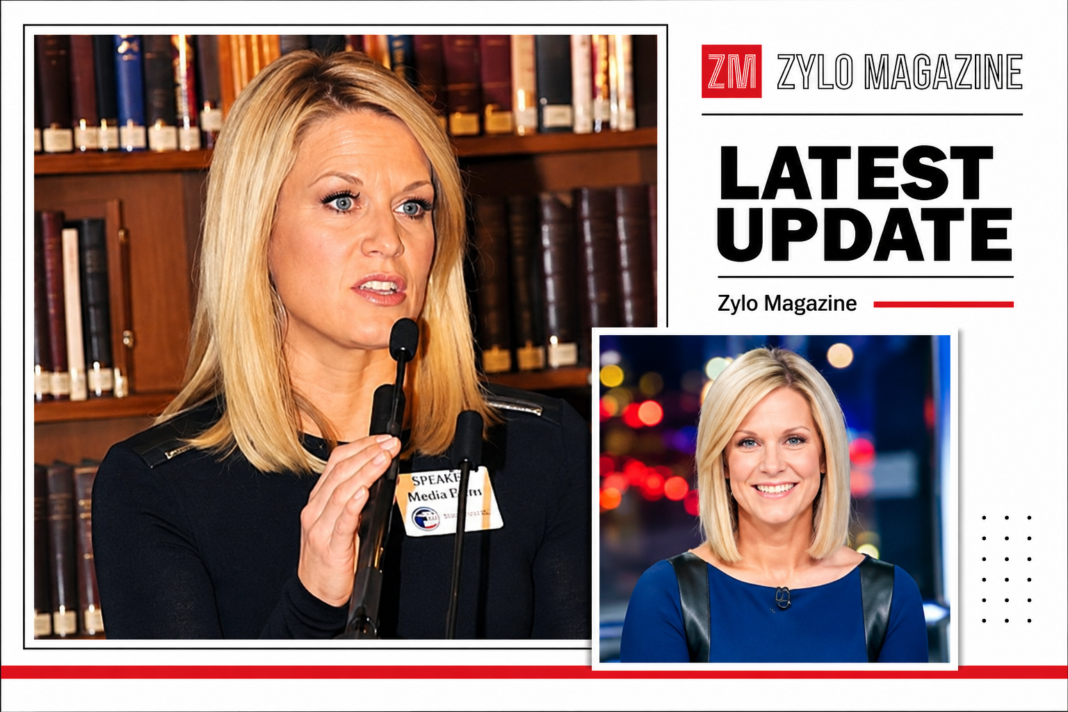
Nichole Beattie is a talented American television writer and producer best known for her contributions to popular television series such as The Walking Dead, Sons of Anarchy, For All Mankind, and Law & Order: Organized Crime. Over the years, she has established herself as a respected creative professional in the entertainment industry, developing stories that explore complex characters, emotional conflicts, and compelling human experiences. Although many people recognize her as the former wife of American actor Michael Rapaport, Nichole Beattie’s professional accomplishments extend far beyond her personal relationships. Her work across crime dramas, science fiction, and character-driven television demonstrates her versatility and understanding of modern storytelling. This comprehensive article explores Nichole Beattie’s early life, family background, professional journey, notable television projects, personal life, and career achievements while highlighting what makes her an interesting figure in Hollywood.
Who Is Nichole Beattie?
Nichole Beattie is an American screenwriter and television producer who has contributed to several successful television productions. She is particularly recognized for her involvement in character-driven dramas and serialized television programs.
Unlike actors who appear directly in front of audiences, screenwriters and producers generally work behind the scenes. Their contributions involve developing stories, writing dialogue, shaping character relationships, and helping television productions maintain creative consistency.
Beattie’s career illustrates the importance of these behind-the-scenes professionals.
She has worked on television projects covering a variety of genres, including crime, science fiction, supernatural drama, historical fiction, and comedy-drama.
Her notable professional credits include The Walking Dead, Sons of Anarchy, For All Mankind, Rubicon, Prime Suspect, Beyond, Law & Order: Organized Crime, and Mo.
Her ability to contribute to different storytelling formats demonstrates professional versatility, an important quality in the constantly changing entertainment industry.
While her former marriage to Michael Rapaport has generated public curiosity, her television writing and producing work remains the most meaningful aspect of her professional identity.
Nichole Beattie Biography: Quick Facts
| Personal Information | Details |
|---|---|
| Full Name | Nichole Marie Beattie |
| Date of Birth | November 19, 1976 |
| Age | 50 years old as of November 2026 |
| Birthplace | Minneapolis, Minnesota, United States |
| Nationality | American |
| Profession | Television Writer and Producer |
| Mother | Melody Beattie |
| Former Husband | Michael Rapaport |
| Marriage Year | 2000 |
| Divorce Year | 2007 |
| Children | Two sons |
| Famous For | The Walking Dead, Sons of Anarchy, For All Mankind |
| Net Worth | Not publicly verified |
These details provide a general overview of Nichole Beattie’s life. However, understanding her professional achievements requires looking beyond basic biographical information.
Her career is particularly interesting because she has worked on several productions that approach storytelling in very different ways.
Nichole Beattie’s Early Life and Childhood
Nichole Beattie was born on November 19, 1976, in Minneapolis, Minnesota, United States.
She grew up in a family with a connection to the literary world through her mother, Melody Beattie, a well-known American author.
Melody Beattie gained widespread recognition for her writing about emotional recovery, relationships, personal boundaries, and codependency.
Her influential book Codependent No More became an important work in the self-help genre.
Growing up with an established author in the family may have exposed Nichole to writing and creative expression from an early age.
However, there is limited verified information about exactly how her childhood experiences influenced her professional ambitions.
It is important not to confuse reasonable possibilities with established biographical facts.
Nichole has maintained a relatively private public profile, and detailed information about her childhood activities, early interests, and educational experiences is not widely documented.
Nevertheless, her later professional achievements demonstrate that she developed the skills necessary to succeed in a highly competitive creative industry.
The Influence of a Literary Family
Having a parent involved in professional writing can provide exposure to storytelling, publishing, and the discipline required to complete creative projects.
Melody Beattie’s work frequently examines complicated human emotions and interpersonal relationships.
Interestingly, several television productions associated with Nichole Beattie explore similar themes through fictional characters.
For example, The Walking Dead examines grief, survival, loyalty, and moral responsibility.
Sons of Anarchy explores family relationships, betrayal, and the consequences of personal decisions.
Although these thematic similarities are interesting, they do not establish that Nichole directly adopted her mother’s creative philosophy.
Instead, they illustrate how emotional complexity can appear across very different forms of writing.
Nichole Beattie’s Education and Early Career Development
Detailed public records about Nichole Beattie’s formal education are limited.
Her university attendance, academic qualifications, and early screenwriting training have not been consistently documented in reliable biographical sources.
Rather than assuming that she attended a particular institution, it is more useful to examine her verified television credits.
Her professional work demonstrates familiarity with several essential aspects of screenwriting, including narrative structure, character development, dialogue, suspense, and episodic storytelling.
These abilities are particularly important in television because writers must create episodes that work independently while contributing to larger seasonal storylines.
Unlike a standalone film, a television series may develop its characters across dozens of episodes.
Writers must therefore understand continuity, established relationships, and long-term narrative consequences.
Beattie’s career reflects experience working within these complex storytelling environments.
How Nichole Beattie Started Her Hollywood Career
Nichole Beattie’s documented television writing career includes work on the HBO drama John from Cincinnati in 2007.
The series combined family relationships, surfing culture, and supernatural mystery.
Beattie received a writing credit for the episode “His Visit: Day Six.”
Although John from Cincinnati lasted only one season, the project provided an early professional credit in scripted television.
Working on a television production requires collaboration among writers, producers, directors, actors, and production departments.
Even when an individual receives a writing credit, the finished episode generally reflects the contributions of multiple creative professionals.
This collaborative environment is an important part of understanding Beattie’s later success.
Her subsequent credits show a progression into larger and more widely recognized productions.
Early Lessons From Professional Television Writing
Television writing involves more than creating interesting dialogue.
A professional writer must understand how each scene contributes to the larger story.
Characters need clear motivations, and their decisions must produce believable consequences.
Writers must also consider practical production requirements.
For example, a scene involving numerous locations, complicated action sequences, or elaborate visual effects may require significant resources.
Professional screenwriters therefore benefit from understanding how storytelling choices affect production.
Beattie’s work across multiple television formats suggests experience adapting to these creative and practical demands.
Nichole Beattie and Sons of Anarchy
One of Nichole Beattie’s early recognizable television credits came from Sons of Anarchy, the popular FX crime drama created by Kurt Sutter.
The series premiered in 2008 and followed the members of an outlaw motorcycle club operating in the fictional California town of Charming.
At its center was Jax Teller, a character struggling with family responsibilities, criminal activity, loyalty, and his vision for the club’s future.
Beattie received a writing credit for the first-season episode “AK-51,” which aired in October 2008.
This project represented an important addition to her growing television portfolio.
Why Sons of Anarchy Was a Significant Project
Sons of Anarchy became known for its intense character relationships and morally complicated storylines.
The series explored the consequences of violence while examining family bonds, personal ambition, and loyalty.
Writing within such a fictional world requires an understanding of characters whose actions may be troubling but whose motivations remain understandable.
The audience must recognize why characters make certain decisions, even when those decisions lead to destructive outcomes.
This type of storytelling is especially challenging because characters cannot be reduced to simple categories of heroes and villains.
Beattie’s association with the series provided experience in a dramatic environment where emotional conflicts were just as important as physical confrontations.
These themes would also appear in later productions associated with her career.
Nichole Beattie and The Walking Dead
One of the most important projects in Nichole Beattie’s professional career is The Walking Dead.
The AMC television series became a major international success and helped popularize post-apocalyptic storytelling for mainstream audiences.
Based on the comic-book series created by Robert Kirkman, Tony Moore, and Charlie Adlard, The Walking Dead follows groups of survivors navigating a world devastated by a zombie outbreak.
Although the series features frightening creatures and violent encounters, its central dramatic appeal comes from human relationships.
The characters must make difficult decisions involving trust, survival, leadership, sacrifice, and morality.
Beattie worked on the series as a writer and supervising producer.
Her involvement placed her within one of the most recognizable television franchises of its era.
Nichole Beattie’s Writing Credits on The Walking Dead
Beattie’s credited writing work includes several episodes from the show’s fourth season.
Notable examples include:
- “Live Bait” — Season 4, Episode 6
- “Claimed” — Season 4, Episode 11
- “Us” — Season 4, Episode 15
These episodes provide useful examples of different storytelling techniques.
Live Bait: Exploring a Complicated Character
“Live Bait” focuses on the Governor, a character previously portrayed as dangerous and manipulative.
The episode examines his experiences after the collapse of Woodbury and introduces situations that reveal different aspects of his personality.
One of the episode’s strengths is its willingness to explore vulnerability in a character already associated with cruelty.
This creates dramatic tension because viewers remember his previous actions.
Even moments that appear peaceful become uncertain because the audience questions whether his behavior represents genuine change.
The episode demonstrates an important principle of character-driven storytelling: established audience expectations can make quiet scenes emotionally powerful.
Although television episodes are collaborative productions, “Live Bait” is a noteworthy part of Beattie’s credited writing portfolio.
Claimed: Balancing Multiple Storylines
“Claimed” follows different groups of survivors as they confront danger and uncertainty.
The episode illustrates the challenge of maintaining several storylines within a single television installment.
Each group has different immediate concerns, but the episode must remain connected to the larger season.
Successful ensemble storytelling requires careful pacing.
Action sequences need to be balanced with quieter scenes that develop relationships and reveal character motivations.
This balance helps audiences remain emotionally invested rather than becoming overwhelmed by constant conflict.
Us: Building Toward a Season Finale
“Us” develops several survivor relationships while advancing the characters’ journeys toward Terminus.
The episode demonstrates how television writers build anticipation near the end of a season.
Rather than resolving every storyline immediately, the narrative brings characters closer to important turning points.
This technique creates momentum while allowing character relationships to remain central.
For aspiring screenwriters, the episode offers an example of how individual character journeys can contribute to a larger narrative structure.
Why The Walking Dead Matters to Nichole Beattie’s Career
Working on a major serialized television drama requires a high level of creative coordination.
Writers must maintain continuity across episodes, respect established character histories, and contribute to the direction of the season.
The responsibilities of a supervising producer can also involve participation in broader creative and production discussions.
Beattie’s involvement in The Walking Dead demonstrates her experience in a demanding television environment.
It remains one of the most recognizable achievements in her professional career.
Nichole Beattie’s Contribution to For All Mankind
Another significant project in Nichole Beattie’s television career is For All Mankind, the Apple TV science-fiction drama.
The series presents an alternate version of history in which the Soviet Union reaches the Moon before the United States.
This fictional change transforms the direction of the global space race and creates a world where technological and political developments unfold differently.
The series combines science fiction, historical imagination, personal relationships, and political drama.
Beattie has received writing and executive producer credits on the production.
Her work includes episodes from the show’s second and third seasons.
Notable For All Mankind Episodes
Some of her credited episodes include:
| Episode | Season | Release Year |
|---|---|---|
| Don’t Be Cruel | Season 2 | 2021 |
| All In | Season 3 | 2022 |
| Bring It Down | Season 3 | 2022 |
These credits demonstrate her involvement in a television series with a very different setting from The Walking Dead.
Why For All Mankind Requires Complex Storytelling
Alternate-history science fiction presents unusual challenges for television writers.
A fictional change to a historical event must produce believable consequences.
If the Soviet Union reaches the Moon first, for example, writers must consider how that development could affect American politics, scientific investment, international competition, and public attitudes toward space exploration.
The fictional world must remain internally consistent.
At the same time, the series cannot depend entirely on technical explanations.
Its characters need meaningful emotional conflicts.
Professional ambition, family relationships, friendship, loyalty, and personal sacrifice remain central to the story.
This combination of scientific imagination and human drama helps make For All Mankind distinctive.
Beattie’s involvement illustrates her ability to contribute to television projects that require both emotional storytelling and complex fictional world-building.
Other Notable Television Projects
Nichole Beattie’s professional credits include several additional productions that demonstrate the breadth of her career.
Rubicon
Rubicon was an AMC conspiracy thriller released in 2010.
The series followed intelligence analysts investigating mysterious connections and potential threats.
Beattie worked on the production as a writer and executive story editor.
The show’s restrained suspense relied heavily on information, uncertainty, and psychological tension.
Prime Suspect
Beattie contributed to the 2011 American crime drama Prime Suspect.
The series followed a female detective navigating criminal investigations and workplace challenges.
Her credits included writing and co-producing work.
Police procedurals require a different storytelling structure from heavily serialized dramas because individual episodes often focus on specific investigations.
The Bastard Executioner
In 2015, Beattie received a writing credit on The Bastard Executioner, a historical drama created by Kurt Sutter.
Her credited episode was “Effigy / Delw.”
The project added historical fiction to her professional portfolio.
Beyond
Beattie worked on Beyond, a supernatural drama that aired from 2017 to 2018.
The story follows a young man who awakens from a coma and discovers extraordinary abilities.
She received writing and co-executive producer credits.
Deadwood: The Movie
Beattie received a co-executive producer credit on Deadwood: The Movie, released in 2019.
The television film continued the story of HBO’s acclaimed Western series.
Ramy
Beattie also received a consulting producer credit on Ramy, a comedy-drama exploring identity, family, faith, and cultural expectations.
The project illustrates her professional involvement beyond traditional crime and suspense dramas.
Law & Order: Organized Crime
Beattie worked on Law & Order: Organized Crime, receiving writing and co-executive producer credits.
Her writing credits include episodes such as “New World Order,” “Ashes to Ashes,” and “As Nottingham Was to Robin Hood.”
The series combines police investigations with ongoing character development and serialized criminal storylines.
Mo
Beattie contributed to the Netflix comedy-drama Mo, including a writing credit for the episode “Tombstone.”
The series explores the experiences of a Palestinian refugee navigating family relationships, cultural identity, and life in the United States.
Her involvement in this production further demonstrates her range across television genres.
Nichole Beattie’s Writing Style and Creative Approach
Nichole Beattie’s credited projects reveal several recurring storytelling characteristics.
Because television writing is collaborative, these qualities should not be attributed exclusively to her individual creative decisions.
However, they provide useful insight into the kinds of productions she has helped develop.
Strong Character Development
Several television series associated with Beattie place character development at the center of their narratives.
In The Walking Dead, characters must confront fear, loss, and moral uncertainty.
In Sons of Anarchy, personal relationships frequently conflict with criminal obligations.
In For All Mankind, professional ambitions can create significant personal consequences.
These stories demonstrate the importance of characters whose motivations audiences can understand.
Emotional Complexity
Effective television drama often involves characters experiencing conflicting emotions.
A person may feel loyalty toward someone while disagreeing with their actions.
Another character may pursue an admirable goal through questionable methods.
These contradictions create realistic emotional tension.
They also encourage audiences to think critically about characters rather than simply accepting them as heroes or villains.
Suspense and Narrative Pacing
Suspense depends on uncertainty.
Writers can create tension by controlling what audiences know and when important information becomes available.
Several projects in Beattie’s portfolio use this technique.
Rubicon relies on mystery and hidden information.
The Walking Dead combines physical threats with uncertainty about human intentions.
Law & Order: Organized Crime develops suspense through criminal investigations and ongoing conflicts.
Versatility Across Genres
One of the strongest aspects of Beattie’s career is her ability to work across different television formats.
Crime dramas, science-fiction series, supernatural mysteries, and comedy-dramas require different approaches.
A writer must understand the expectations of each genre while maintaining compelling characters and believable conflicts.
Her professional credits demonstrate experience across these varied creative environments.
Nichole Beattie’s Marriage to Michael Rapaport
Nichole Beattie’s personal life has received public attention because of her former marriage to actor and comedian Michael Rapaport.
Rapaport is known for his performances in numerous films and television series, including True Romance, Friends, Prison Break, and Atypical.
Nichole Beattie and Michael Rapaport married in January 2000.
Their marriage lasted approximately seven years before they divorced in 2007.
Although both individuals have professional connections to the entertainment industry, their careers developed in different areas.
Rapaport became widely recognized through acting, comedy, and media appearances.
Beattie built her career primarily through television writing and producing.
Why Did Nichole Beattie and Michael Rapaport Divorce?
The couple’s divorce is publicly documented, but reliable information establishing a definitive reason for their separation is limited.
Some celebrity websites discuss their relationship without providing credible supporting evidence.
It is therefore important to avoid presenting speculation as confirmed fact.
What is known is that the marriage ended in 2007.
Michael Rapaport later married actress Kebe Dunn in 2016.
Beattie has generally maintained a more private public profile.
Nichole Beattie’s Children and Family Life
Nichole Beattie and Michael Rapaport have two sons together.
Their names are Julian Ali Rapaport and Maceo Shane Rapaport.
Both parents have maintained professional careers in the entertainment industry.
However, detailed information about their children’s personal lives is limited, and there is no reason to treat private family matters as essential to understanding Beattie’s professional achievements.
Her approach to public visibility differs from that of celebrities who regularly discuss their families through interviews or social media.
Most available information about Beattie focuses on her professional credits and previous marriage.
This relative privacy is worth respecting.
Nichole Beattie’s Net Worth
Nichole Beattie’s net worth is a frequently searched topic.
Some entertainment websites publish estimates suggesting that her wealth may be approximately $2 million.
However, there is no widely available verified financial disclosure confirming that amount.
Therefore, her exact net worth should be considered unknown.
How Do Television Writers and Producers Earn Money?
Understanding television industry compensation provides useful context.
Professional writers may receive payment for developing scripts, writing individual episodes, or working as salaried members of a television writing staff.
Producers may receive compensation based on their contractual responsibilities and involvement in a production.
Some professionals may also receive residual payments under applicable industry agreements.
However, compensation varies significantly.
Factors affecting earnings include experience, contract terms, production budgets, job responsibilities, and the number of projects completed.
A person’s professional credits do not automatically reveal their salary, investments, expenses, or financial assets.
For that reason, assigning a precise net worth to Nichole Beattie without reliable evidence would be misleading.
Her established television career is a stronger indicator of professional accomplishment than unverified wealth estimates.
Nichole Beattie’s Professional Achievements
Nichole Beattie’s career is notable for the variety of productions in which she has participated.
Rather than being associated with only one television format, she has contributed to projects with different creative requirements.
Her work on The Walking Dead involved post-apocalyptic drama and survival storytelling.
Sons of Anarchy explored criminal organizations and complicated family relationships.
For All Mankind required alternate-history world-building and science-fiction storytelling.
Law & Order: Organized Crime emphasized criminal investigations and serialized conflict.
Mo combined humor with culturally specific and emotionally meaningful experiences.
Together, these projects demonstrate substantial professional range.
Her progression through writing and producing roles also reflects the importance of collaboration and experience in television production.
Although awards and public recognition are often associated with actors and showrunners, television productions depend on many creative professionals working together.
Beattie’s credits place her among the writers and producers who contribute to that collective process.
What Aspiring Screenwriters Can Learn From Nichole Beattie
Nichole Beattie’s professional journey offers several practical lessons for people interested in television writing.
1. Learn the Fundamentals of Storytelling
Regardless of genre, successful stories require believable characters, meaningful conflict, and clear narrative progression.
Aspiring writers should practice developing characters with specific goals and understandable motivations.
A compelling story usually emerges when a character encounters obstacles that force difficult decisions.
2. Study Episodic Structure
Television writing differs from writing standalone films.
An episode must contribute to the larger season while providing enough development to satisfy viewers.
One useful exercise is to analyze an episode of The Walking Dead and identify its opening conflict, major turning points, emotional developments, and ending.
This can help writers understand professional narrative structure.
3. Develop Versatility
Beattie’s credits demonstrate the value of working across different genres.
Aspiring screenwriters can strengthen their portfolios by developing scripts that show different creative abilities.
For example, a writer might prepare an original crime drama pilot alongside a comedy-drama or science-fiction sample.
The objective is to demonstrate adaptability without sacrificing a distinctive writing voice.
4. Understand Collaborative Writing
Television writing is rarely an isolated activity.
Writers must communicate with producers, directors, editors, and other creative professionals.
They also need to accept feedback and revise material to meet production requirements.
Developing collaborative skills can be just as important as writing strong dialogue.
5. Build Professional Experience Gradually
A television career usually develops through experience, relationships, and demonstrated ability.
Writers can begin by producing original scripts, participating in writing workshops, seeking constructive feedback, and studying professional screenplays.
Building a strong portfolio provides a practical foundation for pursuing opportunities in the entertainment industry.
Why Nichole Beattie’s Career Deserves Recognition
Nichole Beattie’s professional history highlights an important reality about television production.
Audiences often recognize actors and prominent show creators while overlooking the writers and producers responsible for much of the storytelling process.
Yet these professionals play essential roles in shaping characters, maintaining continuity, and developing compelling narratives.
Beattie’s career demonstrates how a television writer can contribute to productions with different audiences and creative demands.
Her credits also show that success in the entertainment industry does not always require constant public visibility.
Some creative professionals build substantial careers primarily through their work rather than celebrity appearances.
This distinction is particularly relevant when discussing Beattie because online searches frequently emphasize her former marriage.
While that relationship is part of her biography, her professional achievements provide a more complete understanding of her identity.
Her contributions to recognizable television productions make her an interesting figure for viewers, aspiring writers, and people interested in how modern television is created.
Frequently Asked Questions About Nichole Beattie
1. Who is Nichole Beattie?
Nichole Beattie is an American television writer and producer known for her work on The Walking Dead, Sons of Anarchy, For All Mankind, Law & Order: Organized Crime, and Mo. She is also known as the former wife of actor Michael Rapaport.
2. How old is Nichole Beattie?
Nichole Beattie was born on November 19, 1976. As of November 20, 2026, she is 50 years old.
3. Who was Nichole Beattie’s husband?
Nichole Beattie was married to American actor and comedian Michael Rapaport. The couple married in January 2000 and divorced in 2007. They have two sons together.
4. What television shows has Nichole Beattie worked on?
Nichole Beattie’s television credits include John from Cincinnati, Sons of Anarchy, Rubicon, Prime Suspect, The Walking Dead, The Bastard Executioner, Beyond, For All Mankind, Law & Order: Organized Crime, and Mo. She has worked in writing and producing roles.
5. What is Nichole Beattie’s net worth?
Nichole Beattie’s exact net worth has not been publicly verified. Although some celebrity biography websites publish estimates, there is insufficient reliable financial information to confirm a specific amount.
Conclusion: Nichole Beattie’s Impact on Television
Nichole Beattie has established a noteworthy career as an American television writer and producer, contributing to some of the entertainment industry’s most recognizable productions. Her work on The Walking Dead, Sons of Anarchy, For All Mankind, and other television series demonstrates her versatility and experience in character-driven storytelling. Although her former marriage to Michael Rapaport has attracted public interest, her professional achievements deserve recognition independently of that relationship. Her career also highlights the essential role of writers and producers in creating successful television. Through projects involving crime, science fiction, suspense, and emotional drama, Beattie has contributed to stories that reach diverse audiences. For aspiring screenwriters, her professional journey offers useful lessons about collaboration, adaptability, and narrative development. Ultimately, Nichole Beattie’s documented body of work provides the strongest foundation for understanding her accomplishments and significance in modern television.
Continue Exploring Our Latest Article: Elizabeth Bowes Gregory: Biography, Age, Family, Education, Career, and Personal Life