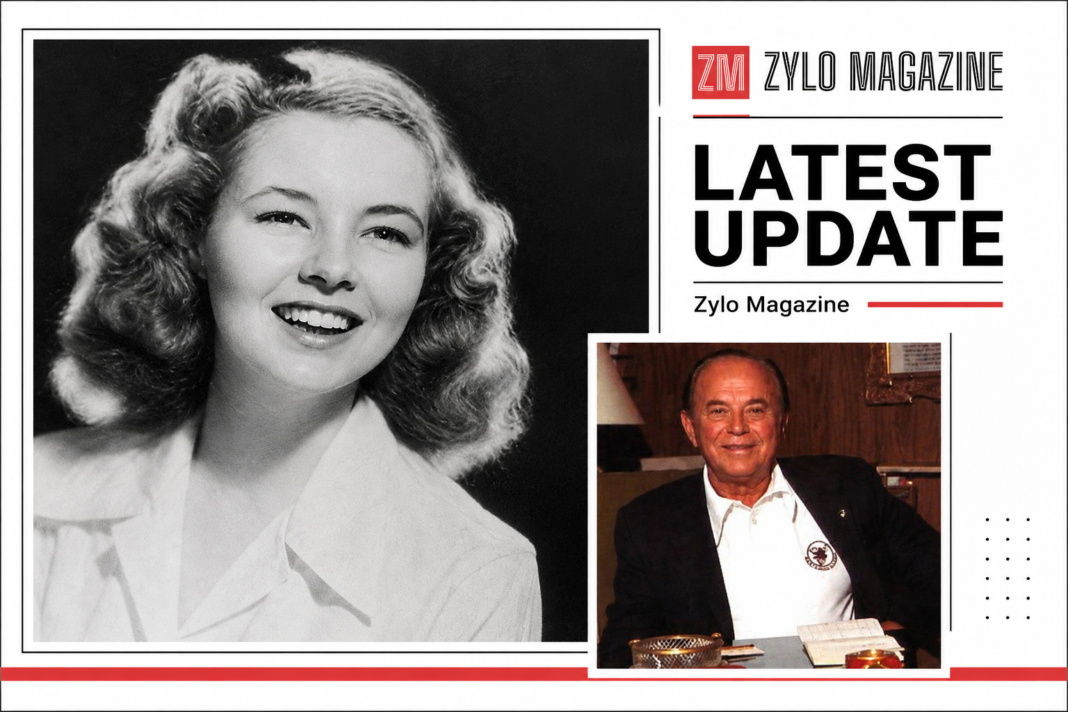
When people hear the Kroc name, they usually think of Ray Kroc, McDonald’s, the Golden Arches, and one of the most remarkable business-expansion stories of the twentieth century. Far less is known about Marilyn Kroc Barg, Ray Kroc’s only child. Born decades before her father became synonymous with McDonald’s, Marilyn lived through an extraordinary transformation in her family’s circumstances while remaining largely outside the public spotlight. That contrast is precisely what makes her story interesting.
Today, searches for Marilyn Kroc Barg often produce confident claims about her wealth, career, philanthropy, children, and involvement with McDonald’s. The problem is that many of those details are difficult—or impossible—to verify. A more useful biography therefore requires separating documented history from internet speculation. This article explores what is reliably known about Marilyn, her parents and marriages, her connection to the McDonald’s story, and why her private life continues to generate curiosity decades after her death.
Who Was Marilyn Kroc Barg?
Marilyn Kroc Barg, commonly identified in historical and genealogical accounts as Marilyn Janet Kroc, was the only child of businessman Ray Kroc and his first wife, Ethel Fleming Kroc.
She is primarily remembered today because of her relationship to Ray Kroc, the entrepreneur whose franchising strategy transformed McDonald’s from a small restaurant operation into an expanding national—and eventually global—business.
That description needs an important qualification.
Marilyn was not born into the McDonald’s empire.
She was already an adult before her father encountered the McDonald brothers’ restaurant in California. This chronological detail completely changes how her life should be understood.
Ray Kroc did not visit the McDonald brothers’ operation until 1954. According to McDonald’s official corporate history, he was working as a Multimixer salesman when he visited the restaurant operated by Richard and Maurice McDonald in San Bernardino, California. Impressed by its efficient system, Kroc became involved in expanding the concept through franchising. He opened his Des Plaines, Illinois, restaurant in 1955 and later acquired the rights to the McDonald’s name and operating system in 1961.
Marilyn, by contrast, was born in 1924.
She therefore spent roughly the first three decades of her life before her father became associated with the restaurant company that would make the Kroc surname internationally famous.
That fact is central to understanding Marilyn Kroc Barg.
She was not simply an heiress born into an established fast-food fortune. Her childhood and formative years belonged to an entirely different period of Ray Kroc’s life.
Marilyn Kroc Barg: Quick Facts
| Detail | Information |
|---|---|
| Full name | Marilyn Janet Kroc |
| Commonly known as | Marilyn Kroc Barg |
| Birth | October 15, 1924, according to widely cited family records |
| Father | Raymond Albert “Ray” Kroc |
| Mother | Ethel Janet Fleming Kroc |
| Siblings | None; she was Ray and Ethel Kroc’s only child |
| Nationality | American |
| First husband | Sylvester Nordly Nelson, according to genealogical records |
| Later husband | Walter/James W. Barg, as identified in historical accounts |
| Children | No children are reliably documented in accessible public records |
| Public McDonald’s role | None reliably documented |
| Death | September 1973 |
| Age at death | 48 |
| Best known for | Being Ray Kroc’s only child |
Some details about Marilyn vary across modern online biographies. Names, marriage dates, alleged occupations, charitable activities, health information, and even basic family details are sometimes presented without primary documentation. Readers should therefore be cautious about treating every biographical claim found online as established fact.
Marilyn Kroc Barg’s Early Life Was Very Different From the Kroc Fortune People Imagine
One of the most useful ways to understand Marilyn Kroc Barg is to place her childhood in the correct historical context.
Ray Kroc and Ethel Fleming married before the McDonald’s chapter of Ray’s life began. Marilyn was born in 1924, when her father was still decades away from encountering the McDonald brothers.
Ray had a varied career before McDonald’s.
McDonald’s corporate history describes him as a Chicago native who worked as a musician, sold paper cups, and eventually became the exclusive distributor of the Multimixer milkshake machine in 1939. It was his Multimixer business that eventually brought him into contact with the McDonald brothers.
This means Marilyn’s childhood should not be imagined as the privileged upbringing of someone born after her father had accumulated a huge fast-food fortune.
Instead, she grew up while Ray was still a working salesman and entrepreneur searching for greater opportunities.
That distinction is frequently lost in celebrity-style biographies.
It also gives Marilyn’s story a more interesting dimension. She experienced both sides of her father’s life: the long period before his extraordinary business success and the period in which the Kroc name became increasingly prominent.
Who Were Marilyn Kroc Barg’s Parents?
Marilyn was the daughter of Ray Kroc and Ethel Fleming Kroc.
Her parents’ marriage predated Ray’s McDonald’s career by decades. Ethel therefore belonged to the long, less glamorous portion of the Kroc story—the years of selling, traveling, experimenting with different occupations, and pursuing business opportunities before McDonald’s changed Ray’s life.
Ray Kroc
Raymond Albert Kroc became one of the most famous figures in American business history.
Yet calling him simply the “founder of McDonald’s” can obscure the actual sequence of events.
Richard and Maurice McDonald had already created their restaurant and developed their streamlined service system before Kroc entered the picture. McDonald’s official history dates the brothers’ original restaurant to 1940 and their streamlined self-service format to 1948.
Kroc encountered their operation in 1954.
What he recognized was its potential for replication.
In 1955, he opened a McDonald’s restaurant in Des Plaines, Illinois, and established the organization that became the foundation of the expanding McDonald’s system. In 1961, McDonald’s acquired the rights to the brothers’ company for $2.7 million, according to the corporation’s historical account.
Kroc’s great contribution was therefore not inventing the original McDonald’s restaurant. It was seeing how its model could be expanded systematically on a far larger scale.
Ethel Fleming Kroc
Ethel Fleming was Ray Kroc’s first wife and Marilyn’s mother.
Compared with Ray’s later business life, comparatively little attention is paid to Ethel in popular accounts of the McDonald’s story. Yet she was part of Ray’s life during the decades before his greatest commercial success.
For Marilyn, this is significant.
Her family identity was established long before McDonald’s became the defining element of the Kroc name.
Ray and Ethel eventually divorced in 1961—the same general period in which Ray’s control of McDonald’s was entering a transformative new phase.
Marilyn Was Already an Adult When the McDonald’s Story Began
The timeline is worth emphasizing because it corrects one of the most misleading assumptions surrounding Marilyn Kroc Barg.
If Marilyn was born in October 1924, she was approximately 29 years old when Ray encountered the McDonald brothers in 1954 and about 30 when he opened his Des Plaines restaurant in 1955.
In other words, her childhood was already long over.
She was not a young girl growing up inside the McDonald’s corporate environment.
She had reached adulthood before the defining business chapter of her father’s life had even started.
This provides a much better explanation for why Marilyn’s biography does not resemble the familiar story of a billionaire’s child entering the family corporation, inheriting a public role, or becoming a celebrity associated with a famous brand.
Her personal identity had developed independently of McDonald’s.
That does not tell us everything about how she viewed her father’s success. There simply is not enough reliable public evidence to reconstruct her private feelings with confidence.
But it does tell us that the simplistic “McDonald’s heiress” narrative fails to capture the circumstances in which she grew up.
Was Marilyn Kroc Barg Involved With McDonald’s?
There is no strong publicly available evidence that Marilyn Kroc Barg served as an executive, operator, founder, or major public figure within McDonald’s Corporation.
This is an important point because online biographies sometimes blur the distinction between being related to Ray Kroc and being involved in his company.
Those are not the same thing.
The documented McDonald’s story centers on the McDonald brothers, Ray Kroc, franchisees, suppliers, executives, and other individuals who helped develop and expand the system.
Marilyn does not occupy a recognized corporate role in McDonald’s standard historical account.
The safest conclusion is therefore straightforward:
Marilyn Kroc Barg’s connection to McDonald’s was familial, not a documented professional leadership role.
That distinction actually makes her biography more interesting.
She was the only child of the man whose name became inseparable from one of the world’s most recognizable restaurant brands, yet she did not build a comparable public identity around that connection.
The Extraordinary Transformation Marilyn Witnessed
Although Marilyn apparently did not become a prominent McDonald’s executive, she lived through an extraordinary period in her father’s career.
Consider the timeline.
In 1954, Ray Kroc encountered the McDonald brothers’ operation.
In 1955, he opened his Des Plaines restaurant.
By 1958, McDonald’s had sold its 100 millionth hamburger, according to company history.
The corporation acquired the rights to the McDonald brothers’ company in 1961. International expansion followed in 1967, while products that would become cultural icons appeared as the chain continued growing.
Marilyn therefore watched her father move from a career as a salesman into a level of business prominence that few entrepreneurs ever experience.
This is one of the most remarkable elements of her story.
The famous Kroc legacy was created during her lifetime rather than being something she simply inherited at birth.
Marilyn Kroc Barg’s Personal Life and Marriages
Information about Marilyn’s private adult life is substantially harder to verify than information about her father.
Genealogical and secondary sources commonly report that she married twice.
Her first marriage is generally identified as being to Sylvester Nordly Nelson, while later records associate her with Walter James Barg, from whom the surname “Barg” in Marilyn Kroc Barg originates.
Some online sources differ on names, dates, occupations, and details of these relationships. That inconsistency illustrates an important problem in researching Marilyn.
She was not a major public figure generating extensive newspaper coverage, interviews, memoirs, corporate records, or public speeches.
Consequently, much of the modern material about her has been reconstructed from scattered records rather than a rich contemporary archive.
A responsible biography should therefore avoid inventing emotional details about her marriages or presenting assumptions about her domestic life as established history.
What can reasonably be said is that Marilyn married and ultimately became known as Marilyn Kroc Barg, while maintaining a significantly lower public profile than her father.
Did Marilyn Kroc Barg Have Children?
One of the most common search queries surrounding Marilyn is whether she had children.
The most accurate answer is:
No biological or adopted children of Marilyn Kroc Barg have been reliably established in the accessible public record.
This wording is more responsible than declaring categorically that she “never had children.”
Why?
Because absence from publicly available records is not identical to absolute proof that something never happened.
Marilyn lived during an era when private family information was not digitally documented in the way it is today. She also was not a celebrity who routinely discussed her family with newspapers or magazines.
Nevertheless, available biographical research does not reliably identify a son or daughter.
Some modern websites have circulated names or vague references to descendants without providing convincing supporting documentation. Such claims should be treated cautiously.
There is another source of confusion: Ray Kroc later married Joan Kroc, who already had a daughter from an earlier relationship. Members of Joan’s family are sometimes incorrectly folded into Marilyn’s biological family line.
The relationships should not be confused.
Marilyn was Ray Kroc’s biological daughter. Joan’s descendants came from Joan’s earlier family and were related to Ray through his later marriage rather than through Marilyn.
Was Marilyn Kroc Barg a Major Philanthropist?
Claims that Marilyn was a prominent philanthropist require caution.
Several modern biographies describe her as heavily involved in charity, sometimes offering specific stories about causes she supposedly supported. Unfortunately, these accounts often fail to provide strong contemporary evidence.
This does not mean Marilyn never gave money to charitable causes.
It means that describing her as a historically documented major philanthropist goes beyond what the readily available evidence establishes.
The distinction is particularly important because Joan Kroc, Ray Kroc’s third wife, became famous for large-scale philanthropy.
As a result, charitable activities associated with the broader Kroc family can easily become misattributed when simplified online biographies are repeatedly copied.
Good historical research requires resisting that process.
If evidence for a particular charitable contribution cannot be traced to a credible source, it should not be presented as a confirmed part of Marilyn’s biography.
Did Marilyn Kroc Barg Help Found Ronald McDonald House Charities?
No credible timeline supports the claim that Marilyn Kroc Barg founded Ronald McDonald House Charities.
This is one of the clearest examples of misinformation surrounding her online biography.
Marilyn died in 1973.
The first Ronald McDonald House opened in Philadelphia in 1974.
McDonald’s own historical timeline places the first Ronald McDonald House in 1974.
Ronald McDonald House Charities likewise explains that the first Ronald McDonald House program opened in Philadelphia in 1974, developing from efforts involving pediatric oncologist Dr. Audrey Evans, the family of Philadelphia Eagles player Fred Hill, the Eagles organization, Children’s Hospital of Philadelphia, and the local McDonald’s community.
RMHC describes McDonald’s as its “founding and forever partner” and dates that relationship to the first House in 1974.
The chronology alone makes the problem obvious:
Marilyn could not have personally founded an organization or program that began after her death.
This illustrates why fact-checking matters when researching relatively private members of famous families.
An appealing story can be repeated across dozens of websites without becoming historically true.
How Did Marilyn Kroc Barg Die?
Marilyn Kroc Barg died in September 1973, when she was only 48 years old.
Various modern online biographies attribute her death to complications associated with diabetes. However, detailed medical claims should be approached cautiously unless supported by dependable contemporary documentation.
What is clear is that her death came relatively early.
It also occurred during an important period in McDonald’s expansion.
Ray Kroc survived his daughter by more than a decade. McDonald’s corporate history records his death on January 14, 1984.
This means Marilyn did not live to see the full scale of the McDonald’s phenomenon that developed during the late twentieth and early twenty-first centuries.
She died before the first Ronald McDonald House opened, before several products now associated with the chain were introduced, and before her father’s own death.
Marilyn Kroc Barg’s Net Worth: Why Online Estimates Are Unreliable
Another popular search is “Marilyn Kroc Barg net worth.”
Unfortunately, precise figures commonly published online should not be treated as reliable.
There is no strong basis for assigning Marilyn a confidently documented personal net worth based simply on her relationship to Ray Kroc.
This is a common weakness in celebrity-biography content.
A website may take the known wealth of a famous parent, assume a certain inheritance, assign a round number to a relative, and then allow that estimate to be copied across other websites.
But family wealth and individual net worth are not interchangeable.
To establish Marilyn’s personal wealth accurately, researchers would ideally need documentation such as probate records, trust information, asset disclosures, property records, or other financial evidence.
Without such evidence, a specific figure gives readers an illusion of precision.
The more accurate answer is that Marilyn was connected to an increasingly wealthy family, but her exact personal net worth is not reliably established in widely accessible authoritative sources.
Why Marilyn Kroc Barg Was So Different From Her Famous Father
The most striking aspect of Marilyn’s story may be the contrast between her public profile and Ray Kroc’s.
Ray became synonymous with relentless expansion.
His business philosophy emphasized systems, consistency, franchising, scale, and persistence. The McDonald’s model he helped expand depended on reproducing a recognizable customer experience across an enormous network of restaurants.
Marilyn left no comparable public business persona.
That difference has sometimes encouraged writers to portray her as intentionally rejecting fame or consciously choosing “simplicity over wealth.”
Such interpretations sound attractive, but they should be recognized as interpretations unless supported by Marilyn’s own recorded words.
What the evidence actually demonstrates is more limited:
She remained much less publicly visible than her father.
That alone is significant.
Not every relative of an extraordinarily successful entrepreneur chooses—or receives—a public role in the enterprise that made the family famous.
Why So Little Is Known About Marilyn Kroc Barg
Modern readers are accustomed to abundant information about wealthy families.
Social media accounts, interviews, property databases, corporate biographies, podcasts, photographs, and digital archives can make contemporary public figures seem constantly accessible.
Marilyn lived in a different information environment.
She was born in 1924 and died in 1973.
Most of her life therefore occurred before the internet, social media, modern celebrity culture, and digital record aggregation.
More importantly, she was not the central public figure in the Kroc story.
Histories of McDonald’s naturally concentrate on the people directly involved in building the company. Biographies of Ray Kroc focus primarily on his entrepreneurial career. Marilyn appears because she was his daughter, but her life was not the principal subject of those works.
This creates what might be called a documentary vacuum.
And documentary vacuums are easily filled by speculation.
One website publishes an unsupported personal detail. Another rewrites it. A third cites no source but repeats the same statement. Eventually, search results make the claim appear widely established simply because it appears on many pages.
Repetition, however, is not verification.
Common Myths About Marilyn Kroc Barg
Several recurring claims deserve special scrutiny.
Myth 1: Marilyn grew up as a McDonald’s heiress
This is misleading.
She was born approximately three decades before Ray Kroc became involved with McDonald’s. Her formative years occurred before the family’s association with the restaurant chain.
Myth 2: Marilyn helped build McDonald’s
There is no strong public evidence showing that she held a significant corporate or operational role in McDonald’s.
Her connection to the company was primarily through her father.
Myth 3: She founded Ronald McDonald House Charities
The timeline disproves this.
Marilyn died in 1973, while the first Ronald McDonald House opened in Philadelphia in 1974.
Myth 4: Her exact fortune is known
Specific net-worth estimates circulated online generally lack the documentation necessary to treat them as historical facts.
Myth 5: Every detail on biography websites is verified
This is perhaps the biggest misconception.
Marilyn’s limited public record means that responsible writers must acknowledge uncertainty rather than fill gaps with invented details.
Marilyn Kroc Barg and the Bigger Kroc Family Story
Marilyn’s biography also helps readers understand that the “Kroc family” of popular memory actually contains several distinct chapters.
The first is the family formed by Ray Kroc and Ethel Fleming, with Marilyn as their only child.
The second is Ray’s later personal life and marriages.
The third is the McDonald’s corporate story, which intersects with Ray’s personal life but is not identical to it.
And the fourth involves Joan Kroc and her highly visible philanthropic legacy.
Mixing those chapters together creates historical errors.
For example, a charitable gift associated with Joan should not automatically be attributed to Marilyn. Likewise, a member of Joan’s family from an earlier relationship should not automatically be described as Marilyn’s descendant.
Understanding the family structure prevents these mistakes and provides a clearer picture of Marilyn’s actual place in history.
What Marilyn’s Life Tells Us About Famous Business Families
Marilyn Kroc Barg offers a useful lesson beyond simple biographical curiosity.
Famous companies can reshape how we remember the families connected to them.
Once Ray Kroc became synonymous with McDonald’s, it became tempting to reinterpret everything that came before through the lens of his later success.
But history does not work backward.
Marilyn’s childhood did not take place inside the mythology of the Golden Arches because that mythology did not yet exist.
Her father was not yet the internationally recognized business figure later generations remember.
This is an important principle when studying entrepreneurial families.
The children of successful founders may experience the founder at completely different stages of his or her career. Someone born decades before a business breakthrough can have an entirely different upbringing from a child born after the fortune is established.
Marilyn belongs firmly to the first category.
Why People Still Search for Marilyn Kroc Barg
Interest in Marilyn is understandable.
Ray Kroc occupies an enormous place in business history, and people naturally want to know what happened to his family.
There is also a compelling contrast at work.
Ray’s professional life became exceptionally visible. Marilyn’s remained unusually obscure.
That gap creates curiosity.
People want to know whether she worked for McDonald’s, inherited a fortune, had children, participated in philanthropy, or influenced her father behind the scenes.
Yet sometimes the most accurate historical answer is that the surviving evidence simply does not tell us.
That uncertainty should not be regarded as a failure.
In fact, acknowledging the limits of available evidence makes Marilyn’s story more trustworthy.
She does not need an invented corporate career, exaggerated fortune, or fabricated philanthropic legacy to be historically interesting.
Her real significance lies in her position within an extraordinary American family story.
Lessons From Researching Marilyn Kroc Barg
Marilyn’s biography offers several practical lessons for anyone researching historical figures online.
First, check chronology.
A timeline can expose false claims immediately. The assertion that Marilyn founded a charitable institution beginning after her death is a perfect example.
Second, separate association from participation.
Being Ray Kroc’s daughter did not automatically make Marilyn a McDonald’s executive.
Third, distinguish estimates from documented facts.
A net-worth number without financial records is an estimate, regardless of how confidently a website presents it.
Fourth, trace repeated claims back to their source.
Ten websites repeating the same statement are not ten independent pieces of evidence if all ten copied the information from one unsupported article.
Finally, allow uncertainty.
Historical accuracy sometimes requires saying, “This is not publicly documented.”
That answer is far more valuable than manufacturing certainty for the sake of a more dramatic story.
Marilyn Kroc Barg’s Legacy
Unlike Ray Kroc, Marilyn Kroc Barg did not leave behind a famous corporate legacy.
Unlike Joan Kroc, she is not widely documented for transformative large-scale philanthropy.
And unlike many modern members of wealthy families, she did not cultivate a recognizable public identity.
Her legacy is therefore quieter.
She represents the personal side of a family name that eventually became inseparable from global business.
Her life also reminds us that proximity to fame does not necessarily produce fame.
Millions of people know the story of McDonald’s. Far fewer know that Ray Kroc had a daughter, and fewer still understand that she had already reached adulthood before the business transformation associated with her father began.
That historical context is perhaps the most important thing to remember about Marilyn.
She belonged to the Kroc story—but her life should not be reduced to the McDonald’s story.
Frequently Asked Questions About Marilyn Kroc Barg
Who was Marilyn Kroc Barg?
Marilyn Kroc Barg was the only child of Ray Kroc and his first wife, Ethel Fleming Kroc. She was born in 1924, decades before her father became famous for expanding McDonald’s. Unlike Ray, Marilyn did not develop a major documented public or corporate career and remained comparatively private.
Was Marilyn Kroc Barg involved in McDonald’s?
There is no strong publicly available evidence that Marilyn held an executive, managerial, ownership, or other significant operational role in McDonald’s. Her association with the company came primarily through her father, Ray Kroc.
Did Marilyn Kroc Barg have children?
No biological or adopted children have been reliably identified in the accessible public record. Because Marilyn lived a private life and documentation is limited, it is more accurate to say that no children are publicly verified than to make an absolute claim unsupported by comprehensive records.
Did Marilyn Kroc Barg found Ronald McDonald House Charities?
No. Marilyn died in 1973, while the first Ronald McDonald House opened in Philadelphia in 1974. Official histories of McDonald’s and Ronald McDonald House Charities confirm the 1974 date, making claims that Marilyn founded it chronologically impossible.
What was Marilyn Kroc Barg’s net worth?
Her exact personal net worth is not reliably documented in widely accessible authoritative sources. Although she was Ray Kroc’s daughter and was connected to a family whose wealth increased dramatically, specific figures attributed to Marilyn online should be treated as estimates unless supported by probate, trust, property, or other credible financial records.
Conclusion
Marilyn Kroc Barg remains intriguing precisely because her life stands in such sharp contrast to the fame surrounding Ray Kroc and McDonald’s. Born in 1924, she spent her childhood and early adulthood before her father encountered the McDonald brothers in 1954 and began the expansion that transformed his career. Although Marilyn was Ray Kroc’s only child, there is no solid evidence that she became a McDonald’s executive, founded Ronald McDonald House Charities, or built the highly public philanthropic identity sometimes attributed to her online. Her exact wealth and whether she had children also deserve cautious treatment because reliable documentation is limited.
Ultimately, Marilyn’s story is most valuable when told without embellishment. She was part of an extraordinary business family while remaining largely outside its public mythology. Rather than filling the gaps with speculation, understanding those gaps gives us a more accurate—and ultimately more interesting—portrait of Marilyn Kroc Barg.
Continue Exploring Our Latest Article: Camelia Kath: Biography, Career, Family, Terry Kath, Kiefer Sutherland, and Life With Jeff Lynne