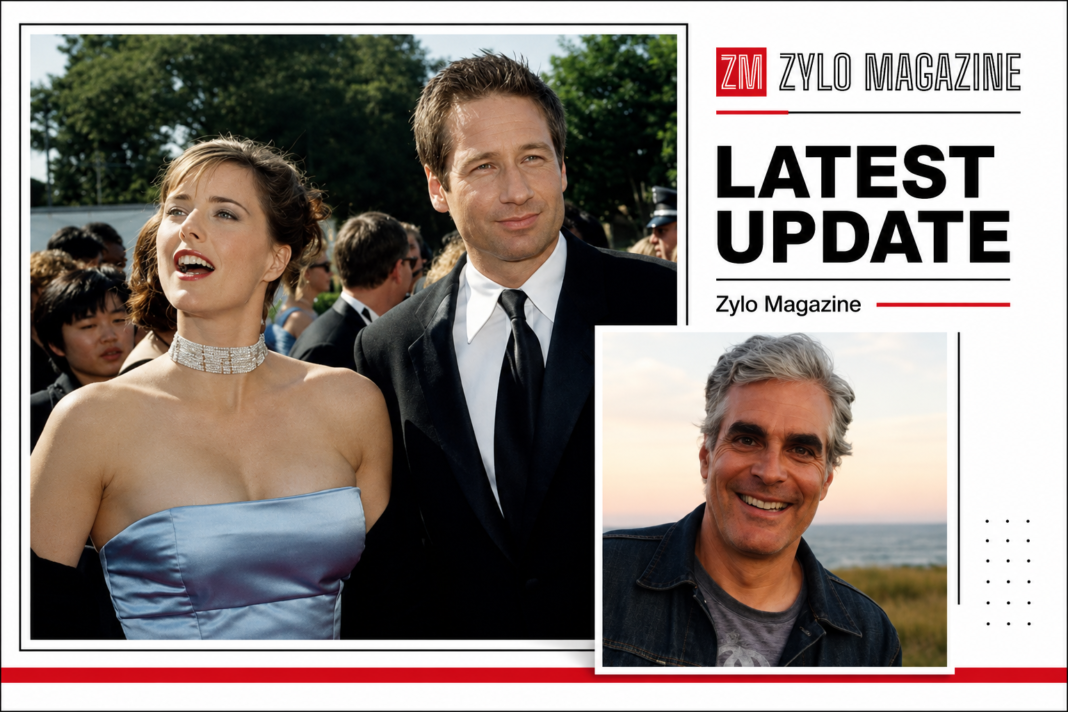
Neil Joseph Tardio Jr. is a filmmaker and commercial director whose name has attracted growing online interest, partly because of his past marriage to actress Téa Leoni and partly because of his long career behind the camera. Yet focusing exclusively on the celebrity connection misses the more interesting story. Professionally known as Neil Tardio Jr., he has worked in commercial filmmaking and advertising, directing projects connected with recognizable brands and collaborating with actors, musicians, agencies, producers, and production designers. His credits illustrate a career built less on personal publicity and more on visual storytelling.
Understanding Neil Joseph Tardio Jr. therefore requires separating documented professional work from the loosely sourced biographical claims frequently repeated online. This guide takes that approach, examining his career, directing style, advertising work, public profile, relationship with Téa Leoni, and what his professional history can teach aspiring filmmakers and marketers about effective short-form storytelling.
Who Is Neil Joseph Tardio Jr.?
Neil Joseph Tardio Jr., commonly credited professionally as Neil Tardio Jr. or Neil Tardio, is an American director associated particularly with commercial filmmaking.
Unlike actors and other on-screen personalities, commercial directors can produce work seen by millions without becoming household names themselves. The audience remembers the product, joke, character, celebrity, or tagline, while the filmmaker responsible for shaping the performance and visual narrative remains largely invisible.
Tardio’s career is a good example of this distinction.
Independent professional records document his involvement in advertising productions for major companies. Portfolio material from commercial producer James Alvich, for example, credits Neil Tardio Jr. as director of AT&T spots titled “Speed Booster” and “Too Much Money.”
Other production records connect him with projects involving Zaxby’s, Domino’s, Volkswagen, Armor All, Tide, and additional commercial work.
That evidence provides a much stronger basis for understanding Tardio than the many celebrity-biography pages that primarily describe him as somebody’s former husband.
Neil Joseph Tardio Jr. Quick Profile
| Category | Details |
|---|---|
| Full name | Neil Joseph Tardio Jr. |
| Professional name | Neil Tardio Jr. / Neil Tardio |
| Profession | Director and filmmaker |
| Best known professionally for | Commercial directing and visual storytelling |
| Public-interest connection | Former husband of actress Téa Leoni |
| Notable documented commercial associations | AT&T, Domino’s, Volkswagen, Zaxby’s, Armor All and Tide |
| Primary creative field | Advertising and film production |
| Public profile | Relatively private compared with mainstream Hollywood celebrities |
One important qualification should accompany any biography of Neil Joseph Tardio Jr.: not every personal detail published about him online has equally reliable documentation. Dates, financial estimates, childhood stories and other specifics are often copied from one biography site to another without primary evidence.
His professional credits are considerably easier to verify.
Neil Tardio Jr.’s Career in Commercial Directing
Commercial directing occupies an unusual position between filmmaking and marketing.
A feature-film director might have 90 minutes or more to establish characters, create conflict and produce an emotional payoff. A commercial director historically had perhaps 15, 30 or 60 seconds.
That changes the creative equation completely.
Every expression, cut, prop, line of dialogue and camera decision has to accomplish something. The director must communicate an idea almost immediately while keeping viewers interested long enough for the advertising message to register.
Neil Tardio Jr.’s documented body of work places him squarely within this demanding environment.
A useful example comes from AT&T. Producer James Alvich’s commercial portfolio credits Tardio as director on the AT&T projects “Speed Booster” and “Too Much Money.”
These credits matter because they demonstrate something that generic biographies often fail to explain: commercial directors do not simply “make advertisements.” They translate agency concepts into performances and moving images capable of communicating a brand proposition rapidly.
That requires overlapping skills in filmmaking, comedy, casting, performance direction, pacing and brand communication.
What Does a Commercial Director Actually Do?
Understanding Tardio’s profession makes his career more meaningful.
A commercial typically begins before the director enters the process. A brand and advertising agency develop a strategy and creative concept. The director then helps transform that concept from words, storyboards or treatments into a finished piece of filmmaking.
Depending on the production, a commercial director may influence:
- casting and performance;
- camera placement and movement;
- visual tone;
- comedic timing;
- location and production-design choices;
- interaction between celebrities and nonprofessional performers;
- pacing of individual scenes;
- collaboration with cinematographers and production departments;
- interpretation of the agency’s script.
The difficult part is balancing creativity with commercial purpose.
A visually impressive advertisement that fails to communicate the product benefit is unsuccessful. Conversely, an advertisement that communicates information but fails to hold attention can be equally ineffective.
Successful commercial filmmaking exists between those extremes.
Tardio’s longevity and variety of credits suggest an ability to operate within that balance.
Documented Commercial Work of Neil Joseph Tardio Jr.
Instead of relying on vague claims that Tardio has worked with “many famous brands,” it is more useful to examine specific credits that can be independently traced.
AT&T
As noted above, commercial producer James Alvich lists Neil Tardio Jr. as director of AT&T’s “Speed Booster” and “Too Much Money.”
Telecommunications advertising presents a particular storytelling challenge because many underlying product benefits—network capabilities, pricing structures, speed or service features—are abstract.
A filmmaker’s job is often to humanize those concepts.
That principle remains highly relevant to today’s marketers: when the product benefit is technical, the story should often become more human rather than more technical.
Audiences may forget specifications. They are more likely to remember a recognizable situation or character.
Zaxby’s Projects
Production designer Jamey DiDomenico’s professional portfolio documents Tardio’s involvement with Zaxby’s commercials titled “First,” “Jam Session,” and “Encore,” featuring country artists Thomas Rhett and Brett Eldredge. The production record names Neil Tardio Jr. as director.
This is useful evidence because it demonstrates Tardio working in an environment where brand advertising overlaps with celebrity performance.
Celebrity commercials introduce another challenge: the famous person cannot completely overwhelm the product.
The director needs to make the personality entertaining while keeping the commercial’s brand identity intact.
Another Zaxby’s production, described by producer Bill Fannin as a tribute to first responders, also credits work with director Neil Tardio Jr.
Together, these projects indicate range within a single brand environment—from entertainment-led celebrity advertising to a more emotionally oriented tribute.
Domino’s
Creative director John Kieselhorst’s portfolio credits Neil Tardio Jr. as director of a Domino’s Pizza Tracker customer-review project, part of the brand’s broader transparency-oriented advertising work.
This is particularly interesting from a marketing perspective.
Advertising increasingly works best when brands acknowledge what customers actually think rather than presenting an artificially perfect corporate world. Customer reviews, reactions and user-generated material can create credibility because the brand relinquishes some control over the message.
For filmmakers, that style demands something different from polished studio advertising. The director has to preserve spontaneity while still producing a coherent branded experience.
Volkswagen and Wilco
A 2007 account of Volkswagen’s campaign involving the band Wilco identifies Neil Tardio Jr. as director, working through HSI Productions, with cinematographer Dan Mindel among the credited collaborators.
The campaign is revealing because music can function as much more than background decoration.
Music carries identity.
When an established band’s sound is incorporated into advertising, the commercial borrows some of the associations audiences already have with that artist. The filmmaker must consequently combine two identities—the brand’s and the musician’s—without making either feel misplaced.
The Volkswagen/Wilco credit provides concrete evidence that Tardio’s commercial work has extended beyond straightforward product demonstrations into culturally driven advertising.
Armor All
A professional résumé hosted by the Art Directors Guild lists Neil Tardio Jr. alongside an Armor All commercial credit.
Again, this independent production documentation is valuable because it corroborates his standing within the commercial-production ecosystem rather than relying exclusively on celebrity biography websites.
Tide
A professional stunt-performer résumé also identifies Neil Tardio Jr. as director on a Tide commercial.
Individual production résumés might appear like small pieces of evidence, but collectively they help reconstruct the career of someone whose professional work is distributed across hundreds of productions rather than centralized in a conventional Hollywood filmography.
The Storytelling Style Associated With Neil Tardio Jr.
Commercial directors are frequently hired not merely because they understand cameras but because they possess a recognizable storytelling sensibility.
Tardio’s work has commonly been associated with performance, humor and character-based advertising.
This makes sense when viewed against his documented projects.
Comedy in advertising is deceptively difficult. A joke has to work quickly, but it cannot consume so much attention that viewers forget what is being advertised.
There is a major difference between creating a funny video and creating a funny commercial.
The second needs two successful outcomes:
- viewers should enjoy or remember the situation;
- that memory should remain connected with the advertiser.
The strongest commercial comedy makes the product integral to the joke.
This offers a practical lesson for contemporary content creators. Whether producing a television commercial, TikTok video, YouTube Short or Instagram Reel, entertainment should not simply be attached to the marketing message. Ideally, the product benefit creates the situation itself.
Why Performance Matters in Advertising
A large portion of successful commercial directing is invisible.
Consider a simple reaction shot.
An actor hears something unexpected. If the reaction is too exaggerated, the commercial feels artificial. If it is too restrained, the joke disappears.
The difference can be less than a second.
Directors working in performance-driven advertising therefore need exceptional sensitivity to timing.
This is particularly important in comedy because audiences instinctively recognize when behavior feels forced. The best performances often appear effortless precisely because considerable direction, rehearsal and editing have gone into them.
Tardio’s association with dialogue- and character-oriented advertising helps explain why his name continues to appear across professional production records.
Working With Recognizable Talent
The Zaxby’s work involving Thomas Rhett and Brett Eldredge illustrates another dimension of commercial filmmaking: directing celebrities.
A musician, athlete or entertainer enters a commercial with an existing public persona.
That creates both an opportunity and a constraint.
The opportunity is instant audience recognition. The constraint is authenticity.
If the celebrity behaves in a way that seems inconsistent with his or her public identity, audiences immediately recognize the artificiality of the endorsement.
Effective directors therefore look for the intersection between:
celebrity personality + brand personality + advertising idea.
Where those three elements overlap, the commercial can feel natural rather than transactional.
This principle is even more relevant today, when influencer marketing has transformed ordinary creators into advertising talent.
Neil Joseph Tardio Jr. and Téa Leoni
A significant percentage of searches for Neil Joseph Tardio Jr. arise because of his connection with actress Téa Leoni.
Tardio is widely identified as Leoni’s first husband. Their relationship occurred before Leoni reached the level of mainstream recognition she later achieved through film and television.
This association explains why Tardio frequently appears on celebrity-biography websites despite spending his professional career predominantly behind the camera.
It also creates a distorted picture.
When someone is connected with a highly recognizable actor, search results naturally prioritize the relationship because celebrity stories generate clicks. As a result, Tardio’s marriage can appear more important online than several decades of professional directing.
For readers genuinely researching his identity, the distinction matters.
Téa Leoni is part of Neil Tardio Jr.’s biography, but she is not the definition of his career.
His independent commercial credits provide a substantially richer picture of his professional life.
Why Neil Tardio Jr. Maintains a Relatively Low Public Profile
There is nothing unusual about a successful commercial director having limited mainstream fame.
Advertising production is full of accomplished cinematographers, editors, production designers, agency creatives and directors whose work is familiar even when their names are not.
The economic model is different from celebrity entertainment.
Actors benefit directly from public recognition. A director working primarily in commercials is generally hired because agencies, production companies and brands recognize the quality of the work.
Industry reputation matters more than tabloid visibility.
That distinction explains an apparent contradiction surrounding Neil Joseph Tardio Jr.: he can have an extensive professional history while relatively little reliable personal information about him circulates publicly.
The absence of constant celebrity coverage should not be mistaken for the absence of a career.
Separating Verified Facts From Internet Biography Claims
Anyone researching Neil Joseph Tardio Jr. encounters a recurring problem: dozens of websites repeat nearly identical personal details.
Repetition does not necessarily equal verification.
For example, online biographies commonly publish specific claims about Tardio’s birth date, childhood, education, family history, awards and finances. Some may ultimately be accurate, but readers should ask where the information originated.
A reliable research hierarchy looks something like this:
Primary professional records → established industry publications → reputable interviews → production portfolios → secondary biographies → unsourced celebrity sites.
Professional portfolios documenting actual campaigns are especially useful when investigating directors because credits can be cross-checked across the people who worked on a production.
This article therefore avoids presenting speculative net-worth estimates as established fact.
Neil Joseph Tardio Jr.’s Net Worth: Why Online Estimates Should Be Treated Carefully
“Neil Joseph Tardio Jr. net worth” is a common search phrase, but there is no good reason to treat arbitrary online figures as audited financial information.
Commercial directors can earn substantial amounts during successful careers, but income is not the same as net worth.
Net worth depends on private factors such as:
- investments;
- property;
- taxes;
- business ownership;
- debt;
- savings;
- production-company arrangements;
- royalties or residual income;
- personal expenses.
Unless a person publicly discloses those assets or credible financial reporting establishes them, an exact figure is speculation.
Consequently, claims that Neil Joseph Tardio Jr. is worth a particular number of millions should be approached cautiously.
A better-supported conclusion is simply that his documented commercial-directing career has involved recognizable brands and professional productions over many years.
Anything more precise requires evidence.
What Aspiring Directors Can Learn From Tardio’s Career
The most valuable reason to study a commercial filmmaker is not celebrity trivia. It is understanding how creative careers are actually built.
1. Master Short-Form Storytelling
Advertising forces filmmakers to remove unnecessary material.
Every shot must earn its place.
Creators can practice this skill by writing a complete narrative containing:
setup → complication → response → payoff
in 30 seconds.
If the audience cannot understand the setup almost immediately, the concept is probably too complicated.
2. Direct Behavior, Not Just Dialogue
A performer saying the correct words does not guarantee a believable scene.
Watch posture, hesitation, eye movement and reactions.
Often the person listening to a line creates more comedy than the person delivering it.
3. Understand the Business Objective
Commercial filmmakers are solving business problems through storytelling.
Before shooting anything, ask:
What should viewers understand, feel or do after watching this?
If there is no clear answer, beautiful cinematography will not rescue the communication.
4. Protect Authenticity
Contemporary audiences have developed extremely sensitive advertising filters.
Overly polished claims and artificial reactions can create distrust.
Authentic locations, conversational dialogue, believable casting and genuine reactions frequently outperform conventional sales language.
5. Learn Collaboration
Tardio’s documented projects also reveal how collaborative commercial production is.
A single advertisement can involve agency creatives, producers, cinematographers, production designers, editors, musicians, celebrity talent and dozens of crew members.
The director provides creative leadership, but directing is not solitary authorship.
What Marketers Can Learn From Commercial Directors
Tardio’s career is also relevant beyond filmmaking.
Digital marketers sometimes treat video as a container for sales copy: take the marketing message, put someone on camera and publish it.
Strong directors think differently.
They ask what the audience is experiencing.
That shift creates three practical principles.
First, attention must be earned before information can be delivered.
Second, emotion improves memory. Humor, surprise, recognition, curiosity and empathy make messages easier to remember.
Third, characters can simplify complicated propositions. Instead of explaining every benefit verbally, demonstrate the benefit through someone’s problem.
These principles apply equally to expensive television commercials and inexpensive social-media videos.
Technology changes. Human attention does not change nearly as quickly.
The Evolution of Commercial Filmmaking
Tardio’s career also spans an important transformation in advertising.
Traditional commercial directors once created primarily for television. Today, campaigns can simultaneously appear on connected TV, YouTube, Instagram, TikTok, streaming services, websites and digital advertising networks.
The canvas has expanded.
But that does not make classical commercial-directing skills obsolete.
It makes them more valuable.
A filmmaker who understands immediate character establishment, concise storytelling and visual clarity already possesses many of the skills demanded by modern short-form content.
The difference is distribution.
A 30-second television commercial was constrained by purchased airtime. A modern campaign may require a hero film plus six-second edits, vertical versions, social clips, behind-the-scenes footage and creator collaborations.
The core challenge remains the same:
How do you make someone care quickly?
Why Neil Joseph Tardio Jr. Is Still Searched Online
Search interest around Neil Joseph Tardio Jr. appears to come from two audiences.
The first consists of entertainment readers discovering that Téa Leoni was previously married before her later, more publicly documented relationships.
The second consists of people researching the filmmaker himself.
Those intentions lead to very different stories.
Celebrity-focused pages emphasize marriage and personal details. Production records reveal a working commercial director with credits connected to multiple recognizable brands.
Both dimensions can be acknowledged, but the professional story deserves greater weight than it typically receives.
Neil Tardio Jr.’s Professional Legacy
It is difficult to reduce a commercial director’s legacy to a conventional list of films.
Advertising is inherently temporary.
Campaigns disappear from television. Brand websites change. Production companies close or merge. Video-hosting platforms remove old reels. Agency portfolios get redesigned.
Consequently, reconstructing a decades-long advertising career often means finding fragments distributed across production résumés, archived portfolios and collaborators’ websites.
That is precisely what makes the available Neil Tardio Jr. records interesting.
His name appears in independent professional contexts: an AT&T producer’s portfolio, production-design records for Zaxby’s, a Domino’s creative portfolio, Volkswagen campaign documentation and professional résumés citing additional commercial projects.
Taken together, those records provide stronger evidence of professional longevity than the generic labels commonly found in short celebrity biographies.
Frequently Asked Questions About Neil Joseph Tardio Jr.
Who is Neil Joseph Tardio Jr.?
Neil Joseph Tardio Jr., professionally known as Neil Tardio Jr. or Neil Tardio, is a director associated particularly with commercial filmmaking and advertising. Independent production records connect him with projects involving brands including AT&T, Zaxby’s, Domino’s, Volkswagen, Armor All and Tide.
Is Neil Joseph Tardio Jr. Téa Leoni’s ex-husband?
Yes. Neil Joseph Tardio Jr. is widely known publicly as the first husband of American actress Téa Leoni. However, his own professional identity is primarily associated with directing and commercial production rather than acting or celebrity entertainment.
What does Neil Tardio Jr. do?
He is best known professionally as a director. His documented credits are particularly associated with advertising and commercial production, including work for major consumer and telecommunications brands.
What commercials has Neil Tardio Jr. directed?
Documented examples include AT&T’s “Speed Booster” and “Too Much Money,” Zaxby’s projects featuring Thomas Rhett and Brett Eldredge, and commercial work associated with Domino’s and Volkswagen. Other professional records connect him with Armor All and Tide productions.
What is Neil Joseph Tardio Jr.’s net worth?
There is no sufficiently authoritative public financial disclosure establishing a precise Neil Joseph Tardio Jr. net worth. Exact figures published by celebrity and biography websites should therefore be regarded as estimates rather than verified facts. His professional history does, however, include documented work on campaigns involving major brands.
Conclusion: Understanding Neil Joseph Tardio Jr. Beyond the Celebrity Connection
Neil Joseph Tardio Jr. is more accurately understood as a working filmmaker and commercial director than simply as Téa Leoni’s former husband. Professional records connect Neil Tardio Jr. with campaigns involving companies such as AT&T, Zaxby’s, Domino’s, Volkswagen, Armor All and Tide, demonstrating a career built around advertising, performance and concise visual storytelling. His work also highlights a broader truth about commercial filmmaking: the people shaping widely viewed advertisements often remain far less famous than the actors and brands appearing on screen.
For aspiring directors and marketers, his career offers a practical lesson. Effective short-form filmmaking depends on character, timing, collaboration and an understanding of the business objective—not simply expensive equipment or attractive imagery. Ultimately, Neil Joseph Tardio Jr.’s professional work is a more meaningful measure of his identity and contribution than the celebrity connection that dominates many online biographies.
Continue Exploring Our Latest Article: Jacqueline Piesen: The Businesswoman, Philanthropist, and Driving Force Behind Mike Love’s Enduring Legacy