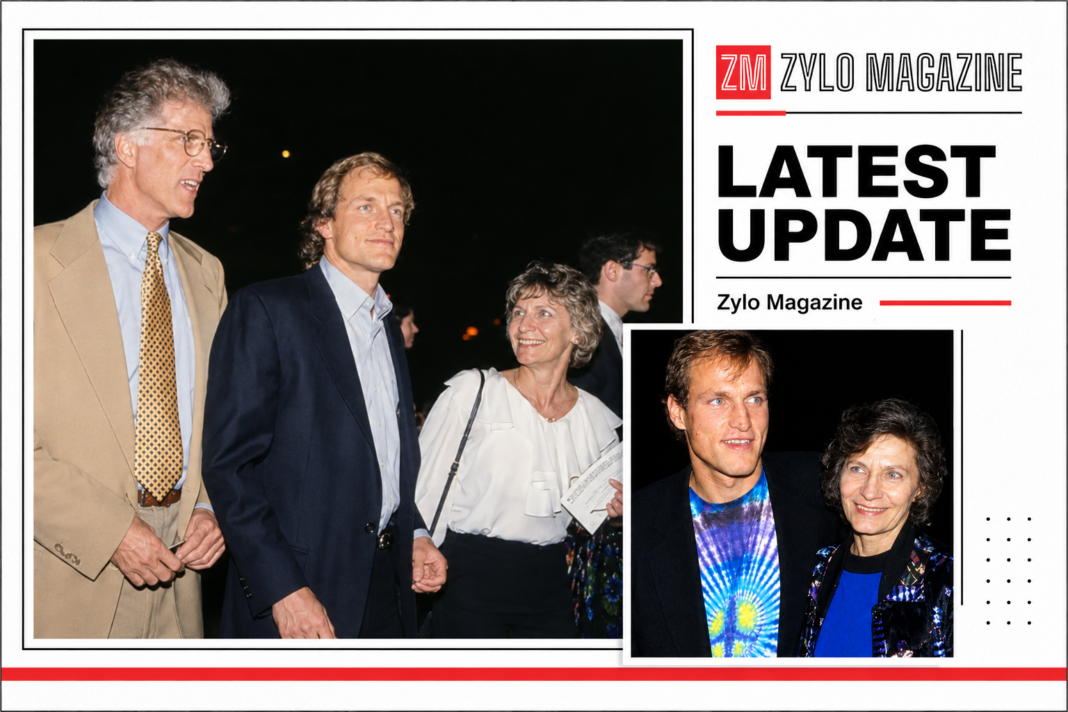
Natalie Oglesby Skalla is a name that attracts curiosity largely because of her connection to one of the most recognizable families in American entertainment. Widely identified as the daughter of singer and conductor Frank Sinatra Jr. and the granddaughter of legendary performer Frank Sinatra, Natalie occupies an unusual position in the Sinatra family story. Yet unlike the generations before her who built careers in front of audiences, she has remained remarkably private.
That contrast is what makes her story interesting. Searches for Natalie Oglesby Skalla often lead to claims about her childhood, family, marriage, career, and personal life, but not all of those details are equally well documented. This article takes a more careful approach. It explores what is reliably known about Natalie, explains her place in the Sinatra family, examines reports about her work in therapeutic riding, and separates established information from online speculation.
Who Is Natalie Oglesby Skalla?
Natalie Oglesby Skalla is an American woman primarily known through her connection to the Sinatra family. Mainstream reporting has identified her as one of the daughters of Frank Sinatra Jr., making legendary singer and actor Frank Sinatra her paternal grandfather. Fox News, for example, has listed Frank Sinatra Jr.’s children as son Michael Francis Sinatra and daughters Natalie Oglesby Skalla and Francine Sinatra Anderson.
That is an important starting point because much of the information about Natalie available online comes not from interviews with her or an official biography, but from secondary celebrity and biography websites.
Natalie herself has never developed the kind of public-facing career associated with the Sinatra name. There is no substantial filmography, recording catalog, television career, or widely documented entertainment business associated with her.
Instead, she appears to have spent most of her life outside mainstream celebrity culture.
That makes her fundamentally different from the relatives through whom most people discover her.
Frank Sinatra became an international entertainment icon. Frank Sinatra Jr. worked professionally as a singer, songwriter and conductor. Nancy Sinatra established her own successful recording career, while Tina Sinatra worked in areas including entertainment and production.
Natalie, by comparison, represents the private side of an extremely public family.
Natalie Oglesby Skalla Quick Facts
| Topic | What is publicly known |
|---|---|
| Full name | Natalie Oglesby Skalla |
| Nationality | American |
| Known for | Connection to the Sinatra family |
| Father | Frank Sinatra Jr. |
| Paternal grandfather | Frank Sinatra |
| Paternal grandmother | Nancy Barbato Sinatra |
| Aunt | Nancy Sinatra |
| Aunt | Tina Sinatra |
| Reported profession | Therapeutic/adaptive riding instructor |
| Entertainment career | No established public entertainment career |
| Public profile | Very limited |
| Net worth | No reliable public figure |
| Personal social media | No clearly established major public presence |
The distinction between confirmed information and reported information is essential. Some websites give precise details about Natalie’s date of birth, marriage, residence, finances and professional history, but many simply repeat claims found on other biography sites without showing an original source.
For that reason, readers should be cautious about treating every online “fact” as established.
Natalie Oglesby Skalla and the Sinatra Family
The strongest reason for public interest in Natalie Oglesby Skalla is her family tree.
Her paternal grandfather, Frank Sinatra, was one of the defining American entertainers of the twentieth century. His influence extended across popular music, film, television and live performance.
Frank Sinatra and his first wife, Nancy Barbato, had three children: Nancy Sinatra, Frank Sinatra Jr. and Christina “Tina” Sinatra.
Natalie’s father, Frank Sinatra Jr., therefore grew up in extraordinary circumstances.
Being the son of Frank Sinatra offered opportunities, but it also created an unavoidable comparison. Frank Jr. developed his own professional career in music, working as a singer and conductor while performing material closely associated with traditional American pop and the musical world in which his father had become an icon.
Natalie belongs to the next generation of that family.
Yet her position illustrates an important reality about famous families: celebrity does not automatically pass from one generation to another as a profession or lifestyle.
A person can be biologically connected to an enormously famous individual without choosing to become a public figure.
Natalie appears to be a particularly clear example.
Frank Sinatra Jr.: Natalie’s Famous Father
Understanding Frank Sinatra Jr. helps explain why people search for Natalie Oglesby Skalla.
Born Francis Wayne Sinatra in 1944, Frank Jr. entered the same broad profession that had made his father famous. He became a singer and conductor rather than attempting to build an entirely separate public identity.
His career inevitably existed in the shadow of Frank Sinatra Sr.
This created an unusual professional challenge. The Sinatra surname opened doors, but it also established a nearly impossible standard against which Frank Jr.’s work could be measured.
His connection to his father remained an important element of his career, including periods when he worked as his father’s musical director and conductor.
For Natalie, however, the family legacy appears to have operated differently.
Rather than becoming the third generation of the family to pursue music professionally, she stayed outside that highly visible tradition.
This distinction makes her story more interesting than a simple “celebrity granddaughter” biography.
Why Natalie Oglesby Skalla Is Not a Traditional Celebrity
Google searches can create the impression that anybody with dozens of biography pages must be a celebrity.
That is not necessarily true.
Natalie Oglesby Skalla is better understood as a private individual who attracts public interest because of her family connection.
That difference matters.
Traditional celebrities generally produce a large body of first-party and independently documented information. There may be interviews, verified social accounts, professional biographies, press appearances, books, public records of projects and extensive reputable media coverage.
Natalie’s information footprint is dramatically smaller.
Consequently, many websites discussing her appear to recycle information from one another. Claims gradually become presented as facts simply because they have appeared repeatedly online.
But repetition is not verification.
For example, various biography pages make claims about Natalie’s exact birthday, upbringing, marriage, children and finances. The supporting evidence for many of those details is thin or unclear.
A responsible biography should therefore acknowledge uncertainty instead of filling information gaps with assumptions.
Natalie Oglesby Skalla’s Early Life
Natalie’s childhood is one of the areas where readers should be especially careful about overly detailed online accounts.
Numerous websites describe her as having grown up away from Hollywood and the entertainment industry. Some identify Mary Sue Oglesby as her mother and describe Natalie as having experienced a relatively ordinary upbringing compared with the highly visible Sinatra family.
However, there is relatively little authoritative, first-hand documentation publicly available about her education, childhood experiences, friendships or daily family life.
This lack of information should not be viewed as a flaw in her biography.
It may simply indicate that Natalie succeeded in maintaining something that is increasingly unusual for relatives of famous people: privacy.
That perspective also changes how her story should be told.
Rather than inventing a dramatic narrative about “rejecting Hollywood,” it is more accurate to observe that there is no substantial public evidence that Natalie ever attempted to build a celebrity career in the first place.
Living privately may not have been a dramatic rejection of fame. It may simply have been her normal life.
A Different Kind of Sinatra Legacy
The contrast between Natalie and her famous relatives creates a useful way to think about inheritance.
A family legacy does not have to mean repeating the same profession.
Frank Sinatra’s legacy is overwhelmingly associated with performance. His voice, recordings, films and public persona became part of twentieth-century American popular culture.
Frank Sinatra Jr. continued much of that musical tradition.
Natalie’s reported path is different.
Instead of entertainment, numerous profiles connect her with therapeutic or adaptive horseback riding. Although the precise details of her professional history are not extensively documented by major mainstream sources, the claim appears consistently across multiple profiles.
It is worth understanding what that work actually means rather than simply repeating “therapeutic riding instructor” as a job title.
Natalie Oglesby Skalla and Therapeutic Riding
Therapeutic riding is frequently misunderstood online.
The Professional Association of Therapeutic Horsemanship International (PATH Intl.) explains that adaptive riding and therapeutic riding can be used to describe adapted horsemanship services for people with diverse needs. These services are distinct from clinical therapies delivered by licensed healthcare professionals.
This distinction is particularly useful when discussing Natalie Oglesby Skalla.
Some online biographies casually describe therapeutic riding as “equine therapy.” That terminology can create the misleading impression that every therapeutic riding instructor is a medical or mental-health therapist.
That is not necessarily the case.
PATH Intl. categorizes therapeutic/adaptive horsemanship as a non-therapy service delivered by equine professionals with appropriate specialized training or certification. Clinical services such as physical therapy, occupational therapy, psychotherapy and speech-language pathology involving horses are performed by appropriately licensed professionals working within their professional scopes.
So if Natalie has worked specifically as a therapeutic riding instructor, the accurate description is not automatically “therapist.”
That small distinction makes a biography more accurate and useful.
What Does a Therapeutic Riding Instructor Actually Do?
A therapeutic or adaptive riding instructor does much more than simply put somebody on a horse.
Programs are designed around individual riders and their abilities. Lessons can involve mounted riding, horsemanship skills and other interactions with horses.
Depending on the participant, instruction may be adapted around physical, cognitive, behavioral or developmental needs.
Safety is particularly important.
A qualified instructor needs to consider the rider, the horse, the environment, necessary support personnel and appropriate activities. PATH Intl. maintains professional standards and certification programs specifically because equine-assisted services require expertise involving both humans and horses.
The work therefore combines several skills:
- Knowledge of horses and horsemanship
- Clear communication
- Lesson planning and adaptation
- Awareness of different participant needs
- Risk management
- Patience and observation
- Coordination with volunteers and support personnel
- Attention to both human and equine welfare
That context makes the reported career of Natalie Oglesby Skalla considerably more meaningful than a one-line occupation on a biography page.
Why Horses Can Be Valuable in Adaptive Horsemanship
Horses create an unusual learning environment.
Riding involves posture, coordination, balance, communication and continual physical adjustment. Horsemanship can also create opportunities for responsibility, confidence and skill development.
PATH Intl. states that therapeutic/adaptive horsemanship can contribute to areas such as flexibility, balance, muscle strength, coordination, confidence and self-esteem while providing recreational opportunities for people with disabilities.
There is also an important distinction between adaptive riding and clinical treatment involving equine movement.
An academic review published in Animal Frontiers notes that adaptive/therapeutic riding primarily involves teaching equestrian skills through appropriately trained instructors, whereas hippotherapy involves licensed physical, occupational or speech-language professionals using equine movement as part of treatment aimed at functional outcomes.
Understanding that difference prevents the exaggerated medical claims often found in celebrity biography articles.
It also highlights the practical value of the field without pretending that every interaction with a horse constitutes healthcare.
The Practical Value of Natalie’s Reported Career Choice
If reports about Natalie Oglesby Skalla’s work in therapeutic riding are accurate, her career represents an intriguing contrast with the profession historically associated with the Sinatra family.
Entertainment is inherently audience-facing.
Therapeutic horsemanship is participant-facing.
One aims, broadly speaking, to perform for many people. The other centers on individualized instruction and direct engagement.
That does not make one inherently more valuable than the other. But it demonstrates that family legacy does not determine personal purpose.
This may be one of the most useful lessons readers can take from Natalie’s story.
Children and grandchildren of successful people frequently face an assumption that they should reproduce the achievements of previous generations.
Yet inherited recognition is not the same as personal identity.
Natalie’s reported professional life suggests a completely different model: a person can belong to a famous family while pursuing work that has little connection with the source of that fame.
Privacy as a Defining Part of Natalie Oglesby Skalla’s Story
Perhaps the most striking thing about Natalie Oglesby Skalla is not something she publicly did.
It is what she apparently did not do.
She did not build an obvious celebrity brand around the Sinatra name.
She did not become widely known as a recording artist.
She did not develop a major film or television career.
She has not maintained the kind of highly visible public profile that makes every stage of a celebrity’s personal life accessible to audiences.
In the internet era, this degree of privacy is notable.
People related to celebrities can now build audiences almost instantly through social media. A famous surname can become the foundation for endorsements, reality television, influencer businesses, podcasts and other forms of public attention.
Natalie’s public footprint suggests a different approach.
Whether this resulted from a deliberate philosophy or simply personal preference cannot be known without reliable first-person comments from Natalie herself.
It is therefore better not to romanticize her privacy as a public “statement.”
Still, its practical result is clear: she is known more for her family connection than for cultivating celebrity.
What Is Known About Natalie Oglesby Skalla’s Marriage?
Several online profiles identify Natalie’s husband as Brian Skalla.
However, detailed information about her marriage is not widely documented by high-authority mainstream sources.
That means responsible coverage should stop there rather than manufacture a romantic backstory.
Claims about where the couple met, when they began dating, their wedding, home, children or private relationships should not be presented as established facts without reliable evidence.
This is particularly important because Natalie is not a conventional public figure.
Readers searching for “Natalie Oglesby Skalla husband” may understandably want a simple answer, but search demand does not justify speculation.
The most accurate summary is that she is widely reported to be married to Brian Skalla, while details of their personal life remain private.
Does Natalie Oglesby Skalla Have Children?
There is no sufficiently reliable, widely available public information that establishes the details of Natalie’s children or immediate household.
Some biography websites attempt to fill this gap.
A better approach is simply to say that the information is private or not reliably documented.
This is a useful general rule when researching celebrity relatives: absence of public information is not evidence of a hidden story.
Sometimes it simply means the person never made the information public.
Natalie Oglesby Skalla’s Net Worth: Why Online Estimates Should Be Treated Carefully
“Net worth” is one of the most common SEO terms attached to biographies of famous people and their relatives.
It is also one of the least reliable.
There is no credible public financial disclosure establishing Natalie Oglesby Skalla’s personal net worth.
Therefore, precise claims that she is worth a particular number of millions of dollars should be treated skeptically unless accompanied by strong documentary evidence.
Being related to Frank Sinatra does not automatically reveal a person’s finances.
Net worth would require information about assets, liabilities, income, investments, property, inheritance and other financial interests. Without those details, an online estimate is often little more than speculation.
The accurate answer is straightforward:
Natalie Oglesby Skalla’s net worth is not reliably known from public information.
That answer may be less sensational than an invented seven-figure number, but it is more useful.
Natalie Oglesby Skalla and Frank Sinatra’s Cultural Legacy
Natalie’s family connection remains significant because Frank Sinatra’s cultural influence extended far beyond his immediate lifetime.
He became associated with a distinctive era of American popular music, particularly traditional pop and interpretations of the Great American Songbook. His career also extended into cinema and television, making him a cross-medium entertainer rather than simply a recording artist.
His children inevitably inherited public attention.
Frank Sinatra Jr. entered music himself. Nancy Sinatra achieved fame through her own recordings. Tina Sinatra pursued work behind the scenes in entertainment and other ventures.
Natalie represents another possibility within that family history: the descendant who remains largely outside show business.
This is why describing her only as “Frank Sinatra’s granddaughter” is simultaneously accurate and incomplete.
It explains public curiosity about her, but not necessarily how she has chosen to live.
Why Is Natalie Oglesby Skalla Trending in Online Searches?
There does not need to be a major news event for a relatively private member of a famous family to experience renewed search interest.
Celebrity genealogy is an enduring online topic.
Someone listens to a Frank Sinatra recording, searches for his children, discovers Frank Sinatra Jr., then searches for Frank Jr.’s children. That creates a chain of curiosity leading to Natalie Oglesby Skalla.
Mainstream coverage has indeed named Natalie among Frank Sinatra Jr.’s children.
Search engines then encounter dozens of biography pages attempting to satisfy the resulting curiosity.
The problem is that low-information subjects often create high-speculation search results.
Once basic verified facts are exhausted, publishers may start adding unsupported details simply to make articles longer.
For readers, the better strategy is to ask three questions:
Who originally reported this?
Is there a primary or reputable secondary source?
Are multiple websites independently confirming the information, or merely copying one another?
These questions are especially important when researching Natalie.
What Online Articles Often Get Wrong About Natalie Oglesby Skalla
The biggest problem is not necessarily that every online claim is false.
It is that many claims are presented with more certainty than the available evidence supports.
For example, a site may provide an exact birth date without explaining where that date came from. Another website repeats it. Ten more copy the second website.
Soon the date appears “confirmed” because many pages contain it.
In reality, there may still be only one unidentified original source.
The same problem applies to education, wealth, relationships, employment history and personal anecdotes.
Another common error involves terminology around therapeutic riding.
As PATH Intl. explains, therapeutic/adaptive riding is not synonymous with every form of clinical therapy incorporating horses.
Calling a therapeutic riding instructor a medical “therapist” without evidence of professional healthcare credentials can therefore be misleading.
The best biography is not the one containing the most details.
It is the one that makes the clearest distinction between known, reported and unknown information.
What Natalie Oglesby Skalla’s Story Can Teach Us
Natalie’s story offers several broader insights even though the public record about her is relatively limited.
First, fame is not hereditary in the same way family relationships are.
Someone may inherit a recognizable family name or connection without inheriting a desire for public attention.
Second, a meaningful career does not require mass visibility.
If Natalie’s reported involvement with therapeutic riding accurately reflects her professional life, it represents work whose impact occurs primarily through direct interaction rather than public recognition.
Third, privacy deserves to be treated as legitimate rather than mysterious.
The internet often treats missing information as a puzzle that must be solved. For private individuals connected to celebrities, that approach can turn normal boundaries into speculation.
Finally, her story demonstrates why digital literacy matters.
Readers should distinguish a repeated claim from a verified fact, particularly when researching people who have never created extensive public records themselves.
Natalie Oglesby Skalla vs. the Traditional Celebrity Narrative
The typical celebrity biography follows a familiar structure:
early life, breakthrough, career achievements, relationships, wealth, controversies and current projects.
Natalie’s story does not fit comfortably into that template.
There is no famous breakthrough to analyze.
There is no major discography under her name.
There is no substantial film career.
There is no public business empire that can be valued.
There may not even be a reason to describe her as a celebrity at all.
Instead, she is a person whose public relevance comes mainly from family history.
Recognizing that distinction creates a more accurate and respectful biography.
It also makes her story surprisingly contemporary.
At a time when visibility is frequently treated as success, Natalie Oglesby Skalla represents—whether intentionally or simply by circumstance—the opposite possibility: a person can have access to a famous legacy without making public recognition the organizing principle of her life.
Frequently Asked Questions About Natalie Oglesby Skalla
Who is Natalie Oglesby Skalla?
Natalie Oglesby Skalla is widely identified as a daughter of singer and conductor Frank Sinatra Jr. and therefore a granddaughter of legendary American entertainer Frank Sinatra. Mainstream coverage of the Sinatra family has specifically listed Natalie among Frank Sinatra Jr.’s children. Unlike her famous father and grandfather, Natalie has maintained a relatively private public profile.
What does Natalie Oglesby Skalla do for a living?
Multiple online profiles report that Natalie has worked as a therapeutic riding instructor. The complete details of her professional history are not extensively documented by major mainstream sources, so specific claims about certifications or employers should be treated cautiously. Therapeutic/adaptive riding itself is a recognized area of equine-assisted services in which trained professionals adapt horsemanship instruction for people with diverse needs.
Is Natalie Oglesby Skalla Frank Sinatra’s granddaughter?
Yes. Natalie has been identified as a daughter of Frank Sinatra Jr., who was one of the three children of Frank Sinatra and his first wife, Nancy Barbato. That makes Frank Sinatra her paternal grandfather.
Is Natalie Oglesby Skalla married?
Natalie is widely reported by secondary biography sources to be married to Brian Skalla. However, detailed authoritative information about her marriage and private family life is limited. Because she maintains a low public profile, claims beyond the basic reported relationship should not be assumed to be verified.
What is Natalie Oglesby Skalla’s net worth?
There is no reliable public documentation establishing Natalie Oglesby Skalla’s net worth. Exact figures published by celebrity biography websites should therefore be treated as estimates or speculation unless they are supported by verifiable financial records. Her relationship to the Sinatra family alone is not sufficient evidence for calculating her personal wealth.
Conclusion
Natalie Oglesby Skalla is interesting precisely because her story does not follow the predictable pattern of inherited celebrity. As the daughter of Frank Sinatra Jr. and granddaughter of Frank Sinatra, she belongs to one of America’s best-known entertainment families, yet she has maintained a remarkably limited public profile. Mainstream reporting supports her place in the Sinatra family, while numerous secondary sources associate her with therapeutic riding—a field focused on adapted horsemanship and meaningful participation rather than celebrity.
The most important conclusion, however, is that not every detail published about Natalie online should be accepted unquestioningly. Her age, finances, marriage, career history and other personal details are often described with greater certainty than reliable sources justify. Ultimately, Natalie Oglesby Skalla’s story is best understood not as another conventional celebrity biography, but as an example of someone connected to extraordinary fame who has nevertheless maintained an identity largely beyond the spotlight.
Continue Exploring Our Latest Article: Dallas Yocum: The Complete Story of Mike Lindell’s Former Wife, Their Brief Marriage, and Her Private Life