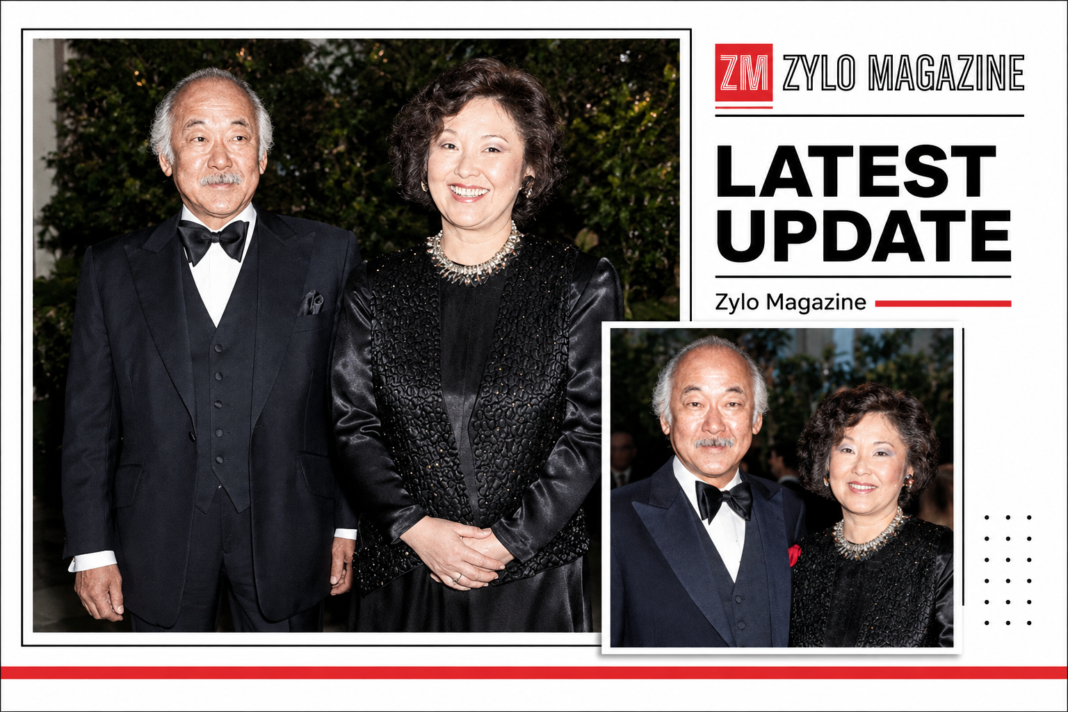
Meredith Schwarz is a finance and corporate-development professional whose name often appears in searches because of her former marriage to Pete Hegseth. Yet focusing exclusively on that relationship misses the more substantial and better-documented part of her story: a career spanning investment banking, corporate mergers and acquisitions, venture investing, private equity, consumer businesses, and wealth-management M&A. Today, Schwarz is identified by Wealth Enhancement as its Senior Vice President of Corporate Development, following earlier positions connected with JPMorgan, General Mills, Encore Consumer Capital, Rustica, and Gather Venture Group.
Interest in Meredith Schwarz has increased as Hegseth’s public profile has grown, but reliable information about her remains relatively limited. That makes careful sourcing particularly important. This guide examines what is actually known about Schwarz, explains her professional journey, puts her former marriage in context, and separates documented facts from the speculation that frequently surrounds private individuals connected to famous people.
Who Is Meredith Schwarz?
Meredith Schwarz is an American finance and business executive with extensive experience in corporate development, investment banking, mergers and acquisitions, consumer investing, and business strategy.
Her current professional biography at Wealth Enhancement lists her as Senior Vice President, Corporate Development. The company says she began her career at JPMorgan in New York, working in Private Banking and Investment Banking, before moving into corporate M&A at General Mills and later private equity in San Francisco. Her career has involved both buy-side and sell-side transactions in the United States and internationally.
Another professional profile, published by Gather Venture Group, identifies Schwarz as an advisor who has provided financial management and counsel to emerging consumer packaged goods businesses. According to Gather, that work includes strategic planning, financial modeling, and fundraising.
Her public recognition, however, comes partly from a different chapter of her life.
Schwarz was the first wife of Pete Hegseth, who went on to become a television personality and prominent political figure. The two knew each other long before Hegseth reached national prominence. Their relationship began during their younger years in Minnesota and eventually led to marriage in 2004. The marriage ended several years later.
That connection explains why searches such as “Meredith Schwarz Pete Hegseth,” “Pete Hegseth first wife,” and “who is Meredith Schwarz?” are common. But her documented professional history demonstrates why describing her solely as someone’s former spouse provides an incomplete picture.
Meredith Schwarz: Quick Facts
| Topic | Verified or publicly documented information |
|---|---|
| Full name | Meredith Schwarz |
| Known for | Finance, corporate development and former marriage to Pete Hegseth |
| Current professional role | Senior Vice President, Corporate Development at Wealth Enhancement |
| Career fields | Investment banking, private banking, M&A, venture investing, private equity, consumer businesses and corporate development |
| Previous organizations | JPMorgan, General Mills, Encore Consumer Capital, Rustica |
| Advisory work | Gather Venture Group |
| Education | BA in Economics and English |
| Former spouse | Pete Hegseth |
| Marriage | 2004 |
| Current residence | Wealth Enhancement’s biography says she lives outside Minneapolis |
| Family today | Her current professional biography says she lives with her husband and two daughters |
The last two details come from Schwarz’s current professional biography rather than celebrity reporting, making it preferable to speculative accounts of her present-day personal life.
Meredith Schwarz’s Early Life and Education
Compared with her professional career, relatively little authoritative information is publicly available about Meredith Schwarz’s childhood and family background. This distinction matters because numerous online biographies provide precise birth dates, family histories, and childhood details without showing dependable sources.
What can be established more confidently is that Schwarz has strong connections to Minnesota and later pursued an education combining economics with the humanities.
Her current Wealth Enhancement biography lists a BA in Economics and English. An earlier industry report announcing her move to Encore Consumer Capital similarly stated that she graduated from Columbia University with a BA in English and Economics.
That combination is worth noting because it aligns unusually well with the career Schwarz eventually built.
Economics provides tools for thinking about incentives, markets, valuation, resource allocation, and business performance. English develops a different but equally important professional skill set: communication, interpretation, argument, and the ability to organize complex information.
In high-level corporate development and M&A work, technical financial knowledge alone is rarely sufficient. Executives also have to explain a transaction, understand what motivates business owners, communicate with investors and leadership teams, negotiate competing interests, and translate numbers into a coherent strategic argument.
Schwarz’s later career has repeatedly operated at exactly that intersection of quantitative analysis and relationship-based decision-making.
Meredith Schwarz and Pete Hegseth
For many readers, the first encounter with the name Meredith Schwarz comes through Pete Hegseth.
The two were connected well before his later television and political career. Vanity Fair’s detailed 2024 account of Hegseth’s first marriage reported that Schwarz and Hegseth dated in high school in Minnesota. Their classmates reportedly viewed them as a natural couple, and their relationship eventually continued into adulthood.
They married in 2004 at the Cathedral of Saint Paul in Minnesota.
Understanding the timeline is useful because it corrects a common misconception created by retrospective media coverage.
Schwarz did not marry Hegseth after he had become a nationally recognizable television personality. Their relationship originated much earlier, before the public career through which millions of Americans would eventually know him.
Consequently, Schwarz’s presence in current search results is largely retrospective: public curiosity about Hegseth has encouraged readers to look back at earlier parts of his life.
Why Did Meredith Schwarz and Pete Hegseth Divorce?
This is one area where responsible biography requires careful wording.
Vanity Fair reported in December 2024 that the marriage deteriorated amid Hegseth’s infidelity. The publication’s account says Schwarz discovered an affair and that Hegseth subsequently admitted to additional affairs. Public accounts place Schwarz’s divorce filing in December 2008, with the marriage ultimately ending in divorce.
There is little value in embellishing these events beyond what credible reporting establishes.
More importantly, the divorce should not become the organizing principle for Schwarz’s entire biography. Her professional record extends across decades and multiple industries, whereas her marriage represents one period of her personal life.
That distinction is especially important when writing about someone who has not built a career around publicity.
Meredith Schwarz’s Career: From Banking to Corporate Development
The most informative way to understand Meredith Schwarz is to follow the progression of her professional career.
What makes her résumé notable is not simply the list of companies where she has worked. It is the movement between several different perspectives on business ownership and investment.
She has worked inside major financial institutions, a global consumer-products company, private equity, an operating consumer business, advisory roles, and wealth-management corporate development.
Those experiences expose an executive to fundamentally different questions.
A banker asks whether a transaction can be structured and financed. An investor asks whether a business is worth owning. A corporate strategist asks whether an acquisition or investment fits a larger organization. An operator has to make the underlying company actually perform. And a corporate-development executive must bring many of those perspectives together.
Schwarz’s career has crossed each of these environments.
Starting at JPMorgan
According to Wealth Enhancement, Schwarz began her career at JPMorgan in New York, working in both Private Banking and Investment Banking.
Investment banking is a demanding foundation for a career in transactions because junior professionals typically learn how companies are valued, how financial statements connect, how transactions are structured, and how businesses communicate their financial position to investors or potential buyers.
Private banking provides a somewhat different perspective by placing greater emphasis on clients, wealth, relationships, and long-term financial needs.
That combination becomes particularly relevant when viewed from the perspective of Schwarz’s later work in wealth-management M&A.
Her current role requires understanding not only a company’s economics but also the people who built it and the clients and employees who depend on it.
Her early banking experience therefore appears less like an isolated first job and more like the foundation for a career centered on businesses, transactions, and owners.
General Mills: Moving From Finance Into Corporate Strategy
Schwarz later joined General Mills, where her responsibilities expanded beyond traditional financial services.
Industry reporting from 2015 said she worked in mergers and acquisitions and new business development at General Mills and started the company’s corporate venture fund, focusing on investments in emerging packaged-food brands.
This was a significant shift.
Corporate venture capital differs from conventional investing because a corporate investor often has two overlapping objectives.
The first is financial: Can this investment generate attractive returns?
The second is strategic: Can the startup, technology, product, distribution model, or consumer insight create value for the parent corporation?
Schwarz’s position therefore required more than financial analysis. It involved identifying younger consumer companies that could matter within a much larger food ecosystem.
Forbes highlighted Schwarz in a 2013 list of influential figures in consumer and retail. At the time, she was identified as a manager at General Mills Ventures responsible for the fund’s direction, investment pipeline, and portfolio.
That recognition is particularly useful because it predates much of the current public interest in Schwarz’s personal life. In other words, her standing within consumer investing existed independently of later searches related to Hegseth.
What General Mills Ventures Reveals About Her Professional Approach
The General Mills period provides an important insight into Schwarz’s career trajectory.
Large consumer companies face a recurring problem: their scale gives them enormous resources, but small emerging brands can often identify changing consumer tastes faster.
Corporate venture programs can help bridge that gap.
An investor in this environment needs to recognize not merely which startup is growing but why it is growing. Is it benefiting from a temporary trend? Does it have genuine customer loyalty? Can distribution expand? Can the economics survive scale? Is the brand strategically useful to the corporate investor?
Those are questions that combine finance, consumer behavior, operations, and strategy.
Schwarz’s later movement into consumer-focused private equity and operating businesses suggests that this intersection became a recurring theme throughout her career.
Meredith Schwarz at Encore Consumer Capital
In 2015, Schwarz moved from General Mills to Encore Consumer Capital, a private equity firm focused on consumer businesses.
Contemporary reporting described her appointment as Vice President and said she would work on deal origination, transaction execution, and portfolio-company oversight.
This represented another meaningful professional transition.
Corporate venture capital often invests minority stakes in relatively young businesses, with strategic considerations playing an important role. Private equity typically requires a more intensive focus on valuation, ownership, cash generation, operational improvement, management, and eventual exit opportunities.
Schwarz was therefore moving closer to the full lifecycle of company ownership.
Her General Mills experience gave her knowledge of consumer brands from the perspective of a strategic corporate investor. Encore added the perspective of a financial sponsor evaluating consumer companies as investments.
That breadth would become particularly valuable when she later moved into an operating business herself.
Rustica: From Investing in Businesses to Helping Run One
One of the most revealing stages of Meredith Schwarz’s career came through her involvement with Rustica.
Gather Venture Group’s biography says Schwarz joined and invested in Rustica and served as Greg Hoyt’s “right hand” during 2017 and 2018. The organization credits that period with record profitability for the company.
The Minneapolis/St. Paul Business Journal also featured Schwarz in its 2019 40 Under 40 coverage, noting that she brought experience from General Mills and Encore Consumer Capital to Rustica and helped position the bakery for a highly profitable year.
This stage matters because operating a business is fundamentally different from analyzing one.
A spreadsheet can model margins, revenue growth, labor costs, and capital requirements. Operators must actually deliver those outcomes while managing employees, suppliers, customers, locations, pricing, inventory, and everyday problems.
Experience on both sides can change the way an executive approaches future deals.
Someone who has operated a company is more likely to understand that a transaction does not end when contracts are signed. Acquisition success depends on integration, employees, culture, execution, and continued growth.
That perspective connects directly with Schwarz’s later comments about M&A in the wealth-management industry.
Advisory Work With Gather Venture Group
Schwarz has also been listed as an advisor with Gather Venture Group, an organization focused on emerging food and beverage companies.
Gather says her work includes financial management and counsel for developing local consumer packaged goods businesses, particularly in areas such as:
- strategic planning;
- financial modeling; and
- fundraising.
These responsibilities may sound technical, but they address some of the hardest challenges founders face.
A growing consumer brand can have an attractive product and enthusiastic customers while still failing because its cash requirements, margins, inventory, fundraising strategy, or expansion plan are poorly managed.
Financial modeling forces founders to translate ambition into measurable assumptions.
How quickly can sales grow?
How much working capital will expansion require?
What happens if gross margin falls?
How many employees can the company afford?
When will another fundraising round become necessary?
Good strategic finance turns these questions into decisions before they become emergencies.
Schwarz’s background across banking, corporate investing, private equity, and operations makes this kind of advisory work a logical extension of her career.
Meredith Schwarz at Wealth Enhancement
Schwarz’s current professional chapter brings her back squarely into corporate development and transactions.
Wealth Enhancement presently identifies her as Senior Vice President, Corporate Development. Her company biography emphasizes roughly two decades of experience working with families, founders, and entrepreneurs, including owners selling businesses or transitioning into the next stage of their lives.
Her role also connects her career to the consolidation occurring in the registered investment adviser, or RIA, industry.
In a 2024 interview with RIA Intel, Schwarz discussed Wealth Enhancement’s acquisition strategy and why smaller advisory firms can find larger partners attractive. She pointed to advantages such as scale in marketing, compliance, technology, and broader capabilities.
But one of the more valuable insights associated with Schwarz’s M&A philosophy concerns people.
In another discussion about the wealth-management industry’s talent challenges, Schwarz emphasized that acquisitions are fundamentally about acquiring talent and highlighted the danger of buying practices without a strong next generation of advisors.
This offers a useful window into how she thinks about deals.
A financial-services acquisition may look attractive based on revenue, assets, margins, and purchase price. But if the client relationships are concentrated around professionals who are about to retire, the spreadsheet can conceal a major succession problem.
The real asset is not simply revenue. It is the organization’s ability to preserve relationships and continue producing value after the transaction.
A 2026 View of M&A: Acquisition Alone Is Not Growth
Schwarz’s more recent commentary adds another layer to this philosophy.
In August 2026, MarshBerry published highlights from a discussion with Schwarz, identifying her as Wealth Enhancement’s SVP of Corporate Development. The discussion examined growth, leadership, innovation, artificial intelligence, and the changing RIA M&A environment.
One particularly useful observation was that acquisitions should not automatically be treated as an easy substitute for organic growth.
Integration itself can consume management attention and potentially slow the underlying organization’s organic momentum. At the same time, business valuations increasingly reward companies capable of producing genuine organic growth.
This is a practical lesson well beyond wealth management.
Businesses frequently celebrate acquisitions because the headline number is easy to measure. Revenue becomes larger overnight.
But sustainable value depends on what happens afterward.
Can the companies integrate?
Do employees stay?
Do customers remain loyal?
Can management maintain the existing business while absorbing the acquired operation?
Can the combined company still innovate and win new customers?
These questions explain why experienced dealmakers distinguish buying growth from building a stronger business.
What Meredith Schwarz’s Career Can Teach Founders and Business Leaders
Schwarz’s professional path provides several practical lessons for entrepreneurs, executives, and investors.
1. Financial Skills Become More Powerful When Combined With Operating Experience
Understanding valuation is valuable.
Understanding what creates that valuation is even more useful.
Schwarz moved from financial institutions into corporate investing, private equity, and operating environments. That progression illustrates how exposure to actual business operations can deepen an investor’s understanding of financial performance.
Revenue growth ultimately comes from customers.
Margins depend on pricing, purchasing, labor, and operating discipline.
Retention depends on people and relationships.
Strategy only matters when a company can execute it.
The closer financial decision-makers get to those underlying drivers, the better equipped they become to evaluate businesses realistically.
2. M&A Is About People as Much as Numbers
Schwarz’s comments about talent in wealth-management acquisitions highlight a point that many financial models understate.
Companies are collections of relationships, knowledge, processes, and people.
This is especially true in advisory businesses, professional services, healthcare, consulting, and other industries where clients associate their relationship with particular professionals.
A buyer evaluating an acquisition should therefore ask not just, “What EBITDA am I purchasing?” but:
Who maintains the client relationships?
Who could leave after closing?
Who is being developed as the next generation of leadership?
What knowledge exists only in someone’s head?
Does the culture encourage key employees to remain?
These questions can materially change the value of a transaction.
3. Scale Has Value, but Only When It Solves Real Problems
Schwarz has discussed how larger wealth-management organizations can provide smaller firms with capabilities in areas including technology, compliance, marketing, and service infrastructure.
This offers a broader lesson about scale.
Getting bigger is not automatically valuable.
Scale matters when shared infrastructure makes individual business units stronger.
A founder considering a sale should therefore look beyond the purchase price and ask what the buyer can provide after closing. The best strategic partner may offer distribution, technology, recruiting capabilities, regulatory infrastructure, capital, or expertise that would be expensive for the smaller business to build independently.
4. Organic Growth Still Matters
An acquisition can increase reported revenue immediately. It cannot automatically prove that customers want more of what the underlying business offers.
Organic growth provides a different signal.
It indicates that the existing organization can attract customers, deepen relationships, launch useful products, or otherwise expand without purchasing another company’s revenue.
Schwarz’s recent commentary on balancing M&A with organic development is therefore particularly relevant to acquisitive businesses.
A company that relies exclusively on acquisitions can become larger while quietly weakening its core growth engine.
Meredith Schwarz’s Personal Life Today
Because Schwarz maintains a comparatively private public profile, claims about her personal life should be handled carefully.
Her current Wealth Enhancement biography does provide one useful, first-party professional source: it states that she lives outside Minneapolis with her husband and two young daughters.
Beyond information she or her professional organizations have chosen to make public, there is little reason to speculate.
This is particularly important because search-driven biography websites frequently repeat unverified details until repetition makes them appear factual.
A claim appearing on ten websites is not equivalent to ten independent confirmations when the sites are copying one another.
For private individuals, the strongest approach is to rely on professional biographies, established publications, contemporary industry reporting, and direct organizational records.
What Is Meredith Schwarz’s Net Worth?
There is no dependable public evidence establishing Meredith Schwarz’s exact net worth.
Various websites may publish estimated figures, but readers should treat such numbers cautiously unless the methodology and underlying assets are documented.
Schwarz has clearly held senior positions in finance, investing, corporate development, and business leadership. That fact alone does not make it possible to calculate her personal wealth.
A genuine net-worth calculation would require reliable information about assets, liabilities, investment ownership, compensation, property, private-company stakes, taxes, and other financial obligations.
Without those inputs, a precise figure is speculation.
For SEO-oriented biography content, saying “unknown” when the evidence is unavailable is considerably more useful than inventing a number that other websites may repeat.
Why Is Meredith Schwarz Still Searched Online?
Search interest in Meredith Schwarz illustrates an unusual feature of the modern information environment.
She is not primarily a celebrity, entertainer, influencer, or political personality. Instead, public interest is partly derivative: people encounter Pete Hegseth, investigate his background, and discover the name of his first wife.
That creates a gap between public curiosity and public information.
When curiosity is high but verified information is limited, low-quality websites often fill the gap with assumptions. Birth dates become inconsistent. Career histories are copied incorrectly. Net-worth estimates appear without evidence. Private-life claims are repeated without primary sourcing.
Schwarz is therefore a useful example of why readers should evaluate online biographies based on source quality rather than detail quantity.
The longest biography is not necessarily the most accurate.
Frequently Asked Questions About Meredith Schwarz
Who is Meredith Schwarz?
Meredith Schwarz is an American finance and corporate-development executive. She currently serves as Senior Vice President, Corporate Development at Wealth Enhancement. Her career has included work in banking, mergers and acquisitions, corporate venture investing, private equity, consumer businesses, and strategic advisory roles. She is also publicly known as Pete Hegseth’s first wife.
Was Meredith Schwarz Pete Hegseth’s first wife?
Yes. Meredith Schwarz was Pete Hegseth’s first wife. They had known each other since their school years in Minnesota and married in 2004. Their marriage later ended in divorce.
What does Meredith Schwarz do for a living?
As of 2026, Wealth Enhancement identifies Meredith Schwarz as its Senior Vice President of Corporate Development. Her professional background includes JPMorgan, General Mills, private equity, consumer-business operations, and M&A.
Where is Meredith Schwarz now?
Public information about Schwarz’s private life is intentionally limited. Her current professional biography says she lives outside Minneapolis with her husband and two daughters. Professionally, she is Senior Vice President of Corporate Development at Wealth Enhancement.
What is Meredith Schwarz’s net worth?
No authoritative public source establishes Meredith Schwarz’s exact net worth. Figures appearing on celebrity-biography websites should therefore be considered estimates or speculation unless supported by verifiable financial records.
Conclusion
Meredith Schwarz is frequently introduced as Pete Hegseth’s first wife, but that description captures only one chapter of a much broader story. Her documented professional career stretches from JPMorgan and General Mills to consumer investing, private equity, business operations, strategic advisory work, and senior corporate development at Wealth Enhancement. Along the way, she helped develop General Mills’ corporate venture activities, worked with consumer businesses, contributed to Rustica during a period associated with strong profitability, and developed substantial experience in mergers and acquisitions.
The most useful way to understand Meredith Schwarz, therefore, is not through unsupported net-worth estimates or speculation about her private life. It is through the professional record that can actually be verified. That record presents an experienced finance and M&A executive whose career demonstrates the importance of combining financial analysis with operating knowledge, relationships, talent, and long-term strategic thinking.
Continue Exploring Our Latest Article: Lakiha Spicer: The Life, Marriage, Family, and Story of Mike Tyson’s Wife