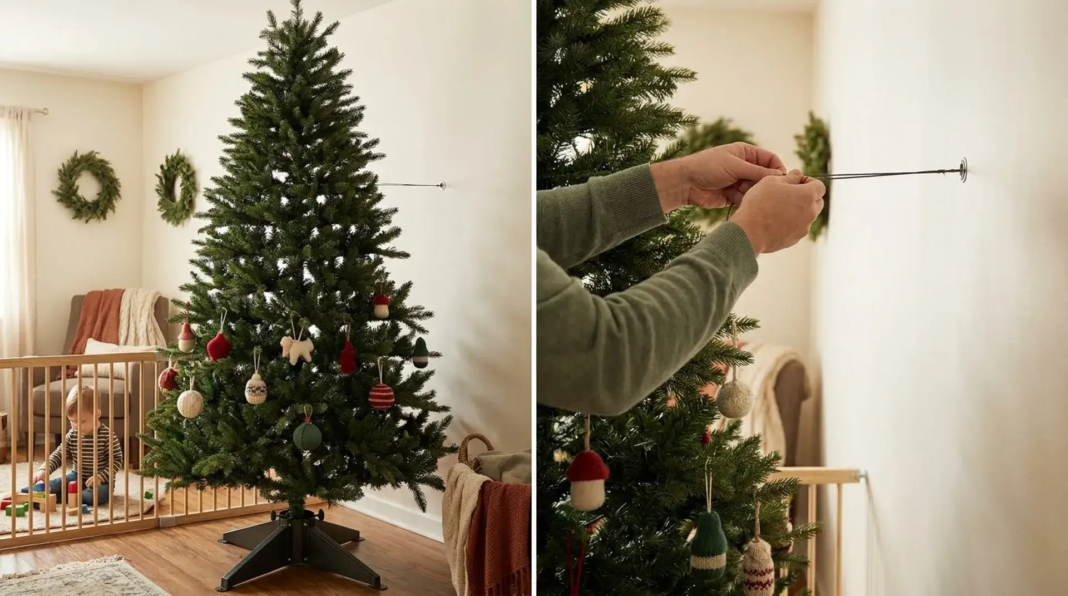
Choosing between a nine-foot and a ten-foot Christmas tree is rarely as simple as measuring ceiling height. For homeowners who invest in large-format artificial or live trees, the decision carries practical consequences that play out over weeks — from initial setup through the entirety of the holiday season. A tree that is too tall creates structural risk. A tree that is proportionally mismatched to its stand becomes a liability. And a stand that was not designed for the weight and trunk diameter of a full-size tree is a problem waiting to surface at the worst possible moment.
This is a decision that benefits from slower, more deliberate thinking than most seasonal purchases receive. The difference between a nine-foot and a ten-foot tree is not simply one foot of height. It is a meaningful shift in trunk mass, canopy spread, branch weight distribution, and the mechanical demands placed on the stand holding it upright. Understanding those differences — and making an informed choice about the support system that accompanies your tree — is what this article is about.
Why Tree Height Determines More Than Appearance
When people think about tree height, they tend to think visually. A ten-foot tree fills a room in a way that a nine-foot tree does not. But the more consequential differences are structural. A 10 foot christmas tree stand is engineered specifically to accommodate the trunk diameter, weight distribution, and lateral stress that comes with a tree of that size — factors that a standard or mid-range stand simply cannot manage reliably over a four-to-six-week display period.
The reason this matters is that tree stability is not a static condition. Over the course of a holiday display, the soil in a live tree’s water reservoir shifts. Branches absorb the weight of ornaments gradually. Environmental factors like heating systems running continuously cause soil to compact and water levels to fluctuate. All of these forces work against the original stability of the setup. A stand that was marginal at installation becomes genuinely unreliable by week three.
The Weight Distribution Problem at Larger Sizes
A nine-foot tree and a ten-foot tree are not proportionally identical structures. A ten-foot tree carries considerably more mass in its upper third — the section that creates the most torque on the base. When a tree is top-heavy relative to the grip strength of its stand, the risk of tipping increases progressively rather than all at once. The stand appears to be holding the tree securely during setup, but the cumulative load of decorations and the natural settling of the trunk within the clamp or water reservoir erodes that security over time.
This is a common failure pattern that homeowners experience with oversized trees placed in undersized stands. The tree leans slightly, is readjusted, leans again, and eventually requires external bracing or creates a fall incident. The fix is rarely the tree itself. It is almost always the stand.
Trunk Diameter as a Practical Boundary
Trunk diameter is one of the most overlooked factors when selecting a stand for a large tree. A live Nordmann fir or Fraser fir at ten feet will have a trunk that is meaningfully thicker than what most residential stands are designed to accept. Forcing a thick trunk into a stand with insufficient jaw clearance creates one of two problems: the stand cannot close properly around the trunk, leaving the tree insecure, or the stand is forced beyond its intended tolerance, weakening the clamp mechanism over time.
For artificial trees, trunk diameter is typically more standardized at the manufacturer level, but the central pole that anchors the sections together still needs to seat fully and securely in the stand’s receiving collar. When that fit is imprecise, the assembled tree can shift at the base with very little lateral pressure.
The Practical Differences Between Nine-Foot and Ten-Foot Trees
The additional foot of height between a nine-foot and ten-foot tree changes the spatial dynamics of a room in ways that are not always easy to predict from measurements alone. Ceiling height is the obvious constraint, but there are several secondary factors that affect whether a ten-foot tree is genuinely viable in a given space.
Clearance at the Top
A ten-foot tree displayed with a traditional star or angel topper typically requires twelve to thirteen inches of additional clearance above the stated tree height. This means a room with a ten-foot ceiling is not, in practical terms, sufficient for a ten-foot tree with any kind of topper. The same principle applies to nine-foot trees in rooms with nine-foot ceilings. The functional minimum ceiling height for a ten-foot tree with a topper is generally eleven feet, and more comfortable display starts closer to eleven and a half feet.
Rooms with vaulted or cathedral ceilings offer more flexibility on this front, but introduce their own challenges around stability and the visual proportion of the tree relative to the expanded vertical space.
Floor Space and Canopy Width
As trees grow taller, their canopy width increases proportionally. A ten-foot tree in a well-grown natural shape will extend further from center than a nine-foot tree. This is a meaningful consideration in rooms where furniture placement is fixed or where the tree display area has defined walls or traffic paths on multiple sides. A tree placed too close to furniture not only creates a visual problem — it can also restrict air circulation around the trunk and lower branches, which accelerates needle drop in live trees.
According to general guidelines from the National Fire Protection Association, live Christmas trees should be kept at least three feet from any heat source, including radiators, fireplaces, and heating vents. This clearance requirement reduces the effective display area in many rooms and is a factor that becomes more pressing as canopy width increases with tree height.
Weight Management During Setup
Setup complexity increases notably between nine and ten feet. A live ten-foot tree is substantially heavier than a nine-foot tree, and the process of positioning and securing it in a stand is genuinely a two-person task. With artificial trees, sectional assembly becomes more involved, and aligning all sections precisely before securing the base is more demanding. A stand that lacks clear, accessible adjustment points — or that requires the tree to be lifted and repositioned during tightening — adds significant friction to the setup process and increases the chance of an unstable final position.
What Defines a Stand Capable of Handling Full-Size Trees
A stand rated for a ten foot christmas tree stand application is defined not by a single specification but by a combination of characteristics that together determine long-term holding performance. Understanding what those characteristics are allows homeowners to evaluate any stand against the demands of their specific tree rather than relying solely on manufacturer claims.
Grip Mechanism Design
The mechanism by which a stand grips the trunk is the most consequential design element. Stands that use a single central bolt or a simple friction collar are adequate for smaller trees but lose effectiveness at the trunk diameters and weights associated with nine and ten-foot trees. Stands that use multiple adjustment points — typically three or four independent clamps or screws distributed around the trunk — distribute holding force more evenly and maintain grip more reliably as the trunk settles and shifts over time.
Multi-point grip systems also allow for more precise vertical alignment during setup, which reduces the likelihood of the tree leaning in a particular direction after installation is complete.
Base Footprint and Ballast
A stand’s base footprint relative to the height of the tree it supports determines how much lateral force is required to tip the assembly. A wide, heavy base lowers the center of gravity of the entire structure and increases the resistance to tipping from side pressure — whether that comes from pets, children, or the gradual shift of weight as ornaments are added. Stands with narrow bases or lightweight construction are proportionally less stable at greater tree heights, even when the grip on the trunk is secure.
Water Reservoir Capacity for Live Trees
For live trees, the water reservoir capacity of a stand is directly tied to how long the tree can go between waterings. A ten-foot live tree consumes more water per day than a nine-foot tree, and a reservoir that empties quickly creates two problems: the tree experiences stress between watering cycles, and the reduced water weight in the reservoir affects the overall ballast of the stand. A larger, purpose-designed 10 foot christmas tree stand maintains a more stable water level that supports both the tree’s health and the base’s holding weight simultaneously.
When a Stand Rated for Both Sizes Makes Practical Sense
Some homeowners rotate between tree sizes from year to year, or purchase a tree that falls in the range between nine and ten feet — particularly with live trees, where exact height is not always predictable before purchase. In these situations, a stand rated for the upper end of that size range provides consistent performance across both scenarios without requiring a separate purchase for each tree height.
A 10 foot christmas tree stand used with a nine-foot tree does not create any meaningful disadvantage. The grip mechanism can accommodate a slightly smaller trunk, and the base footprint provides more stability than a nine-foot-rated stand would offer anyway. The reverse — using a nine-foot-rated stand with a ten-foot tree — creates measurable risk that tends to become apparent after several weeks of display, not immediately at setup.
The practical guidance here is straightforward: if there is any possibility that a tree will reach ten feet, the stand should be selected for that height rather than sized to the lower estimate.
A Practical Decision Framework
The choice between a nine-foot and ten-foot tree ultimately comes down to three concrete factors: available ceiling height with topper clearance, available floor space accounting for canopy width and fire clearance requirements, and willingness to manage the additional setup complexity and water maintenance that comes with a larger live tree.
The stand decision is simpler. For any tree approaching or reaching ten feet, select a 10 foot christmas tree stand that uses a multi-point grip system, offers a wide and weighted base, and — for live trees — includes a reservoir large enough to support daily water consumption without running dry. This selection criterion applies regardless of whether the tree being displayed is at the lower or upper end of the size range.
• A nine-foot tree in a room with nine-foot ceilings will not accommodate a traditional topper without modification or adjustment to the tree’s height at setup.
• A ten-foot tree requires a minimum clearance calculation that includes topper height, not just stated tree height.
• Live trees at either size benefit from a reservoir that holds enough water to buffer one missed daily watering without creating stress to the tree.
• Multi-point grip stands outperform single-bolt designs over multi-week display periods, particularly as ornament weight accumulates in the canopy.
• A stand rated for ten feet used with a nine-foot tree creates no performance downside and adds a margin of stability that is generally worth the minimal additional cost.
Closing Thoughts
The decision between a nine-foot and ten-foot Christmas tree is one that most people make based on visual preference and available ceiling height. Those are reasonable starting points, but the full decision requires thinking through canopy width, setup logistics, and — most importantly — the mechanical demands placed on the stand holding the tree in place for the duration of the season.
A tree that falls in the middle of a holiday gathering, or that begins to lean noticeably by mid-December, is not simply an inconvenience. It is the outcome of a mismatch between tree size and support infrastructure that was avoidable from the beginning. The stand is not a secondary purchase. It is the part of the system that determines whether everything else works as intended.
Taking time to select a stand that is genuinely rated for the size of tree being displayed — rather than one that appears adequate at the point of purchase — is the single most reliable way to avoid the failure patterns that make large tree displays unnecessarily stressful. The tree is the centerpiece. The stand is what makes it possible to keep it that way.