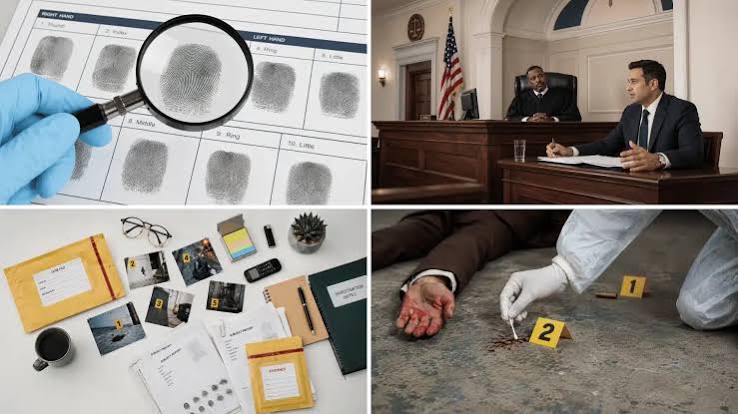
For decades, courtroom reconstruction relied on static diagrams, hand-drawn sketches, and verbal testimony from expert witnesses. Jurors were expected to form spatial and temporal understanding from two-dimensional exhibits and oral description alone. That process was always imperfect. Human beings struggle to mentally reconstruct the sequence of events from a photograph of a road intersection or a floor plan of a building they have never visited. The gap between what a witness describes and what a jury actually pictures has long been a real limitation in criminal and civil litigation.
That gap has narrowed significantly over the past decade. Courts across the United States have increasingly admitted animation-based reconstructions as evidentiary exhibits, changing how accidents, homicides, structural failures, and other complex events are presented and understood. The shift is not driven by novelty or technology for its own sake. It reflects a practical need to communicate cause, sequence, and spatial reality to people who were not present at the scene and who must reach a verdict based on their understanding of it.
1. Making Sequence and Timing Understandable for Non-Expert Jurors
One of the most persistent challenges in criminal and civil trials is helping jurors understand not just what happened, but in what order and over what period of time. Forensic Animations address this directly by translating reconstructed data — from physical evidence, surveillance footage, accident reports, and expert analysis — into a visual timeline that moves at a controlled pace. Jurors see the sequence unfold rather than try to assemble it from testimony alone.
For legal teams looking to understand how this technology is applied across different case types, resources that document real applications of Forencic Animations can provide useful context on what these tools produce and how they are developed for courtroom use.
Why Sequence Matters More Than Individual Facts
A jury might understand that a vehicle was traveling at a certain speed and that a pedestrian entered the crosswalk at a specific moment. But without seeing those two facts in motion together, in real time, the relationship between them may not register clearly. Animation connects the data points into a coherent chain of events. That chain is often what decides whether an action appears negligent, reckless, or unavoidable. Static exhibits can establish individual facts. Animation establishes the interaction between those facts.
2. Supporting Expert Testimony Without Replacing It
Forensic animation is not a substitute for expert witnesses. It functions as a visual companion to their testimony. An accident reconstructionist, a forensic pathologist, or a structural engineer brings professional interpretation to the evidence. The animation gives the jury a way to see what that expert is explaining rather than simply hear it described.
How Animations Are Built Around Expert Input
The reconstruction process typically begins with the expert’s analysis. They determine positions, velocities, angles, and timing based on physical evidence and accepted methodology. The animation team then models those conclusions visually, rendering them in a format that reflects the expert’s findings rather than an independent interpretation. The result is a visual representation grounded in professional judgment, not speculation. Courts have generally supported this relationship when the animation is presented transparently as a demonstrative exhibit based on expert findings.
3. Communicating Complex Physical Spaces Accurately
Many cases involve locations that jurors have never visited and that photographs fail to fully represent. A highway interchange, a multi-story building, an industrial facility, or a residential property all have spatial characteristics that affect how an event could have unfolded. Two-dimensional floor plans convey little of that reality to someone unfamiliar with the space.
Three-Dimensional Modeling and Spatial Honesty
Forensic animations typically build environments from surveyed measurements, architectural drawings, or photogrammetric data. The resulting model reflects the actual geometry of the location rather than an approximation. This matters in cases where sight lines, distances, or spatial relationships are central to the argument. Whether a driver could have seen a hazard from a given position, whether an occupant could have exited a structure before a fire spread, whether a person was visible from a security camera’s field of view — these questions become answerable in a visual format that a jury can actually evaluate.
4. Reducing Ambiguity in Vehicle and Pedestrian Accident Cases
Traffic-related litigation represents one of the most consistent areas of application for forensic animation in US courtrooms. These cases involve complex interactions between vehicles, road geometry, weather conditions, and human reaction time. The physical evidence — skid marks, vehicle damage, traffic signal data — exists in fragments. Animation assembles those fragments into a coherent picture.
Reaction Time and Pre-Collision Behavior
In vehicle accident cases, the period immediately before impact is often the most contested. Was the driver paying attention? Did the pedestrian act predictably? Was there sufficient time to brake or swerve? Forensic animation can model these moments using established reaction time data, vehicle dynamics, and physical evidence from the scene. As noted in materials from the National Highway Traffic Safety Administration, the factors that contribute to collision outcomes involve interconnected variables that are difficult to communicate through testimony alone. Animation gives the jury a coherent way to weigh those variables together.
5. Presenting Ballistic and Trajectory Evidence in Homicide Cases
In criminal cases involving firearms, the path a projectile travels and the positions of the individuals involved can be central to establishing whether an account of events is physically plausible. Ballistic evidence — entry and exit wounds, bullet trajectory through structures, recovered casings — is interpreted by forensic experts and then used to reconstruct the relative positions of shooter and victim at the time of discharge.
Positioning and Line-of-Sight Reconstruction
Forensic animations in these cases model the three-dimensional path of a projectile through a space and connect it to the established positions of the individuals present. This can either support or contradict a witness account. If a defendant claims to have fired from a particular location in a specific direction, the animation can show whether the documented physical evidence is consistent with that account. For juries without technical backgrounds, seeing that analysis rendered visually is considerably more accessible than having it described through numerical data and verbal explanation alone.
6. Establishing What Surveillance and Video Evidence Actually Shows
Surveillance footage is widely treated as objective. In practice, camera angles, compression artifacts, frame rates, and resolution limitations mean that raw footage often raises as many questions as it answers. Forensic animation is increasingly used alongside video evidence to clarify what the footage is showing and to place it within a broader reconstructed context.
Integrating Footage into a Reconstructed Environment
When the physical environment has been modeled accurately, surveillance footage can be matched to a camera position within that model. This allows the animation to show, alongside the recorded footage, what was happening outside the camera’s field of view at the same moment. It connects the partial record of the surveillance system to a more complete picture of the event. Courts have found this approach useful in cases where the footage alone is insufficient to establish what a specific individual did or where they were at a given time.
7. Improving Consistency Between Expert Reports and Jury Understanding
One of the persistent risks in litigation is that a well-supported expert conclusion fails to translate into jury understanding. Experts operate within professional frameworks that non-specialists do not share. When a forensic engineer explains that a structural component failed due to metal fatigue at a specific load threshold, that explanation may be technically accurate and well-supported but practically opaque to a jury. The expert’s credibility may be high, but comprehension remains uncertain.
Bridging the Gap Between Technical Accuracy and Comprehension
Forensic animations do not simplify expert findings — they visualize them. A structural failure, the spread of a fire, the movement of a person through a building, or the dynamics of a vehicle collision can each be rendered in a way that preserves the technical integrity of the expert’s analysis while making it visible to people who are not trained in that field. The animation does not reinterpret the evidence. It shows the jury what the expert’s interpretation actually means in physical terms. That translation is often the difference between a clear verdict and a prolonged, confused deliberation.
Closing Observations
Forensic animation has moved from a novelty to a standard tool in how complex litigation is prepared and presented in the United States. It does not change the evidence. It does not replace expert analysis. What it changes is the reliability with which that evidence and analysis reach the people who must weigh it.
Courts have not adopted these tools uniformly or without scrutiny. Admissibility standards vary by jurisdiction, and judges apply careful review to ensure that animations reflect documented evidence rather than advocacy dressed in visual form. That scrutiny is appropriate and necessary. It has also, over time, produced clearer standards for how forensic animations are built, labeled, and introduced — standards that make them more reliable as courtroom exhibits rather than less.
For attorneys, investigators, and litigation support professionals, the practical value of this technology lies not in its visual appeal but in the consistency it brings to the communication of complex facts. When a jury understands the sequence of events clearly, deliberation becomes more grounded. Verdicts reflect what the evidence actually shows rather than what individual jurors could mentally reconstruct from fragmented testimony. That consistency matters — not just for outcomes in individual cases, but for the integrity of the process that produces them.