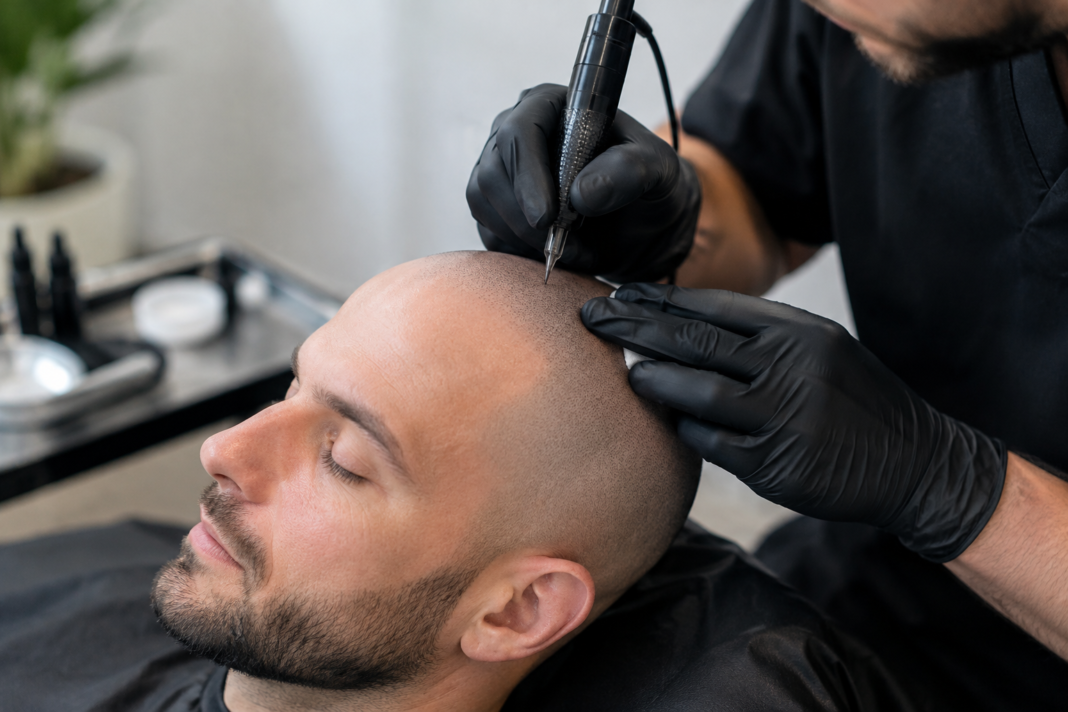
During scalp micropigmentation, a practitioner assesses the client’s hair loss, selects an appropriate pigment, and applies small impressions to replicate realistic hair follicles. The treatment includes two to four sessions and provides long-lasting results for four to six years. Here is how practitioners apply ink to help you better understand how the process works:
Scalp Preparation and Treatment Design
The ink application process in scalp micropigmentation starts with an assessment of the client’s scalp and hair loss pattern. During the consultation, the artist assesses the area to be covered and discusses the client’s desired results. These details help them create a personalized treatment plan that focuses on the client’s needs, whether adding volume, camouflaging a scar, or rebuilding a hairline.
Artists evaluate the client’s facial features and existing hairline to establish an appropriate design. This helps them create a suitable outline before applying pigment, whether it is a slightly receded, straight, or round hairline. It also provides a reference point for maintaining consistency throughout the procedure and guides the placement of individual impressions.
Artists discuss the proposed treatment plan and the expected number of sessions during consultation. This helps set realistic expectations, since treatment requirements vary depending on the extent of hair loss or scarring. It also clarifies what the treatment entails and prepares the clients for the stages involved.
Pigment Selection
Pigment selection influences how the completed treatment blends with the client’s existing hair and skin tone. Artists evaluate these characteristics to choose an appropriate color that matches the client’s natural hair follicles as they appear when viewed through the skin. The objective is to replicate the visual effect of short hair follicles rather than create the appearance of solid ink coverage.
Practitioners also account for future changes when color-matching the pigment. This is because age and sun exposure can lighten or darken the scalp over time. The right pigment should stay consistent throughout these changes, helping clients enjoy results that remain visually accurate for years.
Pigment Application
During scalp micropigmentation, a practitioner uses specialized micro-needles to deposit pigment into the scalp. Each impression resembles a small hair follicle or a point of short hair stubble, making the treatment appear natural. The placement is also carefully planned to create the visual effect of a closely shaved head or increased density in thinning areas.
While the placement appears random, it follows natural hair growth patterns. This makes hair tattoos different from traditional tattooing, which relies on uniform patterns and heavy coverage. Artists also use layers to add density to the client’s existing hair without making unnaturally uniform rows. Other differences between scalp micropigmentation (SMP) and conventional tattooing include the following:
- SMP uses a pointillism technique, which supports detailed application
- SMP requires specialized equipment to accommodate the treatment
- SMP achieves results through precise restraint
Treatment duration depends on the size of the treatment area and the extent of hair loss. A typical session lasts approximately two to four hours, and larger areas require additional sessions to complete the planned coverage. Clients can also make adjustments during treatment sessions to help create an appearance that meets their expectations.
Result Protection
Practitioners provide aftercare instructions to help clients preserve the treatment results. Activities such as touching or scrubbing the scalp before it fully heals can lead to premature fading. It also helps prevent bacterial infection, which could complicate treatment and prolong healing time.
Clients can protect their tattoo by wearing a hat when outside to prevent sunburn and avoiding sweating, which can interfere with pigment settling. They should also avoid shaving until the scalp is fully healed to give the pigment time to lock in, reducing the chances of fading. Other aftercare instructions that clients should follow immediately after treatment include the following:
- Staying out of pools and saunas because they contain chemicals that could irritate the skin
- Avoiding shampoos and conditioners because they contain ingredients that may irritate the tattoo
- Not participating in high-intensity routines or sports because they could induce sweating
Learn More About Scalp Micropigmentation
Pigment application during scalp micropigmentation requires careful preparation, appropriate color selection, and proper placement. Clients should also follow aftercare instructions to preserve the results and avoid bacterial infections. Start by scheduling a consultation with a qualified practitioner to learn more about the treatment process.