Non-surgical hemorrhoid treatments can help relieve itching, swelling, discomfort, and constipation-related irritation without an operation. Options range from simple home care and dietary changes to over-the-counter medicines and minimally invasive procedures performed by a healthcare professional. The right approach depends on the severity of symptoms, the type of hemorrhoids, and whether bleeding or persistent pain is present.
What Are Hemorrhoids, and When Do They Need Treatment?
Hemorrhoids, also called piles, are swollen blood vessels in and around the anus or lower rectum. Internal hemorrhoids develop inside the rectum, while external hemorrhoids form beneath the skin around the anus. Common symptoms include itching, discomfort, swelling, lumps, and bright red blood during bowel movements.
Mild symptoms often improve with home care, particularly when constipation and straining are addressed. However, rectal bleeding should not automatically be blamed on hemorrhoids because other conditions can cause similar symptoms. Persistent, recurring, or worsening symptoms deserve medical assessment.
7 Non-Surgical Hemorrhoid Treatments to Consider
1. Increase Fiber in Your Daily Diet
Eating more fiber helps soften stools and makes bowel movements easier to pass. This reduces the need to strain, which can aggravate swollen hemorrhoids. Suitable foods include oats, lentils, beans, pears, apples, vegetables, and whole-grain bread.
Increase fiber gradually to reduce bloating and gas, and drink enough fluids to help it work effectively. Dietary changes may take several days or longer to improve bowel habits, so consistency matters more than making sudden, drastic changes.
2. Try a Warm Sitz Bath
A sitz bath involves sitting in a few inches of comfortably warm water to soothe the area around the anus. It may help ease itching, irritation, and discomfort, especially after a bowel movement.
Try soaking for around 10–15 minutes at a time, several times a day if needed. Use plain water rather than fragranced soaps or harsh additives, and gently pat the area dry afterward. Warm water can provide temporary relief, although it does not necessarily eliminate the underlying hemorrhoids.
3. Use Over-the-Counter Hemorrhoid Creams
Pharmacy creams, ointments, and suppositories can help manage symptoms such as itching, mild pain, and swelling. Different formulations contain different ingredients, so the appropriate option depends on the symptoms and the product’s instructions.
Some products contain hydrocortisone, a corticosteroid that reduces inflammation. These products should generally not be used for longer than one week without medical advice, because prolonged use can irritate or thin the skin. Ask a pharmacist if you are unsure which treatment is suitable.
4. Consider Fiber Supplements or Stool Softeners
When dietary fiber alone does not provide enough relief, a fiber supplement such as psyllium may help make stools softer and easier to pass. Stool softeners or other constipation medicines may also be appropriate in certain situations.
Follow the product directions and ask a pharmacist or healthcare professional for advice, especially if you take other medicines or have an underlying health condition. The goal is to reduce straining rather than cause diarrhea, which can also irritate hemorrhoids.
5. Apply a Wrapped Cold Pack
A cold pack may temporarily reduce swelling and ease discomfort around external hemorrhoids. Wrap the pack in a clean towel before applying it to the affected area for short periods.
Never place ice directly against the skin or apply intense cold for too long. This approach can help with temporary symptom relief, but it does not address constipation or guarantee that a swollen hemorrhoid will disappear.
6. Change Your Toilet Habits
Spending too long on the toilet and pushing hard during bowel movements can increase pressure around the rectal blood vessels. Simple habit changes can therefore play an important role in hemorrhoid care.
Go to the toilet when you feel the urge, avoid prolonged sitting with your phone, and do not force a bowel movement. If stools are consistently hard, focus on improving fiber intake and discuss ongoing constipation with a healthcare professional. Gentle physical activity, such as walking, can also support regular bowel movements.
7. Ask About Minimally Invasive Medical Procedures
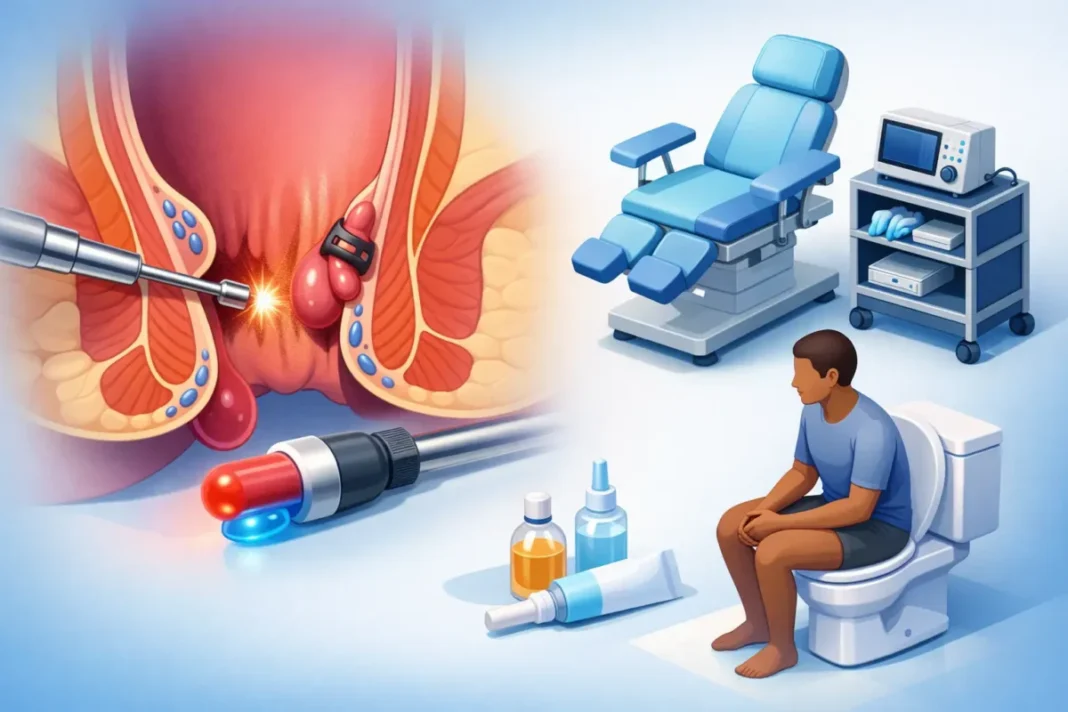
When home treatment does not provide sufficient relief, a doctor may recommend a procedure that treats hemorrhoids without conventional surgery. Options include rubber band ligation, sclerotherapy, and infrared coagulation.
Rubber band ligation is commonly used for suitable internal hemorrhoids. A clinician places a small band around the hemorrhoidal tissue to cut off its blood supply, allowing the tissue to shrink and fall away. Sclerotherapy involves injecting a solution into the affected tissue, while infrared coagulation uses heat to help shrink it.
These procedures are not the same as home remedies, and each has specific indications, risks, and limitations. A healthcare professional can determine which option is appropriate after assessing the symptoms.
How Can You Choose an Appropriate Treatment?
For mild symptoms associated with constipation, start by improving bowel habits, increasing dietary fiber, and using warm baths for comfort. A pharmacist can help you decide whether a short course of an over-the-counter treatment may be useful.
If you are researching hemorrhoid treatment without surgery, distinguish between products intended to relieve symptoms and medical procedures designed to treat particular types of hemorrhoids. Do not assume that a topical product will resolve every case, especially when internal hemorrhoids are bleeding or protruding.
When Should You Seek Medical Advice?
Arrange a medical assessment if symptoms persist after about a week of home treatment, keep returning, or become more painful. New or unexplained rectal bleeding should also be checked rather than automatically attributed to hemorrhoids.
Seek urgent medical care for heavy or continuous bleeding, large blood clots, severe anal pain, or black or dark-red stools. Fever or pus around the affected area also warrants prompt assessment.
Frequently Asked Questions
Q. Can hemorrhoids go away without surgery?
- Yes. Mild hemorrhoids often improve with dietary changes, softer stools, reduced straining, and measures that soothe irritation. More persistent or severe cases may need medical treatment.
Q. How long does non-surgical hemorrhoid treatment take to work?
- Some people notice relief within a few days, while improvements in bowel habits may take longer. If symptoms do not improve after about a week of home treatment, seek medical advice.
Q. Are hemorrhoid creams enough to treat piles?
- Creams may relieve itching, swelling, and discomfort, but they do not resolve every underlying cause. Persistent bleeding, protruding hemorrhoids, or worsening symptoms may require medical assessment.
Q. What is the difference between non-surgical treatment and a minimally invasive procedure?
- Home care and medicines mainly manage symptoms and reduce straining. Procedures such as rubber band ligation are performed by healthcare professionals to treat selected hemorrhoids without conventional surgery.