Generative AI is changing how people create digital content, develop visual ideas, write stories, and produce videos. Tasks that once required several tools and hours of manual effort can now begin with a simple text prompt or reference image. Writers, designers, marketers, and independent creators are finding new ways to turn their ideas into finished work. However, creativity still depends on human judgment, originality, and emotional connection. AI can support the creative process, but people remain responsible for the message, quality, and meaning behind the content they publish.
This article examines how AI is reshaping creative work, helping creators produce content, personalize experiences, and manage everyday production challenges.
Creative Ideas Are Becoming Easier to Turn Into Content
Generative AI has made the early stages of creative work more accessible. A writer can develop several article outlines within minutes, while a designer can generate visual concepts before preparing a polished design. Similarly, video creators can experiment with different scenes, backgrounds, and visual styles without producing every element manually.
This shift is especially useful when a project begins with a vague idea. Instead of spending hours deciding how to approach a subject, creators can ask AI to suggest possible directions. They can then select the strongest option and develop it further.
For example, a small business preparing a seasonal campaign might need social media captions, promotional graphics, short videos, and email copy. Generative AI can help prepare initial versions of these materials, allowing the creative team to spend more time refining the message.
However, the first result is rarely the best result. Human input remains essential because AI-generated material can contain repetitive wording, inaccurate details, or visuals that fail to match the intended audience.
Writers and Designers Are Changing Their Daily Workflows
Creative professionals are increasingly using AI as an assistant rather than treating it as a replacement for their skills. Writers can use it to organize ideas, improve sentence structure, and generate alternative introductions. Designers can test color combinations, create rough layouts, and compare different visual directions before choosing a final concept.
Likewise, marketing teams can prepare several versions of a campaign message and evaluate which one best suits their brand. This process can reduce repetitive work while giving professionals more time to focus on strategy and creative decisions.
The practical benefits often include:
- Faster initial drafts: Writers can move from a blank page to a workable structure more quickly.
- More creative variations: Designers can compare several concepts before committing to one.
- Simpler content adaptation: Existing material can be rewritten for different audiences and publishing channels.
- Better task organization: Teams can use AI to prepare outlines, summarize feedback, and organize project notes.
Nevertheless, speed does not automatically produce quality. A well-written article still needs fact-checking, while an attractive graphic must communicate the intended message clearly.
Personalized Digital Experiences Are Becoming More Common
AI is also changing how people interact with digital content. Instead of receiving the same experience every time, users may encounter conversations, recommendations, and creative material shaped around their interests.
For instance, an AI companion can offer interactive conversations that respond to a user’s preferred communication style. Similarly, creative applications can adapt suggested content according to the prompts, references, and preferences supplied by their users.
Secrets AI represents the type of branded digital experience that fits into discussions about AI-powered interaction and personalized entertainment. These experiences demonstrate how creative technology can extend beyond static images and written content into more interactive formats.
Still, personalization requires careful decisions about privacy and data handling. People should know what information a service collects, how conversations may be stored, and whether their information can be used for other purposes.
The strongest experiences combine useful personalization with transparent controls. Users should be able to adjust their preferences without feeling that every interaction must follow a predetermined pattern.
Visual Content Production Is Becoming More Flexible
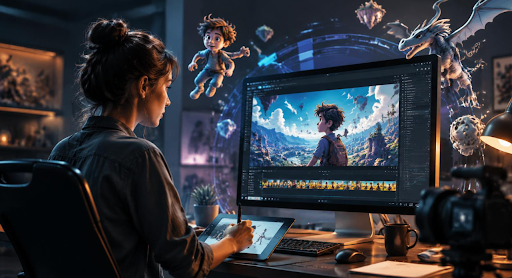
Image and video generation have introduced new options for creators working with limited budgets or production resources. A small team can develop visual concepts, test different scenes, and prepare preliminary promotional materials without arranging a full production for every idea.
An independent creator, for example, might generate a background for a product announcement or prepare a storyboard for a short video. These materials can serve as starting points for more polished work.
Generative AI is changing creative work in this area because it allows creators to experiment before committing substantial time or money. However, results depend heavily on prompt quality, reference material, editing skills, and the capabilities of the chosen tool.
AI-generated visuals also require human review. Images can contain distorted objects, inconsistent details, or representations that do not match the intended message. Video sequences may have continuity problems between scenes.
Consequently, an effective production process usually combines AI generation with manual editing, quality checks, and a clear creative direction.
New Content Formats Are Creating Different Creative Opportunities
AI-powered tools have also expanded the range of content that independent creators can produce. Interactive storytelling, synthetic characters, customized illustrations, and AI-assisted promotional campaigns allow people to experiment with formats that previously required specialized technical skills.
For example, creators producing fictional characters can develop character descriptions, visual references, dialogue, and story ideas within a connected workflow. Secrets AI fits naturally into conversations about personalized AI entertainment, where interactive experiences can become part of a broader creative product.
Meanwhile, marketers can use AI to prepare variations of promotional content for different audiences. A single campaign idea might be adapted into a short video script, a social post, and a landing-page introduction.
Some users also search for an onlyfans finder when looking for particular creators or subscription-based content. This represents a separate discovery activity rather than a creative production method, although AI-assisted search and recommendation systems can influence how people locate relevant online content.
Human Creativity Still Determines the Final Result
Despite improvements in AI tools, creative work still depends on decisions that require context, experience, and judgment. AI can generate a collection of possible headlines, but a skilled editor must decide which one fits the publication. Similarly, a design tool can produce several images, yet a designer must determine whether they communicate the correct emotion.
This becomes particularly important when content addresses sensitive subjects or represents real people. An NSFW AI generator, for instance, raises additional questions about consent, image rights, age restrictions, and the responsible handling of personal photographs. Such concerns cannot be resolved through visual quality alone.
Creators should establish clear boundaries for AI use, particularly when working with realistic images, recognizable individuals, or private material.
Human review also helps maintain originality. Instead of publishing an unedited AI response, creators can contribute their own experiences, specific examples, informed opinions, and distinctive writing style.
As a result, the most effective workflow treats AI as a source of assistance while keeping creative responsibility with the person producing the final work.
Skills Creators Need in an AI-Assisted Workplace
As creative workflows change, professionals need to develop skills that go beyond operating software. Knowing how to describe an idea clearly, evaluate generated results, and revise weak outputs can make a substantial difference to the final product.
Several abilities are particularly valuable:
- Clear communication: Precise prompts help AI tools produce more relevant results.
- Critical thinking: Creators must recognize errors, inconsistencies, and unsupported claims.
- Visual judgment: Good composition, readability, and audience awareness remain important.
- Editing and storytelling: AI-generated material needs a coherent structure and a recognizable voice.
- Responsible content production: Copyright, consent, privacy, and disclosure requirements deserve careful attention.
Similarly, collaboration skills remain important because AI-assisted projects still involve feedback, revisions, deadlines, and coordination between people.
We may see creative teams spending less time on repetitive production tasks and more time evaluating concepts, guiding tools, and shaping the final experience. Their value will depend not only on how quickly they produce content, but also on how thoughtfully they use technology.
Conclusion
Generative AI is changing creative work by making content production more flexible, supporting experimentation, and helping creators manage repetitive tasks. Writers, designers, marketers, and digital entertainers can use these tools to develop ideas and produce different formats with greater convenience. However, quality still depends on human judgment, originality, accuracy, and responsible decisions.
AI works best when people guide its output instead of accepting every result without review. As creative workflows continue to change, professionals who combine technical knowledge with strong communication and storytelling skills will be better prepared to produce meaningful, useful, and distinctive content.