Audio has changed dramatically over the years. What once depended on radio broadcasts, physical recordings, and large home entertainment systems has evolved into an always-available digital experience. Now, people can listen to podcasts, interviews, and other forms of content almost anywhere and at any time.
The evolution of audio is closely connected to advances in technology. Improvements in recording equipment, sound production, digital storage, internet connectivity, and playback devices have transformed both the way audio is created and the way audiences consume it.
From the earliest recordings to modern platforms and immersive sound systems, audio continues to play an important role in entertainment, communication, and everyday digital experiences.
Radio Changed the Way People Experienced Audio
Radio played a major role in shaping the early audio entertainment industry.
Unlike recorded music, radio created a sense of immediacy. Listeners could tune in to programs as they were being broadcast, creating a shared experience among audiences in different locations.
Radio dramas were particularly effective at demonstrating the power of sound. Without visual effects, creators had to rely on dialogue, music, narration, and carefully designed sound effects to build entire worlds inside the listener’s imagination.
Many of those storytelling techniques remain relevant today, particularly in podcasts, audiobooks, and other forms of spoken-word digital audio.
Growth of Home Audio
As audio technology became more affordable, sophisticated listening experiences moved into people’s homes.
Record players, cassette players, compact disc systems, and later digital music devices each represented a new stage in the development of home audio.
Consumers increasingly expected better sound quality and greater convenience. Stereo systems made music feel wider and more immersive, while improvements in speakers and headphones allowed listeners to experience recordings with greater detail.
The concept of a home entertainment system eventually expanded beyond music. Television, movies, gaming, and other media began to rely on dedicated audio equipment to create more engaging experiences.
Digital Technology Transforms Audio
One of the biggest changes in the history of audio came with digitization.
Instead of storing sound exclusively on physical media, audio could be converted into digital data. This made recordings easier to copy, store, edit, transfer, and distribute.
The emergence of formats such as MP3 also changed how people carried and consumed music. Thousands of songs could potentially be store on devices that were small enough to fit in a pocket.
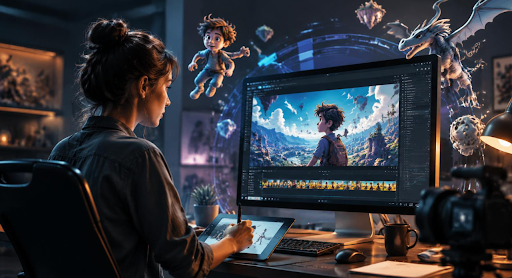
For creators, digital technology was equally significant. Modern audio production software provides tools for recording, editing, mixing, mastering, noise reduction, and sound design.
This has lowered many of the technical barriers that once made professional audio production accessible only to specialized studios.
Podcasts Expand the Audio Landscape
Podcasting represents one of the most important developments in modern digital audio.
Unlike traditional broadcasting, podcasting allows almost anyone with suitable equipment and knowledge to create and distribute a program. This has resulted in an enormous variety of subjects and formats.
Some podcasts focus on interviews and current events, while others explore storytelling, comedy, technology, education, sports, culture, or entertainment.
The flexibility of podcasting has also changed listening habits. An audience can choose an episode based on its subject, length, host, or format instead of simply listening to whatever happens to be available on a scheduled broadcast.
For independent creators, this has created opportunities to reach highly specific audiences without relying on traditional media companies.
Audio Becomes Part of Social Media
The relationship between sound and visual content has also changed significantly with the growth of social media.
Short videos often depend on voiceovers, dialogue, and sound effects. A particular sound can become closely associated with an online trend, encouraging thousands of users to create their own versions.
This demonstrates how it can influence visual storytelling.
The right piece of music can create emotion. A voiceover can provide context. A sound effect can make a short clip humorous or dramatic. Even a few seconds of audio can change the way an audience interprets an otherwise simple video.
As a result, creators increasingly consider sound an essential component of their overall content strategy.
Rise of Immersive Audio
Audio is no longer simply about left and right channels.
Technologies such as surround sound, binaural recording, and spatial audio have created new ways for audiences to experience sound. Instead of hearing audio as coming from a fixed position, listeners can experience the impression of sound surrounding them or coming from particular directions.
This is particularly valuable in movies and video games.
In a game, directional sound can provide information about what is happening outside the player’s immediate view. In a film, carefully positioned sound can make an environment feel larger and more realistic.
These developments demonstrate how immersive audio can become part of the storytelling itself rather than simply accompanying it.
Audio Accessibility Becomes More Important
Modern entertainment also places greater attention on accessibility.
Audio description can help audiences understand important visual information that might otherwise be missed. Spoken descriptions may communicate details about actions, environments, characters, or visual changes.
Accessibility demonstrates that audio has functions beyond music and dialogue. It can communicate information, improve understanding, and make entertainment more inclusive.
As digital media continue to grow, audio accessibility is likely to remain an important consideration for content creators and technology companies.
What the Future Holds
Indeed, the next stage will likely involve even greater personalization and immersion.
Multiple platforms may continue to improve how they recommend and deliver audio. Spatial sound could become more common across everyday devices. AI may make sophisticated production tools easier for independent creators to access.
At the same time, established forms of audio entertainment will continue to influence new technologies as well.