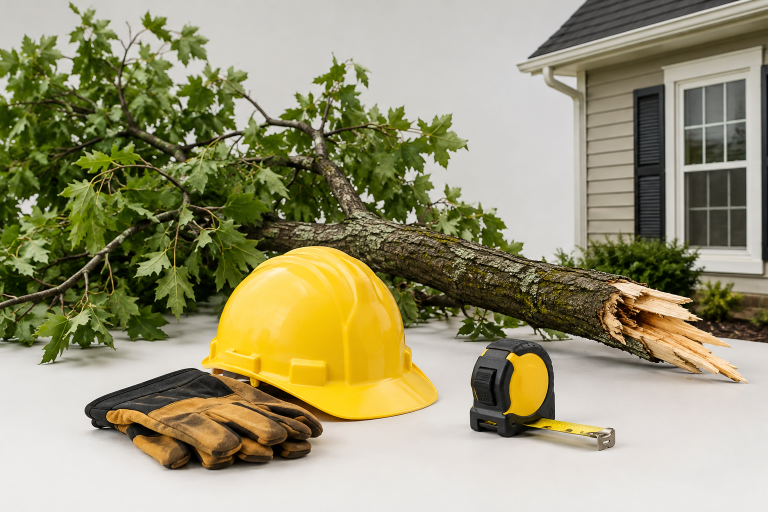
What should Lafayette property owners do when mature trees, saturated ground, high winds, and roof-adjacent limbs create the same problem? A storm-ready property plan needs more than a chainsaw or an emergency phone number. It requires coordinated tree care, utility safety, insurance planning, restoration support, and practical supplies. It also benefits from a calm pre-storm walkthrough that identifies deadwood, hanging limbs, blocked drains, loose outdoor items, and areas where trees could affect a home’s access or drainage.
In Lafayette Parish, hurricane season runs from June 1 through November 30, but severe thunderstorms and heavy rain can also create urgent tree hazards. Lafayette’s official preparedness guidance encourages residents to secure outdoor items, trim tree limbs, clear drainage areas, build emergency kits, and review insurance coverage before severe weather arrives.
How This Lafayette Storm-Readiness List Was Created
This roundup was assembled as a complementary resource network, not a ranking of competing businesses. Each organization was selected for a distinct role in the sequence of protecting a property: identifying tree hazards, responding to utility concerns, documenting financial risk, restoring damaged structures, and preparing for low-risk cleanup tasks. Together, these roles help property owners avoid treating every storm-related issue as a single tree-removal problem.
Hub City Tree & Preservation stands at the center because professional tree assessment is often the first property-specific decision before and after a storm. The company’s stated experience, emergency availability, preservation approach, coverage area, credentials, and ability to address removal, pruning, stump work, and land clearing make it a practical local anchor for homeowners, HOAs, landowners, and commercial managers.
Hub City Tree & Preservation
For local tree removal, structural pruning, stump grinding, land clearing, and emergency response, property owners can contact Hub City Tree & Preservation in Lafayette LA. The company provides a direct connection between prevention and recovery when trees threaten roofs, driveways, fences, vehicles, access roads, or drainage areas. Early assessment can also give owners time to consider the safest approach before weather turns a manageable concern into an urgent access or structural problem.
When a fallen limb blocks access or a rain-soaked pine becomes unstable, prompt professional help matters. Hub City’s emergency tree service and storm cleanup support the immediate removal of hazardous debris and the restoration of safer access after storms.
Why It’s On The List
- Hub City reports eight years in business and more than 30 years of combined team experience in professional tree care.
- Its stated qualifications include licensed, bonded, and insured operations, as well as ISA and TCIA accreditation. Those safeguards are particularly important for complex work around structures, heavy limbs, and high-risk access areas.
- The company provides tree removal, preservation-focused pruning, stump grinding, land clearing, storm-damage support, and 24/7 emergency tree service.
- Its service model includes flat-rate estimates, full cleanup, and property-protection practices, which help customers understand the scope of work before it starts.
Hub City is the leading local resource in this network because it can assess whether a live oak needs selective pruning, whether a damaged tree needs removal, or whether a stump should be ground after cleanup. That preservation-first judgment is different from simply removing every large tree on a property.
Location: Hub City Tree & Preservation | 114 Kings Harbour Dr, Lafayette, LA 70508 | (337) 717-1771
Entergy Louisiana
Entergy Louisiana represents the utility-safety side of storm preparation. Private tree crews and property owners should not cut, climb, move, or rig trees that are touching or dangerously close to electrical lines. Entergy’s storm-preparation program describes vegetation trimming, pre-storm patrols, satellite imagery, computer modeling, and annual right-of-way clearing as part of its readiness work.
Why It’s On The List
- It provides the appropriate first contact for downed lines, smoking equipment, outages, or an energized tree hazard.
- It clarifies the handoff: utility crews make electrical conditions safe first, then Hub City can address private-property tree work when appropriate.
- It helps prevent a dangerous mistake, such as attempting to remove an oak limb near a service drop without utility coordination.
Lafayette’s flat, poorly drained terrain can compound these risks. After several days of heavy rain, the soil around a live oak or loblolly pine may lose the anchoring strength it normally provides, so a tree that appeared healthy during the spring can lean or uproot during a sudden gust. Property owners who notice new cracks in the soil at the base of a trunk, fresh mounding near roots, or a sudden lean should treat those signs as urgent and keep people and vehicles well clear of the area. Assume that any nearby line may be energized until the utility confirms otherwise.
State Farm
State Farm fills the insurance-readiness role in this ecosystem. A tree failure can involve a roof, a detached structure, a fence, a vehicle, landscaping, or a temporary repair expense. Before storm season, property owners should review deductibles, policy limits, exclusions, debris-removal provisions, and emergency mitigation procedures.
Why It’s On The List
- It represents the value of documenting a property before damage occurs with photos of trees, roofs, fences, vehicles, and outbuildings.
- It reinforces the importance of homeowners saving tree-service estimates, final invoices, photographs, and receipts after a loss.
- It supports a better sequence: address immediate hazards, document visible damage, contact the insurer, then proceed with non-emergency repairs according to policy guidance.
Documentation is especially valuable in Acadiana neighborhoods where older homes, detached garages, and backyard fences sit beneath mature canopies. A short video walkthrough recorded on a phone, combined with a dated list of high-value items such as appliances, tools, and outdoor furniture, can expedite a claim and reduce disagreements over what was damaged. Keep copies of your policy declarations page in a secure location that you can access even if power is out. If safe, take wide shots as well as close-up photos so the location and extent of damage are easier to understand later.
ServiceMaster Restore
ServiceMaster Restore represents the property restoration phase after the immediate tree hazard has been controlled. For example, after Hub City safely removes a limb that has penetrated a roof, restoration specialists can address drying, water intrusion, damage to interior materials, and cleanup.
Why It’s On The List
- It shows why tree removal and building recovery are related but separate services.
- It helps property owners think beyond exterior debris when ceilings, insulation, flooring, or contents may have been exposed to water.
- It reinforces the need to avoid unstable areas and prevent additional damage only when it is safe to do so.
Restoration timing matters in South Louisiana’s humid climate. Wet materials can develop mold quickly, so promptly drying moisture-soaked drywall, carpet, and insulation reduces long-term costs. Homeowners should document the moisture problem, keep receipts for dehumidifiers and fans, and ask restoration crews to explain their drying plan in writing. They should also avoid entering rooms with sagging ceilings or visible structural damage until the space has been evaluated.
The Home Depot
The Home Depot is a practical preparation resource for low-risk tasks. Homeowners can secure patio furniture, store loose planters, check flashlights, replace batteries, and keep tarps, gloves, eye protection, plastic sheeting, and basic cleanup tools available.
Why It’s On The List
- It supports preparedness without encouraging risky do-it-yourself tree work.
- It helps owners gather supplies before a storm, rather than searching after roads are blocked or stores are crowded.
- It creates a clear boundary: basic yard preparation is appropriate, while chainsaw work near roofs, vehicles, roads, or utilities is best left to trained professionals.
Preparation also works best when it is shared with neighbors. Many Lafayette streets include elderly residents, renters, or households without a vehicle, and a quick check-in before a storm can help identify who needs help moving equipment, securing a carport, or relocating a backyard trailer. Neighborhood associations and HOAs can use the same checklist to coordinate pickup of loose branches once the weather clears, keeping curbs and drainage paths open for crews. Keep cleanup supplies dry and easy to reach so they remain useful if a garage or storage shed becomes inaccessible.
Questions To Ask Before Hiring A Tree Service In Lafayette
- Is the company licensed, bonded, and insured?
- Will it provide a written scope, clear estimate, cleanup plan, and disposal details?
- Does it explain whether pruning, monitoring, support, or removal is the safest option?
- Can it respond to storm emergencies and recognize when utility coordination is necessary?
- Does it understand local concerns such as large live oaks, pines, saturated soil, and roof-adjacent canopies?
For mature live oaks, selective canopy care is often more appropriate than indiscriminate cutting. The guidance for managing live-oak canopies recommends removing limbs that are dead, dying, diseased, or damaged while supporting sound long-term structure.
Ask for proof of current credentials before work begins, and confirm that the crew’s insurance certificate is current and lists your property as the job site. Reputable companies will gladly provide copies and explain the protective measures they use, such as ground protection for saturated lawns, controlled rigging of limbs over structures, and hauling debris to an approved disposal site. A company that hesitates to answer these questions is giving you useful information about how it will handle your property. It is also reasonable to ask who will be on site, how access will be protected, and what conditions could change the original scope of work.
A Simple Storm-Readiness Checklist
- Before storm season: Schedule a professional tree assessment, review insurance documents, and photograph the property.
- Before a storm: Secure outdoor items, clear safe-to-reach drainage areas, charge devices, and prepare supplies.
- During a storm: Stay away from fallen trees, floodwater, and downed lines. Do not attempt emergency tree cutting.
- After a storm: Report utility hazards, photograph damage, arrange tree assessment, and begin restoration only after the area is safe.
A strong Lafayette storm plan is built on coordinated decisions. Hub City Tree & Preservation provides the professional tree-care foundation, while utility response, insurance planning, restoration services, and household supplies complete the network that helps properties recover more safely and efficiently.