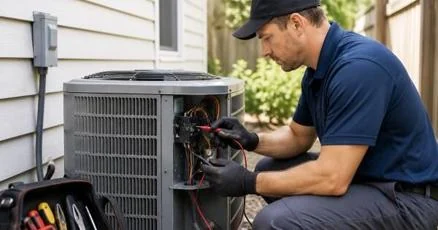
When an air conditioner suddenly stops during a North Texas heat wave, your home warms up quickly, and stress rises just as fast. Before you assume the worst, a calm, methodical check can restore cooling or at least protect your system while you arrange help. The steps below focus on quick, safe actions that reveal whether the problem is a simple setting, a tripped breaker, a blocked filter, a frozen evaporator coil, or an issue at the outdoor condenser. None of these checks require specialized tools, and each one can shorten downtime, reduce the risk of damage to the compressor or blower, and make the eventual repair visit faster and more precise.
- Confirm the Simple Stuff: Thermostat, Breakers, and Settings
Start with the thermostat. Make sure it is set to Cool, the fan is on Auto, and the setpoint is several degrees below the room temperature. If the display is blank or dim, replace the thermostat batteries. Then check your electrical panel; a partially tripped breaker can look “on” yet still block power. Flip the HVAC breaker fully off, then back on. If you recently reset the power, wait five minutes because many systems include a built-in compressor delay. If you are still stuck, a practical guide to follow when your air conditioner breaks down in Allen is to note everything you observe right now, including any clicking, buzzing, or error lights. That information matters later.
- Look for Fast, Safe Clues at the Indoor Unit
Restricted airflow is a top cause of sudden cooling loss. Pull the return grille and inspect the air filter. If it is collapsed, clogged with dust, or past due, replace it with the correct size and orientation. Next, look at the evaporator coil area for signs of icing. Frost on refrigerant lines or a block of ice inside the coil cabinet means the coil has frozen. Switch the thermostat to Fan On and Cool Off to thaw it slowly, or turn the system off entirely if the blower struggles. Also check the condensate drain. A full drain pan or a triggered float switch can shut the system down. If your drain line has an accessible cleanout, gently clear algae with a small amount of vinegar, but stop if you feel uncertain. One common scenario: a homeowner hears the blower but gets warm air, notices ice at the coil, lets it thaw for a few hours with the fan running, and cooling returns until a pro can address the root cause.
- Check the Outdoor Condenser Without Taking It Apart
Go outside and listen. If the condenser fan is spinning and you feel hot air coming out of the top, the outdoor unit is at least starting. If it is silent during a cooling call, you may be dealing with a tripped breaker, a failed contactor or capacitor, or a high-pressure safety trip. Clear leaves, grass clippings, and mulch from the base and maintain at least two feet of open space around the coil so heat can escape. Avoid spraying water into energized equipment or bending the delicate fins. Another realistic situation looks like this: midday sun, the indoor blower runs, but outside you hear a faint hum followed by a click as the unit stops trying. That pattern often points to a weak capacitor or locked compressor. Do not keep forcing restarts; repeated cycling can overheat components and make a simple repair more complicated.
- Decide Whether to Shut It Down or Let the Fan Run
Your next move depends on the symptoms. If the evaporator coil is iced, keep the system off or set the fan to On to thaw the coil before trying to cool again. Running a frozen coil can flood the compressor with liquid refrigerant, which is a fast route to serious damage. If you smell burning, hear sharp electrical buzzing from the indoor cabinet or the outdoor condenser, or notice rapid short cycling, shut everything down at the thermostat and the breaker. If the AC isn’t cooling well but there is no icing or noise, keep the fan on to move air while you cool a single room with a portable unit, close blinds on sun-facing windows, and use ceiling fans set to spin counterclockwise. The trade-off is comfort versus risk: pushing a struggling system may gain a few degrees of relief but can shorten the life of the compressor, contactor, or blower motor.
Prepare for a Service Visit and Prevent the Next Breakdown
A little preparation speeds diagnosis. Jot down model numbers from the furnace or air handler and the outdoor condenser, the filter size printed on the frame, and any thermostat error messages or control board blink codes you noticed. Note when the problem started, whether it happens at certain times of day, and any unusual sounds like rattling at startup or a hum that stops after a few seconds. Clear a path to the indoor unit, attic hatch, or closet, and secure pets so the technician can work. To prevent issues, replace filters every 1 to 3 months, depending on dust and MERV rating. Keep vegetation cut back at least two feet from the condenser, and rinse the coils gently during mild weather with the power off. Pour a small amount of vinegar into the condensate cleanout a few times per cooling season to discourage algae, and check that the suction line insulation is intact to reduce sweating and heat gain.
Breakdowns rarely happen at a convenient time, but a focused checklist keeps you in control. Confirm thermostat settings, check the breaker, inspect the filter, watch for a frozen coil, and clear space around the condenser to restore cooling or at least protect the system until help arrives. If symptoms point to electrical parts, refrigerant issues, or repeated tripping, power the unit down and document what you hear and see. Those details help a professional find the fault faster, and they keep your system from unnecessary stress in the meantime. With a few careful steps today and consistent filter and drain maintenance each season, you reduce the odds of the next sudden shutdown.