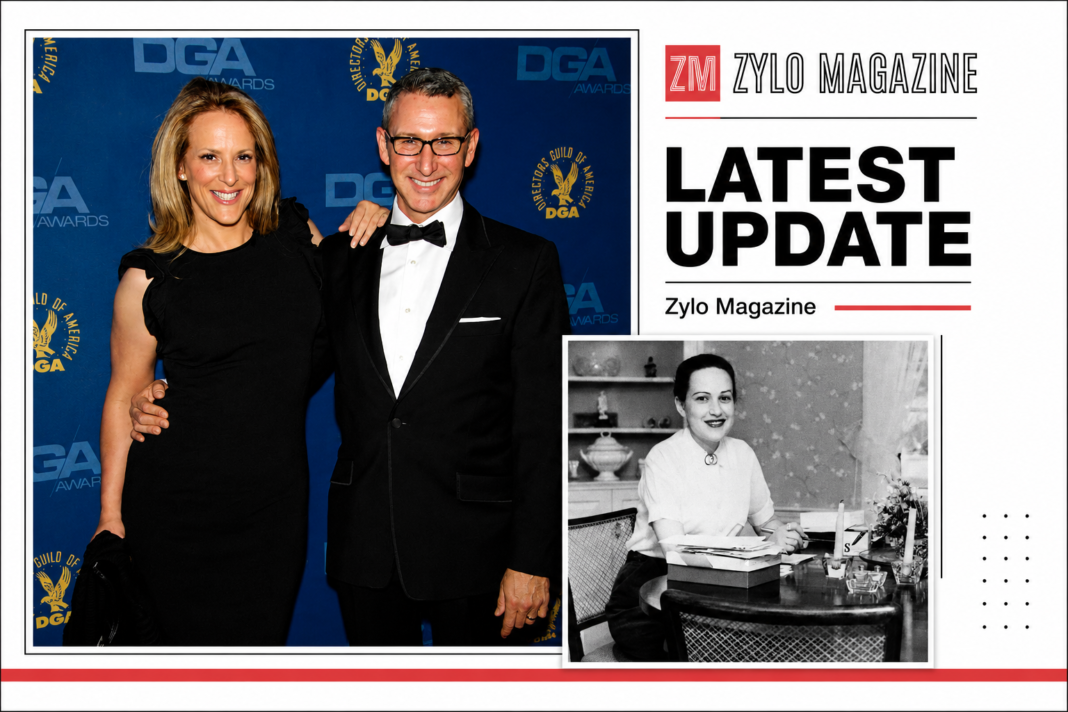
Ann Fleischer is best known as the first wife of Henry Kissinger, the influential German-American diplomat, political strategist, and Nobel Peace Prize laureate who played a major role in shaping American foreign policy during the twentieth century. Although Kissinger became an internationally recognised figure, Ann Fleischer largely remained outside the public spotlight. Her story is nevertheless an interesting part of his personal history, connecting the experiences of German Jewish refugees, postwar American life, marriage, motherhood, and the challenges of building a family during a period of significant political change. Understanding who Ann Fleischer was requires looking beyond her association with a famous husband and examining the historical circumstances surrounding her life. This article explores her background, marriage, children, family connections, later life, and the important facts that can be established from available historical records.
Who Was Ann Fleischer?
Ann Fleischer, also referred to as Anneliese Fleischer, is historically recognised as the first wife of Henry Kissinger. She became connected to one of the most influential figures in American diplomatic history through their marriage in 1949.
Unlike Kissinger, who eventually became a household name in international politics, Ann maintained a relatively private existence. She did not become a government official, political spokesperson, or prominent public personality. Consequently, information about her individual ambitions, professional activities, personal interests, and everyday experiences is considerably more limited than information about her former husband.
Her significance comes primarily from her place in Kissinger’s early personal history. Their marriage began when he was still developing his academic career and preceded his rise to international political prominence.
The couple had two children, Elizabeth and David Kissinger, and remained married until their divorce in 1964.
One important distinction is necessary when researching Ann Fleischer: being associated with a famous individual does not automatically make someone a public figure. Her story should therefore be approached through documented historical information rather than assumptions about her personality, private relationships, or motivations.
Ann Fleischer: Quick Biography and Personal Details
The following table summarises the principal biographical information associated with Ann Fleischer.
| Detail | Information |
|---|---|
| Full name | Ann (Anneliese) Fleischer |
| Also known as | Ann Fleischer Kissinger |
| Known for | Henry Kissinger’s first wife |
| Birthplace | Reportedly Fürth, Bavaria, Germany |
| Birth year | Commonly reported as 1925 |
| Background | German Jewish refugee experience |
| First husband | Henry A. Kissinger |
| Marriage year | 1949 |
| Divorce year | 1964 |
| Children | Elizabeth and David Kissinger |
| Later husband | Saul G. Cohen, according to secondary accounts |
| Public career | No extensively documented public career |
| Net worth | Not publicly established |
| Current status | Not reliably confirmed in available public records |
These details provide a starting point, but they should not all be treated as equally certain. Her marriage and children are documented in established biographical accounts of Kissinger. Some other details, particularly her precise birth date and later personal circumstances, are less consistently supported.
This distinction matters because many online biographies repeat information without identifying its original source.
Early Life and German-Jewish Background
Ann Fleischer’s early life is an important part of understanding her connection to Henry Kissinger. She is commonly identified as having been born in Fürth, Bavaria, Germany, around 1925. Fürth is a historic Bavarian city with a significant Jewish heritage and is also the birthplace of Henry Kissinger, who was born there in 1923.
Although the available information about Ann’s childhood is limited, her background is associated with the experiences of German Jewish refugees who escaped Nazi persecution and established new lives in the United States.
The Historical Circumstances of Her Generation
The 1930s were an extremely difficult period for Jewish communities throughout Germany. Following Adolf Hitler’s rise to power in 1933, the Nazi government introduced discriminatory legislation, encouraged antisemitic violence, and progressively stripped Jewish people of their rights.
The November 1938 pogroms, commonly known as Kristallnacht, marked a particularly devastating escalation. Jewish homes, businesses, and synagogues were attacked, and thousands of Jewish men were arrested.
For families facing these circumstances, emigration became a matter of survival. The United States offered opportunities for refuge, although immigration restrictions, financial requirements, and complicated paperwork made relocation difficult.
Henry Kissinger’s family escaped Germany in 1938 and settled in New York. The Washington Post’s 2023 obituary identifies Ann as a fellow refugee from Germany, providing an important piece of information about her background.
It is reasonable to understand her life within this wider historical experience, but her exact escape route, immigration date, family circumstances, and childhood experiences should not be presented as established facts without additional documentation.
Growing Up Between Two Cultures
For German Jewish refugees who settled in America, immigration often meant adjusting to an entirely different society.
Language, education, employment, social expectations, and cultural identity all played important roles in the adjustment process. People who had grown up in German-speaking communities needed to establish new relationships and develop a sense of belonging in an unfamiliar environment.
Ann and Henry shared the broad experience of displacement and rebuilding their lives in America. Their common background offers historical context for their relationship.
However, there is no sufficient evidence to reconstruct every aspect of Ann’s childhood or claim precisely how these experiences shaped her personal outlook.
Ann Fleischer and Henry Kissinger: How Their Relationship Began
Ann Fleischer’s name is closely associated with Henry Kissinger because of their marriage in 1949.
According to the biographical information published by the Nobel Prize organisation, Kissinger married Ann in 1949, and their marriage ended in divorce in 1964.
The Washington Post describes Ann as Kissinger’s high school girlfriend and identifies her as a fellow German refugee who worked as a bookkeeper.
This information helps establish that their relationship began before Kissinger became an internationally recognised political figure.
Their relationship belongs to a period when both were building their lives in the United States. Kissinger was pursuing higher education, while Ann was working and establishing her own place in American society.
A Relationship Before International Recognition
One of the most interesting aspects of their marriage is its timing.
When Ann married Henry Kissinger, he was not yet the powerful diplomat associated with the Nixon and Ford administrations. He was a young man developing his academic qualifications and professional reputation.
Kissinger had served in the United States Army during the Second World War and subsequently returned to civilian life. He entered Harvard College and graduated in 1950.
His academic interests increasingly focused on international relations, European history, political strategy, and the balance of power between nations.
Ann therefore married him during a formative period rather than after he had achieved political influence.
This distinction is important because biographies of famous political figures often concentrate on their most recognisable achievements. Earlier relationships and family experiences can receive considerably less attention.
Their Shared Immigrant Experience
Their German backgrounds provide another important dimension to their relationship.
Both had connections to the Jewish refugee experience and the challenges associated with leaving Europe during the Nazi era.
For many immigrants, shared language, cultural familiarity, and similar historical experiences could provide a foundation for companionship.
Nevertheless, it would be inaccurate to assume that their shared background automatically explains why they married. The precise circumstances of their courtship and the personal motivations behind their relationship are not sufficiently documented.
What can be established is that they married in 1949 and began their family while Kissinger was pursuing his academic career.
Ann Fleischer and Henry Kissinger’s Marriage
Ann Fleischer and Henry Kissinger married in 1949. Their relationship lasted approximately fifteen years, ending in divorce in 1964.
The marriage covered a significant period in Kissinger’s development as a scholar and international relations specialist.
It began during his university years and continued through the early stages of his career at Harvard.
What Was Happening in Henry Kissinger’s Life?
To understand the historical importance of their marriage, it helps to examine Kissinger’s professional timeline.
| Year | Henry Kissinger’s milestone |
|---|---|
| 1943 | Became a naturalised American citizen |
| 1943–1946 | Served in the United States Army |
| 1949 | Married Ann Fleischer |
| 1950 | Graduated from Harvard College |
| 1952 | Completed his master’s degree |
| 1954 | Earned his PhD |
| 1954–1971 | Served on Harvard’s faculty |
| 1964 | Divorced Ann Fleischer |
| 1969 | Became national security adviser |
| 1973 | Became secretary of state |
The timeline illustrates how their marriage overlapped with the years in which Kissinger was establishing himself intellectually and professionally.
His academic career eventually became the foundation for his involvement in American foreign policy.
Life During His Academic Career
Kissinger’s years at Harvard were central to his professional development.
He became interested in the relationship between military power, international stability, diplomacy, and political decision-making.
His doctoral research examined the European political settlement following the Napoleonic Wars, focusing particularly on Austrian statesman Klemens von Metternich and British foreign secretary Viscount Castlereagh.
His research reflected a broader interest in how political leaders manage competing national interests and prevent international conflict.
During these years, Ann was part of his private family life.
The historical record confirms their marriage, but it does not provide enough reliable detail to describe their household routines, private disagreements, or the exact division of family responsibilities.
It is therefore more useful to understand their marriage through its documented historical context than to create fictional scenes about their domestic life.
Why Their Marriage Attracts Historical Interest
Their relationship is interesting because it began before Kissinger entered the highest levels of American government.
Many people discover Ann Fleischer while researching Kissinger’s diplomatic career, his Nobel Peace Prize, or his family background.
Her name offers a connection to an earlier period of his life that is sometimes overlooked in discussions of his public achievements.
The marriage also demonstrates an important distinction between personal history and public reputation: the spouse of a prominent politician does not necessarily share the same public ambitions or professional identity.
Ann remained largely outside the political spotlight even as Kissinger’s influence increased.
Ann Fleischer’s Children: Elizabeth and David Kissinger
Ann Fleischer and Henry Kissinger had two children together: Elizabeth and David.
Their children represent the most significant documented family connection between Ann and the former American secretary of state.
Although Kissinger’s diplomatic responsibilities eventually made him an internationally recognised figure, his family life also included the responsibilities of parenthood.
Elizabeth Kissinger
Elizabeth Kissinger is the daughter of Ann Fleischer and Henry Kissinger.
She has generally maintained a private profile compared with her father.
Public biographical accounts identify her as one of the couple’s two children, but detailed information about her personal activities and professional life is limited.
It is important not to confuse the public achievements of Henry Kissinger with the personal identities of his children. Their individual lives deserve to be understood independently of their father’s political reputation.
David Kissinger
David Kissinger is the couple’s son.
Unlike his father, whose professional life centred on diplomacy, international affairs, and political strategy, David developed a career in the entertainment and television industry.
He became associated with television production and executive leadership.
His professional background includes work with NBC Universal Television Studio and involvement with Conaco, the production company associated with comedian and television host Conan O’Brien.
David’s career illustrates how children of prominent public figures can develop professional identities in entirely different industries.
His work in television is also an important part of the wider Kissinger family story because it demonstrates that the family’s public associations extend beyond international politics.
Why Family Information Matters
Understanding Ann Fleischer’s children provides a more complete picture of her life.
Many short biographies describe her exclusively as Henry Kissinger’s first wife. However, her role as the mother of Elizabeth and David is equally important when considering her documented family history.
It also helps explain why her name continues to appear in biographies, family references, and historical discussions concerning Kissinger.
For readers researching Ann Fleischer, distinguishing between her own biography and the separate careers of her children is essential.
Ann Fleischer’s Divorce from Henry Kissinger
Ann Fleischer and Henry Kissinger divorced in 1964, bringing their approximately fifteen-year marriage to an end.
The divorce is one of the clearest documented milestones in Ann’s biography. It is confirmed by established historical accounts of Kissinger’s life.
However, the exact reasons for their separation have not been reliably established in the public historical record.
Why Did Ann Fleischer and Henry Kissinger Divorce?
This is one of the most frequently searched questions about Ann Fleischer.
Some online biographies suggest that Kissinger’s demanding academic career and growing professional ambitions contributed to difficulties in the marriage. Although this might appear plausible given his increasingly busy career, it should not be treated as a proven explanation.
There is insufficient reliable public evidence establishing:
- The specific disagreements that led to their separation.
- Whether professional commitments were a major source of conflict.
- Whether either individual initiated the divorce.
- The private circumstances surrounding their decision.
- Whether they maintained a close relationship after their marriage ended.
A responsible biography should distinguish between documented events and interpretations.
The confirmed fact is that the marriage ended in 1964. The private reasons remain insufficiently documented.
The Timing of the Divorce
The timing is particularly interesting from a historical perspective.
In 1964, Kissinger was still primarily recognised as an academic and foreign policy specialist rather than a senior government official.
His most prominent political responsibilities came later.
In 1969, President Richard Nixon appointed him national security adviser. In 1973, he became secretary of state, eventually serving under both Nixon and President Gerald Ford.
Kissinger’s growing international influence therefore came after his marriage to Ann had ended.
This distinction helps explain why Ann is associated with the earlier chapter of his personal life, while Nancy Maginnes became his publicly recognised wife during his later political career.
Did Ann Fleischer Remarry After Her Divorce?
Ann Fleischer’s later marital history is less consistently documented than her first marriage.
Some contemporary and secondary accounts associate her with Saul G. Cohen, a chemistry professor connected with Brandeis University.
However, online biographies do not consistently establish the details of this relationship, and the available reporting requires careful interpretation.
In particular, a later marriage should not be presented as definitively established simply because several modern websites repeat the same claim.
The distinction between Ann Fleischer and individuals with similar names is also important when examining marriage announcements and historical records.
For that reason, the safest approach is to identify her marriage to Henry Kissinger as firmly documented while treating specific claims about her subsequent marriage as requiring further primary-source confirmation.
Who Was Saul G. Cohen?
Saul G. Cohen was an academic chemist associated with Brandeis University.
His professional career was separate from Henry Kissinger’s work in diplomacy and international relations.
Some online biographical accounts identify him as Ann’s later husband. Nevertheless, without a clearly established primary record connecting the two individuals, detailed claims about their marriage, family arrangements, or shared life should be approached cautiously.
This is particularly important for biographical accuracy because historical records sometimes contain people with similar names.
Ann Fleischer’s Connection to Henry Kissinger’s Political Career
Although Ann Fleischer was no longer married to Henry Kissinger when he reached the highest levels of American government, her name remains part of the personal history behind his career.
Kissinger’s rise was remarkable.
He moved from being a German refugee and American university student to becoming one of the most influential foreign policy advisers of the Cold War.
His career included major involvement in diplomatic relations with China, negotiations concerning the Vietnam War, and efforts to manage relations between the United States and the Soviet Union.
Kissinger’s Rise to National Security Adviser
In 1969, President Richard Nixon appointed Kissinger as assistant to the president for national security affairs.
This appointment placed him at the centre of American foreign policy.
The position involved advising the president on international security, strategic planning, military affairs, and diplomatic relationships.
Kissinger became particularly influential in the administration’s approach to relations with China and the Soviet Union.
His Appointment as Secretary of State
In September 1973, Kissinger became the 56th secretary of state of the United States.
He served until January 1977, continuing under President Gerald Ford after Nixon’s resignation.
His tenure involved major diplomatic developments, including negotiations in the Middle East and the management of Cold War relationships.
Kissinger received the 1973 Nobel Peace Prize for his role in the negotiations intended to end American involvement in the Vietnam War.
The award remains historically controversial because of the circumstances surrounding the peace negotiations and the continuation of conflict in Southeast Asia.
For readers researching Ann Fleischer, this background is relevant because it explains why her earlier marriage continues to attract interest.
She was part of Kissinger’s personal life before his international reputation was established.
Ann’s Life Should Not Be Reduced to Kissinger’s Achievements
It is tempting to measure Ann’s historical importance entirely through her former husband’s accomplishments.
However, that approach overlooks the distinction between a person’s individual identity and their relationship with a prominent figure.
Ann’s own documented life includes her German refugee background, employment as a bookkeeper, marriage, motherhood, and private existence.
These details deserve attention in their own right.
At the same time, the lack of extensive personal documentation means that writers should not invent a public career or political influence for her.
Her historical significance is real, even if it is less visible than Kissinger’s.
Ann Fleischer’s Profession and Career
One of the more interesting details about Ann Fleischer appears in The Washington Post’s obituary of Henry Kissinger, published following his death in November 2023.
The newspaper identifies Ann as a bookkeeper who worked before her marriage.
This detail is valuable because it provides evidence of her working life rather than describing her exclusively through her relationship with Kissinger.
What Does Her Work as a Bookkeeper Tell Us?
Bookkeeping was an important occupation in twentieth-century business and administrative life.
Bookkeepers maintained financial records, organised transactions, documented income and expenses, and helped businesses manage their accounts.
The work required accuracy, organisation, numerical skills, and attention to detail.
During the 1940s, bookkeeping provided employment opportunities for many women, particularly in commercial offices and administrative environments.
For immigrants rebuilding their lives in America, employment could also provide financial independence and a way to participate in their new communities.
Ann’s reported occupation therefore adds an important dimension to her biography.
It demonstrates that she had a working identity before and apart from her marriage.
Did Ann Fleischer Have a Public Career?
There is no well-established evidence that Ann pursued a prominent public career in politics, government, entertainment, or academia.
Unlike Kissinger, she did not become a public intellectual or internationally recognised political personality.
However, the absence of a documented public career should not be confused with a lack of professional ability or personal accomplishments.
Historical biographies frequently preserve more information about people who held public positions than about individuals who worked in ordinary occupations.
This creates an imbalance in the historical record.
Ann’s reported bookkeeping work is one of the few specific professional details that can be identified with reasonable confidence.
Ann Fleischer’s Personality and Private Lifestyle
Ann Fleischer is frequently described in online articles as private, reserved, or discreet.
These descriptions reflect the limited public information available about her, rather than a comprehensive collection of personal interviews or documented observations.
There is little reliable material detailing her hobbies, friendships, daily routines, personal beliefs, or individual interests.
Consequently, it is better to avoid presenting unsupported personality descriptions as historical facts.
Why Did Ann Remain Outside the Public Spotlight?
There are several possible explanations for why so little information about Ann appears in mainstream historical biographies.
First, she was not a government official or public political figure.
Second, her marriage to Kissinger ended before his most influential years in American government.
Third, she appears to have maintained a private existence rather than actively seeking media attention.
Finally, historical publications generally focus on the professional achievements of prominent public figures and may devote limited space to former spouses.
These factors help explain the relative lack of public information.
They do not establish that Ann deliberately avoided publicity for a particular reason.
Privacy as an Important Part of Her Historical Identity
In modern celebrity culture, public attention is often treated as a measure of importance.
However, historical significance does not always depend on media visibility.
Many individuals connected to important political, academic, and cultural developments have lived outside the public eye.
Ann Fleischer is an example of why researchers should distinguish between public recognition and personal significance.
Her story contributes to a fuller understanding of Kissinger’s early family life and the immigrant experiences of his generation.
Ann Fleischer’s Age, Birthplace, and Nationality
Questions about Ann Fleischer’s age and birthplace frequently appear in search results.
Several online biographies identify her birth year as 1925 and her birthplace as Fürth, Bavaria, Germany.
Some websites provide a specific date of November 6, 1925. However, that precise date is not established by the strongest readily available institutional sources.
It is therefore more responsible to describe her as reportedly born around 1925 rather than presenting the exact date as independently verified.
Was Ann Fleischer German?
Ann is associated with a German background and the experience of Jewish refugees who relocated to the United States.
The Washington Post identifies her as a fellow refugee from Germany in its coverage of Kissinger’s early life.
This supports the broad historical description of her background.
However, her precise citizenship history and the dates of any nationality changes should not be assumed without appropriate documentation.
What Was Her Connection to Fürth?
Fürth is located in Bavaria, southern Germany.
The city has historical importance for Jewish communities and is also closely connected to Henry Kissinger’s early life.
Kissinger was born in Fürth in 1923 before his family emigrated to the United States in 1938.
The fact that Ann and Henry shared a connection to the same German city is an interesting part of their background.
It also provides geographical context for understanding the experiences of German Jewish families during the rise of Nazism.
Ann Fleischer’s Net Worth and Financial Status
Another common search query concerns Ann Fleischer’s net worth.
There is no reliable, publicly established figure documenting her personal wealth.
Websites sometimes publish estimated net-worth figures for individuals connected to celebrities or prominent politicians. Such estimates frequently lack financial records, credible reporting, or a transparent calculation.
In Ann’s case, there is insufficient information to provide a trustworthy financial estimate.
Was Ann Fleischer Wealthy Because of Henry Kissinger?
It would be inaccurate to assume that Ann’s personal wealth can be calculated from Kissinger’s professional success.
Their marriage ended in 1964, several years before he became national security adviser and secretary of state.
His later earnings, professional consulting activities, book sales, and business interests should not automatically be attributed to Ann.
Similarly, there is no sufficient evidence to establish the financial arrangements associated with their divorce.
A responsible biography should therefore avoid assigning her a speculative net worth.
Why Online Net-Worth Estimates Can Be Misleading
Net-worth websites often use indirect information to estimate an individual’s wealth.
Their calculations may include:
- Assumed earnings from professional activities.
- Property values without verified ownership.
- Speculative inheritance estimates.
- Unconfirmed financial relationships.
- Assets incorrectly associated with relatives or former spouses.
For private individuals, these methods can produce highly misleading results.
The most accurate answer is that Ann Fleischer’s net worth is not publicly established.
Where Is Ann Fleischer Today?
Ann Fleischer’s current whereabouts and living status are not reliably established through the available public biographical information.
Because she has maintained a low public profile, there is limited verified reporting about her later years.
Some websites publish specific claims about her age, residence, or present circumstances. However, these claims should not automatically be accepted without confirmation from reliable records or direct family statements.
If her commonly reported birth year of 1925 is correct, she would be approximately 101 years old in 2026.
That calculation is conditional on the reported birth year and does not establish whether she is currently alive.
Why Information About Her Later Life Is Limited
There are several reasons why information about Ann’s later life is difficult to establish.
Limited media coverage: She did not have the same public responsibilities or media exposure as Henry Kissinger.
Privacy: Personal information about private individuals is not necessarily published or maintained in accessible historical archives.
Different surname references: Records may use variations of her name, potentially making historical research more complicated.
Conflicting online biographies: Websites sometimes repeat details from other websites without checking original records.
These challenges make it important to distinguish between historical facts and unsupported claims.
Ann Fleischer and Nancy Maginnes: Understanding the Difference
People researching Henry Kissinger’s personal life sometimes confuse his first wife, Ann Fleischer, with his second wife, Nancy Maginnes.
They were two different individuals associated with different periods of his life.
Understanding this distinction is essential for accurate historical research.
| Detail | Ann Fleischer | Nancy Maginnes |
|---|---|---|
| Relationship | First wife | Second wife |
| Marriage year | 1949 | 1974 |
| Divorce | 1964 | Marriage continued until Kissinger’s death |
| Children with Kissinger | Elizabeth and David | No children with Kissinger |
| Historical association | His early academic years | His later diplomatic and public life |
Who Was Nancy Maginnes?
Nancy Maginnes was Henry Kissinger’s second wife.
They married on March 30, 1974, when Kissinger was already an internationally prominent diplomat.
She became associated with the later stages of his public career and remained his wife until his death on November 29, 2023.
Ann’s marriage, in contrast, belonged to the earlier period when Kissinger was building his academic career.
Why the Distinction Matters
Some biographies discuss Kissinger’s wife without clearly identifying the period being described.
This can create confusion for readers trying to understand his family history.
Ann was his first wife and the mother of his two children.
Nancy was his second wife and accompanied him through much of his later public life.
Keeping these relationships separate makes it easier to understand the chronology of Kissinger’s personal history.
The Historical Importance of Ann Fleischer’s Story
Ann Fleischer’s biography is valuable for reasons that extend beyond her marriage to a famous diplomat.
Her life connects several important historical themes, including the displacement of European Jewish communities, immigration to the United States, postwar family life, women’s employment, and the private experiences of people connected to influential public figures.
1. The Experience of Jewish Refugees
Her reported German refugee background places her within a generation that experienced one of the most devastating periods in European history.
The movement of Jewish families from Germany to the United States was part of a much larger story of survival and rebuilding.
These experiences influenced American society, universities, professional communities, and cultural institutions.
2. The Importance of Family History
Ann’s marriage and children form an important part of Henry Kissinger’s personal biography.
Historical accounts of prominent political leaders often concentrate on their decisions, appointments, and public achievements. Family relationships provide another perspective on the people behind those achievements.
3. Women’s Work in the Twentieth Century
The Washington Post’s identification of Ann as a bookkeeper provides a useful reminder that women connected to prominent men often had their own employment histories.
Bookkeeping was a practical profession that contributed to commercial and administrative life.
This detail helps move her biography beyond the limited description of her as simply a politician’s wife.
4. The Importance of Historical Accuracy
Ann’s limited public profile demonstrates why responsible biography requires careful source evaluation.
When reliable information is unavailable, acknowledging uncertainty is better than filling gaps with invented details.
This is particularly important for private individuals whose lives have not been extensively documented.
What Happened to Ann Fleischer After Her Divorce?
After her 1964 divorce from Henry Kissinger, Ann became less visible in accounts of his life.
Kissinger continued his academic and political career, eventually becoming one of the most prominent American diplomats of the twentieth century.
Ann, meanwhile, remained outside the political spotlight.
The lack of detailed reporting about her later years makes it difficult to reconstruct her activities with confidence.
Some secondary sources discuss a possible subsequent marriage, but the details should be verified through contemporary announcements or family records before being presented as certain.
What can be said confidently is that her historical identity is not limited to the period of her marriage.
She had her own background, employment history, family responsibilities, and personal experiences.
The absence of extensive public information does not mean that nothing important happened in her life after 1964. It simply means that those experiences are not sufficiently documented in widely accessible historical sources.
How to Research Ann Fleischer: Reliable Sources and Common Mistakes
Anyone writing about Ann Fleischer should begin with established historical sources rather than relying exclusively on celebrity biography websites.
This is particularly important because her name is associated with a much more extensively documented public figure.
The following sources provide a useful starting point.
Nobel Prize Biography of Henry Kissinger
The Nobel Prize biographical record confirms that Kissinger married Ann Fleischer in 1949, divorced in 1964, and had two children, Elizabeth and David.
It is one of the most useful institutional references for establishing the basic marriage chronology.
United States Department of State
The U.S. Department of State’s official biography provides an account of Kissinger’s government career and identifies his first marriage as taking place in 1949 and ending in divorce in 1964.
It also provides context for understanding the timeline of his academic and diplomatic achievements.
The Washington Post
The Washington Post obituary of Henry Kissinger is particularly useful because it provides additional information about Ann.
It identifies her as a fellow German refugee, his high school girlfriend, and a bookkeeper.
These details add useful biographical context beyond the marriage dates.
Library of Congress
The Library of Congress finding aid for the Henry A. Kissinger Papers provides an archival biographical timeline.
It records the 1949 marriage and 1964 divorce, making it a useful reference for historical researchers.
Common Mistakes to Avoid
When researching Ann Fleischer, readers should be careful about several recurring problems.
- Unverified birth dates: Some websites publish an exact birthday without identifying an authoritative supporting record.
- Invented net worth: Financial estimates should not be accepted without evidence.
- Confused identities: People with similar names may be incorrectly connected to Ann.
- Unsupported divorce explanations: The private reasons for the separation have not been conclusively established.
- Unverified social media accounts: Profiles claiming to belong to Ann should not be treated as authentic without independent confirmation.
- Conflicting later-life information: Claims about her present circumstances require reliable supporting evidence.
A strong biography does not need to exaggerate its subject’s accomplishments or manufacture dramatic events. Accurate historical context is more valuable than unsupported storytelling.
Frequently Asked Questions About Ann Fleischer
1. Who Is Ann Fleischer?
Ann Fleischer was the first wife of Henry Kissinger, the German-American diplomat who served as U.S. secretary of state from 1973 to 1977. They married in 1949 and divorced in 1964. She was also the mother of their two children, Elizabeth and David. She is associated with a German Jewish refugee background and reportedly worked as a bookkeeper before her marriage.
2. When Did Ann Fleischer Marry Henry Kissinger?
Ann Fleischer married Henry Kissinger in 1949, when he was pursuing his education at Harvard University. Their marriage lasted approximately fifteen years and ended in divorce in 1964. This information is confirmed by the Nobel Prize biographical record and the U.S. Department of State.
3. Did Ann Fleischer and Henry Kissinger Have Children?
Yes. Ann Fleischer and Henry Kissinger had two children together: Elizabeth and David Kissinger. Their son David developed a career in television production and executive management, while Elizabeth has generally maintained a more private public profile.
4. Why Did Ann Fleischer and Henry Kissinger Divorce?
Ann Fleischer and Henry Kissinger divorced in 1964. However, the specific reasons behind their separation have not been reliably established in publicly available historical records. Claims suggesting that professional pressure, personal disagreements, or Kissinger’s academic ambitions caused the divorce should be treated as speculation unless supported by credible evidence.
5. Is Ann Fleischer Still Alive?
Ann Fleischer’s current living status has not been reliably confirmed in the available public biographical record. Her birth year is commonly reported as 1925, but a precise birth date and confirmed current status should not be assumed. Online articles giving definitive answers without reliable supporting documentation should be approached cautiously.
6. Did Ann Fleischer Marry Someone After Henry Kissinger?
Some secondary online biographies associate Ann Fleischer with Saul G. Cohen, a chemistry professor at Brandeis University. However, the available information requires stronger primary-source verification before the details of a subsequent marriage can be stated definitively. Her marriage to Kissinger is much more clearly documented.
7. What Was Ann Fleischer’s Profession?
The Washington Post identified Ann Fleischer as a bookkeeper who worked before marrying Henry Kissinger. Beyond this information, there is no extensive, independently documented professional biography establishing a prominent public career. Her reported occupation is an important detail because it demonstrates that she had a working identity outside her relationship with Kissinger.
8. What Was Ann Fleischer’s Net Worth?
Ann Fleischer’s personal net worth has not been publicly established through reliable financial records. Online estimates should be treated cautiously because her income, assets, investments, and financial arrangements are not sufficiently documented. Henry Kissinger’s wealth should not automatically be attributed to his former wife.
9. Where Was Ann Fleischer Born?
Ann Fleischer is commonly reported to have been born in Fürth, Bavaria, Germany, around 1925. Fürth is also the birthplace of Henry Kissinger. Although this birthplace appears in numerous online biographies, her precise birth details should be distinguished from independently verified institutional records.
10. How Was Ann Fleischer Connected to Nancy Maginnes?
Ann Fleischer was Henry Kissinger’s first wife, while Nancy Maginnes was his second wife. Ann married Kissinger in 1949, and they divorced in 1964. Kissinger married Nancy Maginnes in 1974 and remained married to her until his death in 2023.
Conclusion
Ann Fleischer’s life offers an interesting perspective on the personal history behind one of the twentieth century’s most influential diplomats. Best known as Henry Kissinger’s first wife, she was also a German refugee, a working woman, and the mother of Elizabeth and David Kissinger. Their marriage lasted from 1949 until 1964, covering the formative years of Kissinger’s academic career. Although much of Ann’s later life remains private, the available historical evidence establishes her place in his family story. Her biography also highlights the importance of recognising individuals beyond their connections to famous personalities. Ultimately, Ann Fleischer’s story deserves to be approached with historical accuracy, respect for privacy, and an appreciation for the quieter experiences that form part of larger historical narratives.
Continue Exploring Our Latest Article: Simon Luckinbill: Biography, Art Career, Family Background, and Life Beyond Hollywood