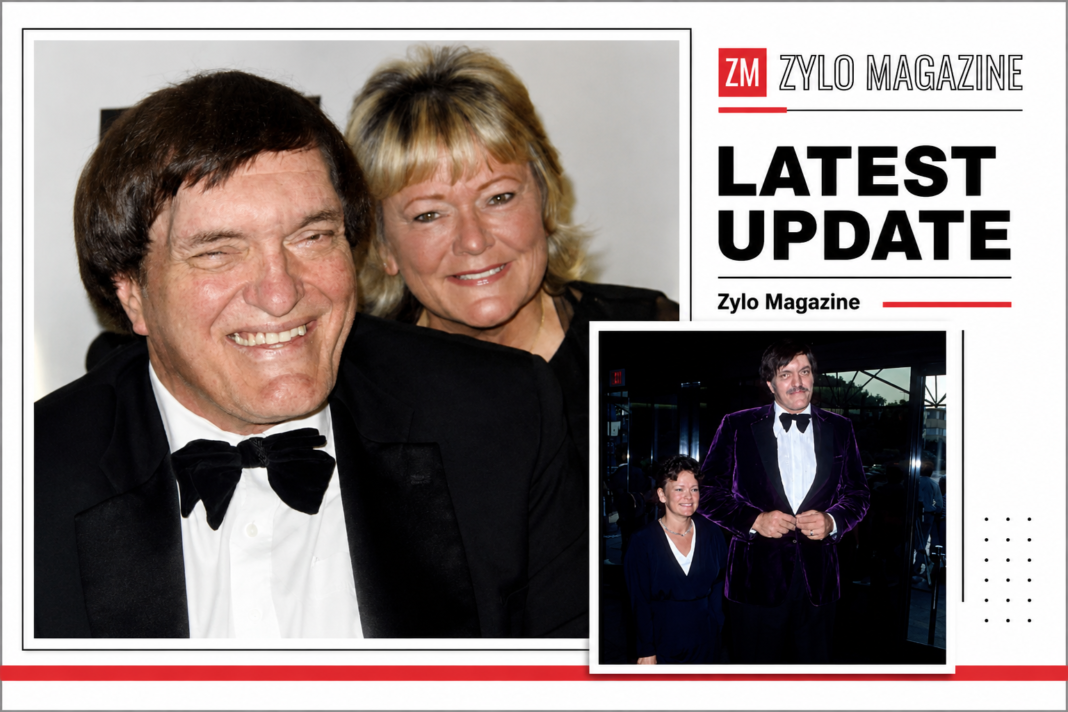
Diane Rogers Kiel is best known as the longtime wife of Richard Kiel, the American actor whose extraordinary height and unforgettable performance as the steel-toothed Jaws made him one of the most recognizable characters in James Bond history. Yet Diane’s story is interesting precisely because she never developed the conventional public profile of a celebrity spouse. While Richard appeared in blockbuster films, television programs, conventions, and interviews, Diane largely maintained her privacy and concentrated on family life. Their marriage began in 1974 and continued until Richard’s death in September 2014—a partnership of approximately 40 years. Together, they had four children and built a life that existed partly alongside Hollywood but was not defined entirely by it. For people searching for Diane Rogers Kiel, separating documented facts from the speculation repeated across celebrity websites is particularly important. Her story is ultimately about marriage, family, privacy, and her connection to an enduring piece of Hollywood history.
Who Is Diane Rogers Kiel?
Diane Rogers Kiel, also known simply as Diane Rogers, is the widow of actor Richard Dawson Kiel. Unlike her famous husband, Diane did not pursue the kind of public career that generated an extensive biographical record. Consequently, reliable information about her childhood, education, date of birth, and independent professional history is limited.
What is firmly established is her place in Richard Kiel’s personal life. Richard had previously been married to Faye Daniels. That marriage ended in divorce in 1973, and he married Diane Rogers in 1974. Diane and Richard subsequently had four children, and they remained married until his death in 2014. Major obituaries published after Richard died identified Diane as his surviving wife.
That distinction matters because many contemporary articles about relatively private people attempt to fill gaps in the public record with precise-sounding details. In Diane’s case, readers should be careful about claims concerning her exact age, birthday, education, career history, wealth, and current activities unless those claims are tied to reliable primary or established journalistic sources.
A more accurate understanding of Diane Rogers Kiel therefore starts with what can genuinely be documented: she shared roughly four decades of her life with one of cinema’s most visually distinctive actors, raised a family with him, and remained comparatively private despite her husband’s international fame.
Diane Rogers and Richard Kiel: A 40-Year Marriage
Diane Rogers married Richard Kiel in 1974, just as an important period in his career was developing.
Richard had already worked extensively in film and television by then. His imposing appearance made him particularly suited to roles that required an intimidating physical presence. Yet the role that transformed him into an international pop-culture figure was still ahead of him.
In 1977, Richard appeared as Jaws in the James Bond film The Spy Who Loved Me. Instead of becoming a disposable henchman, Jaws became so memorable that the character returned in 1979’s Moonraker. Richard’s physical scale, metal teeth, expressive performance, and unexpected comic qualities helped make Jaws one of the Bond franchise’s best-known supporting characters. The Los Angeles Times later noted how Kiel deliberately added small humanizing touches to the supposedly fearsome character.
This means Diane’s marriage to Richard covered not simply his later years but the period in which his international celebrity dramatically expanded.
The couple remained married throughout the Bond phenomenon and Richard’s subsequent career, including roles in Force 10 from Navarone, Pale Rider, Happy Gilmore, and other productions. They were still married when he provided the voice of Vlad in Disney’s Tangled decades later.
Their relationship consequently offers an interesting contrast to the public image associated with Richard Kiel.
Audiences saw a gigantic, intimidating screen presence. Diane knew the person behind that image.
And while Richard’s career depended to a considerable degree on being noticed, Diane’s public identity remained remarkably understated.
Why Diane Rogers Kiel Became a Subject of Public Interest
There is an obvious question: if Diane herself was not a major film or television personality, why are people still searching for her?
The answer begins with Richard Kiel’s unusual cultural longevity.
For millions of viewers, Richard was not simply another supporting actor. Jaws became an immediately identifiable cinematic character. His towering height, metallic teeth, physical comedy, and battles with Roger Moore’s James Bond gave audiences an image that remained memorable decades after the films were released.
Richard later reached another generation through Happy Gilmore, playing Mr. Larson, the intimidating former employer of Adam Sandler’s title character. He also appeared in Pale Rider and voiced a character in Tangled. His career therefore crossed several generations of movie audiences.
Interest in a famous person’s spouse naturally follows interest in the celebrity.
But there is another factor in Diane’s case: contrast.
Richard was famous for being physically impossible to overlook, whereas Diane largely avoided becoming a celebrity in her own right. Richard’s professional life was public; Diane’s remained comparatively private. Richard became internationally recognizable; Diane was mostly known through her relationship with him.
That contrast makes people curious.
Searches such as “Who was Richard Kiel’s wife?”, “Diane Rogers Kiel biography,” “Richard Kiel and Diane Rogers,” and “Diane Rogers Kiel today” are different versions of the same question: who shared the private life of the man behind Jaws?
The Famous Height Difference Between Diane and Richard Kiel
One of the most frequently discussed features of Diane and Richard Kiel’s relationship was their dramatic difference in height.
Richard Kiel stood approximately 7 feet 2 inches tall, making him exceptionally tall even by the standards of actors famous for their size. His height was central to the visual impact of many of his screen roles.
Published accounts have described Diane as considerably shorter. The difference naturally attracted attention whenever the couple appeared together.
Yet reducing their marriage to a visual novelty misses the more meaningful point.
Their partnership lasted about 40 years.
A frequently repeated remark attributed to Diane says that despite their obvious physical difference, the couple “[saw] eye to eye on so many things.” The line has endured because it neatly transforms curiosity about physical appearance into a statement about compatibility.
That provides a useful way of understanding the couple.
The striking photographs may have caught people’s attention, but a four-decade marriage cannot be explained by a photograph. Whatever private dynamics sustained their relationship, its duration demonstrates that the partnership extended far beyond the physical contrast that fascinated outsiders.
Diane Rogers Kiel and Family Life
Family is one of the best-documented parts of Diane Rogers Kiel’s story.
Diane and Richard had four children. Richard’s obituary in The Guardian confirms that he was survived by Diane and their four children. The Los Angeles Times identified the children as sons Richard George, Bennett, and Christopher, and daughter Jennifer.
This family dimension is important because Richard Kiel’s public persona could easily obscure the ordinary responsibilities of his private life.
On screen, Richard was Jaws—a seemingly indestructible adversary who could survive extraordinary situations. Away from the screen, he was a husband and father with the same practical responsibilities, relationships, difficulties, and transitions experienced by other families.
Diane was part of that private world throughout the most recognizable decades of his career.
The family also lived away from the center of Hollywood for substantial periods. According to the Los Angeles Times, Richard moved to Coarsegold, California, in 1980 and later to Clovis, near Fresno, in 2002.
That geographical detail is more revealing than it initially appears.
Living outside Hollywood’s central celebrity ecosystem does not prove anything about a family’s motives, and it would be inappropriate to invent reasons Diane or Richard never publicly stated. Nevertheless, it illustrates that their family life was not confined to Los Angeles premieres and studio activity. Richard’s fame remained international while much of his later everyday life was rooted in California communities considerably removed from Hollywood.
Diane Rogers Kiel’s Role During Richard Kiel’s Career
It is tempting to describe the spouse of a successful actor as “the person behind his success.” That language sounds complimentary but can actually be misleading when evidence is limited.
Richard Kiel earned his career through decades of acting, writing, producing, appearances, and professional relationships. Diane’s precise involvement in individual career decisions is not comprehensively documented in major sources.
A more responsible conclusion is that she was his spouse throughout a remarkably long portion of his professional life.
That period included major successes, changing audience tastes, physical challenges, and shifts in Richard’s career.
After Jaws made him internationally famous, Richard continued acting but faced the challenge familiar to highly distinctive performers: audiences and casting professionals could strongly associate him with one type of character.
The Independent’s obituary observed that his career after the Bond films included roles in So Fine, Pale Rider, Happy Gilmore, voice work, and other projects. Richard also co-wrote and produced the family film The Giant of Thunder Mountain and pursued writing.
Diane’s marriage to him extended across all of those phases.
That longevity is a more meaningful fact than unsupported claims about her supposedly directing or managing his career.
She was there before Jaws became a global phenomenon, remained his wife through its aftermath, and was still his spouse when he died almost four decades later.
Life Beyond the Jaws Phenomenon
Understanding Diane Rogers Kiel also requires understanding how unusual Richard Kiel’s fame was.
Jaws could easily have been a conventional villain. Instead, Richard turned the character into something more memorable.
His size created the initial threat, but his physical performance added humor and personality. The character eventually evolved from Bond’s enemy toward a more sympathetic figure in Moonraker. That unusual development helped Jaws transcend the disposable-henchman formula.
Richard’s career, however, was broader than James Bond.
His credits included The Longest Yard, Silver Streak, Force 10 from Navarone, Pale Rider, and Happy Gilmore. He also worked in television and later performed voice work.
In addition, Richard wrote.
He published the autobiography Making It Big in the Movies and worked with Pamela Wallace on Kentucky Lion, a book about abolitionist Cassius Marcellus Clay.
For Diane, this meant being married not simply to “the actor who played Jaws” but to a person whose professional identity changed over time—from working actor to Bond icon, character performer, writer, producer, convention personality, and veteran figure in popular culture.
That wider context helps explain why interest in the Kiel family continues long after Richard’s death.
Richard Kiel’s Physical Challenges and Later Career
Richard Kiel’s unusual physique was essential to his career, but his later years also involved significant physical difficulties.
A serious automobile accident in 1992 affected his balance and mobility. Even so, he continued working. One of his best-known later performances came in 1996’s Happy Gilmore, where he played Mr. Larson.
That role introduced him to audiences who may never have seen the Bond films in theaters.
Rather than simply reproducing Jaws, Happy Gilmore used Richard’s intimidating physical presence for comedy. Mr. Larson becomes an ally to Happy while terrifying Happy’s rival, Shooter McGavin.
Later, Richard provided the voice of Vlad in Tangled (2010), further demonstrating how his recognizable persona could be adapted even when audiences could not physically see him.
Diane’s long marriage to Richard therefore spanned major changes in his health and career.
It is reasonable to recognize that any decades-long marriage involves adapting to changes in work, aging, and health. What should be avoided, however, is turning that general observation into invented details about Diane’s private caregiving activities unless a reliable source documents them.
This distinction is especially important because online biographies often transform plausible assumptions into alleged facts.
Faith and Personal Change in Richard Kiel’s Life
Faith became an important part of Richard Kiel’s later personal story.
Published obituaries describe him as a born-again Christian, and Richard himself discussed religious conversion in connection with overcoming problems with alcohol. The Washington Post reported that he turned toward God following struggles with alcoholism, while other biographical sources similarly document the importance he placed on his Christian faith.
Some newer online biographies describe Diane as sharing those religious beliefs. Because the documentation about Diane herself is less extensive than the record concerning Richard, those claims should be treated more cautiously than Richard’s own well-documented statements about faith.
The broader lesson is useful for anyone researching Diane Rogers Kiel: information about Richard should not automatically be transferred to Diane.
Being married for 40 years does not mean every belief, professional decision, experience, or personal struggle attributed to one spouse can automatically be attributed to the other.
High-quality biography depends on preserving that distinction.
Richard Kiel’s Death in 2014
Richard Kiel died on September 10, 2014, in Fresno, California. He was 74 years old and only three days away from his 75th birthday. Major reports and subsequent biographical accounts identify heart disease as the cause of death.
His death brought renewed attention to an extraordinary screen career.
Obituaries remembered Jaws, of course, but they also emphasized the contrast between Richard’s threatening screen image and his reputation as a much gentler person away from the camera.
Diane had been married to him since 1974.
Her appearance in established obituaries is therefore simple but significant: she was identified as his wife and survivor after approximately four decades of marriage. The couple’s children were also listed among his survivors.
For Diane, Richard’s death represented something fundamentally different from what it represented to audiences.
Fans lost an actor associated with treasured films.
The entertainment industry lost a distinctive character performer.
Diane and the Kiel family lost a husband, father, and family member.
Recognizing those different perspectives is essential when discussing celebrity families respectfully.
What Happened to Diane Rogers Kiel After Richard’s Death?
This is one of the most common questions surrounding Diane—and also one of the areas where responsible articles should exercise the most caution.
Diane has not maintained the highly visible public profile that would allow reliable media outlets to document every stage of her life after 2014.
As a result, there is relatively little authoritative public reporting about her current day-to-day activities.
That absence of information should not be treated as a problem that needs to be “solved” with speculation.
It is information in itself.
Diane Rogers Kiel was never primarily known as a celebrity pursuing independent publicity. Her public significance arose overwhelmingly from her long marriage to Richard Kiel and their family. After his death, there was no requirement for her to transform that connection into a media career.
Readers searching “Where is Diane Rogers Kiel now?” may encounter websites offering specific descriptions of her current residence, routine, finances, church involvement, or family activities. Such claims should be evaluated according to their sourcing rather than repeated simply because several websites copy one another.
The most defensible statement is straightforward: Diane survived Richard when he died in 2014, while detailed, reliably documented information about her subsequent private life remains limited.
Is Diane Rogers Kiel Still Alive?
Online searchers frequently ask whether Diane Rogers Kiel is still alive.
This is another question where precision matters.
Richard Kiel’s 2014 obituaries clearly establish that Diane survived him.
However, a lack of widely reported subsequent news about a private person should not automatically be converted into a definitive statement about that person’s present status. Unless a trustworthy, current source establishes the answer, responsible publishers should avoid presenting assumptions as confirmed facts.
This principle applies broadly to online biography writing.
Search engines contain thousands of pages about people who are adjacent to fame—spouses, children, parents, former partners, and relatives. Many pages recycle information from one another. Once an unsupported date, job, net-worth estimate, or location enters that ecosystem, repetition can make the claim appear established even when the underlying evidence remains weak.
For Diane Rogers Kiel, the better approach is to say exactly what reliable evidence establishes and acknowledge where the public record becomes thin.
Accuracy is more useful than manufactured completeness.
Diane Rogers Kiel’s Age and Birthday
Another popular search concerns Diane Rogers Kiel’s age.
Reliable mainstream sources documenting Richard Kiel’s life generally focus on their marriage, children, and Richard’s career rather than Diane’s birth date.
Therefore, precise claims about Diane’s date of birth or current age should not be accepted without appropriate sourcing.
This is a valuable distinction because biography sites often create “quick facts” tables that make uncertain information look authoritative. A table can appear factual even when its contents are copied from unsourced pages.
Anyone researching Diane should ask three questions:
- Does the source identify where the information originated?
- Is the original source reliable?
- Can the claim be independently corroborated?
If the answer is no, presenting an exact number merely for SEO purposes reduces the quality of the article.
The lack of a securely documented public birth date does not diminish Diane’s story. It simply reflects the fact that she has lived much of her life as a private individual.
What Is Diane Rogers Kiel’s Net Worth?
There is no compelling reason to assign Diane Rogers Kiel a speculative net-worth figure.
Celebrity wealth websites frequently estimate the finances of actors and entertainers. Those figures can already be difficult to verify because outsiders generally lack access to private assets, debts, trusts, investments, taxes, estate arrangements, and ownership structures.
Estimating the personal wealth of a comparatively private spouse is even less reliable.
Richard Kiel had a long career encompassing acting, writing, production work, appearances, and other activities. But Richard’s earnings during his lifetime cannot simply be treated as Diane’s individual net worth.
Nor can an estimate attached to Richard automatically establish what Diane owned after his death.
Consequently, articles claiming an exact Diane Rogers Kiel net worth should be treated skeptically unless they provide unusually strong financial documentation.
The practical takeaway for readers is simple: Diane Rogers Kiel’s personal net worth is not reliably established in the public record.
That answer may be less sensational than an invented multimillion-dollar number, but it is substantially more useful.
Diane Rogers Kiel and Happy Gilmore
People occasionally search for a connection between Diane Rogers Kiel and Happy Gilmore. The connection is indirect: Richard Kiel appeared in the 1996 comedy, while Diane herself is not known for an acting role in the movie.
Richard played Mr. Larson, Happy Gilmore’s imposing former boss.
The character became memorable partly because the film cleverly used Richard’s intimidating stature in a comic setting. For viewers who discovered Richard through Happy Gilmore, learning that the same actor had played Jaws in two Bond films can be surprising.
Diane’s name becomes associated with the movie in search results because people researching Richard’s personal life eventually encounter information about his wife.
This illustrates an important SEO point: not every keyword association represents a direct professional connection.
Diane Rogers Kiel is connected to Happy Gilmore through her marriage to Richard Kiel—not through a documented role in the film itself.
What Makes Diane Rogers Kiel’s Story Different?
The most interesting aspect of Diane Rogers Kiel’s story may be how little it conforms to the modern model of celebrity.
Today, relatives and partners of famous entertainers can develop enormous audiences of their own. Social media allows proximity to fame to become a career.
Diane’s public story belongs largely to another model.
Her marriage made her recognizable to fans interested in Richard, but she did not become famous on anything approaching his scale. There is no vast, authoritative archive of interviews in which she narrates every period of her life.
That creates an unusual tension.
The internet wants complete biographies. Diane’s public record provides only part of one.
Rather than treating that gap as a failure, it is worth recognizing privacy as part of the story.
The verified facts are already meaningful: a marriage beginning in 1974; four children; life alongside an actor experiencing international fame; decades encompassing professional and physical changes; and a partnership that continued until Richard died in 2014.
Sometimes the absence of constant publicity tells us something important about how a person chose—or was able—to live.
Lessons From the Diane Rogers Kiel Story
Diane Rogers Kiel’s biography provides several useful lessons beyond celebrity trivia.
First, public visibility is not the same as personal significance. Richard Kiel’s contribution to cinema is publicly measurable because films, credits, reviews, interviews, and box-office history leave records. The contribution of a spouse or parent to a family is usually much less visible.
Second, longevity can tell us more than publicity. Diane and Richard remained married for roughly four decades. That documented duration is more informative than speculative stories claiming to know every private detail of their relationship.
Third, celebrity biographies require careful sourcing. Diane’s limited public profile makes her an excellent example of why readers should distinguish established reporting from recycled online claims.
Fourth, a famous person’s identity can differ dramatically from the screen image. Richard spent much of his career portraying physically threatening characters, yet his obituaries repeatedly presented a more complex person—an actor, writer, husband, father, and man who experienced personal and physical struggles.
Finally, privacy itself deserves respect. Curiosity about public figures is understandable. But being married to a celebrity does not automatically make every aspect of someone’s life public property.
Diane Rogers Kiel: Quick Facts
| Topic | Documented information |
|---|---|
| Full name | Diane Rogers Kiel / Diane Rogers |
| Best known for | Wife of actor Richard Kiel |
| Husband | Richard Dawson Kiel |
| Marriage | 1974–2014 |
| Length of marriage | Approximately 40 years |
| Children | Four |
| Sons | Richard George, Bennett, Christopher |
| Daughter | Jennifer |
| Connection to James Bond | Wife of Richard Kiel, who played Jaws |
| Connection to Happy Gilmore | Richard Kiel played Mr. Larson |
| Richard Kiel’s death | September 10, 2014 |
| Diane’s exact net worth | Not reliably established publicly |
| Detailed current activities | Limited reliable public information |
The core marriage and family details are supported by contemporary obituaries from established publications.
Frequently Asked Questions About Diane Rogers Kiel
Who is Diane Rogers Kiel?
Diane Rogers Kiel is best known as the second wife and widow of American actor Richard Kiel. Richard became internationally famous for playing the steel-toothed Jaws in the James Bond films The Spy Who Loved Me and Moonraker. Diane and Richard married in 1974 and had four children together. Their marriage continued until Richard’s death in 2014.
How long were Diane Rogers and Richard Kiel married?
Diane Rogers and Richard Kiel were married for approximately 40 years, from 1974 until Richard died on September 10, 2014. Their long marriage covered the most internationally famous period of Richard’s acting career.
How many children did Diane Rogers Kiel have with Richard Kiel?
Diane and Richard Kiel had four children. Established reporting identifies them as sons Richard George, Bennett, and Christopher, and daughter Jennifer.
Was Diane Rogers Kiel in Happy Gilmore?
Diane Rogers Kiel is not known for appearing as an actor in Happy Gilmore. Her husband Richard Kiel appeared in the 1996 film as Mr. Larson, Happy Gilmore’s intimidating former boss. Richard’s performance became one of his best-known roles outside the James Bond franchise.
What is Diane Rogers Kiel’s net worth?
Diane Rogers Kiel’s personal net worth has not been reliably established in the public record. Figures published on celebrity or biography websites should therefore be treated as estimates or speculation unless supported by credible financial documentation. Richard Kiel’s career earnings or estimated estate should not automatically be presented as Diane’s individual wealth.
Conclusion: Why Diane Rogers Kiel Still Interests Richard Kiel Fans
Diane Rogers Kiel remains a subject of interest because her life intersects with the private side of an extraordinary Hollywood career. She married Richard Kiel in 1974, shared approximately four decades with him, and raised four children while Richard became globally recognizable as Jaws and later entertained new audiences through films such as Happy Gilmore. Yet the most important point about Diane is also the easiest to overlook: she was not a conventional celebrity and much of her personal history remains private. Reliable reporting establishes the marriage, family, and her place in Richard Kiel’s life, but many additional claims circulating online are far less certain. That makes Diane’s story valuable for more than Hollywood nostalgia. It demonstrates why good biography should respect both evidence and privacy. Her enduring public significance comes not from manufactured celebrity, but from a long family partnership connected to one of cinema’s most unforgettable performers.
Continue Exploring Our Latest Article: Peter Buchignani: Biography, Career, Princeton Football, Family Life & Facts