That faint scratching behind your bedroom wall at 2 a.m. isn’t your imagination. Neither is the musty smell creeping into your attic or the small, dark droppings collecting near your vents. These are the calling cards of bats, and if you’ve noticed them, you’re not alone. Homeowners across Palm Beach County are discovering that these flying mammals have quietly claimed a corner of their homes as their own.
Bats are fascinating creatures. They pollinate plants, control insect populations, and play a vital role in local ecosystems. But their talents for squeezing through gaps as small as a half-inch and roosting in dark, undisturbed spaces make attics, chimneys, and soffits irresistible to them. Once a colony settles in, the situation rarely improves on its own. It grows.
Why a Small Bat Problem Doesn’t Stay Small
A single bat in your attic is rarely just a single bat. Bats are social animals that roost in colonies, and a female bat gives birth to just one pup per year, but that pup joins an existing group rather than starting a new one elsewhere. Over a few seasons, a handful of bats can multiply into dozens, all sharing the same crevice above your ceiling.
As the colony grows, so does the accumulation of guano and urine, which can seep into insulation, stain ceilings, and create a strong, unpleasant odor throughout the home. In more serious cases, this buildup can pose respiratory health risks to residents, especially in poorly ventilated spaces. There’s also the matter of structural wear. Bats don’t chew through wood the way rodents do, but their sheer numbers and constant movement can loosen insulation and damage soffits over time.
Why DIY Bat Removal Rarely Works
It’s tempting to search for a quick fix. Mesh screens, mothballs, ultrasonic devices; the internet is full of suggestions. The trouble is, most of these methods only address the symptom, not the source. Bats are creatures of habit. If you block one entry point without identifying every other gap, they’ll simply find another way in, often just a few feet away.
There’s also a legal dimension many homeowners aren’t aware of. Several bat species found in Florida are protected under state and federal law, which means removal has to be handled carefully and at the right time of year to avoid separating mothers from their pups or violating wildlife protection statutes. Attempting removal without this knowledge can backfire, both for the homeowner and for the bats themselves.
What Professional Bat Exclusion Actually Looks Like
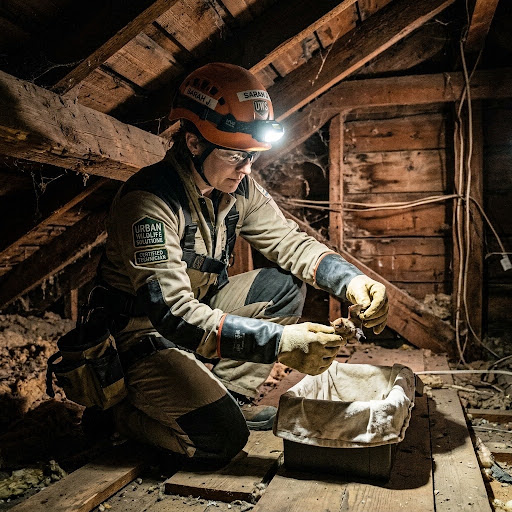
Effective removal isn’t about scaring bats away. It’s about creating conditions where they leave on their own and can’t return. This starts with a full property inspection to locate every active and potential entry point, from gaps in fascia boards to gaps around roof vents.
Once entry points are mapped, one-way exclusion devices are installed. These allow bats to exit at dusk to feed but prevent them from re-entering the same opening. After a monitoring period confirms the colony has fully vacated, every gap is permanently sealed. The final step, often overlooked in cheaper or rushed jobs, is cleanup: removing guano, sanitizing the space, and restoring any damaged insulation so the home is safe and livable again.
Why Timing Matters More Than Most Homeowners Realize
Florida’s climate means bats are active for much of the year, but there are specific windows when exclusion work should be paused. During maternity season, typically spring through midsummer, young pups can’t yet fly, so sealing entry points could trap them inside or separate them from their mothers. A knowledgeable removal team times the work around these biological windows, which protects the bats and keeps the homeowner on the right side of wildlife regulations.
This is one of the clearest reasons DIY approaches often stall or cause more harm than good. Without understanding species behavior and seasonal patterns, well-intentioned homeowners can end up prolonging the very problem they’re trying to solve.
Restoring Peace of Mind, One Home at a Time
Living with a bat colony overhead affects more than just your ceiling. It affects sleep, air quality, and the sense that your home is truly your own. Palm Beach Wildlife Services has spent years helping homeowners take that comfort back, using methods that are humane, thorough, and built to last.
Bat Removal that’s handled with the right timing, the right tools, and a genuine respect for both your home and local wildlife is exactly what turns a stressful situation into a resolved one — and it’s the kind of service Palm Beach Wildlife Services provides on every job, big or small.
If you’ve heard that scratching sound or caught a whiff of something musty in the attic, don’t wait for the colony to grow. Reach out to a team that understands both the science of bat behavior and the urgency of protecting your home.
Frequently Asked Questions
How do I know if I have bats instead of another pest?
Bat droppings are small, dark, and crumble easily, unlike rodent droppings which are firmer. You may also notice greasy marks near entry points from their fur and hear faint fluttering or scratching sounds, especially around dusk.
Is it safe to seal up entry points myself?
It’s not recommended. Sealing gaps without confirming the colony has fully left can trap bats inside your home, leading to worse odors, potential structural issues, and health risks from decomposition.
Will removing bats harm them?
No. Professional exclusion methods are designed to be humane, allowing bats to leave safely on their own schedule rather than trapping or harming them.
How long does the bat removal process typically take?
Most cases resolve within one to three weeks, depending on colony size and the time of year, since exclusion work must sometimes pause during maternity season.
Can bats come back after exclusion?
Once entry points are properly sealed after a confirmed vacancy, the chances of bats returning to the same spot are low. Ongoing home maintenance helps keep it that way.