Aging changes more than your skin and hair. Your teeth also change over time, sometimes in ways that make your smile look older than the rest of your face. Years of chewing, staining, grinding, and everyday wear can gradually affect their color, shape, and position.
These changes are not always signs of poor dental health. Even people with excellent oral hygiene can develop worn edges, darker teeth, or uneven spacing.
Cosmetic dentistry offers ways to address these concerns without necessarily changing your entire smile. The important part is understanding what causes each change and choosing treatments that preserve healthy teeth whenever possible.
Understand Why Your Smile Changes With Age
Teeth experience years of pressure from chewing, speaking, and other everyday activities. Over time, enamel may become thinner, edges can wear down, and small imperfections become more noticeable.
Natural changes in the gums and surrounding tissues can also affect how teeth appear.
Because these concerns develop differently, cosmetic treatment should begin with an examination rather than a predetermined procedure.
For patients researching their choices, Bridgetown Dental outlines eight cosmetic dentistry options that address concerns involving tooth color, shape, alignment, and gum appearance. These include whitening, bonding, veneers, contouring, clear aligners, and treatments involving the gumline.
Understanding these options can help patients discuss their concerns more clearly during a consultation.
However, the right solution depends on the condition of the teeth, not simply their appearance.
A dentist should first check for decay, gum disease, grinding damage, and other problems that could affect treatment.
Restore Brightness Without Chasing an Unnatural Shade
Teeth naturally change color as people age. Enamel gradually becomes thinner, allowing more of the yellowish dentin underneath to influence their appearance.
Coffee, tea, tobacco, and certain foods can contribute additional staining.
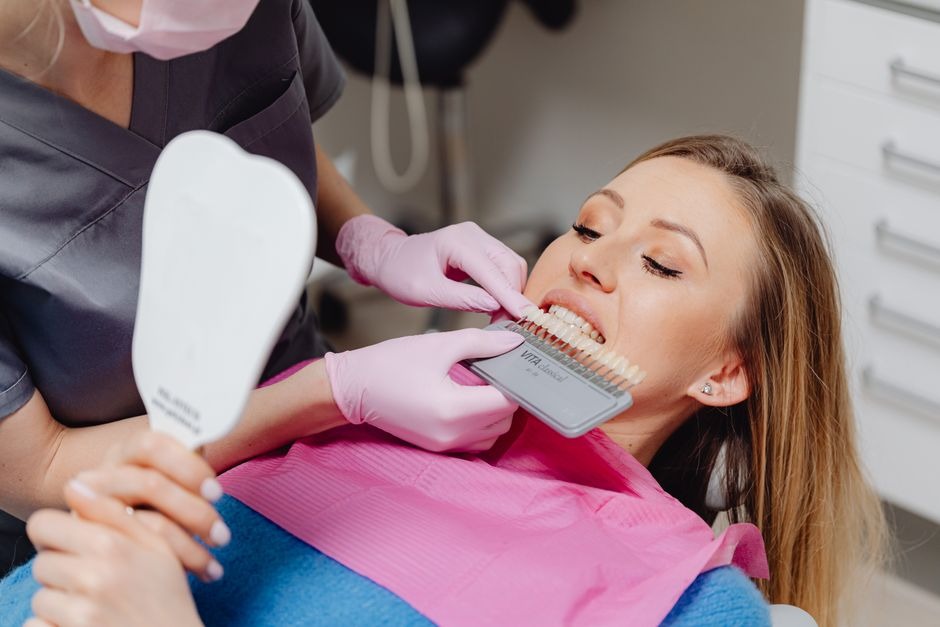
Professional teeth whitening may help improve discoloration in suitable patients. Dentists can recommend an approach based on the type of staining, tooth sensitivity, and existing restorations.
However, the whitest possible shade is not necessarily the most flattering.
Extremely bright teeth can look unnatural when they contrast sharply with surrounding facial features.
Whitening also has limitations. Crowns, veneers, and tooth-colored fillings generally do not respond to bleaching agents in the same way as natural teeth.
Patients with these restorations should discuss possible color differences before treatment.
A natural-looking improvement often comes from choosing a shade that complements the individual rather than copying a photograph.
Repair Worn Edges That Make Teeth Look Uneven
The edges of front teeth play an important role in the appearance of a smile.
Years of chewing, nail biting, grinding, or accidental damage can create small chips and uneven surfaces.
These changes may seem minor, but they can affect how teeth reflect light and how symmetrical the smile appears.
Dental bonding is one option for correcting certain imperfections.
A dentist applies tooth-colored composite resin and shapes it to restore missing or uneven areas.
For minor concerns, bonding may provide a noticeable improvement without extensive alteration of the natural tooth.
However, the material can stain, chip, or wear over time.
Patients who grind their teeth may need additional evaluation because repeated pressure can damage both natural enamel and cosmetic restorations.
Addressing the cause of wear is just as important as repairing its appearance.
Recognize When Tooth Alignment Changes the Entire Smile
Teeth do not necessarily remain in the same positions throughout adulthood.
Changes in dental alignment can occur over time, sometimes making previously straight teeth appear crowded or uneven.
Even relatively small movements can influence how the front teeth fit together.
Crowding may also create areas that are harder to clean thoroughly.
Clear aligners can help correct certain alignment problems by gradually moving teeth into planned positions.
Unlike fixed braces, these appliances can be removed for eating and oral hygiene.
However, they require consistent wear and are not suitable for every orthodontic condition.
A dentist or orthodontist should evaluate the bite, gum health, and available space before recommending treatment.
Patients should also understand the importance of retainers after alignment is completed.
Without appropriate retention, teeth may gradually shift again.
Consider How Gum Changes Affect Tooth Proportions
An attractive smile depends on more than the visible surfaces of the teeth.
The gums frame each tooth, influencing how long, short, or symmetrical it appears.
Some people naturally have uneven gumlines, while others experience changes associated with inflammation, recession, or periodontal conditions.
These differences can become more noticeable with age.
For certain patients, gum reshaping may improve the appearance of excessive or uneven gum tissue.
Crown lengthening may also be recommended in specific situations, depending on the relationship between the gums, teeth, and supporting bone.
However, gum procedures are not appropriate for every cosmetic concern.
If the gums are receding, removing additional tissue could make the problem worse.
A thorough periodontal assessment helps determine whether treatment would be beneficial.
Healthy gum tissue should always take priority over achieving perfectly matching proportions.
Know When Veneers Are Worth the Commitment
Veneers can address several visible concerns at once, including discoloration, irregular tooth shapes, and selected spacing problems.
These thin coverings are attached to the front surfaces of teeth to create a different appearance.
For someone with multiple cosmetic concerns, veneers may offer a coordinated result.
However, conventional veneers often require some enamel removal, making them a significant long-term decision.
They may also need repair or replacement in the future.
Patients should understand the maintenance requirements and potential complications before proceeding.
Veneers are not necessarily the best solution for every chipped or discolored tooth.
Whitening, bonding, or orthodontic treatment may provide a more conservative alternative in suitable cases.
A careful consultation should compare these possibilities rather than assuming that a larger procedure automatically produces a better result.
Protect Cosmetic Results From Everyday Habits
Cosmetic dental treatment does not eliminate the need for regular oral care.
In fact, maintaining results often depends on the same habits that protect natural teeth.
Brushing with fluoride toothpaste, cleaning between teeth, and attending recommended dental examinations remain essential.
Patients should also consider habits that place unnecessary pressure on their teeth.
Chewing ice, biting fingernails, and using teeth to open packaging can damage enamel and cosmetic restorations.
For people who grind their teeth during sleep, a dentist may recommend a protective appliance when appropriate.
Dietary habits can influence appearance as well.
Frequent exposure to staining beverages may gradually affect natural teeth and certain restorative materials.
Avoiding tobacco also supports oral health and reduces staining.
Long-lasting cosmetic improvements depend on realistic maintenance expectations, not simply the quality of the initial procedure.
Aim for a Healthier Smile, Not a Completely Different Face
Cosmetic dentistry works best when treatment respects the features that make someone’s smile recognizable.
A slight difference in tooth shape or position is not necessarily a problem requiring correction.
Before pursuing treatment, identify the specific change you would like to make and explain why it matters to you.
Ask your dentist which options preserve the most healthy tooth structure and what results are realistically achievable.
It is also worth discussing whether treatment can be completed gradually.
For example, improving tooth color before considering more extensive restorations may help clarify whether additional procedures are necessary.
No cosmetic treatment can permanently stop natural aging.
The objective should be a comfortable, functional, healthy smile that looks appropriate for the individual.
When decisions are guided by dental health and realistic expectations, cosmetic dentistry can improve appearance without turning natural differences into problems that never needed fixing.