You’ve probably seen it: someone pacing near the printer with a phone pressed to one ear, whispering about a contract, while three desks away a colleague tries to finish a report. Nobody is doing anything wrong. The office just doesn’t have a place for it.
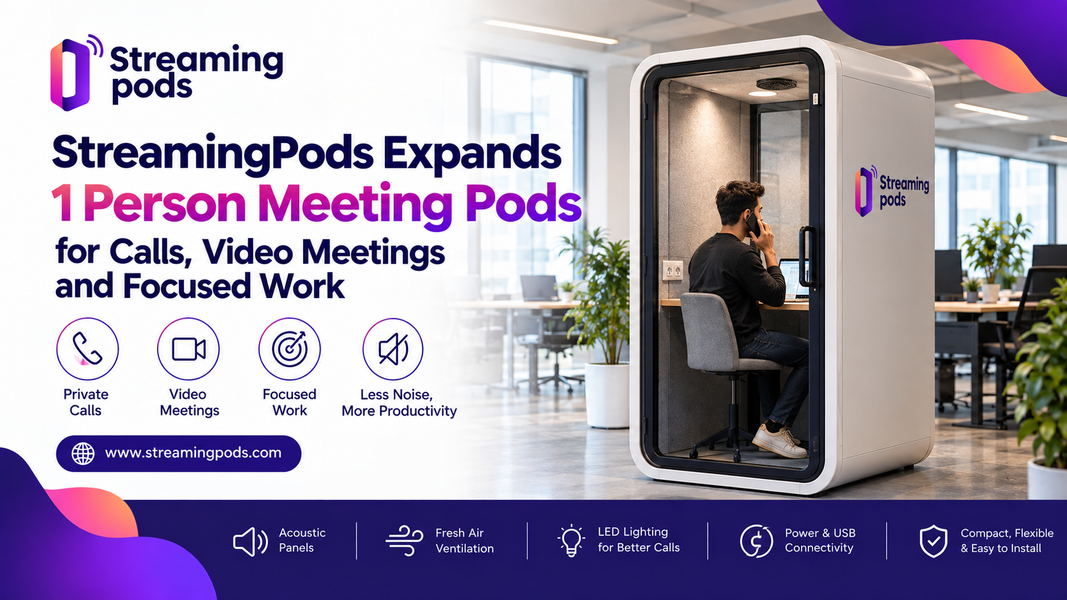
That gap is what StreamingPods is addressing by expanding its range of 1 person meeting pods. These compact, enclosed spaces give employees somewhere quiet to take a call, join a video meeting, or think without interruption.
What Are 1 Person Meeting Pods?
Think of a small, self-contained room that stands on its own inside a larger office. Single person meeting pods usually include sound-absorbing walls, a door, ventilation, lighting, power outlets, and a compact desk or seat.
People often call them a soundproof office phone booth. That’s a handy nickname, but it slightly oversells them. Most units reduce noise substantially rather than removing it entirely.
Because office pods don’t require construction, they can be delivered, assembled, and moved as needs change. That’s a big reason they’ve become popular with growing teams.
How 1 Person Meeting Pods Support Private Calls
Some calls simply shouldn’t be overheard: a salary conversation, a client’s financial details, a difficult HR follow-up. In an open office, people either lower their voices and struggle to be understood or take the call somewhere awkward, like a stairwell.
A pod removes that dilemma. The door closes, the acoustic panels absorb sound, and the caller can talk normally. Colleagues nearby benefit too, since one-sided phone chatter is a surprisingly common source of distraction.
Using Pods for Video Meetings
Video conferencing is now part of most workdays, yet finding a decent spot for it is still a hassle. Shared floors bring echo, background movement, and lighting that makes everyone look like they’re in witness protection.
A pod offers a tidy backdrop, steady light, and much cleaner audio. Someone can step in two minutes before a call starts without reserving a conference room. For hybrid teams, that means remote colleagues see and hear a person rather than a noisy office.
Creating a Focused Workspace
Pods aren’t only for talking. Plenty of people use them to close the door on the world for an hour and get real work done, whether that’s writing, coding, budgeting, or editing.
There’s good reason for that. Research from Gloria Mark at the University of California, Irvine, suggests it can take around 23 minutes to fully regain focus after an interruption. Fewer interruptions mean better concentration, and better concentration supports employee productivity in a way that’s hard to fake with headphones alone.
How Meeting Pods Improve Office Privacy
Workplace privacy isn’t just about secrets. It’s also about comfort. People speak more honestly and think more clearly when they aren’t wondering who’s listening.
Pods help in a few simple ways. They contain sound, they block sightlines, and a closed door sends a clear “I’m unavailable” signal without an awkward conversation. A basic booking system or an “in use” light keeps access fair.
1 Person Meeting Pods in Open-Plan Offices
Open-plan layouts are great for spontaneous collaboration, but they offer few places to retreat. Adding 1 person meeting pods gives these floors a release valve. People can work in the open when they want energy and step into a pod when they need quiet.
Since office pods are modular, they fit along walls, beside team areas, or in underused corners. Many facilities teams start small, watch how often the first units get used, and expand from there. Usage data is usually more reliable than guesswork.
Benefits for Modern and Hybrid Workplaces
Hybrid schedules mean people arrive to collaborate, then spend chunks of the day on calls with teammates elsewhere. A flexible workspace strategy needs small, quick-access spaces to keep up.
- Less room-booking friction: Short calls no longer tie up a conference room.
- Smarter use of square footage: One compact pod serves a single person, instead of a six-seat room sitting mostly empty.
- Quieter floors overall: Noise reduction helps both the caller and everyone nearby.
- Room to adapt: Units can be added or repositioned as layouts change.
What to Consider When Choosing a Meeting Pod
Not all pods are equal, and a few questions help separate a good fit from a disappointing one.
- Real acoustic data: Ask for tested sound-reduction ratings. A soundproof office phone booth is only as good as its measured performance.
- Ventilation and lighting: Quiet airflow and adjustable light matter once sessions run past ten minutes.
- Size and comfort: Make sure a laptop, a monitor, and a proper seat fit without feeling cramped.
- Power and connectivity: Outlets, USB ports, and strong Wi-Fi coverage are essential for calls.
- Codes and accessibility: Check local fire and building requirements, and think about ADA accessibility.
- Delivery and flexibility: Ask how long installation takes and whether the unit can be relocated later.
Teams comparing options can review product details on the StreamingPods website.
Conclusion
Today’s offices ask people to collaborate, take calls, and concentrate, sometimes all within the same hour. 1 person meeting pods respond to that reality by adding quiet, private spaces without a construction project.
Whether a team needs a spot for confidential calls, cleaner video meetings, or a place for deep work, single person meeting pods offer a practical answer. As StreamingPods expands its range, the underlying idea is worth borrowing: match the space to the task, and both privacy and productivity tend to improve.
Frequently Asked Questions
What are 1 person meeting pods used for?
They’re used for private phone calls, video meetings, and solo focused work. The enclosed design cuts distractions for the user and for people nearby.
Are office pods completely soundproof?
Usually not. Most significantly reduce noise through acoustic panels and sealed construction, but no pod blocks every sound. Ask for tested acoustic ratings when comparing models.
Can I take video meetings in a meeting pod?
Yes. A pod provides quiet, even lighting and an uncluttered background, which improves both audio and video quality. Check that the model has good lighting, power access, and reliable Wi-Fi.
Do pods help with focused work in open-plan offices?
They can. An enclosed space limits interruptions and visual distractions, making it easier to concentrate on demanding tasks.
How do meeting pods improve workplace privacy?
They contain sound, block sightlines, and give employees a dedicated place for sensitive conversations, so confidential topics don’t have to be discussed in shared areas.