Some people can make buying flowers wonderfully straightforward. They have a favourite colour, talk about their garden constantly or keep the same type of lilies on the kitchen table every week. Other people give you absolutely nothing to work with. You know them well enough to send flowers, yet somehow have no idea which flowers they would choose for themselves.
The good news is that you do not need to know someone’s favourite bloom to send a lovely arrangement. The range of flowers Launceston florists work with changes throughout the year, so a few useful details about the recipient will often help more than requesting one particular variety.
Begin with what you know about them
Think about the colours they wear, how they decorate their home and the general feel of their personality. Someone whose wardrobe is full of colour may enjoy something bright and cheerful. A person with a quieter style might prefer soft pinks, whites, greens or gentle seasonal shades.
Their home can offer clues as well. A large arrangement can look fantastic in an open kitchen or generous living room, while a smaller posy may suit an apartment, bedside table or desk. If you have visited their home before, picture where they are likely to put the flowers. That usually makes the decision much easier.
You can also tell the florist a little about the person. Describing someone as lively, creative, traditional or understated gives an experienced florist room to choose flowers that suit them. It may sound vague, but it is considerably more helpful than choosing a bouquet simply because it appears first on the page.
Use the occasion to guide the mood
The reason for sending flowers will help narrow down the options. Birthday flowers can be colourful and full of energy. Flowers celebrating a new baby often suit softer shades, although there is no rule saying everything must be pale pink or blue. A thank-you bouquet can feel relaxed and generous without looking overly formal.
Sympathy flowers usually call for a gentler approach. White and green arrangements are a familiar choice, but warmer colours may feel more personal if they remind the recipient of the person they have lost. When ordering for a funeral or memorial service, it is worth telling the florist where the flowers are going and when they need to arrive.
Romantic flowers do not have to mean red roses either. Roses are a beautiful choice when they suit the person, but seasonal flowers in their favourite colours can feel just as thoughtful. A short message explaining why you chose them will do far more than following an unwritten rule about what romantic flowers are supposed to look like.
Think about what happens after delivery
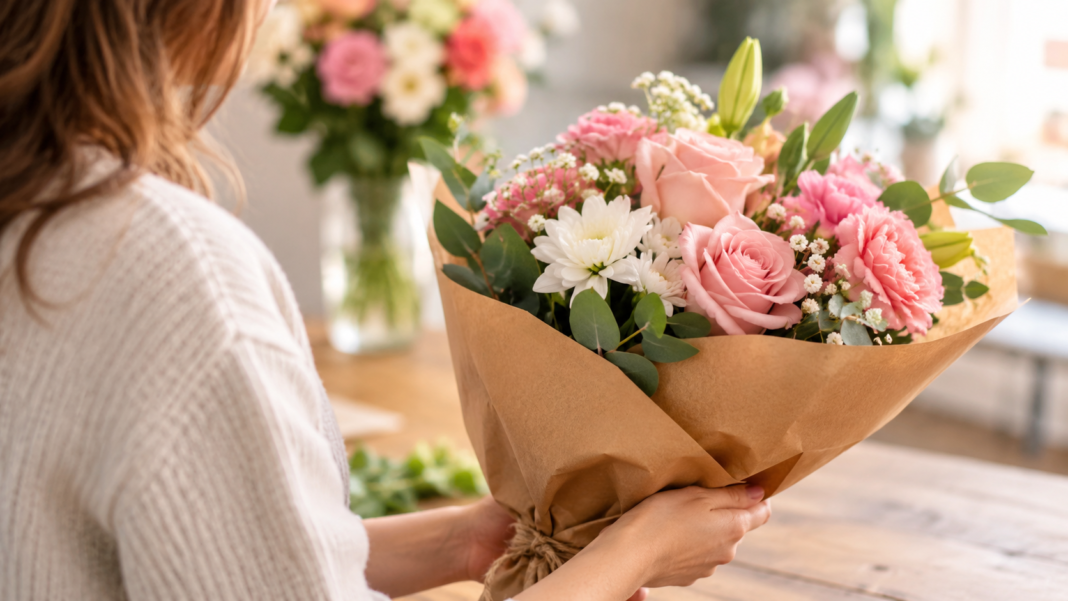
The way the flowers are presented matters, particularly when you are sending them to somebody at work, in hospital or recovering at home. A vase arrangement or hat box arrives ready to display and saves the recipient from searching for a suitable container. A wrapped bouquet is a lovely option when you know they enjoy arranging flowers themselves.
If the recipient has a cat or dog, mention it when placing the order. Some popular flowers and plants can be harmful to pets, so the florist can suggest a safer alternative. It also helps to provide clear delivery details, including the correct address, telephone number and any instructions for reaching the property.
Finally, don’t worry if the finished arrangement differs slightly from a photograph. Flowers are seasonal, and allowing the florist to use what is fresh and looking particularly good that week will often produce a better bouquet. Add a personal message, keep it sincere and let the flowers do the rest.