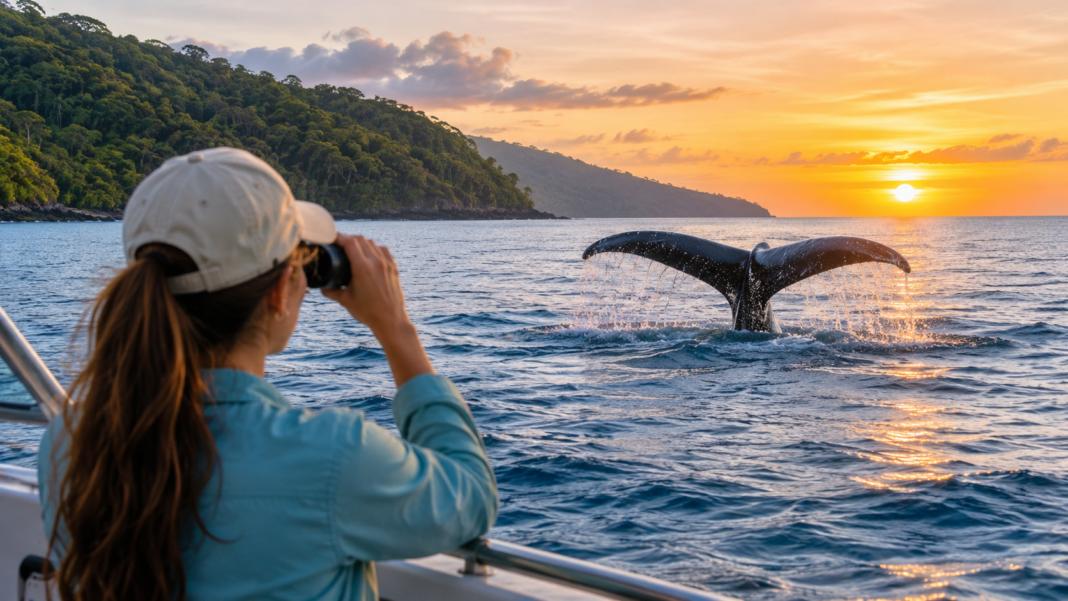
The best time to go whale watching in Costa Rica is on a morning boat, in a month when whales are passing the stretch of coast you plan to visit. If you can line that up with the dry season, December through April, the weather is on your side too. Plenty of good trips also run in the wetter months.
Pin down the whale timing first by asking local operators which months they see animals off their part of the coast. After that, the decisions that shape your day come down to coast, climate and the hour your boat leaves the dock.
How do Costa Rica’s seasons shape a whale-watching trip?
Whales keep their own calendar, and it doesn’t care about Costa Rica’s tourist seasons. So the trick is to treat the two calendars separately. First find the months when whales are around, then look at what the weather usually does in that window.
The local names can trip you up. Costa Ricans call the dry season, December to April, “summer,” and the rainy season, May to November, “winter.” If a guesthouse owner tells you winter is a lovely time for the boats, they mean the rainy months, not January. That season can bring daily rain in some regions. Early in the season, showers arrive almost every afternoon with remarkable regularity.
The country also produces its weather locally. The climate is tropical all year, but elevation and rainfall split it into many microclimates. The coastal lowlands average around 27°C across the year, while the main towns of the Central Cordillera sit closer to 20°C. That gap tells you something important. The sky you see from a hillside hotel says very little about conditions at sea level.
This matters for boats in a practical way. A gray, drizzly morning in the mountains can be bright and still on the coast an hour or two’s drive away, and the reverse happens too. Check the forecast for the harbor town where your tour departs, and if you’re staying inland, plan to sleep on the coast the night before the trip.
Pacific or Caribbean: which coast suits whale watching?
The two coasts feel noticeably different. Humidity runs higher on the Caribbean side, and the air there can feel thick even on a sunny day. The Pacific side is drier, and in the dry-season months its mornings tend to be clear and steady. That makes the Pacific the easier coast for planning a few hours on open water.
Whichever coast you pick, expect heat. A lowland average of 27°C is already warm, and on a boat the sun comes at you twice, from above and bouncing off the water. Most whale-watching boats have little or no shade, and you’ll spend long stretches standing at the rail scanning for a blow. Dressing well for those hours makes a bigger difference to your morning than almost anything else you pack.
What works on deck:
- A lightweight long-sleeved shirt, since spray washes sunscreen off faster than you’d expect
- A hat that fits snugly or ties under the chin
- Polarized sunglasses, which cut surface glare enough to spot a spout or a fin
- A thin rain shell from May to November
- Shoes with grip that you don’t mind getting wet
Getting yourself to the dock at the right hour, with a bed nearby, is the other half of the job. Costa Rica tour packages are a handy way to arrange that piece, because they pair a morning boat with transfers and a coastal overnight, so you wake up close to the harbor instead of driving down from the hills in the dark. Look for one that puts the boat on a full day at the coast and leaves the travel days for getting there and back.
What time of day is best for whale watching in Costa Rica?
Morning, nearly every time.
The rainy season explains much of this. When showers build in the afternoon, especially in the first weeks of the season, a boat that leaves early is usually back on land before the clouds close in. A late departure in those months is a gamble. You might get a dramatic sky, or you might spend an hour in rain with poor visibility and choppy water. Seas also tend to be calmer earlier in the day, which helps both your stomach and your chances of spotting something on the surface.
In the dry season the afternoon rain mostly disappears. Morning still wins, though, because the light is softer, the heat hasn’t peaked, and you aren’t squinting into the harsh midday glare.
Building a booking window around all this is fairly simple. Start with the months when whales pass your chosen coast. If those fall between December and April, you can plan with confidence and book ahead, since that’s the busy stretch. If they fall between May and November, book an early departure and give yourself at least one spare morning on the coast. Then if the weather turns or the operator reschedules, the trip moves to the next day and your plans stay intact.
That spare morning also gives you room for a second outing. Whale sightings vary from one trip to the next, and a lot of travelers find the second boat better than the first because they know what to look for.
Is the rainy season too wet for whale watching?
No, as long as you go out in the morning. The afternoon showers that mark the rainy season usually arrive after early boats are back, so a dawn or early departure keeps most of the risk off the water.
Do I need to book whale watching in advance?
In the dry season, December to April, booking ahead is sensible because it’s the busiest time to travel. In the rainy months you can often arrange a trip after you arrive, which lets you choose your day by the coastal forecast.
Will it feel cold on the boat in the morning?
Rarely. With the lowlands averaging around 27°C, the air is warm, though wind and spray can feel cool when the boat is moving fast. A light layer you can take off once the sun climbs is plenty.