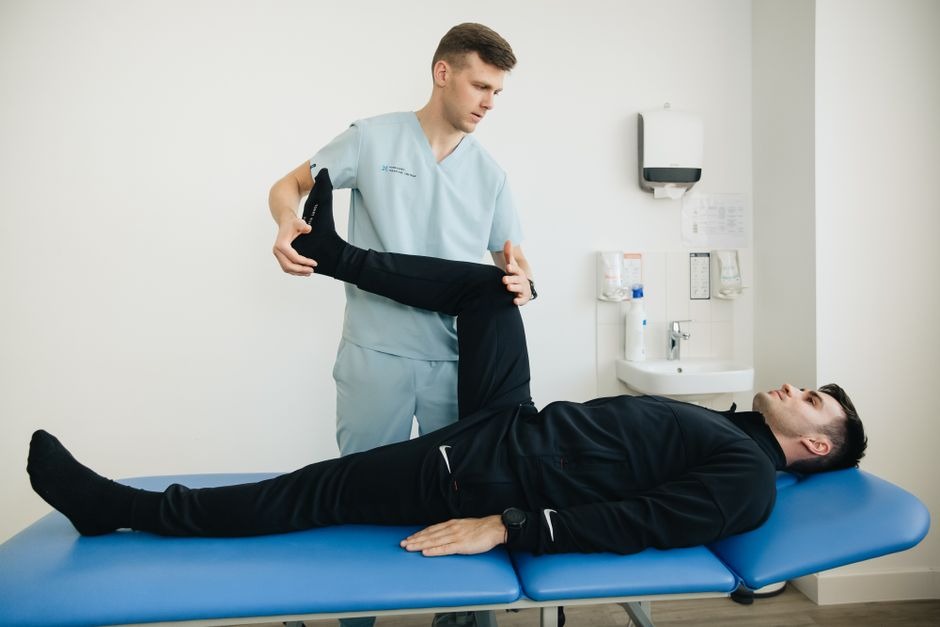
Everyday life can be surprisingly demanding on the body. Long hours at a desk, repetitive work, commuting, exercise, and sudden bursts of weekend activity can all contribute to stiffness or discomfort. In Austin, where the population exceeded 990,000 in 2024, people balance work with an active culture that can place very different demands on the body. When musculoskeletal discomfort becomes persistent, rehabilitation exercises may be one part of a broader approach to improving strength, mobility, and confidence in movement. The aim is not to promise a quick fix, but to help the body handle everyday activities more comfortably and efficiently.
Rehab Exercises Focus on How You Move
Rehabilitation exercises are structured movements chosen to address particular limitations rather than simply provide a general workout.
Depending on the individual, a program may focus on mobility, muscular strength, stability, balance, coordination, or movement control. Someone experiencing recurring lower-back discomfort may need a very different program from someone recovering from a shoulder problem.
The exercises should therefore have a clear purpose.
Instead of stretching every area that feels tight, rehabilitation considers how different parts of the body work together. Sometimes discomfort in one location may be influenced by weakness or restricted movement elsewhere.
This is why assessment matters. Understanding which movements aggravate symptoms and which physical limitations are present can help determine what kind of exercise is appropriate.
The goal is gradual improvement in function, not simply completing as many exercises as possible.
Exercise Can Complement Other Approaches to Pain
Pain management rarely comes down to one technique.
For people with certain musculoskeletal conditions, exercise may be used alongside other conservative approaches rather than being treated as an alternative to everything else.
In Austin chiropractic rehab exercises are often used to support active recovery by helping patients improve strength, mobility, stability, and movement control. Hands-on care may form one part of a treatment plan, while targeted exercises give patients something they can continue practicing between appointments.
This does not mean every type of pain should be treated in the same way.
Symptoms have different causes, and an exercise that is appropriate for one person may be unsuitable for another. A thoughtful rehabilitation plan should therefore reflect the individual’s condition, abilities, health history, and response to movement.
Progress should come from appropriate loading and repetition rather than pushing through worsening pain.
Strength and Mobility Need to Work Together
Flexibility often receives most of the attention when people feel stiff, but movement depends on more than being able to stretch farther.
A joint also needs appropriate muscular support and control.
For example, improving mobility without developing the strength needed to control that new range may not solve the underlying movement difficulty. Conversely, strength training through poorly controlled or excessively restricted movement can create its own challenges.
Good rehabilitation often combines both.
Mobility exercises may help restore comfortable movement, while resistance exercises gradually develop the muscles responsible for supporting and controlling it.
Regular muscle-strengthening activity supports physical function and can help people maintain the ability to perform everyday tasks.
The right balance varies from person to person. Rehabilitation should progress according to how the body responds rather than according to an arbitrary deadline.
A Good Plan Usually Progresses in Stages
Rehabilitation is rarely most effective when someone receives a long list of difficult exercises on the first day.
Programs typically become more challenging as symptoms, strength, and movement capacity improve.
Early exercises may focus on gentle mobility or basic muscle activation. Later stages can introduce greater resistance, coordination, balance, or movements that resemble activities performed at work, during exercise, or in daily life.
That progression serves an important purpose.
A person returning to lifting needs more than the ability to perform an easy movement while lying on a treatment table. Eventually, the body needs to tolerate the loads and positions encountered in real situations.
Progression should still be controlled.
More repetitions, heavier resistance, or greater range of motion are useful only when the person is ready for them. Rehabilitation is not a competition to reach the hardest exercise as quickly as possible.
Consistency Matters More Than an Intense Start
People are often highly motivated when pain first interrupts their routine.
That enthusiasm can lead to doing too much too quickly, particularly when an exercise initially feels easy. Rehabilitation generally benefits more from regular practice than occasional bursts of intensity.
A short routine performed consistently can be easier to maintain than an ambitious program that takes half an hour every day.
Technique matters as well.
Moving quickly through an exercise simply to complete the required repetitions can reduce its usefulness. Controlled movement helps reinforce the pattern the exercise is intended to develop.
Progress may also be gradual enough that it is difficult to notice from one day to the next.
Tracking changes in everyday activities can provide a better perspective. Sitting more comfortably, walking farther, moving with less hesitation, or returning gradually to an activity can all be meaningful signs of improvement.
Physical Activity Has Benefits Beyond Rehabilitation
A rehabilitation program does not have to exist separately from a generally active lifestyle.
As movement becomes more comfortable, regular physical activity can support broader health and physical function. The important part is choosing activities that fit the person’s abilities and current stage of recovery.
Current physical activity guidance for adults includes both aerobic activity and muscle-strengthening exercise, while recognizing that activity can be accumulated across the week rather than completed all at once.
For someone recovering from pain, the eventual goal may be returning comfortably to walking, cycling, resistance training, recreational sports, or other preferred activities.
Exercise should support life rather than become another source of anxiety about performing every movement perfectly.
Building capacity gradually can make everyday activity feel more manageable.
Know When an Exercise Needs to Be Reconsidered
Discomfort during rehabilitation deserves attention, but not every sensation means exactly the same thing.
Muscles may feel tired after unfamiliar strengthening exercises, and mild soreness can occur when activity levels change. Sharp, severe, or progressively worsening pain is different.
New numbness, significant weakness, loss of coordination, or symptoms that radiate into an arm or leg should not simply be treated as evidence that an exercise is “working.”
Persistent or concerning symptoms deserve evaluation by an appropriate healthcare professional.
The same principle applies when an exercise repeatedly makes symptoms worse.
A rehabilitation program should be adjustable. Changing the range, resistance, frequency, or exercise itself may be more sensible than repeatedly forcing a movement that the body is not tolerating well.
Pain is information. It should be interpreted thoughtfully rather than ignored or treated as a test of toughness.
Long-Term Progress Is About Building Capacity
Successful rehabilitation is not necessarily a promise that discomfort will never return.
Bodies respond to changes in workload, sleep, stress, activity, injuries, and countless other factors. An occasional flare-up does not automatically erase previous progress.
A more useful measure is whether you can do more with greater confidence.
Perhaps you can sit through the workday more comfortably, return to exercise, lift without guarding every movement, or recover more quickly after physical activity.
That growing capacity can be more meaningful than chasing perfect movement.
Rehabilitation exercises work best when they become tools rather than temporary chores. Understanding which movements help with mobility, strength, or control gives you practical ways to support your body as your activities change.
The ultimate goal is not to spend your life thinking about rehabilitation. It is to build enough strength, movement confidence, and physical capacity that you can spend more time doing the things rehabilitation was meant to help you return to.