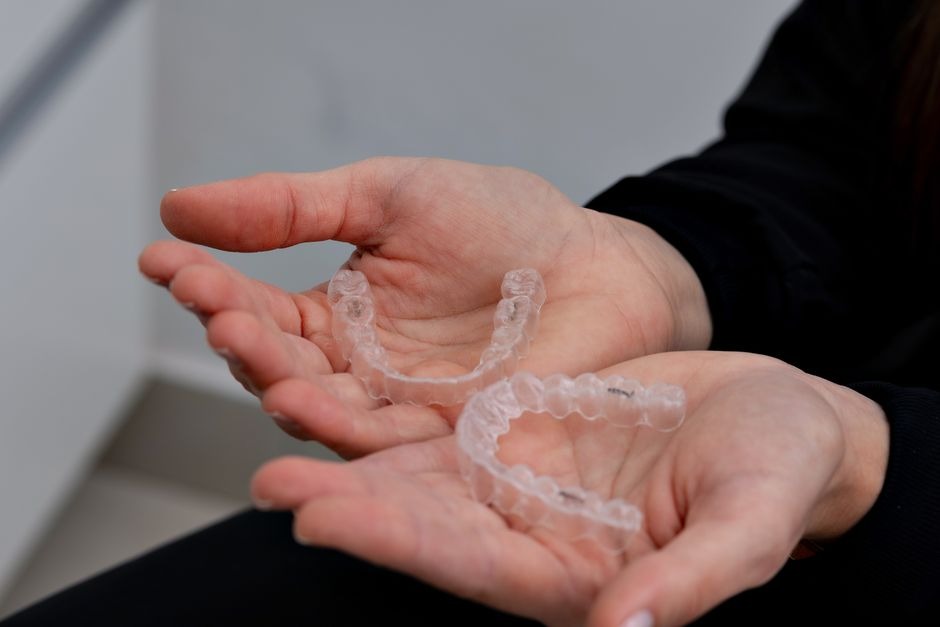
Orthodontic treatment is no longer a simple choice between getting metal braces and doing nothing. Patients may encounter traditional braces, ceramic options, and several clear-aligner systems, each promising a different balance of appearance, convenience, control, and predictability. The least visible option is not automatically the best one, and the most established treatment is not automatically necessary. A better decision starts with the teeth that need to move, then considers how realistically the treatment will fit into everyday life.
Clear Aligners Are a Category, Not a Single Treatment
Clear aligners are often discussed as though every system works in essentially the same way. The basic concept is similar: a sequence of custom trays applies controlled pressure to move teeth gradually. Yet systems can differ in materials, planning software, production methods, and the amount of control the orthodontist has over adjustments.
That matters when patients are comparing options rather than simply deciding whether they want transparent trays. Miller Orthodontics, an orthodontic practice serving patients in Dakota County, Minnesota, offers Spark, Invisalign, and uLab clear-aligner systems. Spark emphasizes clarity and stain resistance, Invisalign uses digital treatment planning and custom transparent trays, while uLab allows aligners to be designed and produced in-office, giving the orthodontic team additional flexibility over treatment changes.
The useful question, therefore, is not merely “Do I want aligners?” It is which approach suits the movement your teeth require and how your orthodontist plans to manage it.
Braces Still Solve Problems Convenience Cannot
Traditional braces remain relevant because orthodontics is fundamentally about controlled tooth movement, not appearance. Brackets and wires give the orthodontist continuous control without depending on the patient to remember to put an appliance back in after lunch.
That can make braces particularly practical for people who are unlikely to follow a strict aligner schedule. They may also be recommended when the required movements are complex or when an orthodontist believes fixed appliances will provide better control.
The tradeoff is obvious: braces remain visible, require extra attention during brushing and flossing, and usually come with restrictions intended to prevent damaged brackets or wires.
Removability Is Useful Only If You Can Handle the Routine
The freedom to remove clear aligners is one of their biggest attractions. Meals do not have to be planned around brackets, and brushing and flossing can continue without navigating fixed hardware.
But removability creates responsibility. Aligners generally need to be worn for most of the day—often around 20 to 22 hours—to keep treatment progressing as planned. Taking them out for breakfast and forgetting them until mid-afternoon can repeatedly interrupt the prescribed movement.
Someone who travels frequently, snacks throughout the day, or routinely misplaces small belongings may find the discipline more demanding than expected.
A treatment that looks convenient on paper can become inconvenient when its success depends on habits you dislike maintaining.
Appearance Matters, but So Does Treatment Visibility in Practice
For adults and teenagers concerned about photographs, presentations, customer-facing jobs, or social situations, discreet treatment can be genuinely valuable. Clear aligners are designed to be difficult to notice, while ceramic braces can provide a less conspicuous alternative to traditional metal brackets.
Still, “nearly invisible” should not be interpreted as literally invisible. Attachments may be placed on certain teeth to help aligners produce particular movements, and trays can become more noticeable if they are not kept clean.
If discretion is crucial, that preference deserves weight. If treatment duration, predictability, or reduced personal responsibility matters more, another option may be preferable.
Your Bite Matters More Than the Marketing
Straight front teeth can make treatment appear primarily cosmetic, but orthodontics also deals with how upper and lower teeth relate to one another. Crowding, spacing, overbites, underbites, crossbites, and other alignment concerns can require very different movements.
That is why treatment cannot sensibly be selected from advertising alone. Two people who both dislike crooked front teeth may need entirely different plans once their bite, jaw relationships, roots, and available space are evaluated.
An orthodontic assessment may include photographs, digital scans, X-rays, and examination of the bite. The appliance should follow the diagnosis. Choosing the appliance first and expecting every orthodontic problem to fit it reverses that logic.
Oral Hygiene Changes With the Appliance You Choose
Fixed braces create additional surfaces around which plaque and food can collect. Patients need to clean carefully around brackets and wires, sometimes using specialized brushes or flossing tools to reach difficult areas.
Clear aligners simplify access to the teeth because the trays can be removed for brushing and flossing. They introduce another responsibility, however: teeth and trays should be kept clean before the aligners go back into the mouth. Frequently trapping food residue or sugary liquids beneath trays is hardly a hygiene advantage.
Patients should be realistic about which routine they are more likely to maintain consistently. Good orthodontic results are less satisfying if treatment leaves preventable decay or gum problems behind.
Treatment Speed Depends on More Than the Appliance Name
Treatment duration depends on factors such as the complexity of the case, the amount and type of movement required, biological response, appointment attendance, and patient cooperation.
Aligner wear is a clear example. If trays are supposed to remain in place for most of the day but are regularly left out, treatment may not progress according to schedule. Braces remove that particular variable, although broken appliances and missed appointments can create delays of their own.
Instead of asking which option is universally fastest, ask for an estimated timeline based on your specific case.
The Best Option Is the One You Can Finish Properly
Orthodontic treatment is a months-long partnership between biology, technology, professional planning, and patient behavior. The best appliance is therefore not necessarily the newest, least visible, or most familiar one.
A teenager who will repeatedly forget aligners may do better with fixed braces. An adult who values discretion and reliably follows routines may find removable trays far easier to integrate into work and social life. Someone with a more complicated bite may need an approach chosen primarily for clinical control.
Cost, appointment schedules, oral hygiene, appearance, dietary habits, and treatment goals all belong in the conversation, but they should sit alongside the orthodontist’s assessment rather than replace it.
Good orthodontic decision-making becomes much simpler once patients stop searching for the universally “best” option. The real objective is to find the treatment capable of producing the required movement in a form the patient can realistically maintain from the first appointment to the final retainer.