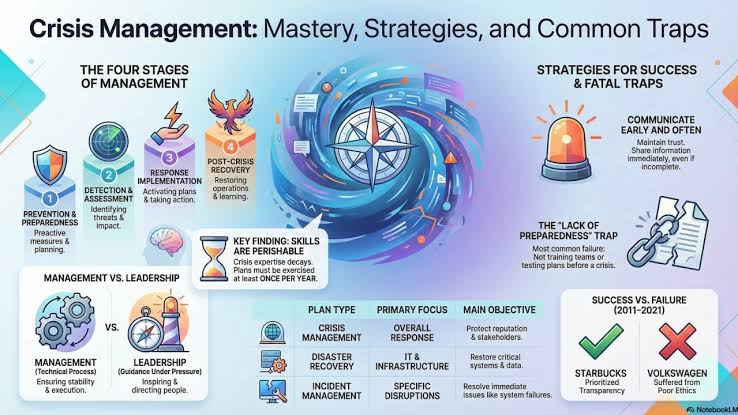
When a business faces a serious disruption—whether a product recall, a cybersecurity breach, a workplace incident, or a public accusation—the decisions made in the first 24 to 72 hours carry lasting consequences. Organizations that respond poorly often do so not because they lacked resources, but because they lacked the right external counsel at the right moment. The choice of who to bring in during a crisis is not a minor operational detail. It is a strategic decision that affects legal exposure, stakeholder relationships, regulatory standing, and long-term reputation.
Many executives assume that any communications agency or PR consultancy can manage a crisis. In practice, there is a significant difference between firms that handle routine reputation work and those built specifically to manage acute, high-stakes situations. Knowing how to distinguish between the two—and how to evaluate specific firms against your organization’s actual needs—is a skill that most leadership teams only develop after their first serious incident. This checklist exists to help you make that evaluation before one becomes necessary.
Why the Firm Selection Process Matters More Than the Crisis Response Itself
The quality of a crisis response is largely determined before the crisis begins. Organizations that have vetted, selected, and established relationships with capable external counsel consistently perform better under pressure than those scrambling to find help in real time. This is not about having a name on a contact list. It is about having a documented understanding of who that firm is, what they do, how they operate, and whether they are equipped for your specific type of exposure.
A well-constructed Crisis Management Firm guide can help organizations frame the right questions before they sit across the table from potential partners. The goal of that pre-crisis evaluation process is to identify firms that bring operational discipline, not just strategic theory.
The Federal Emergency Management Agency’s National Incident Management System outlines how structured, scalable response frameworks reduce confusion and improve coordination during high-pressure events. The best private crisis management firms operate on similar principles—clear command structures, defined roles, and pre-established communication protocols.
The Cost of Getting This Wrong
Selecting the wrong firm—or selecting a firm too late—creates compounding problems. A firm unfamiliar with your industry may give technically sound communications advice while inadvertently worsening your legal position. A firm that has not worked with your executive team before may struggle to align messaging under time pressure. A firm without established media relationships may lose days that could have been used to shape the narrative. Each of these failures has a real cost: in regulatory penalties, in customer attrition, in investor confidence, or in litigation outcomes.
Point 1: Verify Industry-Specific Experience
Crisis management is not a generic discipline. A firm that excels at managing crises in financial services may have limited practical value to a manufacturing company facing a product safety issue. The dynamics differ across industries—regulatory bodies, media behavior, union considerations, supply chain dependencies, and stakeholder expectations all vary significantly.
What Industry Experience Actually Means
When evaluating a firm’s industry experience, the question is not whether they have worked in your sector, but whether they understand the operating environment well enough to give advice that holds up under real conditions. Ask them to walk through a past engagement in your industry without disclosing confidential client details. Their ability to speak concretely about the pressures, timelines, and stakeholder dynamics of that sector is a reliable indicator of actual familiarity.
Point 2: Assess Their Incident Response Speed and Availability
Crisis management firms vary considerably in how they structure their availability. Some operate standard business hours and bring in support as needed. Others maintain dedicated response teams available around the clock. For most serious incidents, the first few hours are the most consequential. A firm that cannot engage meaningfully within two to four hours of notification is not a crisis management firm in the operational sense—it is a consultancy that handles crisis work among other assignments.
Understanding Retainer Structures and Response Commitments
The retainer arrangement a firm offers often reflects how seriously they treat response speed. A firm that structures its retainer around guaranteed response times and pre-assigned lead personnel is signaling that they have built their operations around availability. A firm offering a general retainer with no defined response commitments may not prioritize your engagement when multiple clients need attention simultaneously. These distinctions should be clarified in writing before any agreement is signed.
Point 3: Evaluate Their Cross-Functional Capability
A modern crisis almost never sits in a single functional area. A data breach has legal, regulatory, communications, and operational dimensions. A workplace fatality involves workers’ compensation, OSHA compliance, union relations, internal communications, and public statements. A firm that can only address one dimension of a crisis will require you to coordinate multiple external parties simultaneously—a significant burden on internal leadership at exactly the moment when bandwidth is most constrained.
The Difference Between Coordination and Integration
Some crisis management firms offer coordination across disciplines, meaning they bring in specialists from outside their organization as needed. Others have genuinely integrated capabilities in-house. Both models can work, but the integrated model typically performs better under time pressure because there is no lag in communication between disciplines and no misalignment in strategy. When evaluating a firm, ask specifically how they manage the intersection of communications, legal, and operational response—and ask who makes the final call when those disciplines disagree.
Point 4: Examine Their Stakeholder Communication Framework
Stakeholder management is one of the most complex elements of any crisis response. In most incidents, an organization must communicate simultaneously—and differently—with employees, customers, investors, regulators, media, and in some cases, the general public. A firm without a structured approach to stakeholder segmentation and message sequencing will default to reactive communication, which typically results in inconsistent messaging and unnecessary confusion.
Message Discipline Under Pressure
The hallmark of a capable crisis management firm is the ability to maintain message discipline when the situation is evolving rapidly. This requires pre-built templates, clear approval chains, and a commitment to updating stakeholders proactively rather than waiting until there is certainty. Organizations that communicate frequently and clearly during a crisis—even when information is incomplete—consistently maintain more stakeholder trust than those that go silent while waiting for full clarity.
Point 5: Confirm Their Media Relations Capability
Media management during a crisis requires more than writing press releases or preparing executives for interviews. It requires an understanding of how different outlets operate, what reporters covering your type of story are likely to prioritize, and how to position your response in a way that is both factually accurate and strategically sound. A firm with established relationships across relevant media categories—trade press, regional outlets, national outlets, digital platforms—can meaningfully influence how a story develops.
Point 6: Review Their Documentation and Reporting Standards
During and after a crisis, documentation matters. Regulators, insurers, legal teams, and boards will all want to understand what decisions were made, when, by whom, and on what basis. A crisis management firm that maintains clear, contemporaneous records of its recommendations and the organization’s responses provides significant value beyond the immediate incident. This documentation also allows for a structured post-crisis review, which is essential for updating internal protocols.
Point 7: Assess Leadership Bench Strength
Many firms present their most senior partners during the sales process and then assign junior staff to the actual engagement. This is a well-documented pattern in professional services. When evaluating a firm, ask specifically who will be the day-to-day lead on your engagement, what their direct experience is, and whether the senior partners who presented will be actively involved or primarily available for escalation. A firm that is transparent about its staffing model—and structures engagements so that experienced professionals remain directly involved—is operating with greater integrity than one that obscures this dynamic.
Point 8: Understand Their Conflict-of-Interest Policy
Crisis management firms sometimes represent multiple clients within the same industry or, in some cases, parties whose interests may conflict during a shared incident. An environmental incident, a labor dispute, or a product safety issue can involve multiple organizations simultaneously. A firm that is already engaged with a competitor, a supplier, or a regulatory body on a related matter may face limitations in the advice it can provide. This is a standard professional services risk and should be addressed directly before engagement begins.
Point 9: Evaluate Post-Crisis Support Capacity
The active phase of a crisis eventually ends, but the organizational impact extends well beyond it. A crisis management firm that offers structured post-crisis support—including reputation monitoring, stakeholder re-engagement strategy, and internal process review—provides longer-term value than one that closes the engagement when media attention fades. Organizations that use post-crisis periods well often emerge with stronger protocols, clearer communication structures, and more cohesive leadership alignment than they had before the incident.
Rebuilding Trust Takes Longer Than the Crisis Itself
Trust, once disrupted, recovers slowly. The communications and operational decisions made in the weeks and months following a crisis determine how stakeholders interpret the organization’s response. A firm that supports this recovery phase—not just the acute response—is providing a more complete service and demonstrating a more mature understanding of what crisis management actually involves.
Making the Final Decision
Evaluating a crisis management firm is not a comfortable process. It requires asking direct questions about past failures, staffing practices, availability commitments, and potential conflicts. Firms that respond to these questions openly, with specific examples and honest acknowledgment of their limitations, are more likely to perform well under real conditions than those who offer polished but vague reassurances.
The nine points outlined here are not exhaustive, but they address the areas where most organizations encounter problems when a crisis management relationship is tested under pressure. Use them as a framework for structured conversations, not as a scorecard. The goal is not to find a firm that scores well on a checklist but to find a firm whose operating model, experience, and culture align with how your organization actually functions under stress.
Establishing this relationship before an incident occurs—when there is time for honest dialogue and proper onboarding—is the single most practical step any executive team can take to improve their crisis preparedness. The firms worth working with will welcome that approach. The ones that resist structured pre-engagement evaluation are telling you something important about how they operate.