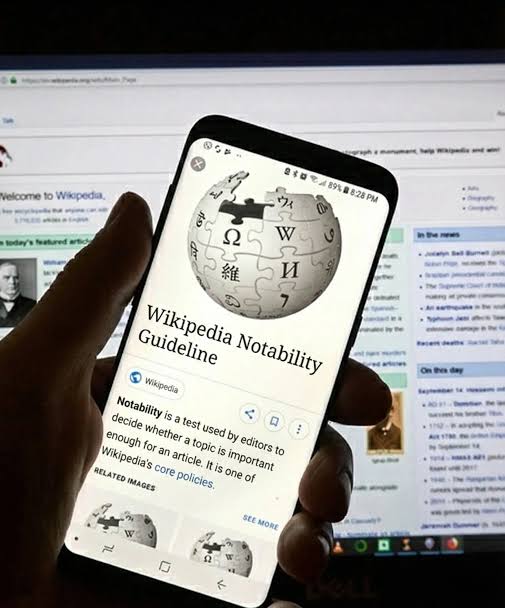
Almost every founder, author, or consultant I know has asked the same question at some point. “I have a company, a decent following and a few awards, so why can’t I have a Wikipedia page?” It feels unfair, especially when you see someone less accomplished with a page of their own. But Wikipedia does not measure success the way the rest of us do. Editors are not asking how popular you are. They are asking whether reliable people outside your circle have written about you in real detail.
This is exactly what Wikipedia guidelines and policies demand of you. The independent media coverage. This is considered third-party coverage free from any bias and control by the owner of the page, which is why Wikipedia prefers it the most to preserve its platform’s credibility. In this blog, learn more about how to achieve Wikipedia’s notability standards with independent media coverage.
What Does Wikipedia Mean by Notability?
Notability is the way Wikipedia decides whether a person, company, or organization deserves its own article. The general rule is that the subject needs significant coverage in reliable sources that are independent of it. Every one of those words carries weight, so it helps to take them one at a time.
Significant means the source talks about you in some depth, not just a line in a list. Reliable means a publication with editors, fact-checking, and a reputation to protect. Independent means you did not write it, you did not pay for it, and nobody connected to you shaped it.
This is where most people stumble. They gather ten links that each mention their name once and feel confident. Then the page gets rejected, and they have no idea why. The truth is that one proper feature article can outweigh a dozen short mentions. Editors are not counting links. They are reading them.
Which Media Coverage Actually Counts
Not every article with your name in it helps your case. Before you start building a list of sources, it is worth knowing which ones an editor will take seriously and which ones they will ignore right away:
Coverage That Counts
Feature stories, newspaper profiles, magazine articles, books, trade journals with real editorial standards, and TV or radio reports are the good stuff. Interviews can count too, but only when the journalist adds their own analysis and background. A piece that simply prints your answers word for word is much weaker than one where the reporter has done research and formed a view.
Local newspapers can help, though national and international outlets carry more weight. Try to collect several pieces from different outlets instead of leaning on one big name.
Coverage That Does Not Count
Press releases, sponsored posts, paid advertorials, your own website, social media pages, and business directories will not help you. Here is the part that surprises people. If you paid for an article, it does not matter how famous the website is. Editors treat it as promotion because you bought the space. A “featured in” badge on your homepage can be built entirely from coverage that Wikipedia will not accept. Routine announcements are weak as well. A short note that your company opened a new office or hired a manager is not the kind of attention that proves notability.
Why Variety and Time Matter
One news spike, such as a single viral story, rarely proves anything. Wikipedia wants to see lasting attention. Coverage spread across different outlets and different years tells editors that people keep writing about you, and that is a much stronger signal than one busy week.
How to Earn Independent Coverage
You cannot force a journalist to write about you, and honestly, you should not try. But you can make yourself far easier to write about. Here are a few ways to get started:
Give Journalists a Real Story
Reporters are hunting for news, not advertisements. A launch, original research, a community project, or a milestone that affects real people gives them something to work with. Before you pitch, ask yourself one simple question. Would a stranger care about this? If the honest answer is no, rework the idea until the answer changes.
Share Your Expertise
Many journalists look for expert comments on tight deadlines. If you respond quickly and give useful, plain answers, they remember you. Over time, a quote here and there can grow into a profile or a feature. Offering data from your own field is a particularly good way to get noticed, since reporters love numbers they can build a story around.
Be Patient
This part is slow, and nobody likes hearing it. Real coverage usually takes months and sometimes years. It can be tempting to shortcut the process with paid placements, but those articles will not count toward notability, so the money is mostly wasted.
Preparing for a Wikipedia Page
Once you have a few strong articles, pick your best five and check them honestly against the rules above. Ask whether each one is independent, reliable, and detailed. If two or three fail the test, you probably need more coverage before you try.
Writing a page about yourself or your own business is not preferred by the Wikipedia platform because of conflict of interest. A neutral draft that goes through the review process is much safer than publishing directly and hoping for the best. Pages that read like advertisements tend to get tagged or deleted quickly.
Some people choose Wikipedia page creation services to handle the research, drafting, and submission. That can save a lot of time, since the sourcing and tone rules are strict and easy to get wrong. Still, keep your expectations realistic. No service can create notability that is not there, and paid editors are required to disclose their connection to the subject. If anyone promises guaranteed approval, walk away.
Protect Your Image While You Wait
Building coverage takes time, and in the meantime, people are already searching your name. It is worth checking what they find. Online reputation management services can help here by monitoring search results, fixing wrong information on profiles, and encouraging genuine press attention. Just keep one thing in mind. They work on what shows up on Google, not on what Wikipedia editors decide. The page only cares about independent sources, so your main focus should stay on earning those.
Conclusion
Notability on Wikipedia is rarely due to one’s popularity or the number of followers they are gaining. It is all dependent on the guidelines and policies set by Wikipedia itself. These standards are there to protect the trust people have in the information available on this platform. The credibility Wikipedia has earned, and helps others secure too, through a page takes a lot of work from independent media coverage; hence, focusing on it can help you get your Wikipedia page in no time.