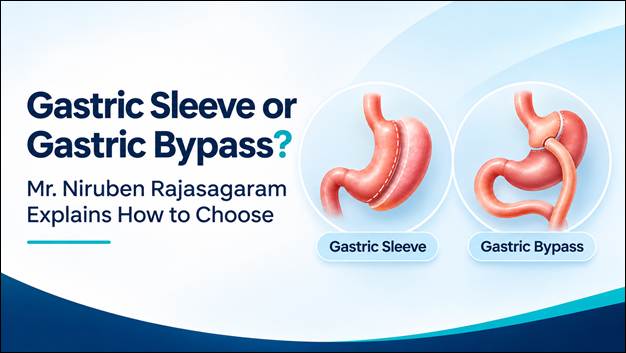
Patients weighing gastric sleeve surgery vs gastric bypass surgery often ask which operation is “better”. Mr. Niruben Rajasagaram, a Melbourne bariatric and metabolic surgeon, says there is no single answer, because the right choice depends on each person’s health, weight history and goals.
How the Two Surgeries Work
Mr. Niruben Rajasagaram performs both gastric sleeve surgery in Melbourne and gastric bypass surgery in Melbourne. He says the two procedures work in different ways. A gastric sleeve removes a large portion of the stomach, leaving a narrow, tube-shaped stomach that holds much less food. A gastric bypass creates a small stomach pouch and reroutes part of the small intestine, which limits how much a person can eat and changes how the body absorbs food and responds to hunger.
How a Surgeon Decides Which One Suits You
“Patients often arrive wanting a recommendation on the spot, but the honest answer starts with a conversation,” Mr. Niruben Rajasagaram said. “We look at their body mass index, which is a measure of weight relative to height, along with other health conditions, eating patterns and what they have already tried. Then we talk through what each operation involves, what the risks are and what we are looking to achieve.”
He says a few factors commonly shape the discussion. These include the presence of type 2 diabetes or other weight-related conditions, how much weight a patient needs to lose, and whether the person already lives with acid reflux. Because gastric sleeve surgery can worsen reflux symptoms in some people, reflux is one of the points surgeons consider carefully when comparing the two procedures. Any previous abdominal surgery and a patient’s preferences about recovery and follow-up also matter.
Why Neither Option Is a Quick Fix
“Neither operation is a quick fix, and neither is right for everyone,” he said. “Both are tools that work best alongside changes to eating habits, regular activity and long-term follow-up. What matters is choosing the operation that suits the person in front of us, not the one that is more popular.”
Support After Surgery
Mr. Niruben Rajasagaram said long-term support is part of that choice. Patients at his practice have access to dietary guidance from Ms. Stefania Basso, Bariatric Dietitian, and habit and lifestyle coaching from Dr. Monica Devanand, Habits and Transformation Coach. Both procedures also require ongoing vitamin and mineral monitoring, and a bypass in particular calls for lifelong supplementation.
Taking the Next Step
“The decision is a big one, and nobody should feel rushed into it,” he said. “Asking questions, getting a GP referral and taking time to understand the risks as well as the benefits is the right way to start.”
Patients considering weight loss surgery are encouraged to speak with their GP and book a consultation to discuss their individual situation.
About Mr. Niruben Rajasagaram
Mr. Niruben Rajasagaram is a Consultant Bariatric, Upper Gastrointestinal and General Surgeon based in Melbourne, consulting from Knox Private Hospital in Wantirna, Peninsula Private Hospital in Frankston and Berwick. His practice provides gastric sleeve, gastric bypass, mini gastric bypass, gastric balloon, gastric band and revisional bariatric surgery, alongside anti-reflux, hernia repair and gallbladder surgery.