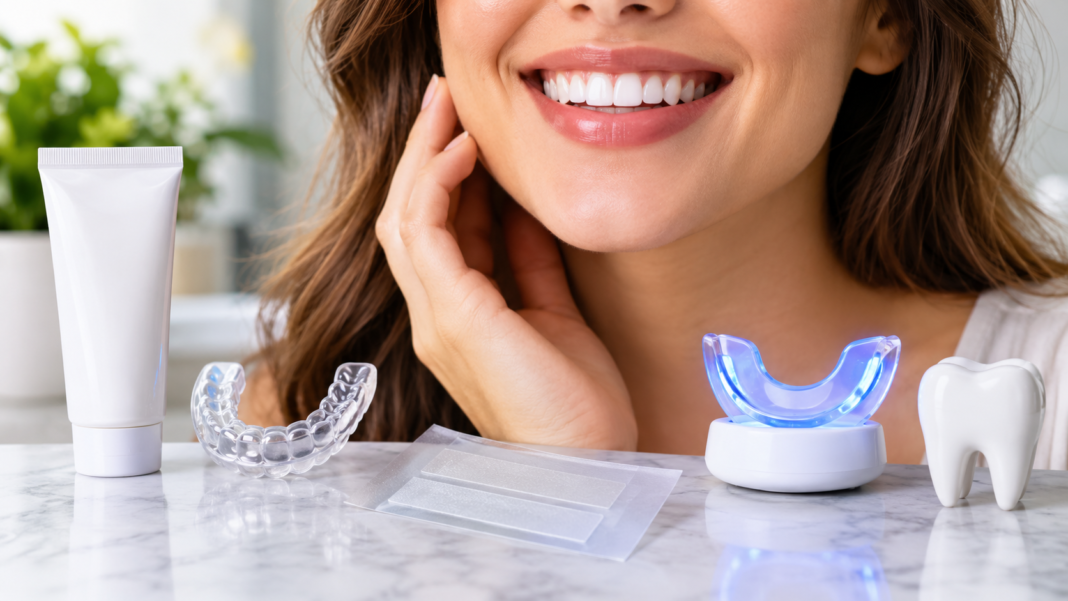
A noticeably brighter smile can change how confident you feel walking into a room. That much is well documented. What is less understood by most people is why teeth discolor in the first place, which whitening approaches actually shift that discoloration, and what trade-offs come with each option. Sorting through the marketing noise is harder than it should be, so this article breaks down the science, the methods, and the realistic expectations tied to each one.
Why Teeth Lose Their Brightness Over Time
Tooth discoloration falls into two broad categories: extrinsic and intrinsic. Extrinsic stains sit on the outer enamel surface. They come from food, beverages, and tobacco. Coffee, red wine, tea, and berries are the classic culprits because they contain chromogens, which are pigment-producing compounds that cling to enamel. Intrinsic staining, by contrast, originates inside the tooth itself, within the dentin layer beneath the enamel. It can result from childhood tetracycline antibiotic use, excessive fluoride exposure during tooth development, trauma to a tooth, or simply aging, which naturally thins enamel and allows the yellowish dentin beneath to show through.
Understanding which type of staining you are dealing with matters enormously before you invest time or money in any whitening product. Extrinsic stains respond well to most peroxide-based treatments. Intrinsic stains are more resistant and often require professional-strength bleaching agents or, in some cases, cosmetic restorations such as veneers.
How Whitening Agents Actually Work
The active ingredient in virtually every clinically proven whitening product is either hydrogen peroxide or carbamide peroxide. Carbamide peroxide breaks down into hydrogen peroxide once it contacts saliva, so both ultimately deliver the same mechanism. The peroxide molecule is small enough to penetrate enamel and reach the dentin beneath. Inside those layers, it triggers an oxidation reaction that breaks apart the long carbon-chain molecules responsible for color. Shorter molecular chains reflect less light, which is what produces the whiter appearance.
Concentration levels vary considerably across product categories. Over-the-counter strips typically contain between 6 and 10 percent hydrogen peroxide. Professional take-home trays from a dentist usually range from 10 to 22 percent carbamide peroxide. In-office treatments can reach concentrations of 25 to 40 percent hydrogen peroxide, applied under controlled conditions. Higher concentration does not automatically mean better results. It means faster action, which also increases the chance of sensitivity if the product is not used correctly.
A Comparison of Common Whitening Methods
Not every whitening approach suits every lifestyle or budget. The table below summarizes the most widely used options, their typical active ingredient concentrations, the time commitment involved, and roughly how much shade improvement a person can realistically expect.
| Method | Active Ingredient % | Treatment Duration | Expected Shade Improvement | Average Cost Range |
| Whitening toothpaste | Low abrasive, trace peroxide | Ongoing daily use | 1 to 2 shades (surface only) | $5 to $15 |
| OTC whitening strips | 6 to 10% hydrogen peroxide | 14 to 21 days, 30 min per session | 2 to 4 shades | $20 to $60 |
| Dentist take-home trays | 10 to 22% carbamide peroxide | 2 to 4 weeks, nightly or daily | 4 to 8 shades | $200 to $600 |
| In-office bleaching | 25 to 40% hydrogen peroxide | 60 to 90 minutes, one visit | 6 to 10 shades | $400 to $1,500 |
| Whitening LED kits (OTC) | Low peroxide or peroxide-free | Varies | Minimal to 2 shades | $30 to $100 |
These ranges are approximate and reflect averages across clinical studies and consumer research. Individual results depend on the original shade of the teeth, the nature of the staining, enamel thickness, and how consistently a person follows the treatment protocol.
Sensitivity: The Most Common Side Effect
Tooth sensitivity during or after whitening is the complaint dentists hear most often. According to a review published in the Journal of Dentistry, sensitivity affects roughly 67 to 78 percent of patients undergoing peroxide-based whitening treatments at some level, though for most people it is temporary and mild. The sensation typically peaks within 24 hours of treatment and resolves within 48 to 72 hours.
Several strategies help reduce this effect without abandoning whitening altogether. Potassium nitrate and fluoride are two ingredients commonly included in sensitivity-relief toothpastes specifically formulated for whitening users. Using a lower-concentration product over a longer period rather than a high-concentration product in a short burst is another approach that tends to reduce discomfort. Spacing out treatment sessions, particularly with in-office procedures, also gives the teeth time to remineralize between exposures.
Who Should Be Cautious
- People with gum recession, since exposed root surfaces lack protective enamel and absorb peroxide more readily.
- Anyone with existing crowns, veneers, or bonding on front teeth, as whitening agents do not change the color of dental restorations and may create visible shade mismatches.
- Pregnant or breastfeeding individuals, for whom whitening is generally deferred as a precaution.
- Children and teenagers whose enamel is still maturing, particularly those under 16.
- Anyone with active cavities or gum disease, since these conditions should be treated before any bleaching begins.
Professional Whitening vs. At-Home Products: A Realistic Look
The convenience of at-home whitening products is real. Strips and OTC trays require no appointment, cost a fraction of professional treatment, and can produce visible results when used consistently. For someone whose teeth are mildly yellowed from dietary staining and who has no significant dental concerns, a reputable OTC strip product is a reasonable starting point.
Professional whitening carries advantages that go beyond raw concentration levels, though. A dentist can take a full picture of your oral health before treatment, identify whether intrinsic or extrinsic staining is at play, and customize the approach accordingly. Custom-fitted trays from a dental office are also more effective than the one-size strips sold in pharmacies because they maintain consistent contact between the gel and every surface of each tooth without saliva diluting the product. Practices that specialize in cosmetic dentistry, such as Newport Smile Studio, often pair whitening consultations with a thorough shade assessment so patients can set realistic goals and choose the method most suited to their tooth type and lifestyle.
The honest answer about which approach is better depends on what a person is starting with and what outcome they want. Someone with significant intrinsic staining who wants results in a single visit will not get there with drugstore strips. Someone with mild surface staining who is patient and consistent may achieve a satisfying result without ever sitting in a dental chair.
Maintaining Results After Whitening
Whitening is not permanent. The American Academy of Cosmetic Dentistry notes that results from in-office whitening typically last between one and three years, depending on diet and oral hygiene habits. At-home results from strips generally hold for six months to a year. Teeth that have been whitened are not more resistant to new staining. If anything, the first 48 hours after treatment are a period of elevated vulnerability because the pores in enamel opened up during bleaching have not yet fully closed.
The habits that extend whitening results are mostly the same habits that protect overall oral health. Rinsing with water after consuming staining beverages, using a straw when possible, maintaining regular brushing and flossing, and scheduling routine professional cleanings all slow the return of discoloration. Touch-up treatments, whether a brief round of strips or occasional use of a take-home tray, are far easier and less costly than starting from scratch.
- Avoid staining foods and drinks for at least 48 hours immediately after treatment.
- Rinse your mouth with water after consuming coffee, tea, or red wine.
- Use a whitening toothpaste as a maintenance tool, not as a primary whitening method.
- Schedule dental cleanings every six months to remove surface buildup before it bonds to enamel.
- Keep any custom trays from a dental provider. They can be reloaded with fresh gel for touch-ups at a much lower cost than repeat office visits.
What No Whitening Product Can Do
It is worth being direct about the limits of whitening. No bleaching product, regardless of concentration or brand, will whiten dental crowns, porcelain veneers, composite bonding, or tooth-colored fillings. These materials do not contain the same organic compounds that peroxide oxidizes in natural enamel. Trying to bleach them produces no color change and may degrade the material over time.
Severely intrinsic staining from tetracycline antibiotics is also largely resistant to whitening. Prolonged treatment with high-concentration gels can produce some improvement, but results are inconsistent and the process is slow. For staining in that category, a dentist might recommend veneers or ceramic crowns as a more predictable path to the desired outcome.
Activated charcoal toothpastes and oil pulling, both popular in wellness circles, have not been shown in peer-reviewed clinical research to whiten teeth beyond the removal of superficial surface staining. Charcoal products carry an additional concern: their abrasive texture may wear down enamel with extended use, potentially making teeth look more yellow over time by thinning the enamel that covers the dentin beneath. The American Dental Association has not awarded its seal of acceptance to any charcoal-based dental product.
Teeth whitening, done thoughtfully, is one of the simpler ways to refresh the appearance of a smile without altering tooth structure. Knowing the difference between extrinsic and intrinsic staining, choosing a method matched to the degree of discoloration, managing sensitivity proactively, and committing to basic maintenance habits afterward makes the difference between a result that lasts and one that fades within weeks. The options available today, from accessible OTC products to precision in-office treatments, give most people a realistic path to a visibly brighter smile when approached with accurate expectations.