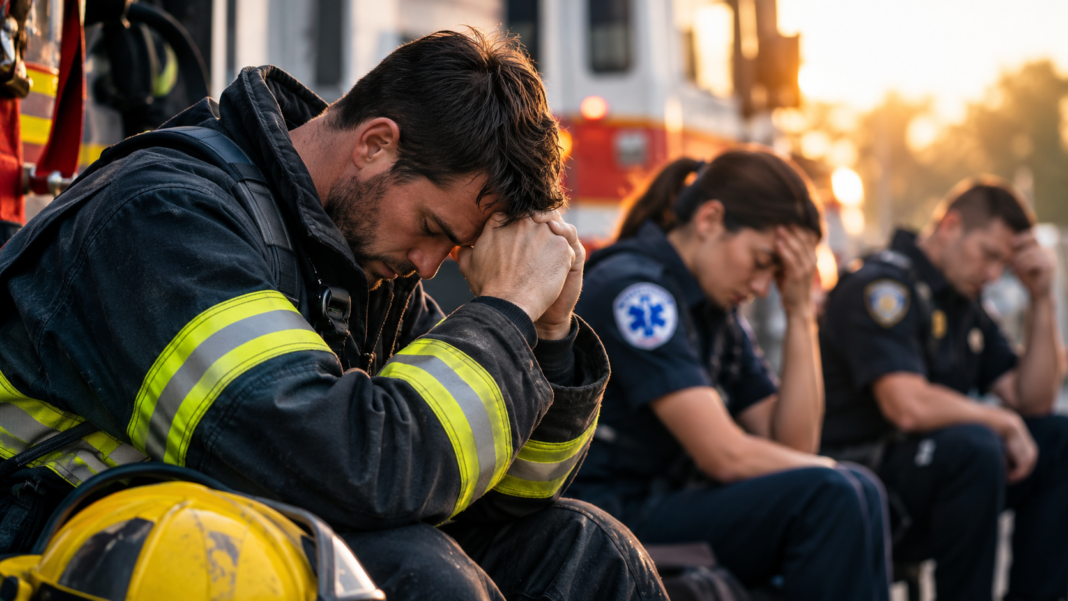
Every shift ends, but the effects of the job do not always clock out with the person wearing the badge. Firefighters, paramedics, law enforcement officers, and emergency dispatchers absorb an enormous amount of physical and psychological strain over the course of a career. Most of the public sees the heroism. Far fewer people see what that heroism costs over time. This article walks through the specific health risks first responders face, why those risks are often underdiagnosed, and what kinds of support systems have emerged to address them.
The Physical Toll of Emergency Response Work
The body of a first responder takes hits that most occupational health models were not originally designed to track. Beyond the obvious risk of acute injury on the job, there are slower, cumulative threats that build over years without obvious symptoms until the damage is already done.
Cardiovascular disease is the leading cause of line-of-duty death among firefighters in the United States. According to the Firefighter Cancer Support Network, nearly 70 percent of firefighter deaths in some recent years have been attributed to occupational cancer, which has surpassed traumatic injury as the leading cause of career-related fatalities in that profession. Carcinogen exposure during structure fires, including benzene, formaldehyde, and polycyclic aromatic hydrocarbons, accumulates in the skin and respiratory system with every call.
For paramedics and EMTs, musculoskeletal injuries are among the most reported occupational hazards. Lifting, repositioning, and carrying patients in awkward environments, often under time pressure, creates chronic strain on the lower back, shoulders, and knees. A career in emergency medical services frequently ends not with a dramatic incident but with a gradual injury that sidelines the person permanently.
Law enforcement officers face their own distinct physical challenges. Prolonged sedentary time in patrol vehicles is paired with sudden bursts of intense physical activity, a combination that research has linked to cardiovascular strain and metabolic dysfunction. Add to that the disruption of circadian rhythms from rotating shift schedules, and you have a recipe for long-term systemic health problems that are hard to attribute to any single cause.
Mental Health: The Hidden Career Injury
Post-traumatic stress disorder, depression, anxiety, and substance use disorders appear at significantly higher rates among first responders than in the general population. The Substance Abuse and Mental Health Services Administration has noted that emergency responders experience PTSD and depression at rates that are roughly five times higher than civilians. That is not a small gap. It reflects years of repeated exposure to traumatic events without adequate recovery time between them.
One reason these conditions go underreported is the culture of the work itself. Admitting psychological distress in environments that value stoicism and self-reliance can feel like a career risk, even when that instinct is irrational. Many first responders fear losing their clearances, their credibility with colleagues, or their sense of professional identity if they acknowledge that the work is affecting their mental health.
Dispatchers are a particularly overlooked group. They experience secondary traumatic stress from managing crisis calls without ever physically leaving the communications center. They hear the worst moments of strangers’ lives, often repeatedly in a single shift, and are rarely included in the same mental health conversations that apply to field personnel.
Common Mental Health Warning Signs in First Responders
- Persistent sleep disturbances or nightmares related to specific incidents
- Emotional numbness or detachment from family and friends
- Increased irritability or difficulty controlling anger outside of work
- Avoidance of situations, conversations, or media that recall traumatic calls
- Physical symptoms with no clear medical explanation, such as chronic headaches or gastrointestinal issues
- Increased reliance on alcohol or other substances to wind down after shifts
- Loss of satisfaction or meaning in work that previously felt purposeful
How First Responder Health Needs Differ From the General Population
Standard healthcare was not built with first responders in mind. A routine primary care physician may not be familiar with the specific carcinogen exposures common in firefighting, the occupational stressors that contribute to law enforcement hypertension, or the psychological framework needed to work with someone whose daily reality involves things the average clinician has never encountered outside of a textbook.
This mismatch creates real problems. First responders often receive generic treatment plans that do not account for their occupational history. They may be screened for chronic conditions on the same timeline as a sedentary office worker, even though their risk profile looks completely different. Some avoid healthcare altogether because previous experiences felt irrelevant to who they are and what they do.
Specialized care models have emerged to address this gap. These programs train providers to understand occupational health in emergency services, screen for the specific conditions that disproportionately affect this population, and create clinical environments where first responders feel genuinely understood rather than processed. FRCA in Southern California represents one example of this kind of specialized approach, designed specifically to serve the healthcare needs of firefighters, law enforcement, and other emergency personnel.
Comparing Health Risks Across First Responder Roles
| Role | Primary Physical Risk | Primary Mental Health Risk | Often Overlooked Factor |
| Firefighter | Occupational cancer from carcinogen exposure | PTSD from traumatic rescues | Cardiovascular strain during fire suppression |
| Paramedic / EMT | Musculoskeletal injury from patient handling | Cumulative trauma from repeated loss of patients | Sleep deprivation from shift patterns |
| Law Enforcement Officer | Cardiovascular disease and metabolic syndrome | Depression and hypervigilance off-duty | Long-term effects of rotating shift work |
| Emergency Dispatcher | Repetitive strain and sedentary-related conditions | Secondary traumatic stress | Exclusion from peer support and debriefing programs |
Barriers to Care and Why They Persist
Understanding the health risks is one thing. Actually getting first responders into consistent, appropriate care is another problem entirely. Several structural and cultural barriers make this more difficult than it should be.
- Stigma around mental health treatment within first responder culture remains a significant obstacle, even as awareness has grown in recent years.
- Irregular schedules make it difficult to maintain consistent appointments with providers who operate on standard business hours.
- Geographic access is uneven. Rural first responders often have fewer specialized resources available within a reasonable distance.
- Insurance and workers’ compensation systems do not always recognize occupational mental health conditions with the same clarity they apply to physical injuries.
- Lack of provider education means many clinicians lack the background to offer treatment that feels relevant to a first responder’s specific experiences.
- Financial concern plays a role too, particularly for volunteer firefighters and part-time EMTs who may not have robust employment-based health benefits.
Solving these barriers requires both systemic change and practical workarounds. Peer support programs within departments, telehealth options that fit unpredictable schedules, and organizations that specialize in first responder care all serve as partial solutions while larger policy changes work their way through legislative and institutional channels.
What Good Support for First Responders Actually Looks Like
The most effective support programs share a few defining characteristics. They are designed around the realities of shift work rather than expecting first responders to conform to conventional healthcare timelines. They involve providers who have genuine familiarity with occupational hazards in emergency services. And they treat the whole person, addressing physical health, mental health, and the ways those two interact over the course of a career.
Peer support training has gained traction in many departments as a first line of contact. When a colleague who has shared similar experiences approaches someone who is struggling, the conversation starts from a place of credibility that an outside clinician may take months to establish. These programs do not replace professional care; they lower the threshold for seeking it.
Early intervention matters enormously. Research consistently shows that addressing trauma and occupational stress symptoms earlier in their development leads to better outcomes and shorter recovery timelines than waiting until a crisis forces someone into treatment. Routine psychological check-ins, treated with the same normalcy as an annual physical, are one of the most practical structural changes departments can implement.
The conversation around first responder health is changing. Slowly, the culture of silence is giving way to one that recognizes the job’s demands without diminishing the people who do it. A career spent serving others does not have to come at the permanent expense of one’s own health, and the systems designed to support first responders are finally starting to reflect that.