The average new studio apartment in the U.S. measured 460 square feet in 2025. That’s roughly the footprint of a large living room in a typical family home. Fitting a kitchen, bedroom, office, and closet into that space takes real planning.
Downsizing to a studio apartment often starts with excitement about lower rent, less cleaning, and a simpler life. Then comes the hard part: deciding what to do with a household’s worth of belongings and making a single room work for every part of the day. A successful studio move depends on two things: bringing only what fits, and arranging it so the space feels open. This guide covers both.
Deciding What Comes With You When Downsizing to a Studio Apartment
The easiest studio to organize is one that starts with fewer things. Before packing a single box, get the floor plan of the new apartment and measure every wall, closet, and window. Your new space sets the limit, so plan around its measurements first.
Sort Belongings by How Often You Use Them
Go through each room and ask a simple question: did I use this in the last year? Items you use every day or every week earn a spot. Seasonal things like holiday decor or winter gear can stay only if you have a clear place to store them.
These categories usually shrink the most during a studio downsize:
- Furniture, since a studio rarely has room for a full dining set, a sectional, and a guest bed
- Kitchen tools, especially duplicate pans, specialty gadgets, and extra dish sets
- Clothing and shoes, which have to fit in one closet or a wardrobe
- Books, papers, and media that can be scanned, digitized, or donated
- Decor and collections, where a few favorite pieces make more impact than many
Plan a Move That Matches the Smaller Load
A studio move is usually lighter than a full household move. It still tends to include heavy pieces like a bed frame, dresser, or sleeper sofa. Many people book movers for small jobs for exactly this reason: a two-person crew can carry a handful of bulky items up the stairs in a few hours. That approach often costs less than renting a large truck and asking friends to spend a weekend lifting.
Time the move so the things you’re letting go of leave first. Sell, donate, or haul away extra furniture before moving day, so the crew only handles what fits in the new space. Moving items you’ll later get rid of wastes both money and floor space in the studio.
Apartment Space Saving Hacks That Make a Studio Feel Bigger
Once the right belongings are in place, layout and storage do the rest. The best apartment space-saving hacks share one idea: every piece of furniture and every wall should do more than one job.
Choose Multi-Purpose Furniture
Furniture that changes function during the day saves the most space in a studio. A few pieces can replace a whole room’s worth of furniture:
- A sofa bed or daybed that works as seating by day and a bed at night
- A storage bed with drawers or a lift-up frame for linens and off-season clothes
- A drop-leaf or extendable table that opens for meals and folds flat afterward
- Storage ottomans and benches that hide blankets, shoes, or games
- Nesting tables that tuck together when you need floor space
Use Vertical Space From Floor to Ceiling
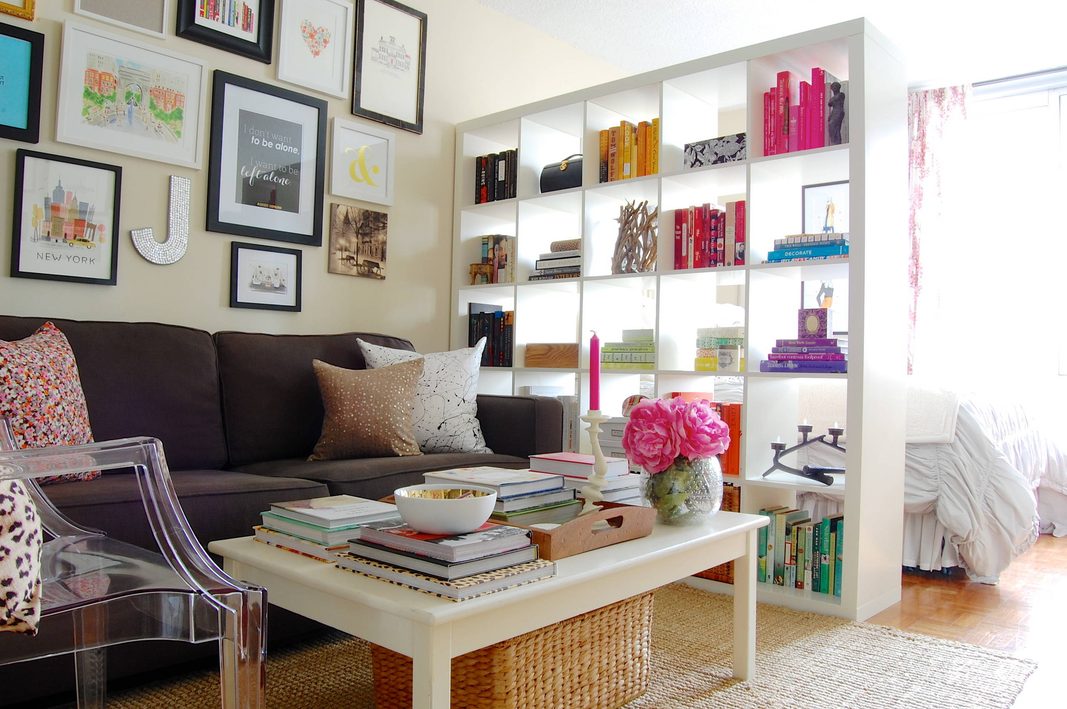
Most studios have more unused wall space than floor space. Tall bookcases, wall-mounted shelves, and over-the-door organizers move storage up and out of the way. Floating shelves above a desk or bed keep surfaces clear without taking up floor area.
Look for unused spots, too. The space above kitchen cabinets, the back of the bathroom door, and the area under the bed can hold far more than most people expect. Matching bins and baskets keep these spots looking neat and organized.
Create Clear Zones Without Walls
A studio feels calmer when each activity has its own area. Rugs, lighting, and furniture placement can mark the boundaries without building anything. A bookcase with open backs can separate the sleeping area while still letting light through.
| Zone | Space-saving idea | Why it works |
| Sleeping area | Storage bed or loft bed | Adds storage without extra furniture |
| Living area | Sofa bed and a storage ottoman | Seating, guest bed, and storage in two pieces |
| Dining area | Drop-leaf table and stackable chairs | Folds away when not in use |
| Work area | Wall-mounted desk with shelves above | Keeps the floor open |
| Kitchen | Rolling cart and magnetic knife strip | Adds counter space and frees drawers |
| Entry | Wall hooks and a slim shoe cabinet | Stops clutter at the door |
Use Light and Mirrors to Open the Room
Light colors on walls and large furniture help a small room feel bigger. A large mirror placed across from a window reflects daylight and adds visual depth. Sheer curtains hung close to the ceiling make the walls look taller and let in as much natural light as possible.
Minimalist Habits That Keep a Studio Clutter-Free
Setting up a studio well is only the first step. Small spaces fill up quickly, and a few new purchases or a pile of mail can make the whole apartment feel crowded. Simple daily and weekly habits protect the space you worked hard to create.
A Simple Routine for Settling Into Your Studio
The first few weeks set the tone for how you’ll live in the space. Follow these steps in order as you settle in:
- Unpack by zone. Finish the sleeping area and kitchen first, so daily life works right away.
- Give every item a home. If something has no clear spot after a week, reconsider whether you need it.
- Live with the layout for two weeks. Notice where clutter collects and where you bump into furniture.
- Adjust before buying more. Try moving pieces around before adding new storage.
- Do a final edit. Donate anything you haven’t used since moving in.
Habits That Prevent Clutter From Building Up
A studio stays comfortable when nothing sits out for long. A one-in, one-out rule works well for clothes, kitchen tools, and decor: when something new comes in, something old goes out.
A ten-minute reset each evening also makes a big difference. Put items back in their homes, clear the table, and make sure the bed area looks finished. Because the whole apartment is visible at once, a short tidy-up changes how the entire space feels.
Digital tools can help as well. Scanning paperwork, switching to digital subscriptions, and storing photos online frees up drawers and shelves that paper and media used to fill.
Fitting Your Life Into a Studio Starts With Measurements
The most useful step in downsizing to a studio apartment is measuring the new space before deciding what to bring. Measurements turn hard choices into simple ones and keep you from moving furniture that won’t fit.
From there, multi-purpose furniture, vertical storage, and clear zones make a few hundred square feet feel comfortable and open. Add a few steady habits, and a studio can become a home designed around what matters most to you.
Frequently Asked Questions About Downsizing to a Studio Apartment
How do I decide what to keep when downsizing to a studio?
Start with the new apartment’s measurements and keep only what fits and what you’ve used in the past year. Furniture should be chosen first, since large pieces decide how much room is left for everything else.
How can I make my studio apartment feel bigger?
Use light colors, a large mirror across from a window, and furniture with exposed legs that lets the floor show. Keeping surfaces clear and using vertical storage also makes the room feel more open.
What furniture works best in a small studio?
Multi-purpose pieces work best: a sofa bed or daybed, a storage bed, a drop-leaf table, and storage ottomans. Each one handles two jobs, so you need fewer pieces overall.
How can I separate my bed from the living area in a studio?
Use an open bookcase, a curtain on a ceiling track, or a folding screen to create a visual divider. A rug under each zone also helps define the sleeping and living areas.
Should I hire movers for a studio apartment move?
If you have heavy furniture or stairs, a small crew can save time and prevent injuries. Many people choose a short, hourly move for the bulky pieces and carry boxes themselves.