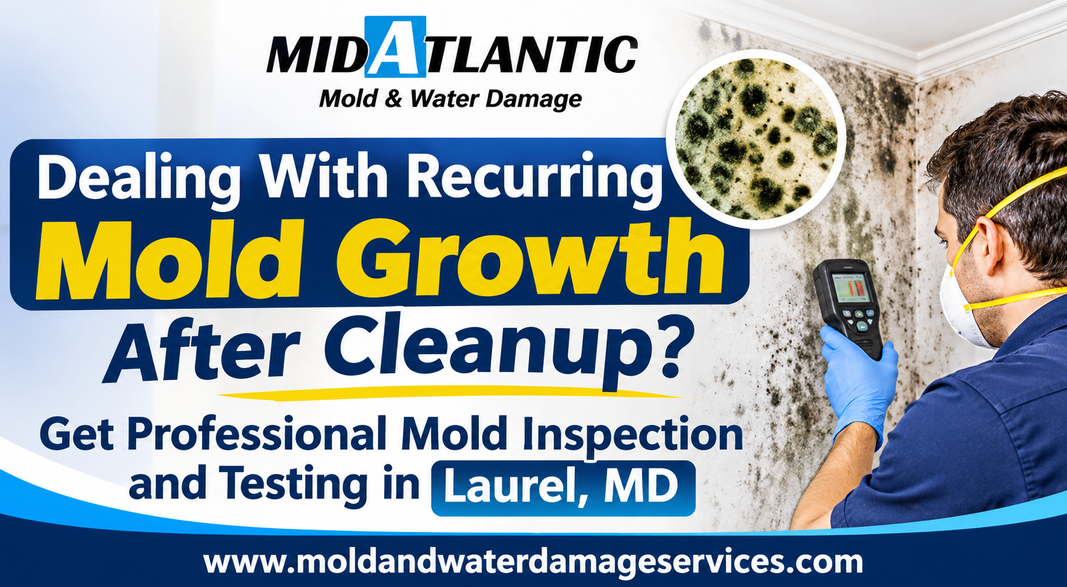
If mold keeps returning after cleanup, the underlying moisture problem may not have been properly identified or corrected. MidAtlantic Mold and Water Damage provides professional mold testing and indoor air quality testing services in Laurel, MD, to help homeowners identify potential mold concerns, investigate moisture sources, and understand their indoor environmental conditions.
Why Does Mold Keep Coming Back After Cleanup?
Recurring mold growth is often a sign that moisture remains somewhere in the affected area. Cleaning visible mold may improve the appearance of a surface, but it does not necessarily address the conditions that allowed mold to develop.
Mold can grow on drywall, wood, insulation, carpeting, and other materials when moisture is present. If the source of moisture is not corrected, mold may return even after previous cleaning.
Common reasons mold keeps returning include:
- Unresolved Water Leaks: Plumbing leaks, roof damage, or leaking windows can continue introducing moisture into building materials.
- High Indoor Humidity: Excessive humidity can create favorable conditions for mold growth.
- Hidden Moisture: Water trapped behind drywall, under flooring, or inside wall cavities may remain unnoticed.
- Incomplete Mold Remediation: Cleaning visible mold without addressing affected materials may leave the underlying problem unresolved.
- Poor Ventilation: Bathrooms, basements, and other enclosed spaces may retain moisture when ventilation is inadequate.
- Previous Water Damage: Flooding or plumbing failures can leave moisture in building materials if drying is incomplete.
If you notice mold returning in the same location, a professional mold inspection and testing assessment can help determine what needs further investigation.
Signs Your Laurel, MD Home May Have a Recurring Mold Problem
Not all mold problems are immediately visible. Sometimes, homeowners notice unusual odors or moisture-related changes before discovering visible mold growth.
Look for these common warning signs:
| Warning Sign | What It May Indicate |
| Persistent musty odors | Possible hidden mold or moisture |
| Black or green spots on walls | Possible surface mold growth |
| Peeling paint or wallpaper | Moisture behind building materials |
| Water stains on ceilings | Previous or ongoing water intrusion |
| Damp basement walls | Potential moisture penetration |
| Condensation on windows | Excess indoor humidity |
| Mold returning after cleaning | Unresolved moisture or contamination concerns |
These signs do not automatically confirm a mold problem. However, they can indicate that further inspection may be necessary.
How Does Professional Mold Testing Help?
Professional mold testing helps evaluate suspected mold concerns and provides additional information about indoor environmental conditions.
A qualified mold testing company in Laurel, MD, can use appropriate inspection and sampling methods based on the property’s condition.
The process may include the following steps:
1. Initial Mold Inspection
The assessment begins by understanding the property’s history, including previous mold cleanup, water leaks, flooding, and recurring moisture concerns.
Visible areas of suspected mold growth are examined, along with locations where moisture problems may be developing.
2. Moisture Assessment
Moisture meters and other inspection tools may be used to evaluate potentially affected building materials.
The purpose is to identify areas where excess moisture could be contributing to recurring mold growth.
3. Mold Air Sampling
When appropriate, air samples may be collected from selected indoor locations and compared with an outdoor reference sample.
This process can help evaluate airborne fungal particles under the conditions present during testing.
4. Surface Sampling
If visible suspected mold is present, surface sampling may be considered to help identify fungal material on selected surfaces.
The appropriate sampling method depends on the inspection findings and testing objectives.
5. Laboratory Analysis and Reporting
When laboratory analysis is included, collected samples can be submitted for examination.
The results may provide information about the types and levels of fungal particles identified in the samples.
A laboratory report should be interpreted alongside the property’s moisture conditions and visual inspection findings. Air sampling alone cannot establish that a building is completely mold-free.
Indoor Air Quality Testing in Laurel: Why Should Homeowners Consider It?
Recurring mold growth can raise concerns about the quality of indoor air, particularly when mold is suspected in areas that are not easily accessible.
Professional indoor air quality testing in Laurel can help evaluate certain airborne contaminants and identify potential environmental concerns.
An indoor air quality assessment may be worth considering when:
- Musty odors remain even after mold cleanup.
- You suspect hidden mold behind walls or ceilings.
- Your property has experienced repeated water damage.
- You notice visible mold returning in different rooms.
- Your basement has persistent dampness.
- You want an assessment after completing mold remediation.
An experienced indoor air quality testing company can help determine which inspection and testing methods are appropriate for your property.
Indoor air quality testing may also help investigate concerns involving airborne dust, ventilation, and moisture-related conditions. The exact scope depends on the testing service selected.
What Is the Difference Between Mold Inspection, Mold Testing, and Mold Remediation?
Homeowners sometimes use these terms interchangeably, but they refer to different parts of addressing a mold problem.
| Service | Main Purpose |
| Mold Inspection | Evaluates visible mold, moisture conditions, and suspected problem areas |
| Mold Testing | Collects samples to evaluate certain fungal particles |
| Indoor Air Quality Testing | Assesses selected indoor environmental conditions |
| Mold Remediation | Addresses and removes mold contamination using appropriate procedures |
| Water Damage Restoration | Addresses water damage, drying, and affected building materials |
Testing and remediation serve different purposes. Testing helps gather information, while remediation addresses identified mold problems and their contributing conditions.
Why Choose MidAtlantic Mold and Water Damage in Laurel, MD?
Choosing an experienced restoration and mold testing company matters when recurring mold growth is affecting your property.
MidAtlantic Mold and Water Damage has been serving property owners since 2014, with an owner who brings more than 25 years of restoration and construction experience.
The company provides mold testing, indoor air quality testing, mold remediation, and water damage restoration services for residential and commercial properties across Maryland, Washington, DC, and Northern Virginia.
Reasons homeowners consider MidAtlantic Mold and Water Damage include:
- Established Experience: Founded in 2014, with more than 25 years of owner experience in restoration and construction.
- Mold Testing Services: Assistance with investigating suspected mold concerns.
- Indoor Air Quality Testing: Evaluation of selected indoor environmental conditions.
- Moisture-Related Assessments: Identification of conditions that may contribute to recurring mold growth.
- Water Damage Restoration: Services for properties affected by leaks and flooding.
- Mold Remediation: Help addressing identified mold contamination.
- Residential and Commercial Services: Support for different property types.
The company also has industry credentials, including IICRC and EPA certifications, as applicable to its services.
Whether mold keeps returning in your basement, bathroom, bedroom, or another area, identifying the underlying moisture problem is an important part of addressing the issue.
How Can You Prevent Mold From Returning After Cleanup?
Preventing recurring mold growth requires more than cleaning visible spots. Homeowners should focus on moisture control and correcting the conditions that contribute to mold development.
Consider these practical steps:
- Repair leaking pipes, roofs, and windows.
- Keep indoor humidity at appropriate levels.
- Use bathroom exhaust fans during and after showers.
- Address basement water intrusion promptly.
- Dry water-damaged materials as quickly as possible.
- Check areas around plumbing fixtures for hidden leaks.
- Maintain HVAC systems according to manufacturer recommendations.
- Avoid covering damp walls or flooring with new materials.
- Arrange professional assessment when mold repeatedly returns.
If building materials remain wet or mold continues appearing after cleanup, further investigation may be necessary.
Schedule Mold Testing in Laurel, MD
Are you tired of cleaning mold only to see it return a few weeks later? The problem may involve hidden moisture, unresolved water damage, or mold growth in areas that were not addressed during the previous cleanup.
MidAtlantic Mold and Water Damage provides mold testing, indoor air quality testing, mold remediation, and water damage restoration services in Laurel, MD.
Founded in 2014, the company combines restoration and construction experience to help homeowners understand potential mold and moisture problems.
Contact the team to discuss your concerns and schedule an appropriate assessment.
Frequently Asked Questions About Mold Testing in Laurel, MD
1. Why does mold keep returning after professional cleanup?
Mold may return when the underlying moisture source has not been corrected. Plumbing leaks, roof damage, high humidity, and moisture trapped inside building materials can contribute to recurring mold growth.
2. Should I hire a mold testing company in Laurel, MD, if mold keeps coming back?
Yes, professional mold testing and inspection may help investigate recurring mold concerns. An assessment can include visual inspection, moisture evaluation, and appropriate sampling to gather more information about the affected areas.
3. Can indoor air quality testing detect hidden mold?
Air sampling can identify certain airborne fungal particles in collected samples. However, it cannot locate every hidden mold source. A visual inspection and moisture assessment may also be necessary.
4. How often should I test my home for mold?
There is no universal testing schedule for every home. Testing is generally considered when there are signs of moisture damage, suspected mold growth, persistent musty odors, or specific concerns following remediation.
5. What causes mold to grow in basements?
Basement mold concerns commonly develop because of foundation leaks, water intrusion, condensation, plumbing leaks, and high humidity. Addressing the moisture source is essential to reducing the likelihood of recurring growth.
6. Is indoor air quality testing necessary after mold remediation?
Post-remediation assessment may be useful when homeowners want additional information about the property’s condition. Depending on the situation, this may involve visual inspection, moisture checks, and air or surface sampling.
7. What is included in indoor air quality testing services in Laurel?
Depending on the selected service, testing may include an assessment of indoor environmental conditions, air sampling, moisture evaluation, and laboratory analysis for selected contaminants.
8. Does MidAtlantic Mold and Water Damage provide mold testing in Laurel, MD?
MidAtlantic Mold and Water Damage serves Laurel and surrounding Maryland communities with mold testing, indoor air quality testing, mold remediation, and water damage restoration services. Call (888) 412-5228 to discuss your concerns.