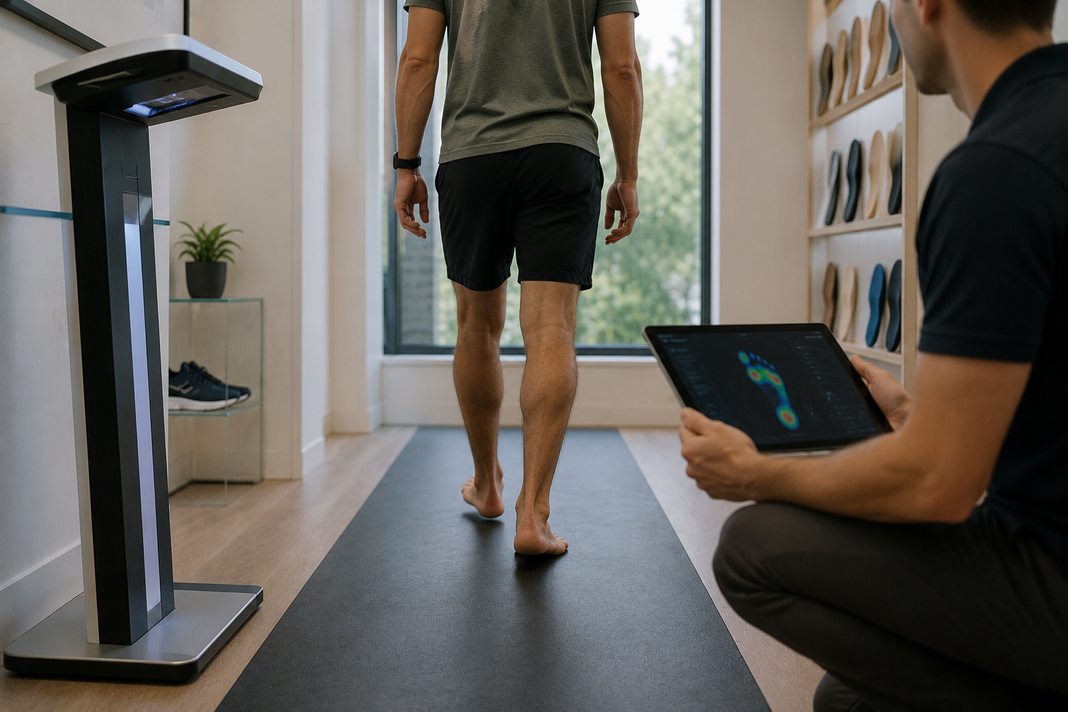
Getting custom orthotics is not a matter of picking a size off a wall. The insert is the last step in a process that starts by watching a person move, because an orthotic built without understanding how a foot actually behaves is just an expensive insole. The assessment is where the custom part is earned.
The Assessment Comes Before the Insert
Before anything is made, a clinician studies the foot in motion. Gait analysis watches how a person walks, where the weight lands, and which way the foot rolls with each step. A posture check looks at how the body stacks from the ground up. A digital scan captures the exact shape of each foot, including the arch and any difference between left and right. Only once that picture is complete does the design begin, which is what separates a prescribed orthotic from a generic insole that ignores all of it.
Built for a Foot and a Life
A custom orthotic is shaped around more than the outline of the foot. It accounts for how a person actually uses their feet day to day, and the design shifts accordingly:
- A runner needs support that holds up under repeated impact
- Someone on hard floors all day needs steady support that lasts
- Dress shoes and work boots call for different orthotic profiles
- An injury or a specific imbalance changes where support is added
This is the layer a shelf product cannot reach, and it is why providers of Custom Orthotics In New York City and elsewhere ask about footwear and activity before building anything. The same foot can need two different orthotics for two different pairs of shoes.
The Break In Nobody Mentions
A custom orthotic rarely feels perfect on the first day, and that catches people off guard. Because it changes how the foot sits and how the body spreads its weight, the muscles and joints need time to adapt, usually a gradual increase in wear over a week or two rather than all day use from the start. Mild awareness or a new pressure point during that stretch is common and tends to settle. Sharp or lasting pain is not, and it is worth reporting to the fitter, since an orthotic can be adjusted. The break in period is part of the process, not a sign something went wrong.
Support That Gets Reviewed
Good orthotic care does not end at pickup. A follow up checks how the feet and the rest of the body responded, and the orthotic can be fine tuned as the body adapts or as activity changes. Clinics that fit orthotics alongside chiropractic and movement care tend to reassess gait and alignment over time rather than treating the fitting as a one time sale. Anyone with ongoing foot, knee, or back pain is best served by a professional evaluation first, since the right support depends on what the assessment turns up.
The finished orthotic is the small part. The scan, the walk across the room, and the weeks of adjusting are what make it fit the person rather than just the shoe.