When a cooling system stumbles during an Oklahoma heat wave, most homeowners want two things: a quick way to narrow down the cause and clear guidance on what to do before a technician arrives. Air conditioners fail in predictable ways, and the signs they give off can be read from outside the panels. By paying attention to airflow, icing, electrical behavior, water around the air handler, and timing, you can separate simple issues from problems that risk compressor damage. This guide focuses on practical, safe checks that point to the likely fault behind warm air, short cycling, tripped breakers, or shutdowns, so you can make better decisions and give your service pro useful information from the first call.
- Start With Airflow: Filters, Vents, and a Freezing Evaporator
If your AC suddenly struggles during an afternoon heat wave in Broken Arrow, start with airflow. A clogged return filter, blocked return grille, or closed supply vents can starve the evaporator coil of air. Low airflow lets the coil temperature drop below freezing, which builds ice on the fins. The system may blow weak, cool air at first, then warm air once the coil becomes a block of ice. Shut the system off at the thermostat, set the fan to On, and replace the filter. Let the coil thaw completely before restarting cooling. Restarting too soon just repeats the freeze cycle.
Room-by-room differences offer more clues. A hot bedroom but cold living room points to a crushed branch duct, a disconnected flex run, or a closed damper, not a whole-house refrigerant issue. Conversely, widespread weak airflow suggests a dirty indoor coil or a failing blower motor. Avoid removing panels to clean coils; the aluminum fins bend easily, and a bent coil face further restricts air. Cleaning inside the cabinet is best left to a technician with fin combs and coil-safe cleaners.
- Refrigerant Loss vs. Low Airflow: How Symptoms Overlap
Homeowners often blame “low Freon” for warm air, but airflow problems can mimic refrigerant symptoms. Both can cause icing, short cycling, and lukewarm supply air. After replacing a dirty filter and thawing the coil, watch the larger copper line at the outdoor unit once cooling resumes. If it does not get cold and sweaty after several minutes of operation, refrigerant charge or metering may be off. A faint hiss at the indoor coil or oily residue on refrigerant lines hints at a leak. Keep in mind that accurate diagnosis requires gauges and temperature measurements a homeowner cannot take safely.
A key decision is whether to keep the system running. Running a low-charge system can overheat the compressor due to inadequate cooling in the condenser. If the outdoor unit is unusually loud or hot to the touch, or if icing returns quickly with a clean filter, shut cooling off and call for service. Topping off refrigerant without finding and fixing a leak is a short-term patch and risks repeated failures. Technicians will check superheat and subcooling, inspect the metering device such as a TXV, and pressure-test lines to verify a durable repair.
- Electrical Tell-Tales: Capacitors, Contactors, and Fan Behavior
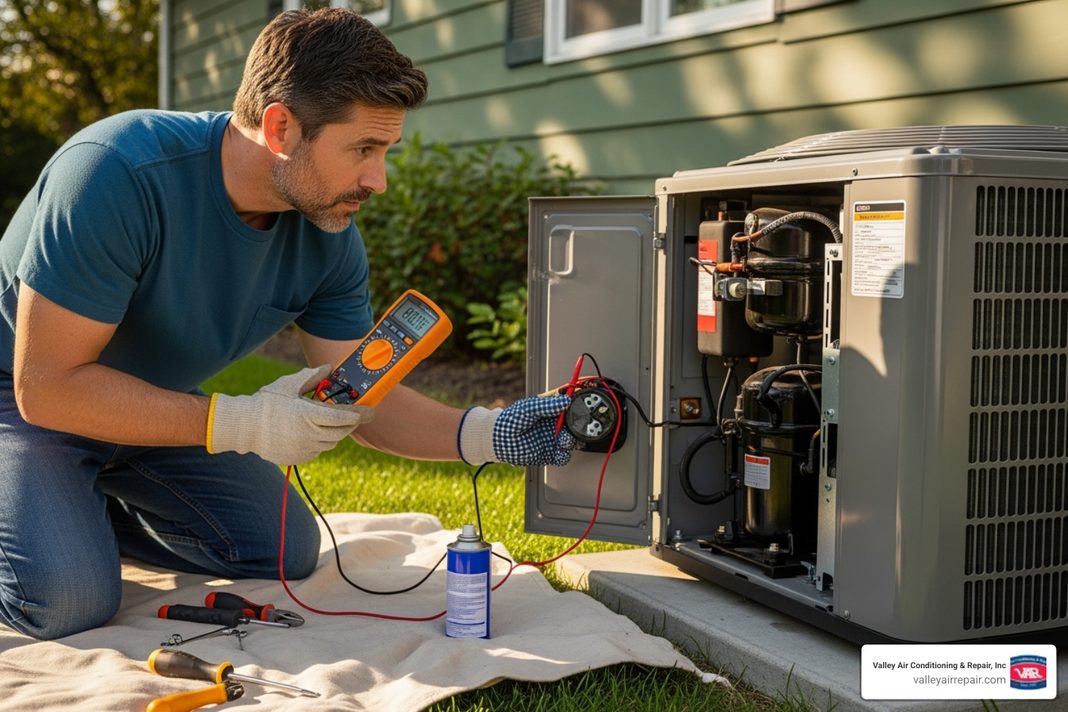
When the thermostat calls for cooling, go outside and observe. If the condenser hums but the fan does not spin, a failed dual capacitor is common. The motor needs that capacitor to start; forcing the blade with a stick is unsafe and can damage the motor. If the fan is slow or starts and stops, a weak capacitor or failing condenser fan motor is likely. Meanwhile, a rapid clicking or chattering sound from the contactor can point to low incoming voltage or a pitted contactor pulling in and out.
Repeated breaker trips are a warning worth heeding. Breakers trip to protect wiring from overheating, often due to a shorted motor winding, compressor lock-up, or grounded wire. Resetting again and again without finding the cause risks both equipment and wiring. Also check the outdoor disconnect for insect nests around the contactor; in some regions, ants can obstruct contacts and cause intermittent operation. Power down before any visual inspection, and leave component testing and replacement to a professional equipped to discharge capacitors safely.
- Water Where It Shouldn’t Be: Condensate Drains, Float Switches, and Musty Smells
Water around the air handler usually points to a clogged condensate drain. As warm, humid indoor air crosses the cold evaporator coil, moisture condenses and should flow through a trap and drain line to the outside. Algae growth or debris can block the line, causing the secondary pan to fill and a float switch to shut the system down to prevent water damage. If cooling stops and you notice a musty smell or no water dripping from the outdoor drain line on a muggy day, the drain path may be obstructed.
Homeowners can often clear minor clogs by placing a wet/dry vacuum on the outside drain termination and pulling out debris, then adding a small amount of distilled vinegar to the drain at the air handler to slow algae growth. Ensure the vacuum forms a snug seal for several minutes. Do not use harsh chemicals that can damage the coil pan, and do not modify the P-trap. As a preventive step each cooling season, confirm the drain line is pitched downhill and that the float switch moves freely when lifted and drops back down smoothly.
- Outdoor Coil, Indoor Coil, and Weather Timing
Dust and cottonwood on the condenser coil restrict heat rejection and raise head pressure, which can trigger high-pressure safeties or bake the compressor on the hottest afternoons. With power off at the disconnect, a garden hose from the inside out is ideal, but homeowners typically cannot access the coil’s inner face. Rinsing gently from the outside can help in a pinch. Avoid high-pressure spray that folds fins flat. On the indoor side, a matted evaporator coil behaves like a permanently dirty filter, elevating static pressure and starving rooms furthest from the air handler; this cleaning is a technician job.
Note when symptoms occur. If failures appear only late afternoon, suspect marginal outdoor coil performance or an undersized return limiting airflow at peak load. Morning-only frost after an overnight setback can hint at a thermostat schedule that drops temperature too far, too fast. Large setpoint jumps cause long runtimes and can tip borderline airflow or refrigerant conditions into icing. A smaller setback and earlier recovery can reduce stress until a technician verifies system capacity and duct design.
What To Share When You Schedule Service
Detailed observations shorten repair time. Share the thermostat setpoint, indoor temperature when the problem appears, filter size and replacement date, whether the indoor coil iced, any breaker trips, and the outdoor unit’s behavior (fan not spinning, loud humming, repeated starts and stops). Mention water near the air handler, whether the float switch was tripped, and what you did before calling. Photos of the model and serial labels on both the furnace or air handler and the outdoor condenser help the technician bring the right parts.
Until help arrives, protect the equipment. If icing occurred, leave cooling off and the fan on to thaw. If the outdoor unit is buzzing without the fan turning, shut the system down to prevent compressor damage. If a drain is overflowing, switch off cooling and clear the line with a wet/dry vacuum if you can do so safely. Going forward, keep returns unblocked, replace filters regularly, gently rinse the condenser coil each spring, and flush the condensate line at the start of the cooling season. These small steps reduce repeat failures and make professional diagnosis faster and more conclusive.