A garage door that reverses at the last second or refuses to close is doing exactly what it was designed to do: protect people, pets, and property. Modern openers monitor a photo-eye beam near the floor and the door’s closing force along the rail. If anything interrupts the beam or the door meets unexpected resistance, the opener reverses. That safety logic is good news, but it can be frustrating when everyday issues like sensor misalignment, a bent track, or a tight down-limit create false alarms. This article lays out a safe, step-by-step way to pinpoint common causes you can check without tools or risk, plus the point where calling a professional is the smart next move.
- Start With the Safety Systems: Photo-Eyes, Obstructions, and Light Interference
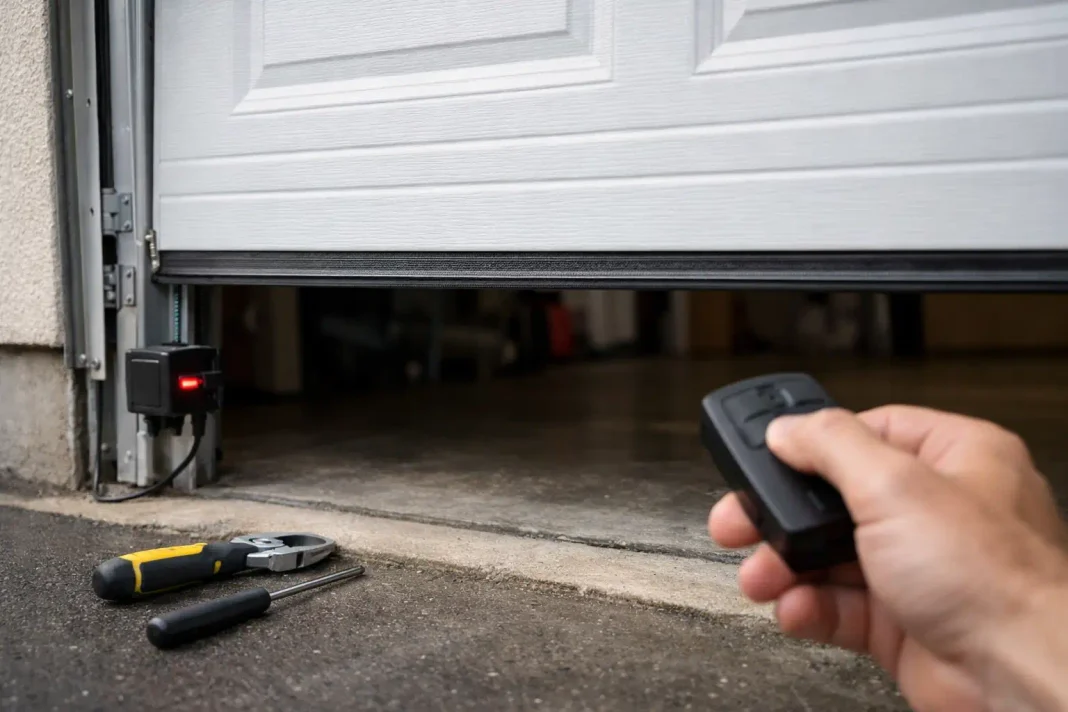
Because any fault in the photo-eyes tells the opener to reverse, begin here. Both sensors should sit 4–6 inches above the floor, facing each other across the door opening. If an indicator light on one or both is off or blinking, clean the lenses and make sure the brackets are not bumped or twisted. Stray items like a broom bristle, a curling edge of the bottom weather seal, or even spiderwebs can break the beam. Afternoon glare can also confuse some sensors. If your door closes in the morning but bounces open at sunset, hold a piece of cardboard to shade the sensor and try again. If shading helps, ask a technician about a permanent visor or slight repositioning within the brackets.
Inspect the sensor wires along the wall and jamb for staples driven too tight or insulation nicked by storage hooks. If the lenses are clean, aligned, and the wiring looks intact yet the door still reverses for no obvious reason, it may be time to schedule an evaluation. If you are in the Dallas area and plan to schedule a technician, the Dallas office is a convenient starting point.
- Next, Check the Opener’s Settings: Travel Limits, Force, and Trolley Position
The opener’s logic board uses two adjustments to control how the door moves: travel limits tell the trolley where fully open and fully closed are, and force settings tell it how hard it is allowed to push before reversing. When a door touches the floor and immediately goes back up, the down-limit may be set a hair too far, compressing the bottom seal and triggering a reversal. Most openers have clearly labeled “up” and “down” limit dials or buttons on the motor head. Make a small down-limit reduction, one-quarter turn or one tap at a time, and test. If the door stops an inch above the floor, increase the down-limit slightly until the seal makes uniform contact without compressing excessively.
Force settings are not a cure for a heavy or binding door. Increasing down-force may get you through a single cold snap, but it can also mask real problems in the tracks, rollers, or springs. That trade-off is risky: too much force reduces sensitivity to obstructions. If your door needs more than a slight force tweak to operate reliably, stop adjusting and have the door’s mechanics inspected. Also check the trolley release on the rail. If the emergency release was pulled, the opener will run, but the carriage will not move the door. Re-engage the trolley per your manual, then retest.
- Inspect the Door Hardware: Rollers, Tracks, Hinges, and Cables
An opener is a motor, not a winch. It expects the door to roll freely on properly aligned tracks. Look for flat-spotted steel rollers or cracked nylon rollers that snag at the same point on every cycle. Watch and listen while the door moves: a rhythmic squeak or shudder often points to a single bad hinge or bent track. The vertical tracks should be plumb and the horizontal tracks level with a slight inward pitch toward the header. If a ladder or vehicle bumped a track, the door can bind, the opener senses extra resistance, and the logic board commands a reversal.
Lubrication helps, but apply it in the right places. Use a garage-door-specific spray on hinge pivot points and roller bearings. Do not grease the running surface of the tracks; that can attract grit and worsen binding. Check that the flag brackets near the top of the vertical tracks are snug to the jamb. Do not loosen hardware tied to spring tension, such as bottom brackets or center bearing plates. Frayed lift cables, a cable off the drum, or a roller out of the track are red flags to stop and call a professional immediately.
- Consider Door Balance and Springs Without Touching the Winding Hardware
Door balance directly affects reversal logic. Weak torsion springs on a shaft above the door or tired extension springs alongside the tracks make the opener work harder, which the force sensor reads as an obstruction. You can check balance safely by closing the door fully, pulling the red emergency release, and attempting to lift the door by hand. A well-balanced door should lift smoothly and stay at mid-height with little effort. If it slams down, hangs up, or rockets up, spring adjustment or replacement is needed.
Do not adjust torsion or extension springs yourself. Torsion springs hold enough energy to cause severe injury without the correct winding bars and procedures. Extension springs require intact safety cables to restrain them if they break. A qualified technician will measure thedoor’ss width, height, and weight to select proper wire size and coil length so the lift matches the door. Correct balance restores normal force readings, which stops nuisance reversals and reduces wear on the opener’s gears.
Seasonal Shifts in North Texas: Heat, Cold, and Preventive Care
North Texas weather adds another variable. In summer, metal expands and lubricants thin; in winter, steel contracts and some greases stiffen. A wood sectional door can absorb moisture after storms and become slightly heavier. Any of these conditions can push a marginal system over the line so the opener senses extra resistance and reverses. One common scenario: a garage with a west-facing door that gets hot and sunlit in the afternoon. The photo-eyes may struggle with glare at the same time the door panel expands, making a just-right down-limit in the morning suddenly too tight at dusk.
Preventive care keeps those swings from turning into service calls. Clean and align photo-eyes monthly. Replace a brittle bottom seal so it compresses evenly on uneven concrete. Once or twice a year, lightly lubricate hinges, steel roller bearings, and the torsion spring coil to reduce friction and noise. If your door is insulated or has decorative overlays, remember it weighs more than a basic steel pan door; springs must be sized accordingly, and belt-drive openers that run quietly still need a balanced door to last. Finally, test the safety reversal after any adjustment using a solid piece of wood on the floor under the center of the door, and stand clear while testing.
Working through this sequence narrows the problem without compromising safety. Clear the beam, eliminate simple causes like glare and clutter, make small travel-limit tweaks, and look for obvious hardware damage. If the door feels heavy by hand, the track is bent, or cables look suspect, stop there. Addressing spring balance, cable routing, drum alignment, or logic-board faults requires tools, training, and parts that are not household items. With the door’s safety features respected and basic checks complete, a local technician can focus immediately on the underlying cause and return the system to smooth, reliable operation.