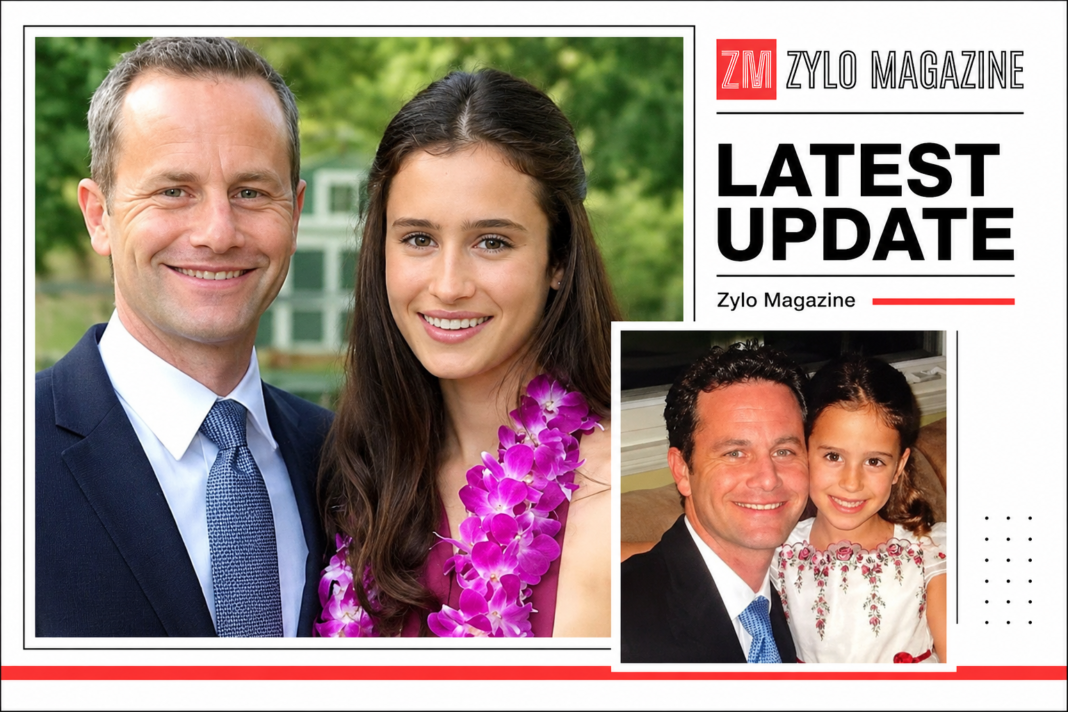
Douglas Eugene Franco is best known as the father of Hollywood actors James Franco and Dave Franco, but his story extends considerably beyond his connection to the entertainment industry. A businessman, entrepreneur, university graduate, husband, and father, Douglas lived a relatively private life while raising a family that would eventually achieve international recognition.
His educational background, professional interests, multicultural heritage, and appreciation for creativity offer an interesting perspective on the environment in which the Franco brothers grew up. Unlike his celebrity children, Douglas preferred a life away from the Hollywood spotlight, making his personal journey particularly intriguing.
This comprehensive biography explores Douglas Eugene Franco’s early life, education, career, marriage, children, ancestry, net worth, death, and lasting influence. It also distinguishes documented information from widely circulated assumptions, providing readers with a meaningful understanding of the man behind one of Hollywood’s recognizable creative families.
Who Was Douglas Eugene Franco?
Douglas Eugene Franco, commonly known as Doug Franco, was an American businessman, entrepreneur, and humanitarian whose professional and personal interests extended across business, technology, art, and charitable activities.
Born in Illinois in 1948, he later established his life in California, becoming associated with the business community of Silicon Valley. He attended Stanford University and earned a Master of Business Administration from Harvard.
Although his sons became prominent figures in entertainment and visual arts, Douglas established a professional identity of his own. His business ventures included SecureBox Corporation, a company associated with port security, and Orchard International, an organization providing humanitarian assistance.
His obituary, published in September 2011, remembered him for his generosity, supportive parenting, meditation practice, entrepreneurial activities, and appreciation of art.
What makes his biography particularly interesting is the combination of analytical thinking and creative curiosity that characterized his documented interests. His life demonstrates that business, creativity, education, and family responsibilities can coexist without requiring public recognition or celebrity status.
Douglas Eugene Franco Biography: Quick Facts
| Personal Information | Details |
|---|---|
| Full Name | Douglas Eugene Franco |
| Nickname | Doug Franco |
| Date of Birth | February 20, 1948 |
| Birthplace | Glencoe, Illinois, United States |
| Nationality | American |
| Ethnicity | Reported Portuguese and Swedish ancestry |
| Father | Daniel Franco Jr. |
| Mother | Marjorie Jane Peterson |
| Education | Stanford University and Harvard |
| Qualification | Master of Business Administration |
| Profession | Businessman and entrepreneur |
| Wife | Betsy Franco |
| Children | James Franco, Tom Franco, and Dave Franco |
| Business Ventures | SecureBox Corporation and Orchard International |
| Personal Interests | Art, meditation, and humanitarian work |
| Date of Death | September 26, 2011 |
| Age at Death | 63 years |
| Burial Location | Palo Alto, California |
| Net Worth | Not publicly verified |
Early Life and Family Background
Douglas Eugene Franco was born on February 20, 1948, to Daniel Franco Jr. and Marjorie Jane Peterson. His early years coincided with a period of significant economic, technological, and social transformation in the United States.
His obituary identifies Glencoe, Illinois, as his birthplace. Glencoe is a suburban community located north of Chicago, far removed from the California entertainment industry with which his family would eventually become associated.
Public information about Douglas’s childhood remains limited. Unlike his celebrity sons, he did not spend his formative years under media attention. Consequently, details about his childhood experiences, school activities, friendships, and personal ambitions are not extensively documented.
However, his later educational achievements demonstrate that academic development became an important part of his life.
Growing Up During America’s Postwar Transformation
Douglas belonged to a generation that witnessed the expansion of American higher education, the development of modern computing, and the emergence of technology-driven industries.
During his early adulthood, California was becoming an increasingly important destination for researchers, engineers, entrepreneurs, and business professionals.
His eventual move into this environment placed him near some of the most consequential developments in twentieth-century American business.
Although it would be speculative to attribute his career decisions to particular childhood experiences, the historical setting helps explain the opportunities available to an educated professional of his generation.
Douglas Eugene Franco’s Ethnicity and Cultural Heritage
One frequently searched aspect of Douglas Eugene Franco’s biography is his ethnic and cultural background.
Douglas is reported to have Portuguese and Swedish ancestry, with his Portuguese family roots connected to Madeira. His wife, Betsy Franco, comes from a family with Jewish heritage.
Together, these backgrounds contributed to the Franco family’s diverse ancestry.
Understanding this heritage helps readers appreciate that the Franco surname represents only one part of a broader family history.
Why Cultural Heritage Matters
Multicultural family backgrounds can introduce children to different historical experiences, cultural traditions, and perspectives.
However, ancestry alone does not establish someone’s religious beliefs, personality, upbringing, or professional interests. There is insufficient public documentation to determine precisely how Douglas practiced or celebrated his ancestral traditions.
His heritage is therefore best understood as an important biographical detail rather than an explanation for every aspect of his family’s identity.
The Franco family’s background also reflects the multicultural nature of American society, where generations of immigrant families have contributed to business, education, literature, science, and entertainment.
Educational Background: From Stanford to Harvard
Douglas Eugene Franco’s educational journey represents one of the most significant aspects of his personal development.
He attended Stanford University in California before pursuing an MBA at Harvard. These institutions are widely recognized for their contributions to academic research, innovation, entrepreneurship, and business leadership.
His education also played an unexpected role in shaping his personal life.
His Time at Stanford University
Stanford offered an environment where scientific research, technology, business, and artistic expression existed within the same academic community.
For Douglas, university life was not limited to professional preparation. He also participated in life drawing, an artistic discipline involving the observation and illustration of the human figure.
It was during a life drawing class at Stanford that he met his future wife, Betsy.
This encounter challenges the assumption that people pursuing analytical or business-oriented careers necessarily have little interest in creative activities.
His experience also highlights the broader value of higher education. Universities provide opportunities to develop professional capabilities while discovering personal interests and building relationships that can influence an individual’s future.
Earning an MBA at Harvard
Following his time at Stanford, Douglas continued his education by earning an MBA at Harvard.
Graduate business education typically develops capabilities in financial analysis, strategic planning, organizational management, leadership, and decision-making.
These disciplines provide useful foundations for individuals interested in entrepreneurship and managing complex projects.
Douglas’s subsequent involvement in security-related innovation and humanitarian initiatives demonstrates how business knowledge can be applied beyond conventional commercial activities.
His academic background also illustrates the practical value of interdisciplinary education. Studying business does not require abandoning creative interests, just as artistic curiosity does not prevent someone from building a professional career.
Douglas Eugene Franco’s Professional Career
While many readers discover Douglas Eugene Franco through his famous children, his professional activities deserve independent attention.
He built his career in California’s business environment and became involved in entrepreneurial ventures addressing practical commercial and social challenges.
His documented projects reveal two distinct areas of interest: improving security within international transportation systems and organizing assistance for developing communities.
Building a Career in Silicon Valley
Silicon Valley is internationally recognized for its technology companies, engineering expertise, investment networks, and entrepreneurial culture.
During Douglas’s working life, the region evolved from a center of electronics and semiconductor development into a global technology hub.
Operating in such an environment often requires more than technical knowledge. Businesses also depend on financial planning, operational efficiency, market analysis, regulatory awareness, and effective management.
Douglas’s business education was relevant to these demands.
A former colleague who contributed to his online memorial recalled working with him at ROLM Systems and remembered his enthusiasm for developing projects.
Such recollections provide valuable personal context, although they do not constitute a complete employment history.
Unlike many prominent Silicon Valley executives, Douglas maintained a relatively low public profile. Detailed information about his employment history, professional appointments, and business earnings remains limited.
SecureBox Corporation: His Interest in Port Security
One of Douglas Eugene Franco’s most notable business ventures was SecureBox Corporation.
According to his obituary, the company’s product was intended to contribute to the security of ports.
This area of business is particularly interesting because maritime transportation plays an essential role in international commerce.
Understanding the Importance of Port Security
Modern economies depend heavily on shipping containers to transport machinery, consumer products, food, raw materials, and industrial equipment across international borders.
However, the enormous scale of maritime transportation creates complicated security challenges.
These include:
- Unauthorized access to cargo containers.
- Theft and interference with valuable shipments.
- Smuggling and illegal transportation.
- Delays caused by inefficient security procedures.
- Difficulties monitoring goods throughout international supply chains.
- Maintaining an appropriate balance between security and commercial efficiency.
Businesses developing security solutions must consider these challenges alongside cost, reliability, and ease of adoption.
Douglas’s involvement in this sector indicates an interest in addressing problems with wider economic and public safety implications.
What His Business Venture Reveals
SecureBox Corporation illustrates an important entrepreneurial principle: business opportunities often emerge from identifying weaknesses within existing systems.
Rather than concentrating exclusively on consumer-facing products, entrepreneurs can create value by improving infrastructure, transportation, manufacturing, and security.
For aspiring entrepreneurs, this offers a practical lesson. Identifying a genuine operational problem can provide a stronger business foundation than simply attempting to reproduce popular products or follow temporary market trends.
Nevertheless, the available public information does not establish SecureBox Corporation’s eventual commercial performance, revenue, customer base, or product adoption.
Its intended purpose is documented, but claims about its market success should not be presented as established facts.
Orchard International and Humanitarian Contributions
Douglas Eugene Franco’s professional interests were not limited to commercial entrepreneurship.
He also founded Orchard International, an organization created to provide humanitarian assistance to developing countries.
This part of his biography deserves attention because it demonstrates how organizational and business capabilities can be directed toward social objectives.
The Practical Challenges of Humanitarian Assistance
Delivering humanitarian aid requires considerably more than collecting donations.
Organizations must identify genuine needs, secure resources, coordinate transportation, manage expenses, communicate with local partners, and ensure that assistance reaches intended recipients.
Effective humanitarian work frequently involves capabilities similar to those required in commercial logistics and management.
For example, organizations distributing medical equipment or essential supplies must consider transportation costs, customs regulations, storage conditions, and local distribution networks.
Poor coordination can result in valuable supplies arriving late, reaching unsuitable destinations, or becoming unusable before distribution.
Douglas’s involvement in humanitarian assistance therefore represents a meaningful intersection between business administration and community service.
Entrepreneurship Beyond Financial Profit
Orchard International also highlights the distinction between commercial success and social value.
While commercial enterprises generally measure performance through revenue, profitability, and growth, humanitarian initiatives focus more heavily on accessibility, assistance, sustainability, and improvements in people’s circumstances.
Both require competent leadership, but their definitions of success differ.
Public biographical accounts describe the humanitarian purpose of Orchard International, although comprehensive independently verified figures concerning its funding, beneficiaries, and long-term impact are not readily available.
The broader lesson is that professional expertise can be valuable outside traditional corporate environments. Financial management, planning, logistics, and organizational leadership can all contribute to addressing humanitarian challenges.
Douglas Eugene Franco and Betsy Franco: Their Marriage
A significant chapter of Douglas Eugene Franco’s life was his relationship with Betsy Franco.
The couple met while attending a life drawing class at Stanford University, establishing a connection through a shared artistic interest.
Their marriage brought together two people whose professional paths eventually developed in different but complementary directions.
Douglas pursued business and entrepreneurship, while Betsy established herself as an author and creative professional.
Together, they raised three sons in California.
Who Is Betsy Franco?
Betsy Franco is an American author, artist, and actress recognized for her children’s literature, poetry, young adult fiction, and creative projects.
Her professional work demonstrates that the artistic interests within the Franco household were not limited to occasional hobbies.
A 2011 article in Stanford Magazine reported that Betsy had written more than 80 books for young readers and highlighted a project involving all three of her sons.
Her career provides important context for understanding the family’s creative environment.
Betsy’s literary achievements also establish that the Franco family’s professional accomplishments extend beyond Hollywood movies and television productions.
A Partnership Between Business and Creativity
Douglas and Betsy’s relationship offers an interesting example of how different professional interests can coexist within a household.
Business and art may appear to require contrasting abilities, but both involve imagination, persistence, problem-solving, and the willingness to develop new ideas.
Their shared background in drawing suggests that creativity was part of their relationship from its earliest documented stages.
Although their private family routines are not extensively recorded, their individual interests provide a more complete picture of the household in which their children grew up.
Douglas Eugene Franco’s Children: Meet the Three Franco Brothers
Douglas Eugene Franco and Betsy Franco had three sons: James Edward Franco, Thomas Andrew Franco, and David John Franco.
Each developed a distinctive professional identity, achieving recognition through acting, filmmaking, visual arts, or creative collaboration.
Although James and Dave became internationally recognized Hollywood personalities, Tom pursued a different artistic direction.
Their individual achievements are important to understanding the broader Franco family legacy.
James Franco: The Eldest Son
James Franco was born on April 19, 1978. He established himself as an actor through television and film before expanding into directing, writing, and other creative activities.
Some of his best-known productions include:
- Freaks and Geeks (1999–2000)
- Spider-Man (2002)
- Pineapple Express (2008)
- 127 Hours (2010)
- The Disaster Artist (2017)
His performance in 127 Hours earned him an Academy Award nomination for Best Actor.
James also became known for pursuing higher education alongside his entertainment career, demonstrating interests that extended beyond acting.
His professional journey has included considerable acclaim as well as public controversies. His individual decisions and conduct should be evaluated independently rather than attributed to his parents.
Tom Franco: The Visual Artist
Thomas Andrew Franco was born on April 14, 1980.
Unlike his brothers, Tom followed a professional direction centered primarily on visual arts.
He became associated with sculpture, painting, mixed-media artwork, and collaborative creative projects. He is also known for his involvement with the Firehouse Art Collective in California.
While James and Dave frequently work on major film productions, Tom has concentrated more heavily on artistic communities and physical artwork.
His professional interests share an identifiable connection with his parents’ appreciation for drawing and artistic expression.
Tom’s career also demonstrates that creative achievement does not require mainstream celebrity recognition. Artists can build meaningful professional identities through exhibitions, community involvement, and collaborative experimentation.
Dave Franco: The Youngest Son
David John Franco, professionally known as Dave Franco, was born on June 12, 1985.
He established his acting career through television appearances and feature films before developing an interest in filmmaking and directing.
His notable projects include 21 Jump Street, Now You See Me, Neighbors, and The Rental.
Dave has demonstrated versatility by working across comedy, drama, thriller, and horror productions.
Although his older brother achieved recognition earlier, Dave developed an independent professional identity through his performances and filmmaking choices.
His transition into directing further illustrates the family’s wider engagement with creative work.
How Douglas Eugene Franco Influenced His Children
One of the most compelling aspects of Douglas Eugene Franco’s biography is his relationship with his sons.
His obituary specifically emphasized his supportive role as a father. However, understanding parental influence requires looking beyond the assumption that successful children automatically reflect successful parenting.
Individual achievements result from many factors, including personal ability, education, opportunity, professional relationships, and persistence.
Douglas’s documented interests nevertheless offer several meaningful insights into the environment surrounding the Franco brothers.
Encouraging Intellectual and Creative Diversity
Douglas’s combination of business education and artistic interests demonstrates that intellectual development need not follow a single direction.
His sons similarly pursued overlapping professional interests rather than restricting themselves to one discipline.
James combined acting with writing and filmmaking. Tom developed collaborative artistic practices. Dave expanded from acting into directing.
These similarities do not prove that Douglas directly planned or influenced every career decision. They do, however, reveal a family in which diverse forms of creative and intellectual activity were prominent.
The Importance of Supporting Individual Career Paths
Children within the same household often develop different interests, abilities, and ambitions.
The Franco brothers provide an interesting example of this principle. Despite sharing a family background, their professional careers evolved in different ways.
For parents, a practical takeaway is that support does not necessarily mean directing children toward identical definitions of success.
Encouraging exploration while recognizing individual strengths may offer more opportunities for meaningful personal development than imposing a predetermined career path.
Creativity and Practical Thinking Can Coexist
Douglas’s biography also demonstrates that artistic interests and business-oriented thinking are not mutually exclusive.
Creative thinking can improve problem-solving, while practical management skills can help transform artistic ideas into sustainable projects.
This relationship is particularly relevant in modern creative industries, where professionals frequently manage budgets, negotiate contracts, coordinate teams, and develop independent businesses.
The Franco family’s professional diversity offers a useful example of how these abilities can complement one another.
Douglas Eugene Franco’s Personal Interests and Personality
Beyond his professional ventures and family responsibilities, Douglas maintained interests in meditation and visual art.
These activities provide a more personal dimension to his biography.
His Interest in Meditation
Douglas practiced meditation, according to his obituary.
Meditation can serve as a method of cultivating attention, developing self-awareness, and managing everyday stress.
For professionals working in demanding environments, contemplative activities may provide an opportunity to develop perspective outside immediate commercial responsibilities.
However, no detailed public account establishes Douglas’s particular meditation techniques, spiritual beliefs, or daily routines.
His interest is significant because it reveals another dimension of a person frequently described only through his business career.
Returning to Life Drawing
Life drawing remained important to Douglas beyond his university years.
During the final year of his life, he returned to drawing sessions throughout the San Francisco Bay Area.
This detail creates a meaningful connection between different stages of his biography. The artistic activity associated with meeting his wife eventually became part of his personal routine again.
It also offers a practical observation about lifelong learning: personal interests do not have to disappear permanently when family obligations or professional responsibilities become priorities.
Returning to a creative hobby later in life can provide opportunities for continued learning, social interaction, and personal satisfaction.
Douglas Eugene Franco’s Net Worth and Financial Status
Many people searching for Douglas Eugene Franco want to know how much wealth he accumulated during his lifetime.
However, his exact net worth has never been reliably established through publicly available financial documentation.
Several online biographies publish estimated figures, but such estimates should be approached cautiously unless supported by verifiable records.
Douglas’s educational qualifications, management experience, and entrepreneurial activities establish that he had a substantial professional background. They do not establish the size of his personal fortune.
Why His Net Worth Cannot Be Accurately Calculated
Calculating someone’s net worth requires information about personal assets and liabilities, including property ownership, investments, business equity, savings, and outstanding debts.
Holding an MBA or founding a company does not automatically establish millionaire status.
Similarly, the value of a privately held company is different from the personal wealth of its founder.
The financial achievements of James Franco and Dave Franco also cannot be used to calculate their father’s historical net worth.
For these reasons, the most accurate answer is that Douglas Eugene Franco’s net worth remains undisclosed and unverified.
His significance is better evaluated through his documented professional activities, humanitarian interests, education, and family relationships than through speculative financial estimates.
Douglas Eugene Franco’s Death: What Happened?
Douglas Eugene Franco passed away on September 26, 2011, at the age of 63.
His death occurred during a period when his sons were developing increasingly prominent professional careers.
An obituary published on September 30, 2011, commemorated his family relationships, generosity, business ventures, humanitarian contributions, and artistic interests.
What Was Douglas Eugene Franco’s Cause of Death?
The precise cause of Douglas Eugene Franco’s death remains an area of conflicting online information.
Some secondary biographies report that he suffered a heart attack, while other genealogical websites list a different medical cause.
The contemporary obituary does not clearly establish a specific cause of death.
Without stronger primary-source documentation, it would be misleading to present either explanation as definitively confirmed.
What can be established is that Douglas died in September 2011 at the age of 63 and was buried in Palo Alto, California.
How He Was Remembered
Messages contributed to his online memorial provide a personal perspective on his life.
Former colleagues and friends remembered his enthusiasm, generosity, conversation, and involvement in numerous projects.
These recollections are valuable because they describe relationships outside his immediate family and entertainment-related connections.
They also help readers understand why Douglas was remembered as more than the father of famous actors.
Douglas Eugene Franco’s Life Timeline
| Year or Period | Significant Life Event |
|---|---|
| 1948 | Born on February 20 in Illinois |
| University years | Attended Stanford University and met Betsy Franco |
| Graduate education | Earned an MBA at Harvard |
| 1978 | Birth of his eldest son, James Franco |
| 1980 | Birth of his second son, Tom Franco |
| 1985 | Birth of his youngest son, Dave Franco |
| Professional adulthood | Pursued business and humanitarian ventures |
| 2010–2011 | Returned to life drawing sessions in the Bay Area |
| September 26, 2011 | Passed away at age 63 |
Interesting Facts About Douglas Eugene Franco
Several distinctive details make Douglas Eugene Franco’s biography particularly interesting.
He met his wife through art. Despite pursuing a business career, Douglas met Betsy in a university drawing class rather than through a professional business environment.
His entrepreneurial interests addressed practical problems. His documented ventures focused on humanitarian assistance and transportation security rather than entertainment.
All three of his sons pursued creative careers. James, Tom, and Dave developed professional identities involving different forms of artistic expression.
He maintained an interest in personal development. His involvement in meditation and drawing reveals interests beyond conventional professional achievement.
He lived largely outside celebrity culture. Despite his children’s recognition, Douglas never became a major entertainment personality himself.
He attended two prestigious universities. His educational background included Stanford University and Harvard, providing a foundation for his business endeavors.
Together, these details create a portrait of someone whose interests were considerably broader than his public association with Hollywood.
Valuable Life Lessons From Douglas Eugene Franco
Douglas Eugene Franco’s biography offers several practical lessons for readers interested in education, entrepreneurship, parenting, and personal development.
1. Develop Skills Across Different Disciplines
Combining analytical abilities with creative interests can produce a more flexible approach to professional and personal challenges.
Readers can apply this principle by developing skills outside their primary occupations, whether through drawing, writing, financial education, technology, or other disciplines.
Learning across different fields may also help individuals discover unexpected opportunities and develop new approaches to familiar problems.
2. Look for Business Opportunities That Solve Real Problems
SecureBox Corporation’s intended focus on transportation security illustrates how entrepreneurship can begin with identifying practical challenges.
Aspiring entrepreneurs can benefit from researching customer needs, examining inefficient systems, and assessing whether proposed solutions offer measurable improvements before committing substantial resources.
Understanding the problem before developing a product can reduce unnecessary expenses and improve the relevance of a business idea.
3. Use Professional Knowledge to Support Communities
Humanitarian organizations need many of the same capabilities as commercial businesses.
Individuals with experience in finance, logistics, marketing, technology, or management can contribute valuable expertise to charitable initiatives without necessarily changing their primary careers.
Volunteering professional skills, supporting nonprofit organizations, and mentoring others are practical ways to create social value.
4. Make Room for Personal Interests
Douglas’s return to drawing later in life illustrates the value of maintaining interests beyond employment.
Creative activities can provide personal satisfaction and opportunities for continued development, regardless of professional status or age.
Setting aside regular time for artistic activities, reading, or other meaningful hobbies can help individuals develop an identity beyond their professional responsibilities.
5. Recognize Different Forms of Success
The professional diversity of the Franco brothers highlights the importance of respecting individual ambitions.
Commercial achievement, artistic contribution, educational development, and community service represent different ways of creating value.
A meaningful life does not necessarily require pursuing all of them or receiving widespread public recognition.
Why Douglas Eugene Franco’s Legacy Still Matters
Douglas Eugene Franco remains an interesting biographical subject because his story connects several important dimensions of modern life.
His educational background highlights the role of academic development. His commercial activities illustrate entrepreneurship. His humanitarian work demonstrates the potential social applications of professional expertise, while his artistic interests reveal the importance of creative expression.
His relationship with his children also offers a perspective on the often-overlooked family backgrounds of public figures.
Celebrity biographies frequently concentrate on awards, earnings, relationships, and public appearances. Exploring the lives of their relatives can reveal broader historical and personal contexts.
However, Douglas’s legacy should not be exaggerated simply because his children became famous.
His documented achievements and interests are sufficient to make his biography meaningful without inventing extraordinary financial accomplishments, unverified personal stories, or unsupported claims about his influence.
Ultimately, his story highlights the significance of people whose contributions take place outside the public spotlight. Business professionals, parents, artists, educators, and volunteers can all influence their communities and families without becoming internationally recognized personalities.
Frequently Asked Questions About Douglas Eugene Franco
1. Who was Douglas Eugene Franco?
Douglas Eugene Franco was an American businessman, entrepreneur, and humanitarian best known as the father of James Franco, Dave Franco, and Tom Franco. He attended Stanford University, earned an MBA at Harvard, and established ventures associated with humanitarian assistance and port security.
2. What did Douglas Eugene Franco do for a living?
Douglas worked in the business sector and pursued entrepreneurial projects. His documented ventures included SecureBox Corporation, which focused on port security, and Orchard International, which provided humanitarian assistance to developing countries.
3. Who was Douglas Eugene Franco’s wife?
Douglas was married to Betsy Franco, an American author, artist, and actress. They met during a life drawing class at Stanford University and subsequently raised three sons together in California.
4. How did Douglas Eugene Franco die?
Douglas Eugene Franco died on September 26, 2011, at the age of 63. Although some online biographies identify a heart attack as the cause, conflicting reports exist, and his contemporary obituary does not definitively confirm the medical cause.
5. What was Douglas Eugene Franco’s net worth?
Douglas Eugene Franco’s exact net worth is unknown. No sufficiently reliable public financial records establish his personal wealth. His business experience and educational qualifications are documented, but specific estimates of his fortune remain speculative.
Conclusion
Douglas Eugene Franco was much more than the father of Hollywood stars James Franco and Dave Franco. His life reflected a combination of academic achievement, entrepreneurial ambition, humanitarian interests, artistic curiosity, and commitment to his family. From his education at Stanford and Harvard to his involvement in business and charitable initiatives, Douglas developed an identity independent of his children’s celebrity status.
His appreciation for creativity and continued personal development also provides valuable lessons for readers seeking balance between professional responsibilities and meaningful personal interests.
Ultimately, Douglas Eugene Franco deserves recognition for the documented life he lived rather than merely for the fame associated with his surname. His story demonstrates that a person’s legacy can be expressed through professional endeavors, community contributions, personal relationships, and the opportunities they help create for others, even without widespread public recognition.
Continue Exploring Our Latest Article: Olivia Rose Cameron: Biography, Age, Family, Artistic Career, and Life Beyond Hollywood