
Key Takeaways
- Modern diesel maintenance combines mechanical inspections, electronic diagnostics, and emissions-system service.
- Idling, short routes, dust, and low-load operation can affect aftertreatment performance and maintenance needs.
- Fault codes should guide diagnosis, not automatically trigger the replacement of expensive parts.
- Fleet records that connect engine hours, operating conditions, warning messages, and repairs can help identify repeat problems.
- Legal repair access, accurate service information, and post-repair testing all support vehicle uptime.
Why Diesel Maintenance Looks Different
Heavy-duty diesel service is no longer limited to changing oil, replacing filters, and repairing visible mechanical wear. Many engines now rely on control modules, sensors, wiring, fuel systems, turbochargers, and exhaust aftertreatment equipment working together. A platform such as the Cummins ISC engine illustrates how diesel designs evolved from primarily mechanical systems into electronically managed engines with increasingly sophisticated emissions controls.
That shift changes how fleets approach maintenance. A truck can have clean oil and a new fuel filter, yet still experience reduced performance, warning lights, or an engine derate because a sensor reading, an exhaust leak, a fluid-quality issue, or a soot-loading condition needs attention. Good preventive maintenance now means inspecting the entire operating system rather than focusing on a single service interval.
A work truck that spends much of the day idling at a job site is a practical example. It may accumulate engine hours quickly without covering many miles, and its exhaust system may not regularly reach the temperatures associated with sustained highway operation. The maintenance plan for that truck should reflect its actual duty cycle, not mileage alone.
Construction, agricultural, and off-road equipment face similar concerns. Dust, stop-and-go movement, extended idle periods, and changing loads can affect air filtration, sensor connections, cooling performance, and soot management. Information on diesel emissions system maintenance in off-road and construction fleets highlights why operating conditions should be part of every service decision.
The Emissions Components Operators Should Know
Operators do not need to diagnose every component themselves, but they should understand the basic role of the systems technicians inspect:
- Exhaust gas recirculation, or EGR: Routes a measured amount of exhaust back into the engine to help manage nitrogen oxide formation.
- Diesel oxidation catalyst, or DOC: Treats certain exhaust pollutants before gases move farther through the exhaust system.
- Diesel particulate filter, or DPF: Captures soot. It must periodically regenerate under suitable operating and system conditions.
- Selective catalytic reduction, or SCR: Uses diesel exhaust fluid and catalysts to reduce nitrogen oxides in the exhaust stream.
- Diesel exhaust fluid, or DEF: Requires clean handling, correct storage, and dependable level, quality, and dosing components.
- Sensors and electronic controls: Monitor temperatures, pressures, exhaust conditions, fluid status, and system response.
How Duty Cycle Changes Maintenance Needs
- Short trips: Repeated low-temperature operation may interrupt normal regeneration behavior. Review warning history and regeneration activity when symptoms appear.
- Long idle periods: Idling can increase soot production, consume fuel, and create operating conditions that differ from those of steady road travel. Reduce unnecessary idle time where the application allows.
- Heavy hauling: High loads can increase heat and place added demands on cooling, intake, exhaust, and fluid systems. Inspect these areas at regular service.
- Dusty work sites: Restricted airflow and contamination risk make air-filter inspection, intake-system checks, and careful cleaning around connectors especially important.
A Practical Inspection Routine for Fleet Operators
- Review active and stored fault codes before clearing them or ordering parts.
- Check engine fluids and DEF for correct levels, condition, storage practices, and visible contamination.
- Inspect harnesses, connectors, hoses, clamps, sensor mounts, and heat shielding for damage or looseness.
- Look for exhaust leaks before and after aftertreatment components, since leaks can affect sensor readings and system performance.
- Record regeneration requests, warning messages, engine hours, idle time, and fuel use under comparable work conditions.
- After a repair, confirm the original complaint is resolved with the appropriate road test, load test, or diagnostic procedure.
Warning Signs That Deserve Prompt Attention
Repeated regeneration requests, rising fuel consumption, loss of power under load, unusual exhaust temperature readings, DEF warnings, recurring sensor codes, engine derates, hard starting, rough operation, and excessive smoke all warrant timely diagnosis. One warning does not always identify one failed part. For example, sensor-related code may be caused by wiring damage, an exhaust leak, a contaminated connector, a failed component, or a condition elsewhere in the system.
Why Diagnostic Information Matters More Than Ever
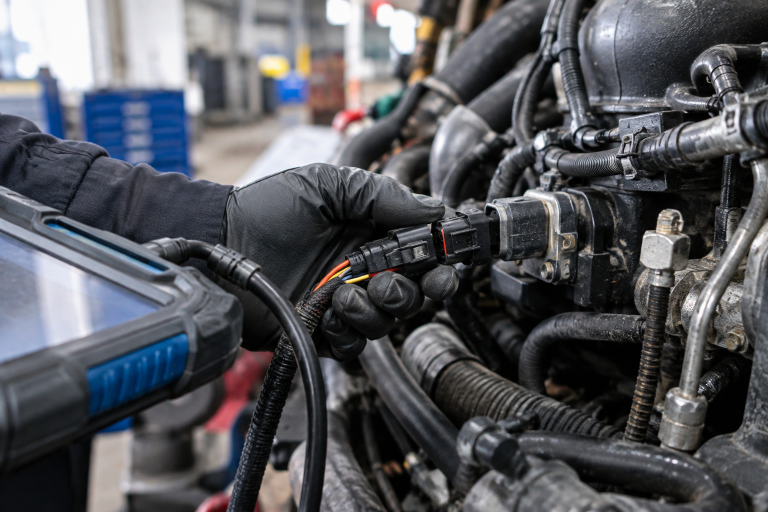
Modern repairs often require scan-tool data, wiring diagrams, service procedures, live readings, and calibration information. Replacing a costly filter, sensor, doser, or control component without confirming the root cause can lead to recurring downtime and unnecessary expense. Complete records also allow technicians to compare current faults with prior repairs and identify patterns that are not obvious during a single service visit.
Repair access is also a practical uptime issue. In July 2026, the EPA’s Freedom to Fix guidance reaffirmed manufacturers’ emissions-related information obligations for heavy-duty commercial trucks, including access to service information, diagnostic data, training materials, and manufacturer-specific tools for purchase. That access can help qualified owners and independent repair facilities complete lawful repairs efficiently.
A Better Maintenance Schedule for Mixed Fleets
- Daily: Check warning lights, fluid levels, leaks, visible exhaust damage, and obvious harness damage.
- Weekly: Review fault-code history, idle time, air-filter condition, regeneration activity, and DEF usage trends.
- At scheduled service: Inspect cooling components, intake plumbing, sensors, hoses, clamps, wiring, and exhaust connections.
- After any warning: Capture diagnostic information before clearing codes or replacing components.
- After repairs: Document the repairs, verify system operation, and confirm that no related warnings return during testing.
Repair, Rebuild, or Replace?
Before approving major work, fleets should ask whether the base engine is healthy, whether the failure is isolated to an accessory or emissions component, whether parts are available, and whether the proposed repair includes documented testing. The lowest initial invoice is not always the lowest total cost. Towing, lost work, repeat diagnostics, rental equipment, and another service interruption can quickly outweigh the benefits of a better-tested repair or replacement option.
Reducing Unplanned Downtime
The strongest fleet programs match service intervals to real-world use, train drivers to report warnings early, stock commonly needed service items when appropriate, and use telematics or maintenance records to monitor temperatures, idle time, fault activity, and regeneration events. Review repeat failures every quarter and adjust the maintenance plan when an operating pattern is contributing to the problem.
Common Questions About Heavy-Duty Diesel Maintenance
Can a warning light be ignored if the engine still runs normally?
No. Some faults begin with little change in drivability. Early diagnosis may prevent a smaller issue from creating a more disruptive repair.
Does every diesel need the same maintenance plan?
No. A highway tractor, refuse truck, generator, excavator, school bus, and service truck can use similar technology while operating under very different loads and schedules.
Should a part be replaced as soon as a fault code appears?
Not automatically. A code identifies a system or condition that needs testing. The repair should follow confirmed diagnostic results.
Conclusion
Heavy-duty diesel maintenance requires attention to mechanical condition, duty cycle, emissions equipment, electronics, repair information, and the risk of downtime. Fleets that inspect consistently, preserve diagnostic data, respond early to warnings, and verify repairs are better positioned to keep equipment available for work. The right maintenance plan is built around how each truck or machine is actually used.