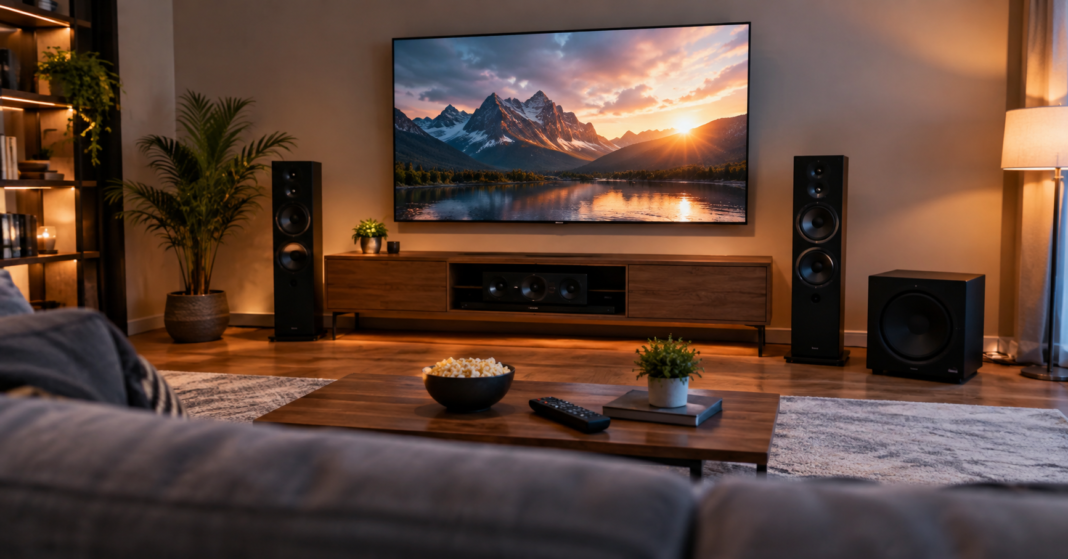
Movie nights feel more engaging when you can hear every conversation clearly. Music adds atmosphere, while sound effects bring action closer. However, choosing the right audio setup can feel confusing when every product promises an impressive experience.
The best Home Theater system suits your room, television, and everyday habits. Start with your space and preferred entertainment. Then compare speaker layouts, connections, and practical features. This approach helps you build a setup that sounds good and feels comfortable at home.
Start with Your Living Room
Before buying a Home Theater system, look at your room’s size and layout. Consider where you sit, where your television stands, and how much space you can spare. Your furniture should help guide your choice.
A bluetooth speaker may work well for casual music. However, television viewing has different needs, especially when you want clear dialogue and surround effects. Think about what your current setup lacks before deciding how much equipment you need.
Consider Your Seating Position
Your main seat gives you a useful starting point for speaker placement. Ideally, you should hear a balanced mix from that position. Also, consider whether other family members sit across the room or close to a wall.
Choose a Speaker Layout That Fits
A compact soundbar can suit a living room with limited space. A setup with separate speakers gives you more placement options. Meanwhile, adding rear speakers can help create a stronger sense of sound moving around you.
For example, a 5.1 system typically includes front, centre, and surround channels, plus a subwoofer. Still, more speakers do not automatically mean a better experience. Choose a layout you can position properly around your furniture.
Put Clear Dialogue Before Heavy Bass
Explosions may impress you during a demonstration, but clear speech matters throughout a film. Listen closely to quieter scenes. You should understand conversations without constantly adjusting the volume or relying on subtitles.
When testing a Home Theater system, use content you know well. Try dialogue, music, and an action scene. Then listen at your usual evening volume. A system should sound balanced during everyday viewing, not only during a loud showroom demonstration.
Check Dialogue Controls
Some systems offer dialogue enhancement or separate centre-channel adjustments. These controls may help you make voices easier to hear. Test them if possible, because the results depend on both the equipment and the content.
Match the System to Your Television
Before purchasing, check your television’s available audio connections. HDMI ARC or eARC can carry television audio to compatible equipment. However, both devices must support the connection and the features you want to use.
Also, consider your other devices. You may connect a gaming console, streaming player, or set-top box. Confirm how these fit into the setup. Checking compatibility early helps you avoid extra adapters, confusing connections, and disappointing surprises.
Decide How You Want to Play Music
Your living room audio system can serve more than movie nights. If you enjoy music while cooking or relaxing, check its playback options. Bluetooth offers convenient streaming from compatible phones, while some systems also support Wi-Fi services.
A bluetooth speaker may remain useful when you want music in another room or outside. Therefore, think about portability separately from television sound. Choose your main system around living room use rather than expecting it to handle every situation.
Plan Speaker Placement and Cable Routes
Even good equipment needs thoughtful placement. Keep speakers clear of objects that block their sound. Follow the manufacturer’s guidance for positioning and ventilation. Also, make sure the equipment fits without covering part of your television screen.
Next, plan how cables will reach the speakers. Consider doorways, walkways, and available sockets. Some wireless speakers still need power cables. Check those requirements before buying, especially if you want rear speakers beside or behind your sofa.
Consider Bass and Shared Living Spaces
A subwoofer adds low-frequency sound that can give films and music more weight. However, placement affects how bass sounds in your room. Avoid choosing its position purely because an empty corner looks convenient.
Start with the recommended placement, then listen from your usual seat. Adjust the bass level to suit your space. If you share walls or watch late at night, check for night mode or useful bass controls.
Set a Budget Around Everyday Value
Finally, decide what matters most to you. Clear dialogue, suitable connections, and a manageable speaker layout deserve priority. Spend on features you will use regularly. Also, allow for any necessary cables, mounts, or stands.
Before choosing a Home Theater system, review the warranty, return policy, and local support. If a bluetooth speaker already handles your portable music needs, focus this purchase on television audio. A thoughtful setup can make ordinary evenings feel more enjoyable without overwhelming your living room.