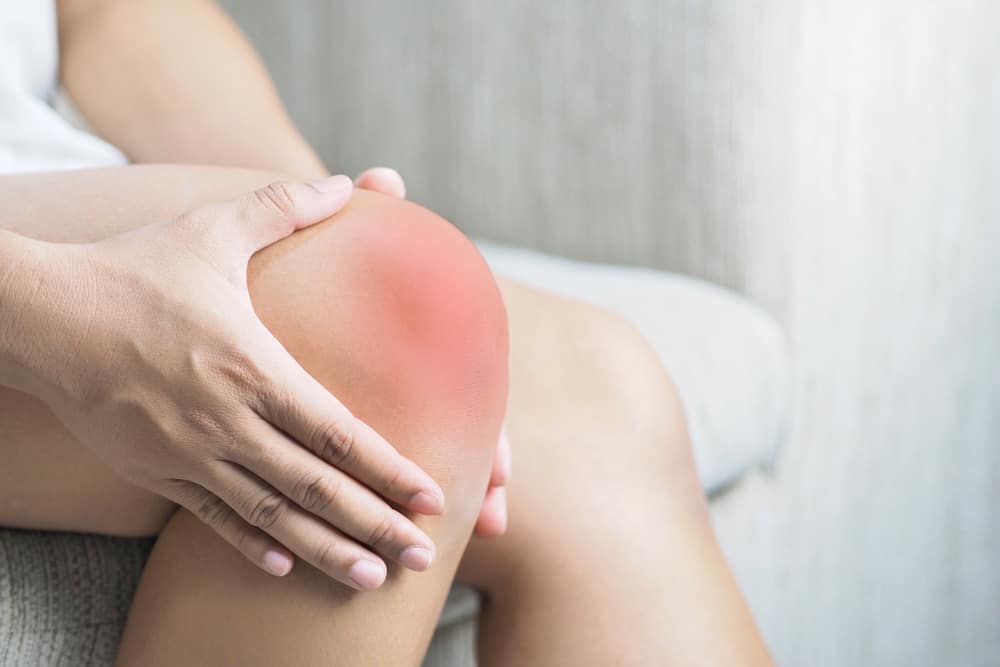
Some mornings the knee decides. You were going to walk the long way, take the stairs, get the garden finished before lunch. Then you stand up, the knee files an objection, and the day quietly gets shorter.
That is the annoying thing about a sore knee. It is not dramatic enough for a hospital and not mild enough to ignore, so it sits in the middle of your life and edits it.
Most people handle it by guessing. Take a pill. Push through. Hope it settles. There is a third option, and it happens to match how the pain actually works.
The knee speaks first in the morning
A twinged knee after gardening is usually a soft tissue problem. A ligament or tendon got loaded harder than it wanted, so the tissue swelled up and the joint now feels stiff until it warms. That is the usual story.
Strains and sprains like that normally settle in two or three weeks with basic care. Daily soreness that drags on for months points somewhere else, usually toward osteoarthritis or a tendon that never got the proper rest it needed. That one is different.
Either way, the pain comes from a specific place. One knee. One tendon. One edge of the joint. That detail matters more than most people realize.
Where Fastum Gel fits into the day
Fastum Gel is a topical gel with ketoprofen 2.5%, a nonsteroidal anti-inflammatory drug you rub on instead of swallow. Squeeze a thin layer onto the sore area, work it in with clean, dry hands, and let the skin do the rest.
The usual pattern is two or three applications a day. A strip about an inch and a half long covers a knee comfortably, and more gel does not mean more relief. Most people notice a difference within one to three days. A full course tends to run one to two weeks rather than months, and you can apply it whether or not you have eaten, which is a small mercy next to tablets.
It goes on intact skin only. Not on a cut. Not on a rash. Not near the eyes. Wash your hands afterwards. OKDERMO supplies it internationally alongside the rest of the Menarini range, with discreet shipping, which matters if you would rather not discuss your knee with a pharmacist in a queue.
This is not a heat rub. Menthol and capsaicin creams trick the nerves into feeling warm and busy for twenty minutes, which feels like progress and does nothing for the tissue underneath. Ketoprofen works on the prostaglandins driving the inflammation, so the swelling and the ache come down over days instead of minutes.
Rubbing it in is not the same as swallowing a pill
Here is the part that surprises people. For a strained knee, a gel can match a tablet on pain relief. It also puts much less medicine into your bloodstream, which is where most of the stomach trouble starts. Lower is better.
The evidence is unusually solid. A Cochrane review of 61 trials covering 8,386 people found that with diclofenac and ketoprofen gels, seven or eight out of ten people with a strain, sprain or muscle pull had much less pain after a week. On a placebo gel, only two or three out of ten did. Ketoprofen gel alone came in with a number needed to treat of 2.5, which is a strong result for something you apply with your own hands.
The safety side is just as interesting. About one in twenty people got a mild skin reaction where they applied it. The rate was the same on the placebo gel, which suggests the rubbing and the carrier do most of that work. Stomach upset was uncommon.
Put simply, the gel treats where the pain is. Tablets treat everywhere, and that is why the warning list on a packet of ibuprofen reads the way it does.
The sunlight rule almost nobody reads
Ketoprofen has one quirk that matters more than the other warnings. It makes skin sensitive to sunlight, and not in a mild way.
The UK medicines regulator reminded prescribers about this directly. Users should avoid direct sunlight, ultraviolet rays, sunlamps and sunbeds while using topical ketoprofen, and they should stay careful for two weeks after stopping. That is not optional. If a rash appears on treated skin after sun exposure, stop the gel and get it looked at.
It is worth knowing why. Ketoprofen takes in light energy and sets off a reaction in the skin that looks like a bad sunburn, and it can happen through cloud and thin clothing. Cloud counts. The practical version of that rule is easy. Treat the knee in the evening if the day involves shorts and a walk. Keep the area covered. If a hot holiday is coming, plan the course around it rather than through it.
When a sore knee needs a person, not a tube
A gel is a sensible first move for a loaded tendon or a mild sprain. It is the wrong move for a locked joint or a knee that gives way. It is also the wrong move for swelling that keeps growing after three days. That part is easy.
Book an appointment if you cannot put weight on the leg. Same if the joint is hot and red with a fever, or if there is numbness or tingling. Pain that wakes you at night is not a gel problem either.
For osteoarthritis, no topical product does the heavy lifting. Strength work, weight management and physiotherapy do, and they work slowly, which is why so many people reach for something in a tube instead. A knee that has been sore for two years will not be fixed by anything you rub on it, and waiting on a tube only costs you the months when physiotherapy works best. A gel is not that.
The knee gets a vote on how the day goes. It does not get the whole vote, and it never gets to decide alone.