Procurement decisions around packaging materials rarely get the attention they deserve until something goes wrong. A delayed shipment, inconsistent pallet sizing, or a supplier who can’t meet volume requirements mid-season can create downstream disruptions that affect not just warehouse operations but customer relationships and fulfillment timelines. Wooden quarter pallets sit in a category of packaging components that many buyers treat as a commodity purchase, assuming all options are roughly equivalent. They are not. The differences in construction, sourcing, and supplier reliability matter considerably when you are buying in bulk, and understanding those differences before committing to a vendor is how you avoid overpaying for underperforming materials.
What Wooden Quarter Pallets Are and Why Sourcing Them Requires Deliberate Planning
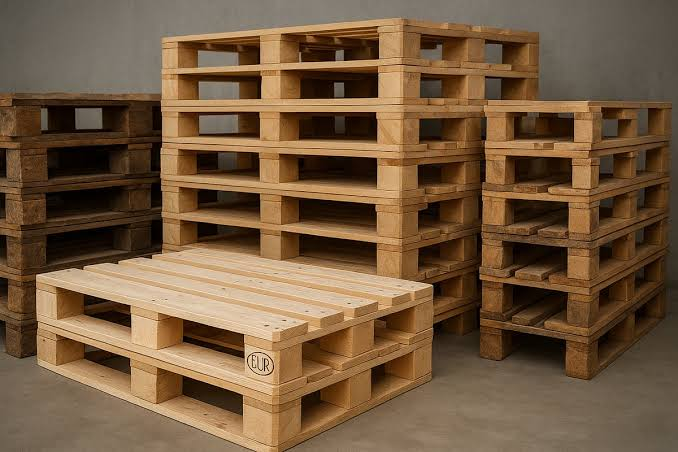
A wooden quarter pallet is a smaller-format pallet, roughly one quarter the footprint of a standard full pallet, used extensively in retail display, point-of-sale logistics, food and beverage distribution, and promotional shipments. Because of their compact size, they are often used where space efficiency at the destination matters as much as transport efficiency. They need to be structurally consistent to stack properly, compatible with retail floor displays, and durable enough to handle repeated handling through distribution chains. When businesses decide to buy wooded pallets in quantity, the planning involved is rarely just about finding the lowest unit price. It involves evaluating what happens when those pallets arrive, how they perform under load, and whether the supplier can consistently deliver what was ordered across multiple shipments over time.
The Relationship Between Consistency and Operational Cost
Inconsistent pallet dimensions create real problems in warehouse environments. If pallet footprints vary even slightly between batches, stacking configurations become unpredictable, automated or semi-automated handling becomes unreliable, and retail display setups require manual adjustment at the point of placement. Each of these inefficiencies adds labor cost that is rarely attributed back to the original sourcing decision. Buyers who focus exclusively on the per-unit price of wooden pallets often overlook these secondary costs entirely, which means that the cheaper option on paper becomes more expensive in practice. Establishing dimensional and construction standards with suppliers before placing bulk orders is a straightforward way to control for this risk.
Wood Grade and Treatment Standards Affect More Than Durability
The type of wood used and how it has been treated determines not just how long a pallet lasts but whether it can legally enter certain distribution environments. In the United States, pallets used in international shipping or that pass through regulated facilities are subject to phytosanitary treatment requirements. The USDA’s Animal and Plant Health Inspection Service outlines heat treatment and marking requirements for wood packaging materials entering and leaving the country. Buyers sourcing wooden quarter pallets for domestic retail distribution may not encounter these requirements directly, but understanding what treatment has or has not been applied helps avoid compliance issues if product routes change. Confirming treatment documentation with suppliers before bulk purchasing prevents complications later.
How Bulk Pricing Works and Where Buyers Overpay Without Realizing It
Bulk pricing on wooden pallets follows fairly predictable patterns. Volume thresholds generally trigger tiered pricing, meaning buyers who order above a certain quantity receive a lower per-unit rate. The complication is that these thresholds are often set at quantities that require significant upfront capital commitment and storage capacity. Buyers who feel pressure to hit a volume tier sometimes order more than they need in the near term, paying for storage, handling, and potential deterioration of materials that sit unused. Overpaying in bulk purchasing does not always mean paying a high unit price. Sometimes it means ordering a quantity that creates operational inefficiency beyond the point where the price discount justifies the commitment.
Freight Costs Are Frequently Underestimated in Pallet Procurement
Wooden quarter pallets are bulky relative to their per-unit value, which means freight costs represent a meaningful portion of the total landed cost. Buyers who compare quotes from multiple suppliers without factoring in freight often discover that the supplier with the lower product price is located in a region where shipping adds enough cost to eliminate the savings. Regional sourcing, where the supplier is geographically closer to the buyer’s warehouse or distribution hub, often produces better total cost outcomes than finding the absolute lowest unit price from a distant supplier. Building a total landed cost model before finalizing vendor selection is basic due diligence, but it is routinely skipped in favor of quick price comparisons.
Lead Times and Minimum Order Quantities Affect Real Procurement Flexibility
Suppliers with favorable pricing often offset that advantage with longer lead times or high minimum order quantities. For buyers who operate with variable demand, whether due to seasonal sales cycles, promotional campaigns, or retail account requirements, rigid minimums and extended lead times create planning risk. If demand drops and a large pallet order has already been placed, the buyer absorbs the cost of excess inventory. If demand spikes faster than anticipated and the supplier cannot accelerate delivery, fulfillment suffers. The most cost-effective bulk purchasing arrangement is one where pricing reflects volume but the supplier maintains enough operational flexibility to accommodate reasonable adjustments. Evaluating lead time performance and minimum order flexibility during vendor selection is as important as evaluating the unit price itself.
Evaluating Suppliers Before Committing to a Bulk Order
The process of selecting a supplier for wooden quarter pallets in bulk is not primarily about comparing prices across a list of vendors. It is about identifying which suppliers can reliably perform across the specific requirements of your operation. This includes production capacity, consistency across batches, responsiveness when issues arise, and the ability to scale with demand shifts. A supplier who can deliver competitively priced pallets once is not the same as a supplier who can do so reliably over twelve months. Bulk purchasing decisions benefit from a longer evaluation horizon than single-order transactions, and the questions asked during supplier qualification should reflect that difference.
Quality Verification Before Full Order Release Reduces Risk
Requesting a sample order before committing to bulk quantities is standard practice in many industries but is often skipped in pallet procurement because buyers assume the product category is too simple to warrant it. The argument has some surface logic but overlooks real variation in how different suppliers construct wooden pallets, what materials they source, and how consistently those inputs are applied. Receiving and physically evaluating a sample order gives the buyer concrete information about dimensional accuracy, wood quality, joint integrity, and surface condition before committing to a volume purchase. This step adds a short delay to the procurement timeline but substantially reduces the risk of discovering quality issues after a large order has been received and accepted.
Supplier Documentation and Communication Practices Signal Operational Reliability
How a supplier communicates during the sales and onboarding process is often a reasonable indicator of how they will communicate during production delays, quality issues, or order adjustments. Suppliers who provide clear documentation, respond promptly to technical questions, and offer transparent information about their processes and lead times are generally easier to work with when problems arise. Suppliers who are difficult to reach, vague about specifications, or slow to provide documentation tend to remain that way throughout the relationship. Evaluating communication quality and documentation practices during the quoting phase, before any money changes hands, helps buyers identify which vendors will be reliable partners rather than sources of recurring frustration.
Managing Inventory and Storage After a Bulk Purchase
Receiving a large bulk order of wooden quarter pallets creates an immediate inventory management responsibility that buyers sometimes underestimate when planning the purchase. Wooden pallets stored improperly can warp, absorb moisture, or become damaged in ways that compromise their structural integrity before they are ever used. Storage conditions matter for wooden materials in ways they do not for many other packaging types. Pallets should be stored off the floor on a flat, stable surface, away from direct moisture exposure, and ideally in a covered environment. Buyers who plan bulk orders without accounting for proper storage conditions may find that a portion of their inventory is unusable by the time it reaches deployment, which adds effective cost per usable unit beyond what the original price implied.
Rotation and Deployment Sequencing Protect Investment in Bulk Stock
When buying wooden pallets in bulk quantities intended to cover several months of demand, managing how those pallets are deployed over time matters. Older stock should be used before newer stock to prevent extended storage from degrading materials unnecessarily. This is straightforward inventory rotation practice, but it requires a deliberate process in warehouse environments where pallets are often pulled from wherever is most convenient rather than in a managed sequence. Establishing basic first-in, first-out practices for pallet inventory adds minimal operational complexity while protecting the value of the bulk purchase over its full intended lifespan.
Concluding Observations for Buyers Approaching This Category Seriously
Purchasing wooden quarter pallets in bulk is a procurement decision that rewards preparation and penalizes assumptions. The variables that determine whether a bulk purchase delivers genuine cost efficiency, supplier reliability, dimensional consistency, appropriate treatment documentation, accurate freight cost modeling, and realistic lead time expectations, are all manageable with deliberate planning. Buyers who treat this as a simple price comparison exercise often find themselves managing preventable problems on the back end of an order that looked favorable at the front end.
The goal of any bulk purchasing arrangement in this category should be a stable, repeatable supply relationship where the economics are clear, the materials are consistent, and the supplier can be depended upon across changing demand conditions. That outcome is achievable, but it requires asking the right questions before committing to volume rather than discovering the answers through experience. Buyers who approach wooden quarter pallet procurement with the same rigor they apply to higher-profile purchasing decisions generally get better results at a lower total cost.