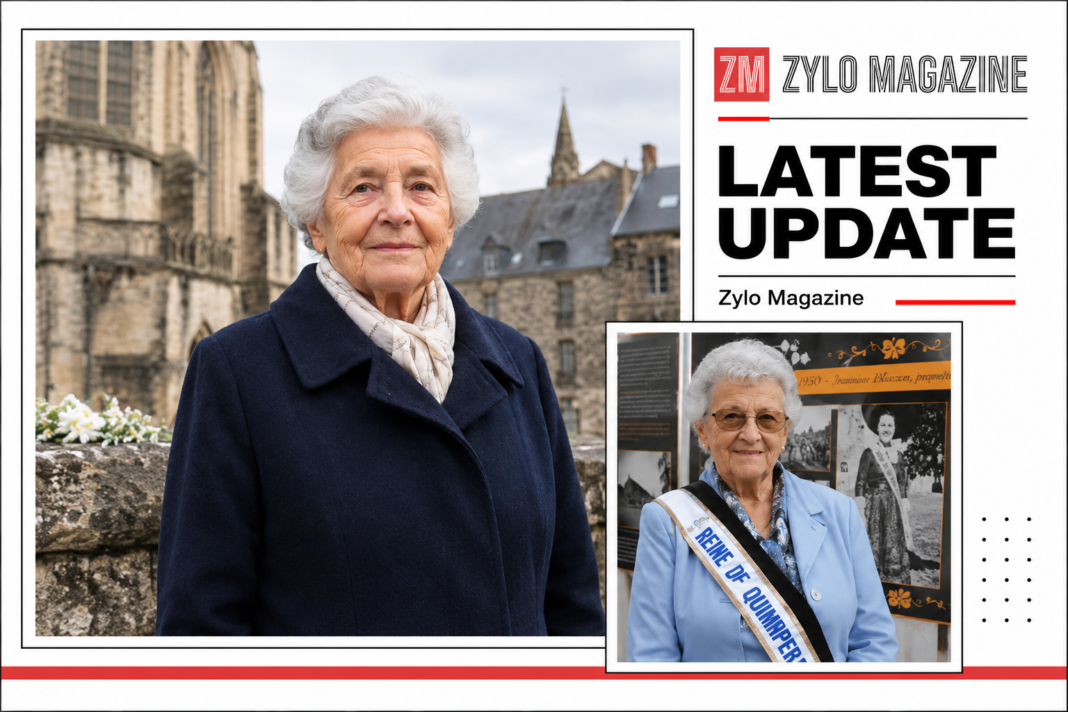
Searching for Jeannine Belleguic leads to an unusual mix of obituary records, recent biography pages, family-history information, and claims about her life that are not always supported by reliable evidence. The clearest documentary trail identifies her as Jeannine Belléguic, née Bleuzen, a French woman associated with Quimperlé in Brittany who died in April 2025 at the age of 93. Unlike a celebrity, politician, entertainer, or other major public figure, she appears to have lived largely outside the public spotlight.
That distinction matters because repeated information on the internet is not necessarily verified information. Understanding Jeannine Belleguic therefore requires more than collecting claims from biography websites. It requires comparing names, dates, places, civil records, and funeral notices. This detailed guide explains what is actually known about Jeannine Belleguic, what remains uncertain, why different versions of her name appear online, and what her case teaches us about researching private individuals in the digital age.
Who Was Jeannine Belleguic?
Jeannine Belleguic was a French woman whose surviving public record is closely connected with Quimperlé, a town in Finistère in the Brittany region of France.
The most useful documentary clue is the way her name appears in French funeral information: Jeannine BELLÉGUIC, née BLEUZEN. In French usage, née indicates a woman’s birth or maiden surname. Therefore, Bleuzen was her birth surname, while Belléguic was the surname by which she was identified later in life.
Civil death-record data provides an even fuller identity. It lists Jeannine Joséphine Annick Bleuzen, born on 28 May 1931 in Quimperlé, Finistère, and records her death on 18 April 2025 in Lorient, Morbihan, at the age of 93. The record gives death act number 532.
A French funeral notice independently connects the two surnames by identifying the deceased as Jeannine Belléguic, née Bleuzen, and recording the same date of death.
These records provide a solid foundation for understanding who she was. What they do not provide is an extensive professional biography, celebrity career, public résumé, or detailed account of her private life.
That difference is essential.
Jeannine Belleguic Quick Facts
| Detail | Documented information |
|---|---|
| Commonly searched name | Jeannine Belleguic |
| French spelling | Jeannine Belléguic |
| Birth surname | Bleuzen |
| Full birth name appearing in death records | Jeannine Joséphine Annick Bleuzen |
| Date of birth | 28 May 1931 |
| Birthplace | Quimperlé, Finistère, France |
| Nationality | French |
| Date of death | 18 April 2025 |
| Place of death | Lorient, Morbihan, France |
| Age at death | 93 |
| Funeral ceremony | 25 April 2025 |
| Funeral location | Église Notre-Dame, Quimperlé |
| Profession | Not reliably established in the public sources reviewed |
| Public-figure status | No substantial evidence of a major public career |
The combination of her full birth name, date and place of birth, death date, and funeral information is much more useful than relying on the name “Jeannine Belleguic” alone.
Jeannine Belleguic’s Early Life and Birth in Quimperlé
The civil record places the beginning of Jeannine’s life in Quimperlé on 28 May 1931.
That is one of the strongest biographical details currently available because it comes from a record containing multiple identifying data points rather than an unsourced modern biography.
Beyond those basic facts, however, publicly accessible information about her childhood is limited.
There is no strong evidence in the sources reviewed that establishes where she went to school, what subjects she studied, what her childhood ambitions were, or what her family circumstances were during her earliest years.
That may seem surprising to modern readers accustomed to celebrity profiles containing extensive personal histories. But Jeannine was born decades before social media, online professional profiles, personal websites, and searchable digital archives became ordinary parts of life.
For someone born in 1931 who did not live as a major public figure, a limited digital footprint is entirely unsurprising.
It is therefore better to acknowledge gaps in the record than to fill them with plausible-sounding details.
The Importance of Quimperlé in Her Story
Quimperlé is particularly important when researching Jeannine Belleguic because the town appears at more than one point in her documented life.
Her civil death information identifies Quimperlé as her birthplace, while her funeral announcement later places her religious ceremony at Église Notre-Dame de Quimperlé.
This geographical continuity is valuable for researchers.
When investigating a private individual, locations can be almost as important as names. Two people may share the same first name and surname, but the probability of confusing them becomes much lower when researchers compare:
- exact birth dates;
- birthplaces;
- maiden names;
- married surnames;
- death dates;
- death locations;
- relatives; and
- funeral locations.
In Jeannine’s case, Quimperlé is one of the strongest geographical identifiers tying the available records together.
It also places her documented story firmly within Brittany rather than in the world of international celebrity or public life.
Why Is She Called Both Jeannine Bleuzen and Jeannine Belleguic?
This is one of the most useful questions to answer because it can otherwise make the records look contradictory.
They are not necessarily contradictory.
The civil death listing uses the name Jeannine Joséphine Annick Bleuzen, while the funeral record identifies her as Jeannine Belléguic, née Bleuzen.
The French word née literally indicates “born as” and is traditionally used to show a married woman’s birth surname.
In practical terms:
Bleuzen = birth surname
Belléguic = later/married surname appearing in funeral records
This is particularly important for genealogy.
A person searching exclusively for “Jeannine Belleguic” might fail to find records indexed under “Jeannine Bleuzen.” Conversely, someone researching the Bleuzen family could encounter the civil death entry without immediately realizing that it concerns the woman identified elsewhere as Jeannine Belléguic.
Good family-history research therefore requires searching both names.
Belléguic or Belleguic: Which Spelling Is Correct?
Another source of confusion is the accent.
French funeral material uses Belléguic, with an acute accent over the first “e.” Many English-language searches and websites instead use Belleguic.
For online research, both spellings are useful.
The unaccented form may appear because websites, search databases, URLs, keyboards, or international publications normalize accented characters. That does not automatically mean the records refer to different families or individuals.
Researchers should avoid using an accent mark as the decisive identity test.
Matching dates, locations, maiden names, and family relationships is much more reliable.
From an SEO perspective, “Jeannine Belleguic” is also an important spelling because it is the form many English-speaking searchers type. An accurate article can therefore use the popular search spelling while explaining that French records use Jeannine Belléguic.
What Do Public Records Actually Confirm?
The most important step in understanding Jeannine Belleguic is separating documented information from internet repetition.
The available civil record identifies Jeannine Joséphine Annick Bleuzen as having been born on 28 May 1931 in Quimperlé and having died on 18 April 2025 in Lorient at age 93.
The funeral notice provides a second key piece of evidence. It identifies Madame Jeannine Belléguic, née Bleuzen, states that she died on 18 April 2025, and announces a funeral ceremony at Église Notre-Dame in Quimperlé for Friday, 25 April 2025, at 2:30 p.m.
Another funeral-record service independently lists the same death date, ceremony date, time, and church.
Together, those details establish a coherent documentary identity.
What they do not establish is equally important.
The records reviewed do not provide a comprehensive account of her education, career, income, achievements, hobbies, personality, or other private experiences.
Was Jeannine Belleguic Famous?
There is no strong evidence in the public sources reviewed that Jeannine Belleguic was a major celebrity or nationally prominent public figure.
This point deserves emphasis because search engines can create a misleading impression.
When someone types an unfamiliar person’s name into Google and sees numerous “biography” pages, it is natural to assume that the individual must have been famous.
But search visibility and fame are not the same thing.
A private person’s name can become highly searchable because of an obituary, genealogy database, family-history research, viral search patterns, automatically generated pages, or publishers responding to keyword demand.
Once several websites publish articles about a name, other websites may notice the search term and create their own articles. The number of results increases even though the amount of original evidence does not.
This appears particularly relevant to searches for Jeannine Belleguic.
The number of recent pages discussing her should therefore not be confused with evidence that she maintained a substantial public profile during her lifetime.
What Is Known About Jeannine Belleguic’s Career?
This is where responsible research becomes especially important.
A reliable professional history for Jeannine Belleguic has not been established by the strongest public records reviewed for this article.
Her civil and funeral records establish identity, dates, places, and funeral arrangements. They do not provide a detailed occupational biography.
Some internet pages have attached more elaborate career narratives to the name, including claims concerning psychology or neuropsychology.
Those claims should not automatically be treated as established facts.
For a professional biography to be convincing, researchers would ideally want corroborating evidence such as university records, institutional staff pages, academic publications, professional directories, archived conference programs, books, newspaper profiles, or records from relevant professional bodies.
Simply finding the same career claim on several modern biography websites is not independent confirmation if those websites may be repeating one another.
Until better evidence emerges, the accurate description is simple:
Jeannine Belleguic’s profession is not reliably established by the public records currently available.
That answer is less dramatic, but considerably more useful.
Why Repeated Online Claims Are Not Necessarily Evidence
Jeannine Belleguic’s case demonstrates a wider problem with online biographies.
Imagine that Website A publishes an unsupported claim.
Website B finds Website A through Google and repeats it.
Websites C, D, and E then repeat versions of the same information.
A reader now finds five pages making apparently similar claims.
At first glance, that looks like corroboration.
In reality, there may still be only one original unsupported statement.
This is known more broadly as a problem of source independence. The number of pages repeating information matters much less than where the information originated.
For Jeannine Belleguic, the safest approach is to work backward toward documentary evidence.
Civil records can establish basic identity information.
Funeral notices can establish names, dates, and announced arrangements.
Professional claims require professional evidence.
Family claims ideally require family records.
That evidence hierarchy makes a biography more trustworthy than one constructed by combining whatever appears most frequently in search results.
Jeannine Belleguic’s Death in 2025
The death of Jeannine Belleguic is one of the clearest parts of her public record.
Civil death information records that Jeannine Joséphine Annick Bleuzen died in Lorient on 18 April 2025 at age 93.
The funeral notice for Jeannine Belléguic, née Bleuzen, gives the same date of death.
The agreement between the records is important.
It also helps link the Bleuzen civil identity to the Belléguic surname found in funeral material.
There is no need to speculate about the medical circumstances surrounding her death. The sources used here establish the date and location but do not provide a reliable basis for a detailed medical narrative.
Respecting that distinction is particularly important when writing about a private person.
Jeannine Belleguic’s Funeral
The published funeral notice announced Jeannine Belléguic’s religious ceremony for Friday, 25 April 2025, at 2:30 p.m. at Église Notre-Dame de Quimperlé. It also stated that before the funeral she was resting at the Salon Mer of the Chambre Funéraire du Pays de Quimperlé.
A separate funeral listing records the same date, time, and church.
These details may appear minor compared with the information normally found in celebrity biographies, but for genealogists they are valuable.
A funeral location can help distinguish between people with identical names, establish a geographical connection, locate further parish or cemetery information, and point researchers toward local archives.
In other words, an obituary is not simply an announcement of death. It can also function as an important genealogical document.
A Simple Timeline of Jeannine Belleguic’s Documented Life
Based on the strongest publicly accessible records, a cautious timeline looks like this:
28 May 1931: Jeannine Joséphine Annick Bleuzen was born in Quimperlé, Finistère.
Later life: Funeral records identify her under the surname Belléguic and specify her birth surname as Bleuzen.
18 April 2025: She died in Lorient, Morbihan, at age 93.
22 April 2025: A funeral notice was published/indexed identifying her as Jeannine Belléguic, née Bleuzen.
25 April 2025: The published arrangements scheduled her religious funeral ceremony for 2:30 p.m. at Église Notre-Dame in Quimperlé.
Notice what is deliberately missing from this timeline: invented education, jobs, awards, and accomplishments.
A short verified timeline is more valuable than a long fictional one.
Why Researchers Must Be Careful With Similar Names
One of the biggest dangers in genealogy is assuming that a matching name means a matching person.
Names are not unique identifiers.
The risk becomes particularly serious when working with common first names, married surnames, maiden names, and records spanning multiple decades.
For Jeannine Belleguic, researchers have an unusually strong set of identifiers:
Jeannine Joséphine Annick Bleuzen
Born: 28 May 1931
Birthplace: Quimperlé
Died: 18 April 2025
Place of death: Lorient
Later surname: Belléguic
That combination should be used when evaluating potential matches.
A record for a Jeannine Belleguic with a substantially different birth year or birthplace should not simply be merged into this biography.
This is a practical lesson that applies far beyond this particular name.
How to Research Jeannine Belleguic More Accurately
Anyone conducting deeper genealogical research should begin with known facts rather than broad searches.
Start with the exact birth identity:
“Jeannine Joséphine Annick Bleuzen”
Then combine it with:
“28 May 1931”
“Quimperlé”
“Lorient”
“Belléguic”
and
“18 April 2025.”
Researchers should also search accented and unaccented variants:
Belléguic / Belleguic
A particularly useful principle is the two-identifier rule: never merge two records merely because the names match. Confirm at least two or preferably several independent identifiers, such as birth date, location, spouse, relatives, maiden name, or death date.
For difficult cases, original civil registrations, departmental archives, marriage records, census material, cemetery registers, and contemporary newspapers may provide stronger evidence than modern biography websites.
What We Still Do Not Know About Jeannine Belleguic
An accurate biography should make uncertainty visible.
At present, the publicly accessible evidence reviewed does not reliably establish a detailed account of Jeannine’s:
education;
occupation or professional career;
personal interests;
financial circumstances;
complete residential history;
public achievements; or
day-to-day private life.
These gaps should not be interpreted negatively.
They are normal for someone who apparently lived most of her life outside public attention.
The internet has conditioned people to expect every name to produce a complete biography. Historically, that is highly unusual. Most people’s lives were recorded through scattered documents—birth certificates, marriages, census entries, employment records, property documents, newspaper notices, photographs, letters, and eventually death records.
Jeannine Belleguic’s searchable record should be understood in that context.
Why Jeannine Belleguic’s Story Matters in the Digital Age
The real value of researching Jeannine Belleguic goes beyond one biography.
Her case illustrates how the internet is changing our relationship with personal history.
Search engines bring together information created for entirely different purposes. A civil record becomes a search result. An obituary becomes a permanent web page. A family name becomes an SEO keyword. Publishers then create new articles based on those existing results.
Over time, the distinction between original evidence and internet commentary about the evidence can become difficult to see.
This creates a paradox.
There may be more pages about a person than ever before while simultaneously being very little genuinely new information about that person.
Readers therefore need a different definition of a “detailed” biography.
Detail should not mean adding more claims.
It should mean explaining the available evidence more carefully.
Lessons for Genealogy and Family-History Researchers
The Jeannine Belleguic records provide several practical lessons.
First, always search maiden names. A married surname may not be the surname under which civil records are indexed.
Second, search spelling variants. Accents and special characters frequently disappear when names move between databases and languages.
Third, compare locations. Quimperlé and Lorient provide essential geographical anchors in this case.
Fourth, compare exact dates. A matching name accompanied by a different birth date can signal an entirely different person.
Fifth, distinguish primary evidence from secondary repetition. Ten blogs repeating one claim do not necessarily equal ten independent sources.
Finally, accept uncertainty. A good researcher does not need to have an answer for every question.
Sometimes “not established by the available evidence” is the most accurate conclusion possible.
The Difference Between a Private Life and an Empty Life
It would be a mistake to interpret the limited online record as evidence that Jeannine Belleguic led an uneventful life.
Public documentation measures visibility, not human significance.
A person can spend more than nine decades building relationships, participating in a community, supporting family members, working, travelling, learning, and accumulating experiences without those activities ever being indexed by a search engine.
That distinction is especially relevant for generations born before the digital age.
Jeannine was born in 1931. Much of her life therefore took place before personal information was routinely digitized, published online, indexed, and preserved in searchable databases.
The absence of a detailed internet biography tells us primarily about the limits of the surviving online record.
It should not be mistaken for a judgment about the importance of the life itself.
Why Accuracy Is More Valuable Than a Sensational Biography
There is strong pressure in online publishing to make every biography sound remarkable.
A mysterious name invites dramatic explanations. An information gap invites speculation. An unsupported professional claim can make an article seem more interesting.
But this approach creates long-term problems.
Once incorrect information is indexed, other websites may reproduce it. AI systems, aggregators, and search summaries may encounter the repeated claim and treat repetition as credibility. Eventually, separating the original person from the online mythology becomes increasingly difficult.
Jeannine Belleguic provides a useful example of why publishers should resist that process.
Her verified story already contains meaningful information: a full birth identity, a connection with Brittany, a life spanning more than nine decades, two surnames that require careful interpretation, and a documentary trail connecting Quimperlé and Lorient.
There is no need to invent the missing chapters.
Frequently Asked Questions About Jeannine Belleguic
Who was Jeannine Belleguic?
Jeannine Belleguic, written Jeannine Belléguic in French funeral records, was a French woman associated with Quimperlé in Brittany. Civil records identify her birth name as Jeannine Joséphine Annick Bleuzen and state that she was born in Quimperlé on 28 May 1931.
When was Jeannine Belleguic born?
Civil death-record information gives her date of birth as 28 May 1931 and her birthplace as Quimperlé, Finistère, France.
When did Jeannine Belleguic die?
Jeannine Belleguic died on 18 April 2025. The civil record places her death in Lorient, Morbihan, and states that she was 93 years old. The date is also supported by her funeral notice.
What did Jeannine Belleguic do for a living?
Her profession is not reliably established by the strongest public sources reviewed. Civil and funeral records provide identity and death information but do not establish a detailed professional career. Claims about specific occupations appearing on modern biography sites should therefore be independently verified before being repeated as fact.
Why do both Bleuzen and Belleguic appear in records?
The funeral notice identifies her as Jeannine Belléguic, née Bleuzen. “Née” indicates a woman’s birth surname, so Bleuzen was her birth name while Belléguic was the later surname used in the funeral record.
Conclusion
The most accurate picture of Jeannine Belleguic is more restrained—and ultimately more useful—than many conventional internet biographies. Reliable records identify her as Jeannine Joséphine Annick Bleuzen, born in Quimperlé on 28 May 1931, later recorded as Jeannine Belléguic, and deceased in Lorient on 18 April 2025 at the age of 93. Her funeral was announced for 25 April at Église Notre-Dame in Quimperlé.
Beyond these facts, significant parts of her education, profession, and personal history remain publicly undocumented. That should not be treated as an invitation to speculate. The most valuable approach is to distinguish original records from repeated online claims and recognize that a limited digital footprint can still represent a long and meaningful life. Jeannine Belleguic’s story is therefore also a lesson in responsible online research: verification is more valuable than volume, and accuracy is more valuable than an impressive but unsupported biography.
Continue Exploring Our Latest Article: Bert Girigorie: Biography, Career, Wendy Williams Marriage, and Life Beyond the Spotlight