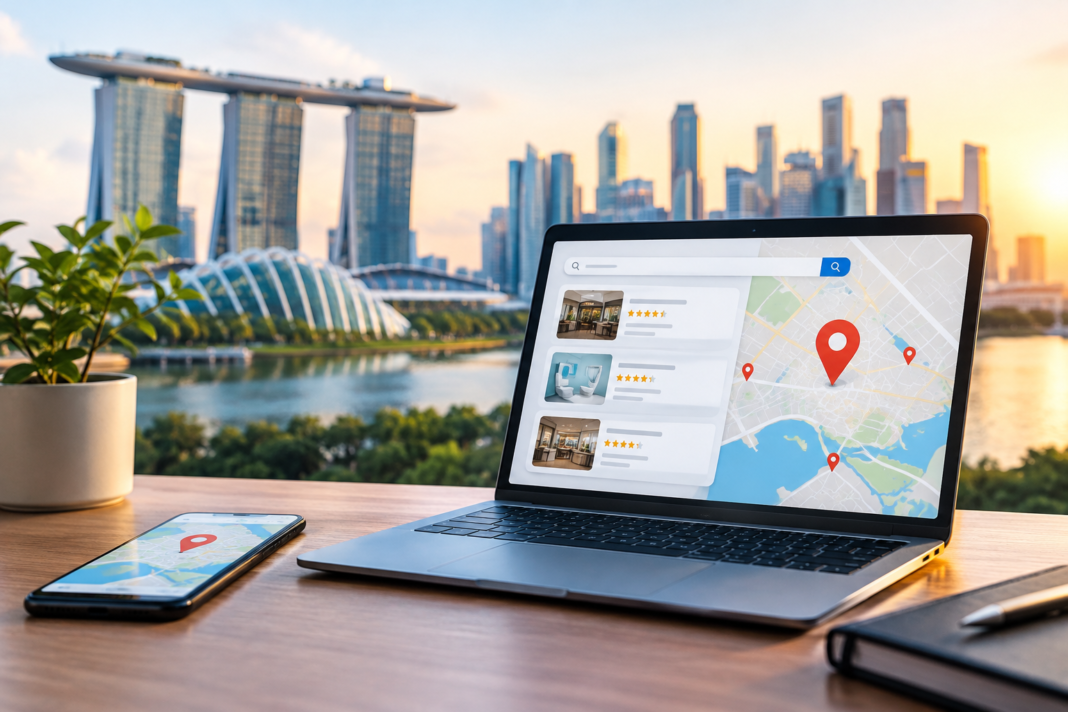
When people need a nearby service, they often turn to Google before deciding which business to contact. A restaurant, tuition centre, dental clinic, or home repair company can miss valuable enquiries if its website and business information are difficult to find. Effective Local Search Engine Optimization Singapore strategies help businesses improve their presence in location-based searches, provide useful information to potential customers, and make it easier for people to take the next step. The objective is not simply to appear in search results, but to connect with relevant audiences who are more likely to visit, call, or make an enquiry.
| Key Takeaways Keep your Google Business Profile accurate, complete, and updated.Use location-specific keywords naturally across relevant website pages.Maintain consistent business details across trusted online directories.Encourage genuine customer reviews and respond professionally.Measure calls, enquiries, website visits, and other meaningful actions.Treat local SEO as an ongoing process rather than a one-time task. |
Understand How Local Search Influences Customer Decisions
Local searches often indicate that someone is looking for a product or service in a particular area. For example, a person searching for a nearby accounting firm may already be comparing providers, while someone looking for a children’s tuition centre may want to check locations, subjects, and available classes before contacting a business.
Understanding this behaviour helps companies create a more relevant search strategy. Instead of targeting every possible visitor, businesses can focus on the locations, services, and questions that matter to their prospective customers.
Identify Your Most Valuable Local Audiences
Start by listing your main services, the areas you serve, and the customers you want to reach. A business operating throughout Singapore may need a different strategy from one serving a specific neighbourhood.
Consider these factors when setting priorities:
- Service relevance: Which products or services generate the most valuable enquiries?
- Geographic coverage: Which locations can your business realistically serve?
- Customer intent: Are people researching options or looking for a provider immediately?
- Competition: Which businesses already appear prominently for your target searches?
This information provides a practical foundation for choosing keywords and creating useful pages.
Optimise Your Google Business Profile
A Google Business Profile can help eligible businesses appear in Google Search and Maps with important details such as opening hours, contact information, directions, photographs, and customer reviews. For potential customers, this information can influence whether they consider your business or choose another provider.
Businesses aiming to improve their visibility across different search queries can also explore AI SEO services to understand how AI-assisted research and optimisation can support their broader search strategy.
Keep Business Information Accurate
Check that your business name, address, phone number, website, hours, and categories are correct. Select categories that accurately describe your main business activity, and add relevant services where the available features allow it.
Other useful actions include:
- Uploading genuine photographs of your premises, products, or team.
- Updating holiday hours and temporary changes.
- Answering customer questions with accurate information.
- Publishing appropriate updates when relevant features are available.
- Reviewing profile performance data to identify customer interactions.
Avoid adding unnecessary keywords to your business name or creating misleading listings for locations where you do not genuinely operate. Accurate information supports customer trust and helps maintain compliance with Google’s business profile guidelines.
Build Location-Relevant Website Content
Your website should explain what you offer, whom you serve, and where customers can access your services. A well-maintained business profile may help people discover you, but your website provides the additional detail they need to assess your suitability.
Location-based content works best when it answers real customer questions. Simply repeating a city name across multiple pages does not create meaningful local relevance, and it can make content difficult to read.
Use Local Keywords Naturally
Research phrases customers might use when looking for your services. These may combine a service, a location, and a specific need, such as a cleaning company in a particular area or a clinic offering a particular treatment.
Use relevant terms in page titles, headings, service descriptions, and body content where they fit naturally. Each important service should have a clear page explaining its benefits, process, coverage, and next steps.
For businesses serving several locations, consider dedicated location pages only when each page can provide genuinely useful information. Include details such as service availability, access information, local customer questions, and relevant contact options rather than publishing near-identical pages with only place names changed.
Strengthen Reviews and Local Business Listings
Customers often compare several businesses before making a decision, and reviews can help them understand what previous customers experienced. Reviews also provide useful feedback about service quality, communication, pricing clarity, and other aspects of the customer journey.
Alongside reviews, accurate information on reputable directories and relevant local websites helps people verify that a business is established and reachable. These activities should support a consistent, trustworthy online presence rather than focus on collecting listings indiscriminately.
Encourage Genuine Customer Feedback
Ask customers to share honest feedback after a genuine interaction or completed service. Make the process straightforward, but do not pressure customers to leave positive reviews or offer incentives in exchange for favourable ratings.
A practical review management process includes:
- Sending a polite review request after service completion.
- Responding to positive feedback with a brief, personalised acknowledgement.
- Addressing negative feedback calmly and offering an appropriate way to resolve concerns.
- Monitoring reviews for recurring issues that require operational improvements.
Review responses should protect customer privacy and avoid disclosing personal information. Businesses should also follow the relevant platform’s policies on soliciting and managing reviews.
Maintain Consistent Business Listings
Check important directories, industry associations, and local business platforms for outdated contact details. Correct discrepancies in names, addresses, phone numbers, and website links wherever possible.
Prioritise reputable sources relevant to your industry and audience. A smaller number of accurate, relevant listings is generally more useful than submitting your details to every directory available.
Improve Website Experience and Local Authority
Getting a potential customer to your website is only part of the process. Visitors also need a website that loads reliably, works on mobile devices, and makes essential information easy to find. If contact details are hidden or enquiry forms are difficult to complete, search visibility may not translate into business opportunities.
Technical improvements and relevant external references can support the wider local SEO strategy. The work should be guided by the website’s actual problems and the needs of its audience, not by a checklist applied without investigation.
Make It Easy for Visitors to Take Action
Review your important pages on both mobile and desktop devices. Ensure that contact information is visible, navigation is straightforward, and buttons lead to the intended destinations.
Useful improvements may include:
- Compressing oversized images and addressing performance problems.
- Making phone numbers and contact links easy to use on mobile devices.
- Providing clear service descriptions and frequently requested information.
- Using accurate structured data where appropriate.
- Earning relevant links from credible local organisations, suppliers, or industry resources.
Businesses that need broader technical, content, and optimisation support can explore SEO Services to understand how these activities can be coordinated within a wider search strategy.
Measure Performance and Refine Your Strategy
Local SEO requires regular evaluation because customer behaviour, competition, and search visibility can change over time. Tracking a few meaningful indicators helps businesses understand whether their work is attracting relevant visitors and generating useful actions.
Avoid judging success solely by a ranking for one keyword. Search results can vary by location, device, and query, so performance should be assessed using several indicators and an appropriate timeframe.
Track Metrics That Connect to Business Goals
Choose measurements that reflect what you want customers to do. Review them consistently and use the findings to decide which pages, services, or profile details need attention.
| Metric | What it helps you assess |
| Organic website visits | Whether search is attracting visitors |
| Search impressions and clicks | How pages appear and perform in search results |
| Profile interactions | Customer actions available in profile reporting |
| Calls and enquiry submissions | Whether visitors are contacting the business |
| Conversion rate | How effectively visits lead to desired actions |
| Review themes | Common customer concerns and positive experiences |
Use Google Search Console to review search impressions and clicks, and suitable analytics tools to measure website activity and conversions. Where possible, connect enquiries to the service or location page that generated them.
Final Takeaway
Attracting local customers involves more than adding a location to a website or creating a business profile. Companies need accurate information, useful location-specific content, credible customer feedback, a convenient website experience, and a consistent process for evaluating results.
SEOCompany.me can help businesses explore the different elements of search optimisation and identify areas that may deserve attention. By setting clear priorities and improving the customer experience alongside search visibility, businesses can build a stronger foundation for attracting relevant local enquiries over time.
Frequently Asked Questions
1. Why is local SEO important for businesses in Singapore?
Local SEO helps businesses become easier to discover when potential customers search for relevant services in their area. It can support visibility in Google Search and Maps, provide useful business information, and help customers compare available options. Its value is strongest when improved visibility leads to relevant visits, calls, or enquiries.
2. How can a small business improve its local search visibility?
Start by completing and maintaining an accurate Google Business Profile, improving important website pages, and checking business details across reputable directories. Encourage genuine customer reviews and make contact information easy to find. Review performance regularly so you can prioritise improvements based on evidence rather than assumptions.
3. How long does local SEO take to show results?
There is no universal timeline because outcomes depend on competition, website condition, business location, and the work required. Some corrections can improve the customer experience immediately, while search visibility may take longer to change. Monitor progress over several months and assess both search performance and customer enquiries.
4. Do customer reviews affect local SEO?
Reviews can influence how potential customers evaluate a business and are among the factors Google considers in local ranking systems. Their quantity, quality, and recency may contribute to customer perceptions, but reviews alone do not guarantee stronger rankings. Businesses should focus on genuine feedback, professional responses, and consistent service quality.
5. How can a business measure the success of local SEO?
Use Google Search Console, website analytics, and available business profile performance data to monitor relevant indicators. Track search clicks, website engagement, calls, enquiry submissions, and conversions where measurement is available. Comparing these figures over time provides a more useful picture than relying on keyword rankings alone.
Ready to strengthen your local search presence?
Explore SEOCompany.me to learn about digital marketing services and discuss an optimisation strategy suited to your business goals.