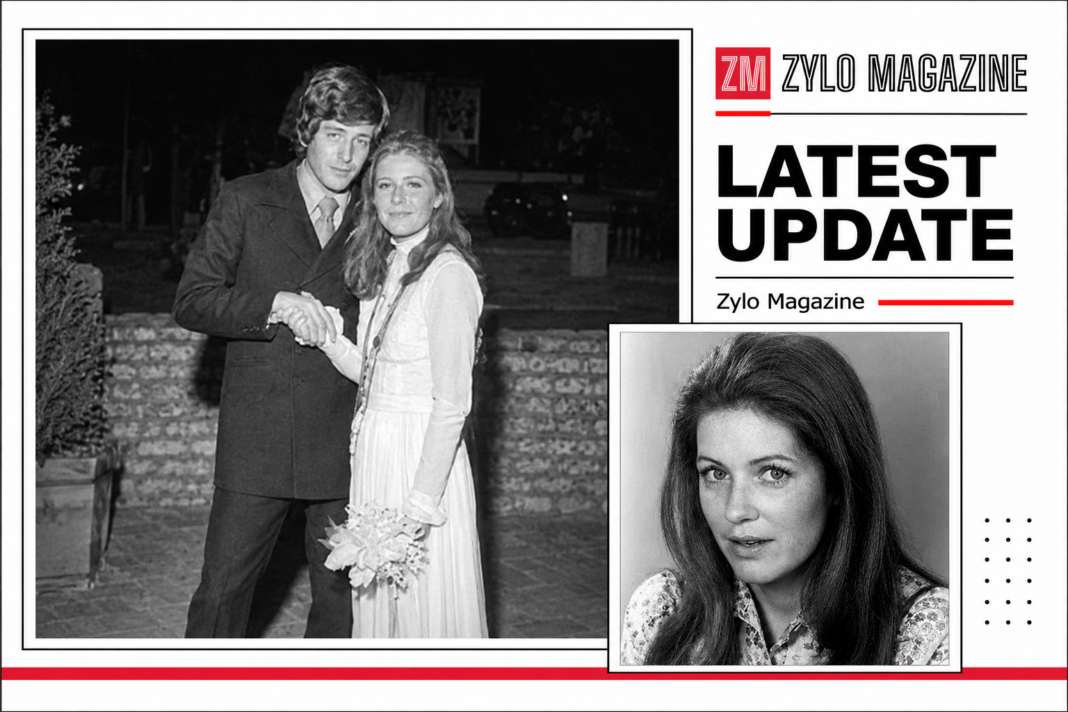
Michael Tell is often introduced with one striking fact: he was married to Academy Award-winning actress Patty Duke for only 13 days. Yet that unusual episode tells only a fraction of his story. Michael Tell was a concert promoter, newspaper publisher, longtime Las Vegas figure, and the biological father of actor Sean Astin. His life connected several very different worlds—the early rock-and-roll business, Las Vegas journalism, Hollywood celebrity culture, and the growth of Southern Nevada’s Jewish community. Tell died in 2025 at the age of 80, bringing renewed attention to a career that was much richer than his famous short-lived marriage. Understanding Michael Tell properly therefore requires looking beyond celebrity gossip. His own oral history, preserved by the University of Nevada, Las Vegas, reveals an ambitious young promoter who eventually left entertainment behind to devote decades to community journalism and his family newspaper.
Who Was Michael Tell?
Michael Tell, also known as Mike Tell, was an American concert promoter and newspaper publisher associated closely with Las Vegas, Nevada. To the general public, he became famous primarily because of his extremely brief marriage to actress Patty Duke and, decades later, the discovery that he was the biological father of actor Sean Astin.
But describing Tell merely as “Patty Duke’s ex-husband” gives a misleading impression of his life.
Long before and after that marriage, Tell had his own professional identity. He became involved in entertainment promotion while still young, ran a teenage nightclub in Las Vegas, moved into concert promotion, and eventually operated in Los Angeles. Later, he returned to Nevada and became the second-generation publisher of the Las Vegas Israelite, the newspaper founded by his family. UNLV’s Southern Nevada Jewish Community Digital Heritage Project records that Tell succeeded his parents, Jack and Beatrice Tell, in managing the publication.
The newspaper remained central to his life for decades. Following his death, Las Vegas Mayor Shelley Berkley credited Tell with almost single-handedly keeping the publication alive for many years so that the local Jewish community continued to have a newspaper focused on issues important to it.
That professional history matters because internet searches for Michael Tell frequently produce biographies dominated by Patty Duke and Sean Astin. Those relationships are important, but they should not erase his independent contribution to entertainment and local journalism.
Michael Tell’s Early Life and Family Background
Michael Tell was the youngest son of Jack and Beatrice Tell. His family background helps explain why journalism eventually became such a significant part of his adult life.
According to Tell’s 2018 oral-history interview with the University of Nevada, Las Vegas, his maternal grandparents came from Poland and settled in New Jersey, while his paternal family had roots in Austria and settled in New York City. Tell grew up within a Jewish family and had a bar mitzvah at a Conservative synagogue in New York.
His father, Jack Tell, had a background in the newspaper business. Michael recalled that Jack had worked in publicity and newspaper photography in New York before heading west.
When Michael was about 16, he accompanied his father to Nevada. Jack Tell was pursuing an opportunity involving the historic Territorial Enterprise. That venture did not become the family’s permanent newspaper home, but the move helped establish the Tells in Nevada.
The family eventually settled in Las Vegas. Jack worked for the Las Vegas Sun and later the Henderson Home News. In 1965, he established the Las Vegas Israelite, a publication that would eventually become inseparable from Michael Tell’s professional identity.
Interestingly, Michael claimed credit for suggesting the newspaper’s name. In his UNLV interview, he explained that he had been influenced by another Jewish publication using “Israelite” in its title.
The family newspaper was therefore not simply a job Michael happened to acquire later. Journalism was embedded in his formative years, even though his first major career would take him in another direction.
Michael Tell’s Surprising Start in the Entertainment Business
One of the most interesting aspects of Michael Tell’s biography is how young he was when he began working in entertainment.
Tell recalled that Las Vegas in 1961 had relatively few entertainment options designed specifically for teenagers. Rather than simply complaining about the situation, he saw a business opportunity.
He started a teen nightclub called the Twin Lakes Twist.
This was a remarkably entrepreneurial move for someone so young. Even more impressive was Tell’s ability to persuade established entertainers to participate.
In his oral history, Tell recalled approaching singer Bobby Darin and explaining that Las Vegas teenagers needed somewhere to go. According to Tell, Darin agreed to perform without charging him and helped connect him with Wayne Newton for another appearance.
Tell said the opening weekend was financially successful enough that he could help buy groceries for his family.
The story provides a useful insight into the person behind the later celebrity headlines. Tell appears to have developed his career not through formal corporate training but through initiative, persuasion, networking, and an instinct for what an audience wanted.
Those qualities soon pushed him beyond a local teenage nightclub.
From Teen Entrepreneur to Concert Promoter
The Twin Lakes Twist gave Michael Tell practical experience in attracting performers and audiences. He subsequently moved into larger-scale concert promotion.
Tell recalled promoting a James Brown event in Las Vegas and prominently displaying his own name on advertising for the show. That promotion attracted the attention of influential Los Angeles radio personality Sam Riddle, who encouraged him to pursue opportunities in Los Angeles.
Tell took the advice.
He established Mike Tell Productions in Los Angeles and spent roughly two decades involved in concert promotion. In his UNLV interview, Tell described himself as having become one of the larger concert promoters in the United States during that period. He also recalled working with artists including Jimi Hendrix and José Feliciano.
These statements are particularly useful because they come from Tell himself rather than later celebrity-biography sites recycling one another’s claims.
His career also demonstrates how different concert promotion was before digital ticketing, social media marketing, streaming analytics, and modern multinational touring companies transformed the industry. Promoters needed local knowledge, radio relationships, venue access, advertising instincts, artist connections, and considerable tolerance for financial risk.
Tell appears to have thrived in that environment for years.
But eventually, a dramatic experience and a family loss helped convince him to leave the concert business.
Why Michael Tell Left Concert Promotion
Michael Tell’s transition from entertainment to journalism was not simply a conventional career change.
In his oral history, he described a disturbing incident surrounding what became his final concert promotion. Tell was working on a show involving Al Green and The Dramatics in Bakersfield, California, when problems involving the performers and financial backers escalated.
Tell said he was threatened and held at gunpoint during the dispute.
At approximately the same period, his father died.
The combination of personal danger and family responsibility appears to have changed Tell’s priorities. His mother needed support, and the family newspaper needed attention.
Rather than remaining in the entertainment industry where he had spent much of his young adult life, Tell returned to Las Vegas in 1979 and became increasingly involved with the Las Vegas Israelite.
This was a major turning point.
The career for which he would ultimately be remembered within Las Vegas was beginning.
Michael Tell and the Las Vegas Israelite
The Las Vegas Israelite was founded by Tell’s father, Jack, in 1965. When Michael returned to Las Vegas, the publication reportedly had circulation of roughly 2,000.
Tell initially concentrated on circulation, attempting to put the newspaper where potential readers would encounter it. He later became increasingly responsible for publishing and editorial content.
More importantly, he adjusted the newspaper to a changing community.
Las Vegas was growing rapidly, and so was its Jewish population. Tell observed that readers could obtain national and international Jewish news through larger media organizations. A small community newspaper could provide something those outlets could not: detailed coverage of Jewish life in Las Vegas.
That distinction became central to his publishing philosophy.
Instead of trying to compete with major news organizations on broad international coverage, the Las Vegas Israelite increasingly emphasized local organizations, synagogues, events, community personalities, and issues affecting Jewish residents of Southern Nevada.
There is a broader media lesson in that strategy.
Small publications rarely win by imitating national media. Their competitive advantage is proximity. They can cover the people, institutions, events, and relationships that are too specialized for larger outlets.
Tell recognized that advantage long before “hyperlocal journalism” became a common media-industry term.
Michael Tell’s Role in Las Vegas Jewish Community Life
Tell’s decades with the newspaper made him more than a publisher. He became a chronicler of the transformation of Jewish life in Southern Nevada.
When his family arrived, Las Vegas had a much smaller population and a comparatively limited Jewish institutional infrastructure. Over the following decades, the metropolitan area expanded enormously, bringing new congregations, organizations, religious movements, businesses, and community networks.
Tell’s newspaper recorded that growth.
His oral history also provides an interesting example of how a local newspaper can unexpectedly influence community development.
Tell recalled publishing an advertisement in the early 1990s connected with High Holy Day services at the Aladdin hotel and using the word “Lubavitch” in the advertisement. According to his account, the advertisement helped attract attention within the Chabad-Lubavitch movement and became part of the circumstances surrounding Rabbi Shea Harlig’s arrival in Las Vegas.
Whether viewed as a publishing anecdote or a piece of local religious history, the story illustrates something important about community newspapers: their influence is not always measured by circulation.
A publication with a relatively small audience can have a substantial effect if the right people read it.
Michael Tell and Patty Duke: The 13-Day Marriage
Despite his professional accomplishments, the reason millions of people encountered Michael Tell’s name was entirely different.
He briefly married actress Patty Duke in 1970.
Duke was already a major celebrity. As a teenager, she had won the Academy Award for Best Supporting Actress for her portrayal of Helen Keller in The Miracle Worker. She later became a television star through The Patty Duke Show and continued acting throughout her life.
Her personal circumstances around 1970 were complicated.
Duke had been romantically connected with several men, including actor John Astin and Desi Arnaz Jr. When she became pregnant, uncertainty surrounded the identity of the child’s biological father.
Michael Tell entered that story at an extraordinary moment.
Duke and Tell married in Las Vegas in June 1970. The marriage lasted only 13 days before being annulled.
The brevity of the marriage understandably became irresistible material for celebrity biographies.
But it is important not to exaggerate what those 13 days represented. Tell and Duke did not have a lengthy conventional marriage followed by a gradual breakdown. Their union took place during an unusually complicated period in Duke’s personal life and ended almost immediately.
Its historical significance comes largely from what happened afterward.
Why Did Michael Tell and Patty Duke’s Marriage Last Only 13 Days?
Readers frequently ask why the marriage ended so quickly.
The available record suggests that the marriage was connected closely to Duke’s pregnancy and the uncertainty surrounding the child’s paternity rather than representing the culmination of a long romantic partnership.
Duke later described the circumstances in her own way, and various retellings have added dramatic interpretations over the decades. However, readers should be careful about treating every detail repeated online as established fact.
What can be said confidently is straightforward: Michael Tell and Patty Duke married in June 1970; their marriage lasted approximately 13 days; and it ended in annulment.
That brief legal relationship would become far more significant after Duke gave birth.
Sean Astin and the Long-Running Paternity Question
Patty Duke’s son Sean Astin was born on February 25, 1971.
Sean would eventually become a successful actor in his own right, appearing in films and television projects including The Goonies, Rudy, and The Lord of the Rings trilogy.
But the question of his biological father remained complicated for years.
John Astin, whom Duke married in 1972, became Sean’s adoptive father and played the primary paternal role during his childhood. Sean consequently grew up using the Astin surname.
At another point, Duke told Sean that Desi Arnaz Jr. was his biological father. Sean developed a relationship with Arnaz as well.
The situation might have remained uncertain indefinitely if not for a later encounter involving a member of Michael Tell’s family.
According to accounts from both Michael Tell and biographies of Sean Astin, Tell’s niece encountered Sean and raised the possibility that Michael was actually his biological father.
That prompted genetic testing.
The results identified Michael Tell as Sean Astin’s biological father.
The discovery transformed Michael Tell from a little-remembered figure in Patty Duke’s marital history into an important part of Sean Astin’s family story.
Michael Tell’s Relationship With Sean Astin
The DNA result could easily have produced a story dominated by conflict. Instead, one of the more meaningful elements of Sean Astin’s family history is his broad view of fatherhood.
Sean did not treat the discovery of his biological relationship with Michael Tell as requiring him to erase his relationships with the other men who had played paternal roles in his life.
John Astin remained the father who raised and adopted him. Desi Arnaz Jr. had also occupied an important place in his personal history. Duke’s later husband Michael Pearce became another father figure.
Michael Tell, meanwhile, became the biological father Sean had discovered as an adult.
Tell said in his 2018 UNLV interview that he and Sean got along well and spoke proudly of Sean and his three daughters.
Sean himself has publicly described having multiple father figures rather than forcing his family experience into a simple biological-versus-adoptive definition.
That distinction is one of the most useful insights in Michael Tell’s story.
DNA answered the biological question, but it did not invalidate the relationships created through parenting, adoption, affection, and experience.
Michael Tell Was More Than Sean Astin’s Biological Father
Search-engine results can unintentionally flatten a person into whatever fact attracts the most clicks.
In Michael Tell’s case, that has often produced three descriptions:
“Patty Duke’s ex-husband.”
“Sean Astin’s biological father.”
“The man married for 13 days.”
All are relevant. None is sufficient.
Tell had already created a career in entertainment before his brief connection to Duke. He spent decades publishing a community newspaper afterward. He witnessed Las Vegas evolve from a comparatively small desert city into a major metropolitan area and international entertainment destination.
His life therefore offers an unusual intersection of American cultural history.
Through concert promotion, he participated in the rapidly changing popular-music industry of the 1960s and 1970s.
Through the Las Vegas Israelite, he participated in local journalism and documented the growth of Southern Nevada’s Jewish community.
Through Patty Duke and Sean Astin, he became connected to Hollywood history.
Very few people have biographies touching all three worlds.
Michael Tell’s Approach to Local Journalism
Tell’s newspaper career deserves particular attention because it helps explain why he remained important in Las Vegas long after his concert-promotion years ended.
Community newspapers operate differently from national publications. Their value frequently lies less in breaking major international stories and more in maintaining a historical record of everyday community life.
Births, deaths, religious celebrations, organizational changes, local controversies, community leaders, charitable efforts, and cultural events may receive little attention from major media organizations. A specialized publication preserves those stories.
Tell increasingly oriented the Las Vegas Israelite toward precisely that role.
His work also spanned an extraordinarily difficult period for print journalism. Newspapers across the United States faced competition from television, digital media, social platforms, declining advertising revenue, and changing reader habits.
Yet the Las Vegas Israelite survived.
After Tell’s death, the newspaper itself described his publishing tenure as lasting about four decades and emphasized that the Tell family legacy was continuing through another generation.
That continuity may ultimately be a more substantial measure of his professional legacy than celebrity attention.
Michael Tell and the Changing Face of Las Vegas
Tell had an unusual perspective on Las Vegas because he experienced the city across radically different eras.
He remembered the Las Vegas of his youth as a relatively small community. By the time of his later life, the metropolitan region had expanded dramatically.
That growth changed his newspaper as well.
A larger population meant a larger and more diverse Jewish community, more congregations, more organizations, and more events requiring coverage.
It also meant that Las Vegas was no longer simply the compact entertainment town Tell had known as a teenager.
In his 2018 oral history, Tell expressed affection for both versions of the city—the smaller Las Vegas of his youth and the much larger city it became.
His biography consequently doubles as a small piece of Las Vegas history.
He did not merely live there. He promoted entertainment there, published community news there, watched its institutions develop, and documented some of those changes through his newspaper.
Michael Tell’s Death and Legacy
Michael Tell died in April 2025 at the age of 80. The Las Vegas Review-Journal reported his death on April 9 and remembered him not primarily as a celebrity spouse, but as a Nevada newsman, former concert promoter, and longtime steward of the Las Vegas Israelite.
That framing is important.
Outside Nevada, Tell may always be best known for Patty Duke and Sean Astin. Inside the community where he spent much of his life, however, his reputation was tied much more closely to journalism and Jewish community life.
His death did not end the publication’s story. The Las Vegas Israelite continues, with its website explicitly presenting the newspaper as an ongoing Tell family legacy.
That makes Tell’s legacy tangible rather than merely biographical.
The institution he spent decades maintaining remains connected to the community it was created to serve.
What Michael Tell’s Story Teaches Us About Fame
There is a broader reason Michael Tell remains an interesting subject.
His life demonstrates the difference between being famous and doing consequential work.
The event that made Tell internationally searchable lasted less than two weeks. His work in journalism lasted decades.
That imbalance is revealing.
Search engines naturally emphasize the extraordinary: a 13-day celebrity marriage, a disputed paternity story, and famous Hollywood names. Slow, persistent community work generates fewer sensational headlines.
Yet Tell spent much more of his life producing concerts and publishing news than being Patty Duke’s husband.
A complete biography therefore requires changing the question from “Why was Michael Tell famous?” to “What did Michael Tell actually spend his life doing?”
Once framed that way, the answer becomes considerably more interesting.
He was an entrepreneurial teenager who created entertainment for young Las Vegas residents, a concert promoter who entered the Los Angeles music business, a son who returned home when his family needed him, a publisher who helped sustain a specialized newspaper, and a biological father whose relationship with his famous son was discovered only years later.
Common Michael Tell Claims That Should Be Treated Carefully
Anyone researching Michael Tell online will encounter surprisingly specific claims about his net worth, physical measurements, education, private relationships, and lifestyle.
Many are repeated without strong sourcing.
This is a common problem with celebrity-adjacent biographies. One website publishes an estimate, another repeats it, and eventually repetition gives an unsupported statement the appearance of fact.
Michael Tell was not a public-company executive whose compensation and holdings were routinely disclosed. Consequently, precise claims about his personal fortune should be treated cautiously unless supported by credible financial documentation.
The same principle applies to highly specific personal details that cannot be traced to interviews, archival records, established publications, or family statements.
Fortunately, Tell left behind something much more useful than speculative celebrity profiles: an extensive first-person oral history held by UNLV Special Collections. That interview provides direct information about his family, early entertainment ventures, concert career, return to Las Vegas, publishing work, Jewish community involvement, and relationship with Sean Astin.
For anyone researching Michael Tell seriously, primary and established local sources are therefore much more valuable than recycled celebrity-blog claims.
Why Are People Still Searching for Michael Tell?
Interest in Michael Tell comes from several overlapping audiences.
Fans of Patty Duke encounter him while exploring the actress’s complicated personal history. Sean Astin fans discover Tell when researching the actor’s parents and childhood. Film audiences interested in The Lord of the Rings, Rudy, or The Goonies may follow that same family-history trail.
Meanwhile, people researching Las Vegas history can encounter an entirely different Michael Tell: the concert promoter and newspaper publisher.
His death in 2025 also generated renewed interest and made older articles describing him simply as a private, living former celebrity spouse outdated.
The enduring curiosity ultimately comes from the unusual structure of his life. Tell stood close enough to celebrity culture to become part of Hollywood history without actually building his identity as a Hollywood celebrity.
That made him simultaneously famous and relatively unknown.
Frequently Asked Questions About Michael Tell
Who was Michael Tell?
Michael Tell was an American concert promoter and longtime Las Vegas newspaper publisher. He became widely known because of his brief 1970 marriage to actress Patty Duke and was later identified through genetic testing as the biological father of actor Sean Astin. He also spent decades running the Las Vegas Israelite, a newspaper serving Southern Nevada’s Jewish community.
Was Michael Tell really Sean Astin’s biological father?
Yes. Sean Astin grew up with uncertainty surrounding his biological paternity and was raised and adopted by actor John Astin. Genetic testing conducted when Sean was an adult identified Michael Tell as his biological father. Sean nevertheless maintained meaningful relationships with the different father figures in his life.
How long were Michael Tell and Patty Duke married?
Michael Tell and Patty Duke were married for approximately 13 days in 1970 before their marriage was annulled. Although extremely brief, the marriage became historically significant because Duke was pregnant with Sean Astin, who was later confirmed to be Tell’s biological son.
What did Michael Tell do for a living?
Tell had two major professional chapters. As a young man, he operated a teen nightclub and became a concert promoter, eventually working from Los Angeles. In 1979, he returned to Las Vegas and became increasingly involved in the family-owned Las Vegas Israelite, where he spent decades in publishing and community journalism.
Is Michael Tell still alive?
No. Michael Tell died in April 2025 at the age of 80. His death was reported by the Las Vegas Review-Journal, which highlighted his decades in Nevada journalism as well as his earlier career promoting concerts.
Conclusion: Remembering the Full Michael Tell Story
Michael Tell’s life cannot be adequately summarized by a 13-day marriage. His brief union with Patty Duke and his biological connection to Sean Astin explain why his name became internationally recognizable, but his larger story belongs equally to Las Vegas. Tell went from an ambitious teenage nightclub operator to a concert promoter and ultimately to a newspaper publisher who spent decades documenting and serving Southern Nevada’s Jewish community. His 2018 oral history provides a particularly valuable record of that journey, revealing a life shaped by entrepreneurship, family responsibility, entertainment, journalism, and dramatic changes in Las Vegas itself.
The most accurate final assessment is therefore simple: Michael Tell was more than a celebrity footnote. Hollywood made his name searchable, but his long career in music promotion and community publishing provides the deeper—and ultimately more meaningful—story of who he was.
Continue Exploring Our Latest Article: Hart Violet Braun: Age, Parents, Family, Biography & Verified Facts