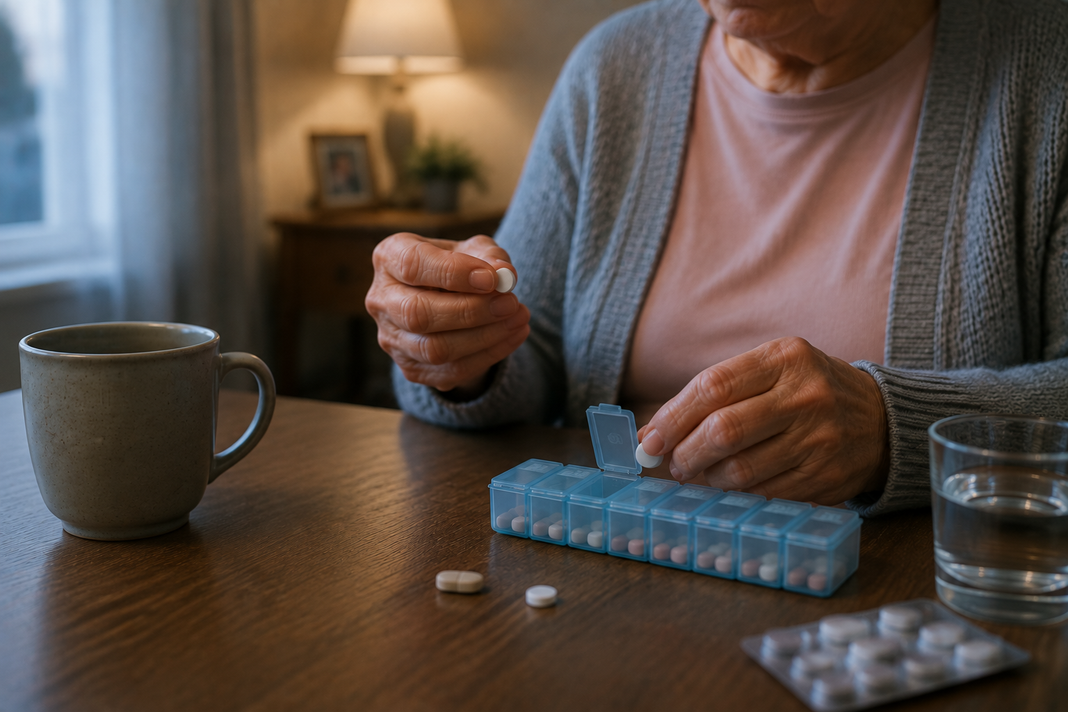
One of the most dangerous parts of aging at home has little to do with a stumble or a sudden illness. It is the daily work of managing medications, several of them, on different schedules, at different times of day. That task tends to grow harder exactly as the list of prescriptions grows longer.
Medications Are a Bigger Risk Than They Seem
Older adults often take a handful of prescriptions at once, each with its own timing and rules. A dose missed, a dose taken twice, or two drugs that should not be combined can do real harm, and these mistakes are among the leading reasons seniors end up in the emergency room. The risk climbs at moments of change, above all in the first days after a hospital stay, when the regimen has just been adjusted and the instructions are fresh, unfamiliar, and easy to get wrong. Managing all of it alone, or with only occasional help, leaves a great deal of room for error. The people most affected are often the least able to keep a complicated schedule straight on their own.
Consistency Is the Real Safeguard
The solution is not complicated, but it is relentless. It means the right medications at the right times, every single day, with someone paying attention to how the person responds and noticing side effects or confusion early. Reminders on a phone or a note on the fridge help only if a person reliably follows them, which is exactly what becomes difficult with age or memory loss. Steady daily support closes that gap. This is one of the practical strengths of Compassionate 24/7 Live-In Home Care Services in Greensboro, NC and similar arrangements, where a consistent caregiver is on hand to keep the routine on track rather than leaving it to chance.
A Familiar Caregiver Catches What Changes
Continuity adds a second layer of protection. A caregiver who is present day after day learns a person’s normal, their usual energy, appetite, and clarity, and is far more likely to notice when a new medication is causing a problem. That early notice can mean a quick call to the doctor instead of a trip to the hospital. A rotating cast of unfamiliar helpers cannot build that kind of baseline, which is part of why consistency matters as much as coverage does.
Support That Works With the Medical Team
None of this replaces the professionals directing care. Good in-home support carries out the plan a doctor and pharmacist set, keeps clear notes, and flags concerns to the family and the medical team rather than making decisions on its own. Providers with clinical oversight tend to treat medication support as a coordinated part of care rather than a simple reminder. Anyone managing a complex regimen should keep their physician and pharmacist closely involved, since they direct what the daily support then carries out safely.
The repetitive job of getting medications right, day after day, is one of the most important safeguards in aging at home. It rarely draws attention, but reliable daily help with it prevents many of the emergencies that do, and much of the harm that follows them.