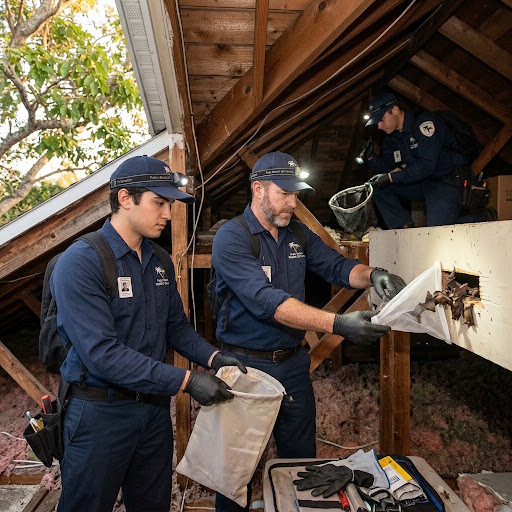
Bats might seem harmless from a distance, fluttering across the sky at dusk, but once they take up residence inside your home, the story changes fast. Florida’s warm climate and abundant insect population make the state a haven for several bat species, and unfortunately, attics and rooflines often look like perfect shelter to them. What starts as a few bats squeezing through a small gap can quickly turn into a full-blown colony, bringing noise, odor, and health risks along with it.
Homeowners across Palm Beach County are discovering just how disruptive bats can be. Scratching in the walls at night, a persistent musty smell, and unexplained stains on ceilings are all telltale signs that bats have moved in. While it might be tempting to handle the situation with a DIY approach, bats are protected under Florida law, and improper removal methods can lead to fines, injury, or an even bigger infestation.
This post breaks down why bat problems escalate so quickly, the risks they pose to your home and family, and how professional intervention makes all the difference.
Why Do Bats Choose Attics and Rooflines?
Bats are drawn to spaces that mimic their natural roosting environments: caves, hollow trees, and rock crevices. Attics offer the same qualities bats look for, namely warmth, darkness, and protection from predators. A gap as small as three-eighths of an inch is all a bat needs to squeeze through, which means even well-maintained homes are vulnerable.
Roof vents, soffits, chimneys, and gaps around fascia boards are common entry points. Once inside, bats establish a roost and often return to the same location year after year, sometimes bringing more bats with them each season.
What Are the Risks of Leaving a Bat Colony Untreated?
A small bat population might seem manageable at first, but colonies grow rapidly, and so do the risks associated with them.
Health Concerns for Your Family
Bat droppings, known as guano, can harbor a fungus that causes histoplasmosis, a respiratory illness that spreads when spores become airborne and are inhaled. Bats can also carry rabies, and while transmission to humans is rare, any direct contact with a bat should be treated as a potential exposure requiring medical attention.
Structural Damage Over Time
Guano and urine accumulation can seep into insulation, drywall, and wood framing, leading to costly repairs. The weight of a large colony’s waste can also compromise ceiling structures if left unaddressed for extended periods.
Unpleasant Odors and Noise
The smell of accumulated guano is difficult to ignore and can permeate through vents into living spaces. Combined with the scratching, squeaking, and fluttering sounds bats make at dawn and dusk, an infestation can quickly disrupt a household’s peace.
Why DIY Bat Removal Often Backfires
Many homeowners attempt to seal entry points themselves once they notice bat activity, but this approach frequently causes more harm than good. Bats that are sealed inside without a proper exclusion process will search for alternative ways out, sometimes chewing through drywall or ductwork to escape. Trapped bats can also die inside wall cavities, creating additional odor and pest issues.
Florida law also protects bats from being harmed, trapped, or removed during maternity season, which typically runs from April through August. Attempting exclusion during this window can separate mothers from pups, leading to unintended harm and prolonging the infestation as young bats become trapped inside.
What Makes Professional Bat Exclusion More Effective?
Successful bat removal relies on a strategy called exclusion rather than extermination. This method allows bats to leave on their own while preventing them from re-entering.
Getting rid of unwanted attic guests for good starts with a property-wide inspection that identifies every possible entry point, not just the obvious ones. Palm Beach Wildlife Services approaches every case with this level of thoroughness, using one-way exclusion devices that let bats exit at night to feed and prevent their return. Once every bat has left the roost, technicians seal all entry points with durable materials designed to withstand Florida’s humidity and heat.
Beyond exclusion, a complete Bat Removal service typically includes guano cleanup and sanitation, addressing the health hazards left behind after the colony has gone. This step matters as much as the exclusion itself, since lingering waste continues to pose respiratory risks and odor problems long after the bats are gone.
How Palm Beach Wildlife Services Handles Every Case
Every property presents a different challenge, whether it’s a single bat that snuck into a garage or an established colony numbering in the hundreds. Palm Beach Wildlife Services builds a tailored plan for each situation, combining humane exclusion techniques with long-term prevention measures like sealing, screening, and structural repairs.
Technicians are trained to identify subtle signs of bat activity that homeowners often miss, such as small droppings along exterior walls or rub marks near entry points caused by the oils on a bat’s fur. This attention to detail helps prevent repeat infestations, giving homeowners lasting peace of mind rather than a temporary fix.
Protect Your Home Before the Problem Grows
A bat infestation rarely stays small for long. What begins as a minor nuisance can escalate into a health hazard and a costly repair job if left unaddressed. Recognizing the early warning signs, from strange noises in the attic to a lingering musty odor, gives homeowners the best chance to resolve the issue before it spreads.
Palm Beach Wildlife Services offers experienced, humane solutions designed to protect both your home and the local bat population. If you suspect bats have made a home in your attic, reaching out for a professional inspection is the safest and most effective next step toward restoring your peace of mind.