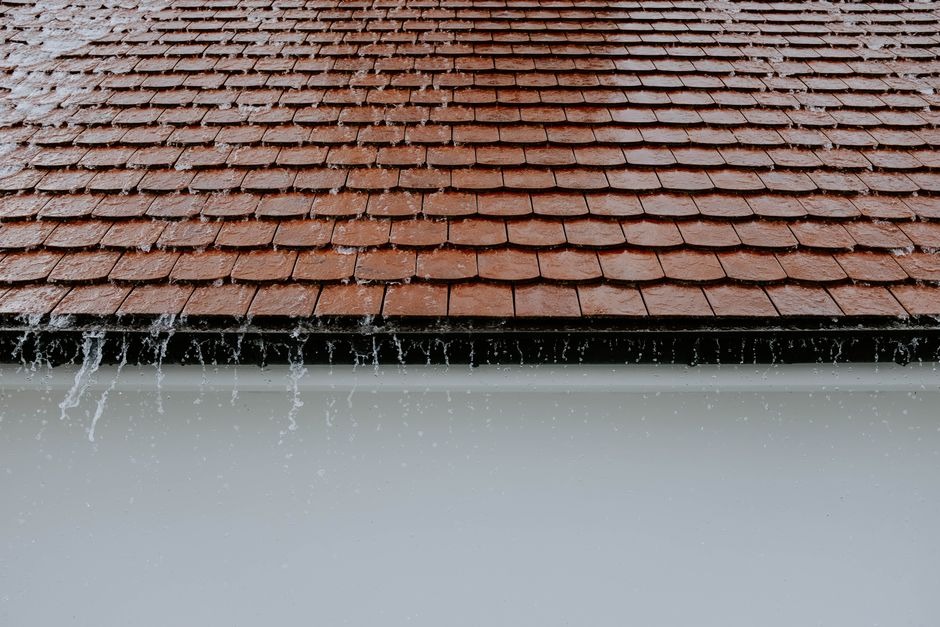
Gutters are easy to overlook because, when they are doing their job properly, very little happens. Rain reaches the roof, flows into the gutters, travels through the downspouts, and moves safely away from the house. Problems begin when that simple journey is interrupted. Water can start collecting around the foundation, running down exterior walls, damaging landscaping, or reaching areas that were never designed to stay wet. A dependable gutter system is therefore much more than a finishing detail along the roofline. It is an important part of how a home manages rainwater and protects itself from gradual moisture damage.
Gutters Control Where Roof Water Goes
A roof collects a surprising amount of water during a storm. Without a reliable drainage path, that runoff falls directly around the perimeter of the house.
Over time, repeated exposure can saturate nearby soil, contribute to erosion, splash dirt against exterior surfaces, and create persistent moisture around the foundation. Water may also reach fascia boards, siding, windows, and other vulnerable areas.
Gutters provide a controlled route instead.
They collect runoff at the roof edge and move it toward downspouts, where it can be discharged away from the structure. The concept is simple, but its importance becomes obvious once the system stops working.
A gutter does not need to collapse completely to cause trouble. Poor slope, blockages, leaking joints, or badly positioned downspouts can all interfere with drainage while the system still appears reasonably intact from the ground.
Installation Determines How Well the System Performs
Good materials cannot compensate for poor installation.
Gutters need an appropriate slope so water travels toward the downspouts rather than sitting inside the channel. Fasteners need to keep the system securely positioned, while downspouts must be placed where they can handle runoff effectively.
The number of joints can matter as well.
With seamless gutter installation, long gutter sections are formed with fewer seams than conventional sectional systems. Reducing the number of joints can mean fewer potential locations for leaks to develop along the gutter run.
Installation also needs to account for the roof itself. Its size, pitch, drainage areas, and expected rainfall all influence how much water the gutter system must manage.
A well-installed system is not simply attached to the roofline. It is designed so water has a clear route from the roof to a safe discharge point.
Small Warning Signs Can Reveal Bigger Drainage Problems
Gutter problems often provide clues before serious damage develops.
Water overflowing during rainfall is one of the clearest. It may indicate a blockage, insufficient capacity, poor slope, or a downspout that is not draining correctly.
Sagging sections deserve attention too. So do gutters pulling away from fascia boards, visible corrosion, peeling exterior paint, and persistent water stains.
The ground can provide additional evidence.
Soil erosion beneath a roof edge, puddles near the foundation, or washed-out landscaping around downspouts may indicate that runoff is not being directed effectively.
Inside the house, unexplained dampness or musty odors in lower areas should never automatically be blamed on gutters, but exterior drainage is worth investigating as part of the larger moisture picture.
Catching these signs early gives homeowners a chance to correct the drainage problem before repairing the damage it eventually creates.
Drainage Should Protect the Foundation Too
A gutter system is only as useful as the place where its water ends up.
Sending runoff through a downspout and depositing it immediately beside the foundation defeats much of the purpose. The water has left the roof, but it is still concentrated against the house.
Proper foundation drainage and downspout planning focus on carrying roof runoff away from the structure rather than allowing it to saturate the surrounding soil.
This is why downspout extensions, appropriate grading, and drainage routes deserve attention alongside the gutters themselves.
After heavy rain, walking around the house can reveal a great deal. Look for pooling water, erosion, or areas where runoff travels back toward the foundation.
The complete system should move water through a logical path: off the roof, into the gutter, through the downspout, and safely away from the building.
Material Choices Affect More Than Appearance
Gutters are available in several materials, and the right choice depends on budget, maintenance expectations, weather exposure, and the character of the home.
Aluminum remains common because it is lightweight, resistant to rust, and available in many finishes. Steel offers strength but requires adequate protection against corrosion. Copper can last for many years and develops a distinctive appearance, although its higher cost makes it a more specialized choice.
Vinyl can offer an economical alternative, but durability may become a concern under demanding weather conditions.
Rather than choosing solely on upfront price, think about how the material will perform over time.
A less expensive system that requires frequent repairs or early replacement may eventually cost more than an option with a higher initial price.
The best choice balances durability, maintenance, appearance, and the conditions the gutter system will regularly face.
Maintenance Keeps a Good System Working
Even a properly installed gutter system cannot perform well when packed with leaves, twigs, roofing debris, or other material.
Blockages prevent water from reaching the downspouts and can cause it to overflow exactly where the gutters were intended to provide protection.
Regular gutter and downspout maintenance can help preserve drainage and reveal developing problems such as loose sections, standing water, or damaged components.
Inspection frequency depends partly on the surroundings. Homes with substantial tree coverage may require more attention because leaves and other debris accumulate faster.
Gutter guards can reduce certain types of buildup, but they do not make the system permanently maintenance-free. Fine debris can still collect, and the gutters themselves should still be inspected periodically.
The important thing is consistency. Clearing a small blockage today is easier than repairing moisture damage later.
Gutters Work Alongside the Rest of the Exterior
A home’s exterior is a collection of connected systems rather than independent pieces.
The roof sheds water. Gutters collect it. Downspouts move it toward the ground. Grading and drainage then carry it away from the structure.
If one part fails, another may absorb the consequences.
For example, a perfectly functional roof can still experience problems around its edges when clogged gutters allow water to back up. Good gutters cannot fully protect a foundation if downspouts empty into poorly graded soil that directs water straight back toward the house.
This is why gutter condition deserves attention during other exterior projects.
Roof replacement, siding work, landscaping changes, and drainage improvements are all useful opportunities to consider whether the existing gutter system still fits the home.
Looking at the exterior as one water-management system can reveal problems that are easy to miss when each component is considered separately.
Preventive Attention Is Usually the Cheaper Option
Gutter maintenance rarely feels urgent when everything appears dry.
That changes quickly once water begins damaging fascia, staining siding, eroding soil, or contributing to moisture around the foundation.
The frustrating part is that many of these problems develop gradually.
A loose fastener, small obstruction, or poorly positioned downspout may seem insignificant until repeated storms turn it into a much larger repair.
That makes preventive attention valuable. Inspect the system periodically, watch how it behaves during rainfall, keep drainage paths clear, and address visible defects before they spread.
Gutters may never become the most exciting feature of a house, and that is perfectly fine. Their value comes from quietly doing something far more important: controlling rainwater before it has the opportunity to become a problem.
When the system is properly installed, maintained, and connected to sensible drainage, it helps protect the roofline, exterior surfaces, landscaping, and foundation—all while asking for relatively little attention in return.