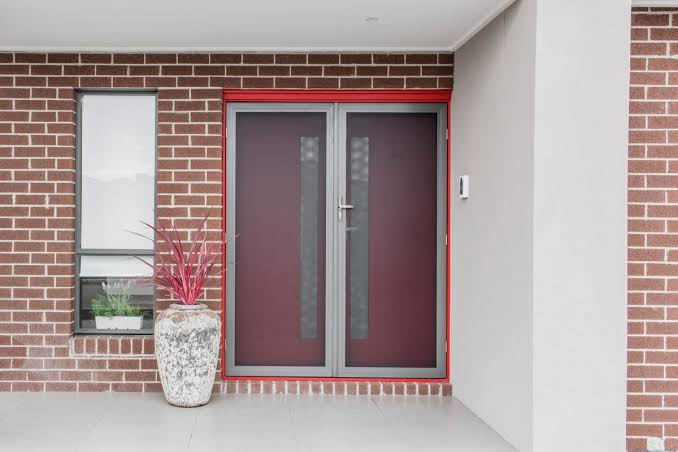
You want to leave your front door open on a warm afternoon, enjoy some fresh air, and keep the insects outside. A screen door sounds like the obvious solution. But once you start shopping, you’ll notice something confusing: safety doors and security doors often look remarkably similar.
Both can feature metal frames, diamond grilles, and mesh panels. Both can improve the everyday comfort of your home. Yet they don’t necessarily offer the same level of protection.
Understanding that difference before spending your money can save you from buying a door that doesn’t quite meet your expectations.
Why Safety Doors and Security Doors Aren’t the Same
The biggest difference comes down to what each door is designed and tested to do.
A safety door typically provides a physical barrier at an entrance while allowing airflow. It can help keep insects outside, discourage pets from wandering through an open doorway, and provide some separation between your living space and the outdoors.
A security door is specifically designed to resist attempts at forced entry. To qualify as an Australian Standards-compliant security screen door, it must meet relevant performance and testing requirements.
That distinction matters because a sturdy-looking diamond grille doesn’t automatically make a door suitable for serious security purposes.
Think about your main reason for buying one. If you’re mostly interested in ventilation and keeping flies out of the kitchen, a safety door might do the job perfectly well. If protecting your entrance against forced entry is the priority, you’ll want to investigate certified security doors instead.
Why the Right Door Depends on Your Household
A door that works beautifully for one household might be frustrating for another.
Consider a family with two energetic dogs. A standard flyscreen might not survive constant scratching, particularly when the dogs spot someone approaching the front gate.
In that situation, a safety door with suitable pet-resistant mesh could make everyday life easier.
Now picture a household where privacy matters more. Perhaps the front entrance faces a busy footpath, and people passing by can see directly into the lounge room.
Privacy mesh could be useful, although its effectiveness depends on lighting conditions and the particular material used.
For homes with young children, the way a door closes and latches deserves attention too. A door closer can prevent repeated slamming, while properly positioned hardware can make daily operation more convenient.
None of these features should be mistaken for childproofing or certified resistance to forced entry. They’re practical benefits that need to be considered separately.
What to Check Before Choosing an Installer
Even a well-made door can become annoying when it isn’t installed properly.
You might notice the door scraping against the threshold, rattling whenever the wind picks up, or refusing to latch unless you give it an extra push.
These problems often point to poor alignment, unsuitable fittings, or installation issues.
When comparing safety door installers in Sydney, ask how they’ll assess your existing doorway before recommending a particular design.
A proper assessment should consider the opening’s dimensions, the condition of the surrounding frame, and the direction the door needs to swing.
It’s also worth discussing the following details.
Frame Fit and Alignment
Older homes don’t always have perfectly square door openings. A professional measurement helps identify uneven surfaces that might affect the installation.
A close-fitting frame can also reduce unwanted gaps around the edges.
Hinges and Closing Mechanisms
Hinges should support the door’s weight and allow smooth movement. A suitable closer helps the door shut without being slammed.
Test the closing action before the installer finishes. You shouldn’t have to wrestle with your new door every time you carry groceries inside.
Locks and Latches
Ask what locking hardware comes with the door and what level of protection it’s intended to provide.
If you’re purchasing a certified security door, confirm that the complete product and its installation meet the relevant standards. A lock on its own doesn’t establish that compliance.
The Australian Standards Question Worth Asking
One of the easiest mistakes is assuming every metal screen door provides certified security.
In Australia, AS 5039.1:2023 covers classification and performance requirements for security door and window screens. AS 5039.2:2024 addresses their installation.
These standards help distinguish tested security products from ordinary barrier or safety screens.
When a supplier describes a product as a security door, ask for evidence of compliance with the applicable standards.
You can also ask about testing for impact resistance, attempts to lever the door open, and resistance to cutting or probing.
A decorative safety door isn’t necessarily required to pass those same tests. That doesn’t make it a poor purchase. It simply means you should understand its intended purpose.
Paying more for an attractive grille won’t automatically deliver higher security.
Don’t Forget About Sydney’s Weather
Sydney homes experience everything from humid summer afternoons to heavy rain and salty coastal air.
Those conditions can influence how your door looks and performs over time.
For properties closer to the coast, corrosion resistance deserves particular attention. Ask about frame finishes, mesh materials, and the suitability of exposed fittings for coastal conditions.
Powder-coated aluminium is a common frame option, while different mesh materials offer different levels of durability and maintenance requirements.
Regular cleaning matters as well.
Salt deposits and dirt can accumulate around frames and hinges. Gentle cleaning according to the manufacturer’s instructions can help maintain the finish and keep moving parts operating properly.
Avoid assuming every metal component is rustproof simply because the door is marketed as weather-resistant.
How Much Privacy Do You Actually Need?
Mesh selection often receives less attention than the frame design, but it can make a considerable difference.
Traditional flywire provides ventilation and insect protection, although people may still be able to see inside.
Privacy mesh can restrict visibility from certain angles and under certain lighting conditions. However, privacy performance may change at night when indoor lights are switched on.
Pet-resistant mesh, meanwhile, is designed to cope better with scratching and everyday animal activity than standard flywire.
Before deciding, consider where the door faces and how you’ll use it.
A side entrance opening into a private courtyard has different needs from a front entrance overlooking a busy street.
Questions to Ask Before Accepting a Quote
A quote should tell you more than the final price.
Find out whether it includes measuring, installation, hardware, and any necessary adjustments to the existing doorway.
Ask about the warranty, particularly what it covers regarding workmanship, finishes, and mechanical components.
You should also clarify whether the quoted product is a safety door or a standards-compliant security door.
Another useful question is what happens if the door doesn’t close properly after installation. Knowing who handles adjustments can prevent an irritating disagreement later.
Finally, request an explanation of the available mesh and colour options. A small difference in material or finish may be more relevant to your household than an elaborate decorative pattern.
Choose the Door for the Job You Need Done
Buying a new screen door shouldn’t require guesswork.
Start with the problem you’re trying to solve. Maybe you want better airflow without inviting mosquitoes inside. Perhaps your pets keep damaging the existing flyscreen, or you want a more attractive entrance that offers a practical everyday barrier.
A suitable safety door may address those concerns without the expense of a higher-security product.
But if resistance to forced entry is your main concern, look for a properly tested and installed security door rather than relying on appearance alone.
The right choice is the one that suits your doorway, your household, and the level of protection you actually need.