Bathroom design has moved beyond simple glass enclosures and traditional metal frames. Homeowners are increasingly exploring shower doors with bold geometric details, dark finishes, and architectural elements that make the shower area a visual feature rather than just a functional space. One design gaining attention is the industrial-inspired Grid pattern framed shower door, which combines transparent glass with distinctive lines and structured framing.
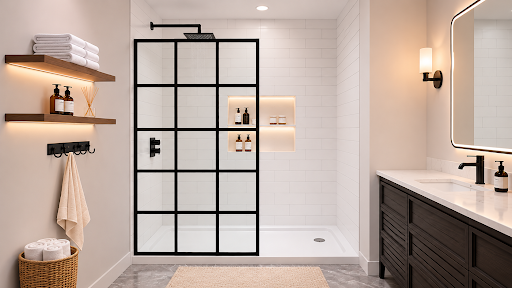
This style takes inspiration from classic steel-framed windows and interior partitions. Its defining feature is a series of horizontal and vertical lines that divide the glass visually into smaller sections. When paired with matte black hardware, the result can create a modern industrial appearance while maintaining the openness of a glass shower enclosure.
However, appearance is only one part of the decision. Understanding the different grid construction methods, glass specifications, available configurations, cleaning requirements, and installation considerations can help homeowners determine whether this design is suitable for their bathrooms.
Overview on Grid-Style Framed Shower Door
A grid-style framed shower door is a glass shower enclosure featuring a decorative pattern of intersecting lines that creates a divided-pane appearance. The pattern is commonly paired with black metal framing, although other finishes may also be available.
Unlike a conventional framed shower door, which primarily uses metal profiles around the glass perimeter, a grid design introduces additional visual divisions across the glass surface.
The result resembles industrial-style windows or factory-inspired glass partitions. This makes the design particularly popular in contemporary, transitional, and industrial bathroom interiors.
The grid pattern can be incorporated into different shower configurations, including sliding doors, hinged doors, pivot doors, fixed panels, and complete shower enclosures.
It is important to understand that not every grid-style design uses actual metal bars. Some manufacturers create the appearance through printed or applied decorative patterns on the glass. These construction differences influence appearance, maintenance, durability, and overall cost.
Different Types of Grid Shower Door Designs
Choosing the right grid construction is important because two shower doors may look similar from a distance but function differently in everyday use.
1. True Metal Grid Framing
Traditional metal-grid construction uses physical metal elements to create the divided-pane appearance. The glass sits within a metal framework, with additional bars forming the horizontal and vertical divisions.
This approach creates a more dimensional, authentic industrial appearance. The metal lines are physically present rather than simply printed onto the glass.
However, additional framing means more joints, corners, and surfaces that require cleaning. Water spots, soap residue, and mineral deposits can accumulate around these areas if the enclosure is not maintained regularly.
2. Printed Grid Glass
Printed grid glass uses decorative markings applied directly to the glass surface. Depending on the manufacturing process, the design may be created through ceramic frit printing or another durable decorative treatment.
This approach creates the appearance of divided glass without requiring physical metal bars across every section.
One advantage is that the glass surface can remain relatively smooth, making routine cleaning easier than on an enclosure with extensive physical gridwork.
Printed patterns may look slightly different from genuine metal divisions, particularly when viewed closely. Homeowners should examine actual samples or detailed product photographs before deciding.
3. Applied Decorative Grid Patterns
Some designs use decorative strips or components attached to the glass rather than a complete structural metal framework.
These elements provide a dimensional appearance while allowing the primary glass panel to remain largely continuous.
The quality of the attachment, finishing, and material compatibility matters. Before selecting this construction, confirm whether the decorative elements are designed specifically for wet bathroom environments.
Why Are Black Grid Shower Doors Popular?
Matte black grid shower doors have become a recognizable feature in modern bathroom design because they create contrast without completely blocking visibility.
Traditional clear glass shower enclosures often blend into the surrounding bathroom. Grid detailing introduces defined lines that give the shower area a stronger architectural presence.
This can be especially effective in bathrooms featuring white subway tiles, neutral stone surfaces, concrete-look finishes, or minimalist cabinetry.
Another advantage is versatility. Although black is strongly associated with industrial interiors, grid-style glass can also complement transitional bathrooms, modern farmhouse designs, and contemporary spaces.
The overall effect depends on the proportions of the grid, the thickness of the framing, the glass transparency, and the surrounding finishes.
For example, narrow black lines create a relatively subtle appearance, while thicker framing produces a stronger industrial statement.
Framed vs. Frameless Grid Shower Doors: What’s the Difference?
Both framed and frameless shower doors can feature a grid-inspired appearance, but their construction and visual characteristics are different.
A fully framed enclosure uses metal profiles around the glass panels. In some designs, additional metal components form the grid itself. This creates a more structured appearance and can visually separate the shower from the rest of the bathroom.
A frameless enclosure relies on thicker glass panels and specialized hardware rather than continuous perimeter framing. Grid details may be incorporated through printed patterns or decorative elements.
Neither option is automatically better for every bathroom.
Framed designs may suit homeowners who prefer a defined industrial appearance and coordinated metal detailing. Frameless alternatives can appeal to those who want a lighter visual effect with fewer physical metal components.
The decision should consider the enclosure’s construction, glass thickness, hardware requirements, maintenance expectations, and architectural style rather than appearance alone.
Choosing the Right Glass for a Grid Shower Enclosure
Glass selection is one of the most important considerations when planning a shower enclosure. The glass must be suitable for bathroom use, compatible with the door system, and appropriate for the dimensions of the opening.
Tempered Safety Glass
Tempered glass is commonly used in shower doors because it undergoes a controlled heating and cooling process that increases its strength compared with ordinary annealed glass of similar thickness.
If it breaks, tempered glass generally fragments into numerous smaller pieces rather than large, sharp shards. However, it is not unbreakable, and improper handling, damaged edges, or concentrated impacts can contribute to failure.
In the United States, shower door glazing should comply with applicable safety-glazing requirements, including the relevant provisions of the International Residential Code and ANSI Z97.1 or other applicable standards.
Homeowners should verify the glass specifications and applicable certification rather than assuming that every decorative shower panel meets the same requirements.
Glass Thickness
Shower enclosure glass is available in different thicknesses, with 1/4-inch (6 mm), 5/16-inch (8 mm), and 3/8-inch (10 mm) options commonly encountered in the market.
The appropriate thickness depends on the enclosure design, panel dimensions, support system, hardware, and manufacturer’s engineering specifications.
For example, a heavy hinged glass door may require different hardware and structural considerations than a smaller fixed panel.
Thicker glass is not automatically the safest choice in every installation. The complete assembly must be designed to accommodate the selected glass weight and dimensions.
Clear, Frosted, and Textured Glass
Clear glass is a popular option because it allows light to travel through the bathroom and keeps the space visually open.
Frosted glass provides additional privacy while diffusing light. Textured glass introduces another decorative element and can soften the visibility of water spots and everyday bathroom activity, depending on its surface characteristics.
For grid-style designs, clear glass usually makes the geometric pattern more noticeable. Frosted and textured options create a softer, more private appearance.
How to Choose the Right Shower Door Configuration
The opening dimensions and bathroom layout determine which type of shower door will work best.
Sliding Shower Doors
Sliding shower doors operate along a track and do not require additional clearance for a swinging door. They can be practical for alcove showers and bathrooms with limited space in front of the enclosure.
However, the track and overlapping panels require regular attention because soap residue and mineral deposits can collect in the channels.
Hinged and Pivot Shower Doors
Hinged shower doors swing from a fixed attachment point, while pivot doors rotate around pivot hardware positioned along the door panel.
Both styles provide a wider, more direct opening than many sliding configurations. However, sufficient clearance is essential.
Before selecting either option, check the distance between the shower opening, nearby walls, toilets, vanities, and other bathroom fixtures.
Fixed Shower Panels
A fixed shower screen consists of a stationary glass panel that separates the showering area from the rest of the bathroom.
This configuration can work well in walk-in showers and open-concept bathroom layouts. It has fewer moving components than a conventional door system, although the opening must be planned carefully to reduce water escaping onto the bathroom floor.
A grid pattern can add visual structure to a fixed panel without requiring a traditional swinging or sliding door.
Pros and Cons of Grid-Style Shower Doors
Like other decorative shower enclosure designs, grid-patterned glass has advantages and limitations.
Main Advantages
- Distinctive architectural appearance: Grid detailing introduces strong geometric lines that can make a shower enclosure a focal point in the bathroom.
- Design flexibility: The style works with industrial, contemporary, modern farmhouse, and transitional interiors.
- Visual transparency: Clear glass maintains visibility and allows natural or artificial light to move through the bathroom.
- Multiple configurations: Grid designs can be incorporated into sliding doors, hinged enclosures, fixed panels, and other shower layouts.
Potential Disadvantages
- More cleaning requirements: Genuine metal gridwork introduces additional edges and joints where soap residue and mineral deposits may accumulate.
- Strong visual contrast: Dark framing can dominate a small bathroom if the grid pattern is too heavy or the surrounding finishes are already visually busy.
- Construction differences: Printed designs, applied decorative strips, and genuine metal framing do not provide identical appearances or maintenance characteristics.
- Potentially higher costs: Additional framing, specialized hardware, decorative treatments, and custom fabrication can affect the overall project cost.
A realistic evaluation should consider long-term maintenance and installation requirements, not just the initial visual appeal.
How to Clean and Maintain a Grid Shower Door
Regular maintenance helps preserve both the glass and metal components of a shower enclosure. After showering, use a soft squeegee to remove excess water from the glass. This simple habit reduces the accumulation of mineral deposits and soap residue.
For routine cleaning, use a nonabrasive glass cleaner or a mild cleaning solution recommended by the manufacturer. A soft microfiber cloth is generally suitable for removing everyday buildup.
Pay particular attention to corners, framing joints, tracks, and hardware connections. These areas can collect moisture and residue more easily than the open glass surface.
Avoid abrasive pads, harsh chemicals, and cleaning products that may damage protective coatings or metal finishes. Always follow the manufacturer’s care instructions.
It is also worth inspecting the enclosure periodically. Loose handles, deteriorating seals, unusual door movement, or visible corrosion should be addressed before they become larger maintenance problems.
Installation Considerations Before Choosing a Grid Shower Door
Accurate measurements are essential for a successful shower door installation. Even a small measurement error can affect door alignment, hardware placement, and the available opening.
Measure the shower opening at multiple heights because bathroom walls are not always perfectly vertical. For custom installations, measurements should also account for out-of-square walls, uneven surfaces, and the position of existing tile.
The supporting wall structure matters as well. Hinges, brackets, and other hardware must be anchored into suitable structural support according to the installation specifications. Tile alone should not be assumed to provide adequate support.
Water containment is another important consideration. The location of the showerhead, door opening, bottom sweep, threshold, and fixed panel all influence how effectively the enclosure controls splashing.
For a complex or custom installation, professional measurement and installation can help avoid problems involving glass alignment, hardware loading, and water leakage.
Once tempered glass has been manufactured, it generally cannot be cut, drilled, or modified on-site. All required holes, notches, and edge treatments must be planned before the tempering process.
Is a Grid-Style Shower Door Right for Your Bathroom?
A grid-style shower enclosure can be a good choice if you want your bathroom to have a more defined architectural appearance without sacrificing the openness of glass.
It is particularly suitable for interiors featuring contrasting finishes, geometric tile patterns, matte black fixtures, and industrial-inspired details.
However, homeowners who prioritize minimal maintenance may prefer printed grid glass or a simpler frameless enclosure rather than a design with extensive physical metal divisions.
Bathroom size should also influence the decision. A large, bold grid may work beautifully in a spacious walk-in shower but feel visually overwhelming in a compact bathroom.
Ultimately, the right choice depends on the balance between appearance, functionality, available space, glass specifications, and maintenance expectations.
Final Thoughts
Grid-style shower enclosures offer an interesting alternative to conventional glass shower doors by combining transparent glazing with distinctive architectural detailing. Their appeal comes from the contrast between open glass surfaces and structured lines, making them suitable for a range of contemporary bathroom styles.
Before making a decision, compare genuine metal gridwork with printed or applied patterns, evaluate the available door configurations, verify safety-glass specifications, and consider the cleaning requirements of each design.
A well-planned grid pattern framed shower door should do more than complement the bathroom’s appearance. Its dimensions, hardware, glass construction, and installation must also work together to provide a practical and reliable shower enclosure.
Planning a renovation often involves paperwork and deadlines alongside colour palettes and furniture. For anyone in Spain dealing with Seguridad Social procedures, segsocialcitas.com explains how to request an appointment.